A silent electric motorcycle hit 455 km/h on the runway where the Space Shuttle used to land
There was no roar, no screaming exhaust, just a low electric whine and a black shape tearing down the old Shuttle runway in Florida. On board was a man who had already won everything in motorcycle racing and retired, lured back for one more impossible number. The Voxan Wattman is the fastest electric motorcycle ever built.
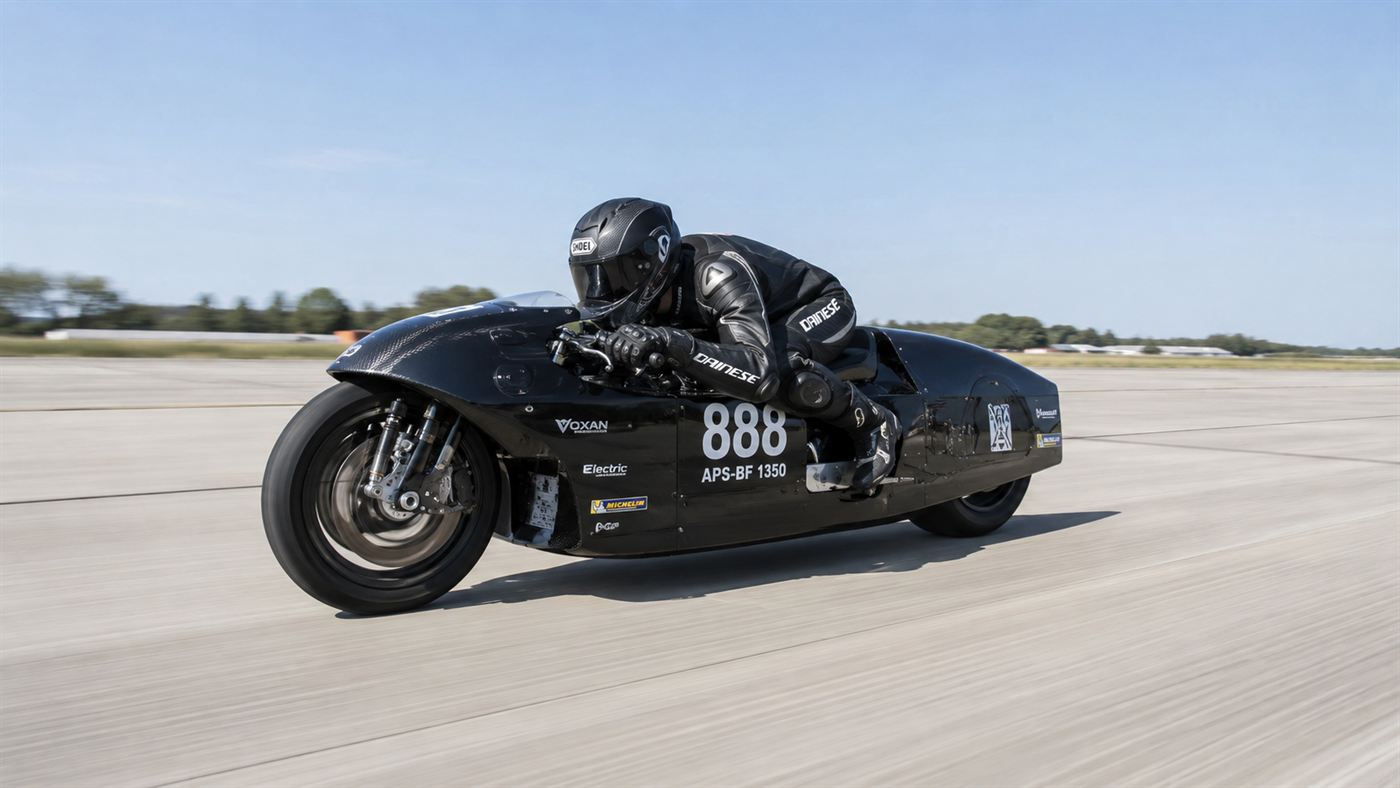
No engine note, no gears, just a silent surge to nearly 470 km/h. Illustration: Watts & Wild.
For more than a century, going truly fast on two wheels has meant noise: the bark of a big engine, the smell of burnt fuel, the violence of combustion. The Voxan Wattman threw all of that away and still went faster than almost any motorcycle on Earth, on nothing but batteries and a long, quiet runway.
It is the kind of record that quietly rewrites what people think electric power can and cannot do, and it happened in a place soaked in the history of going fast and far.
A silent bomb on the Shuttle runway
The setting was almost theatrical. The team took the bike to the Launch and Landing Facility at the Kennedy Space Center, the three-mile strip of concrete where Space Shuttles once glided home from orbit. It is one of the few places on the planet long and smooth enough to let a machine accelerate to these speeds and still have room to stop.
On that runway, in November 2021, a low black motorcycle lined up in the Florida heat. What followed looked strange to anyone raised on racing: enormous speed with barely any sound, the bike simply gathering pace and vanishing toward the horizon as if the air itself had stopped fighting it.
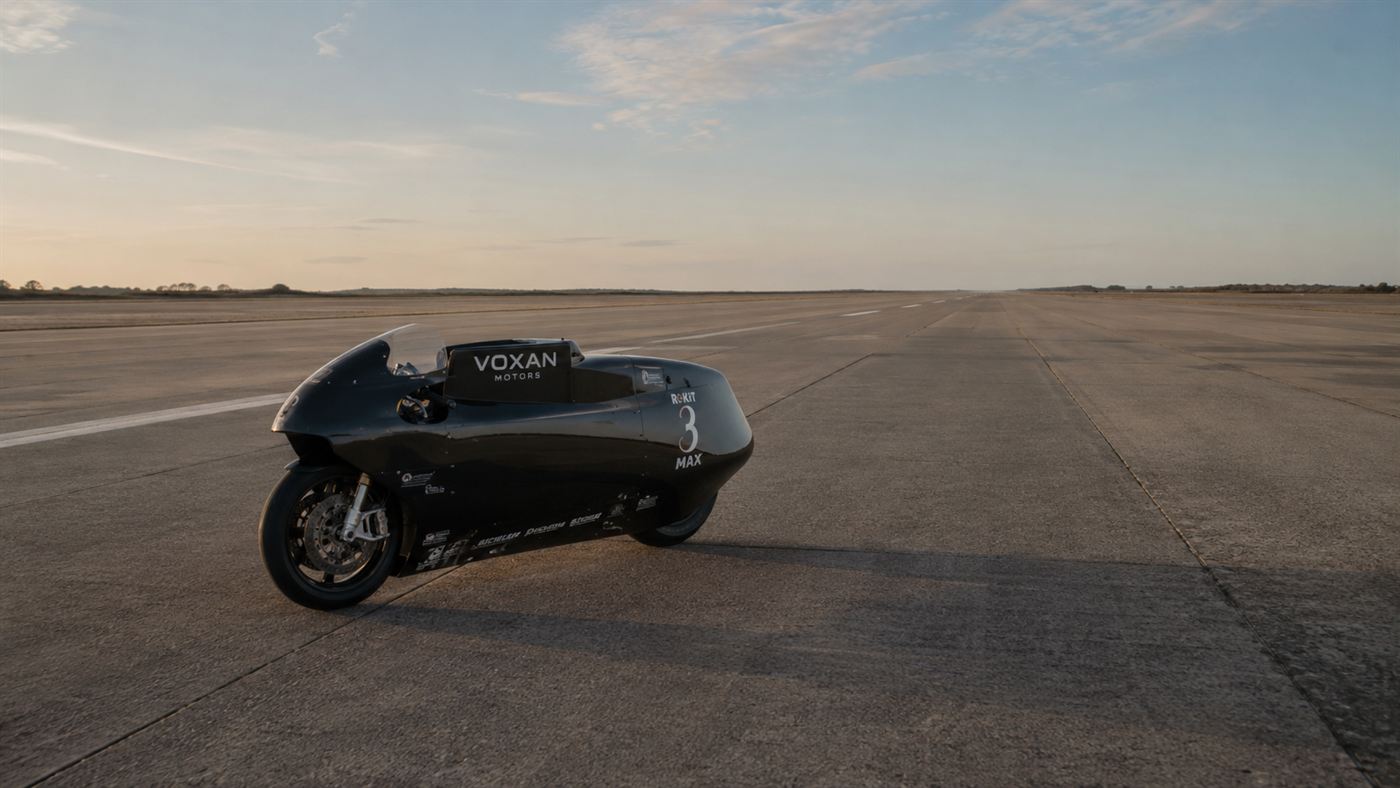
How fast is the Voxan Wattman
The headline number is staggering for a battery-powered two-wheeler. The Voxan Wattman set an official electric motorcycle record of 455.737 km/h, about 283 mph, with its speedometer briefly showing more than 470 km/h on one pass.
That figure was not a single lucky sprint. Under the sport's rules the record speed is the average of two runs over a flying kilometre, ridden in opposite directions within two hours, so the wind helps you one way and fights you the other. Across a single week the team rewrote 21 different world records, building on an earlier haul set a year before on a runway in France.
The champion who came back for it
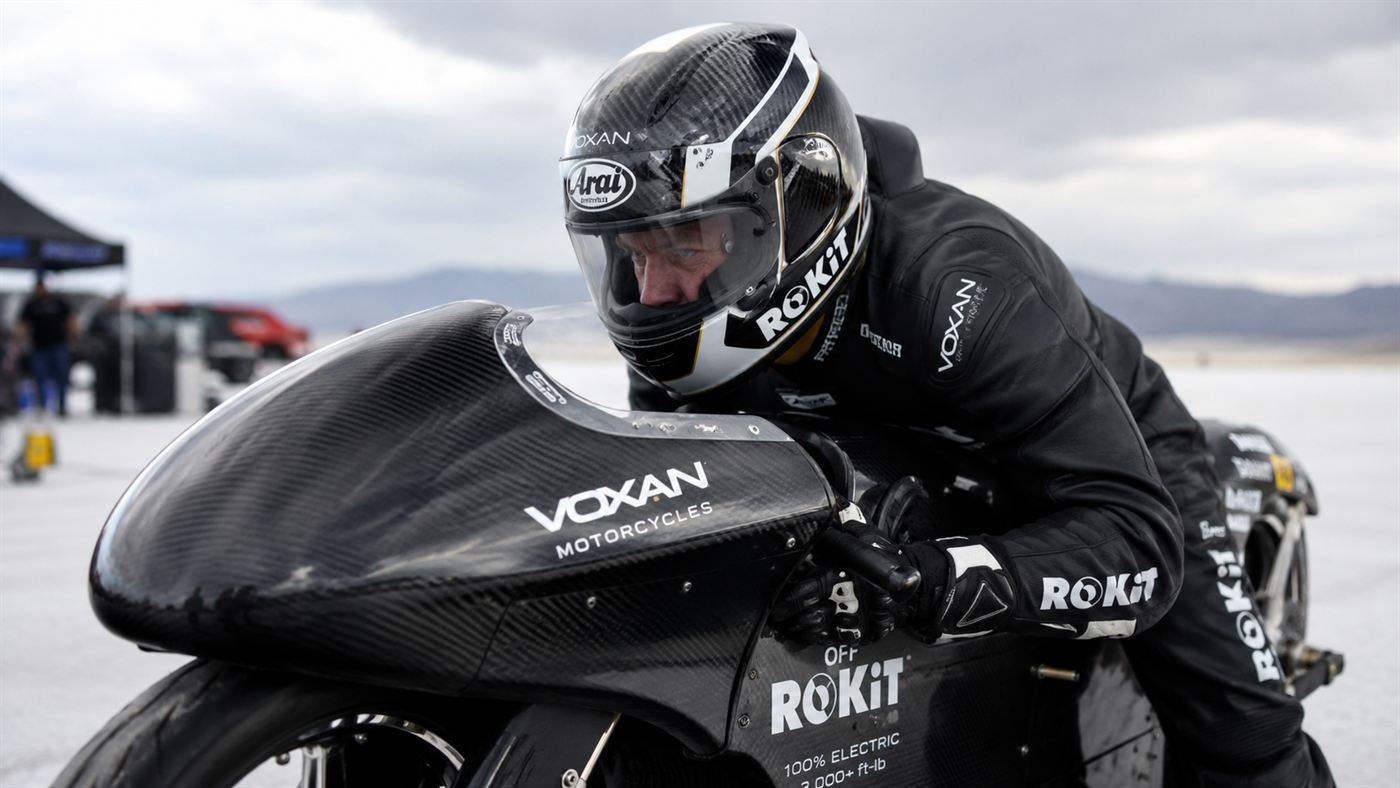
The rider was no stunt double. Max Biaggi is a six-time world champion, one of the great motorcycle racers of his era, long retired from full-time competition. Biaggi agreed to climb back onto a record machine in his fifties, this time on a silent electric bike utterly unlike anything he had raced in his career.
It takes a particular kind of nerve to hold a tuck at 450 km/h, where the smallest twitch or gust becomes life or death, and to do it on a motorcycle that gives you none of the familiar engine sounds a racer uses to read speed. Biaggi described pushing past the point where the world narrows to a single point of concrete ahead. The human story is what gives the dry number its weight: a legend, out of retirement, trusting his life to a battery.
Built in Monaco, charged for the strip
The Wattman was not adapted from a showroom bike. It was a purpose-built record machine from Voxan, a French marque revived under a Monaco-based group, with a body shaped to slice the air and a battery pack engineered to dump huge power in short, brutal bursts. The cells came from a specialist supplier more used to powering satellites and industry than drag strips.
To survive the heat of those full-power runs, parts of the bike were even packed with dry ice to keep the electronics cool. Everything about it was built for one task: to prove that electric drive, so often mocked as slow and dull, could be made savage. On the runway, it answered the question with a number few combustion bikes will ever see.
Is the Voxan Wattman the fastest motorcycle in the world?
This is where honesty matters. The Voxan Wattman is the fastest electric motorcycle, and quicker than virtually any bike you could buy, but it is not the outright two-wheeled land speed record. Fully enclosed petrol streamliners, which look more like missiles than motorcycles, have pushed beyond 600 km/h on the salt flats.
The Wattman's records sit in defined electric classes, set on a prepared surface with a one-off machine rather than a road bike. None of that dims the achievement. It simply places it correctly: not the fastest thing ever to run on two wheels, but the clearest proof yet that the quiet revolution under every new electric vehicle has speed to spare, when someone brave enough decides to find it.
A battery-powered motorcycle just went 455 km/h in near silence, ridden by a champion who had nothing left to prove. Does the quiet of an electric record make it less thrilling, or is the silence the most futuristic thing about it? Tell us what you think in the comments.
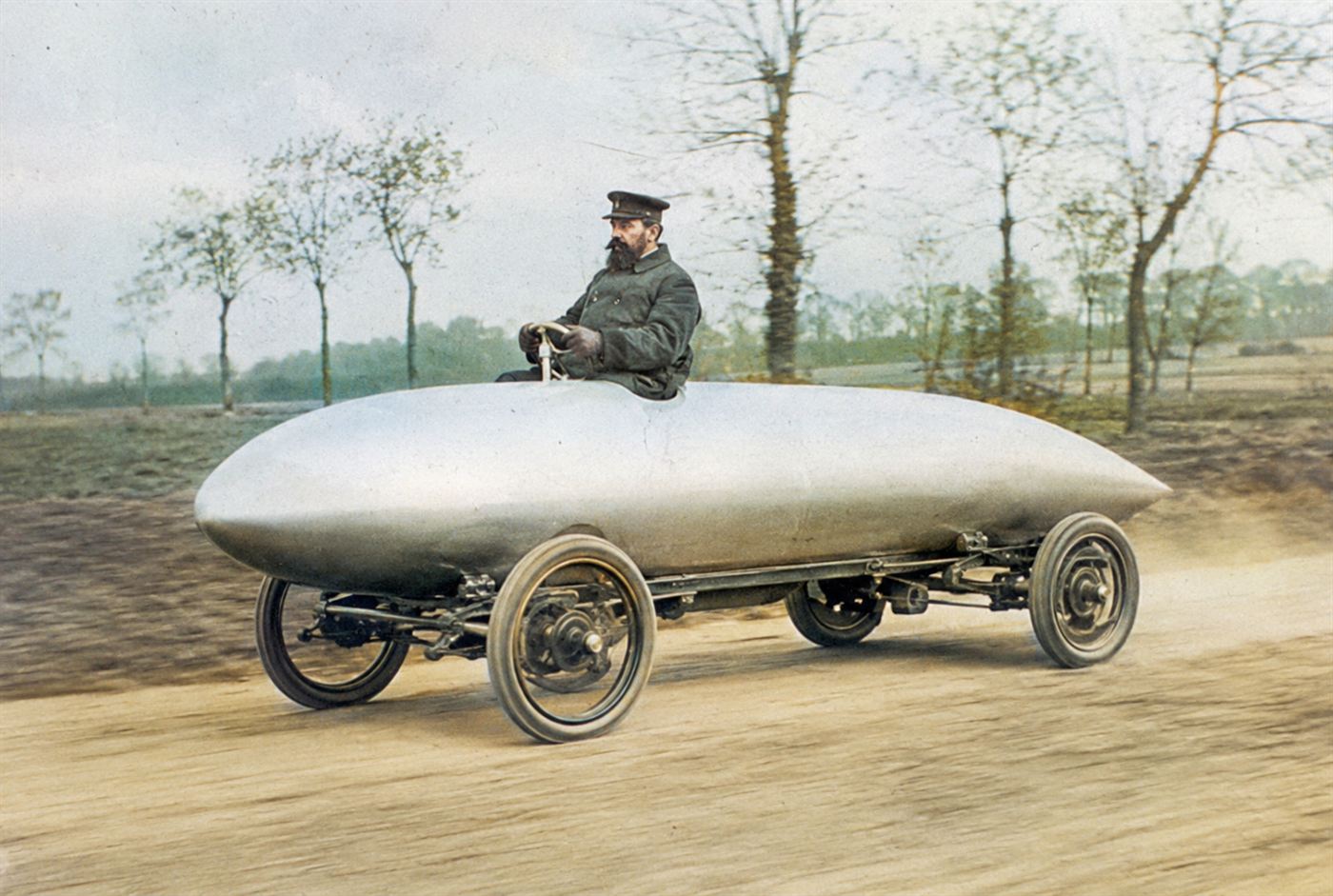
Related reading: La Jamais Contente, the electric car that became the first vehicle to break 100 km/h, back in 1899.