When a coyote gets too close, the horned lizard of the American desert does something almost unbelievable, it shoots a jet of its own foul blood straight from its eyes
Most animals under threat run, freeze or bite. A few do something so bizarre it sounds made up. The horned lizard of the American Southwest keeps its wildest defense in reserve, and it involves turning its own eyes into tiny, blood-filled weapons.
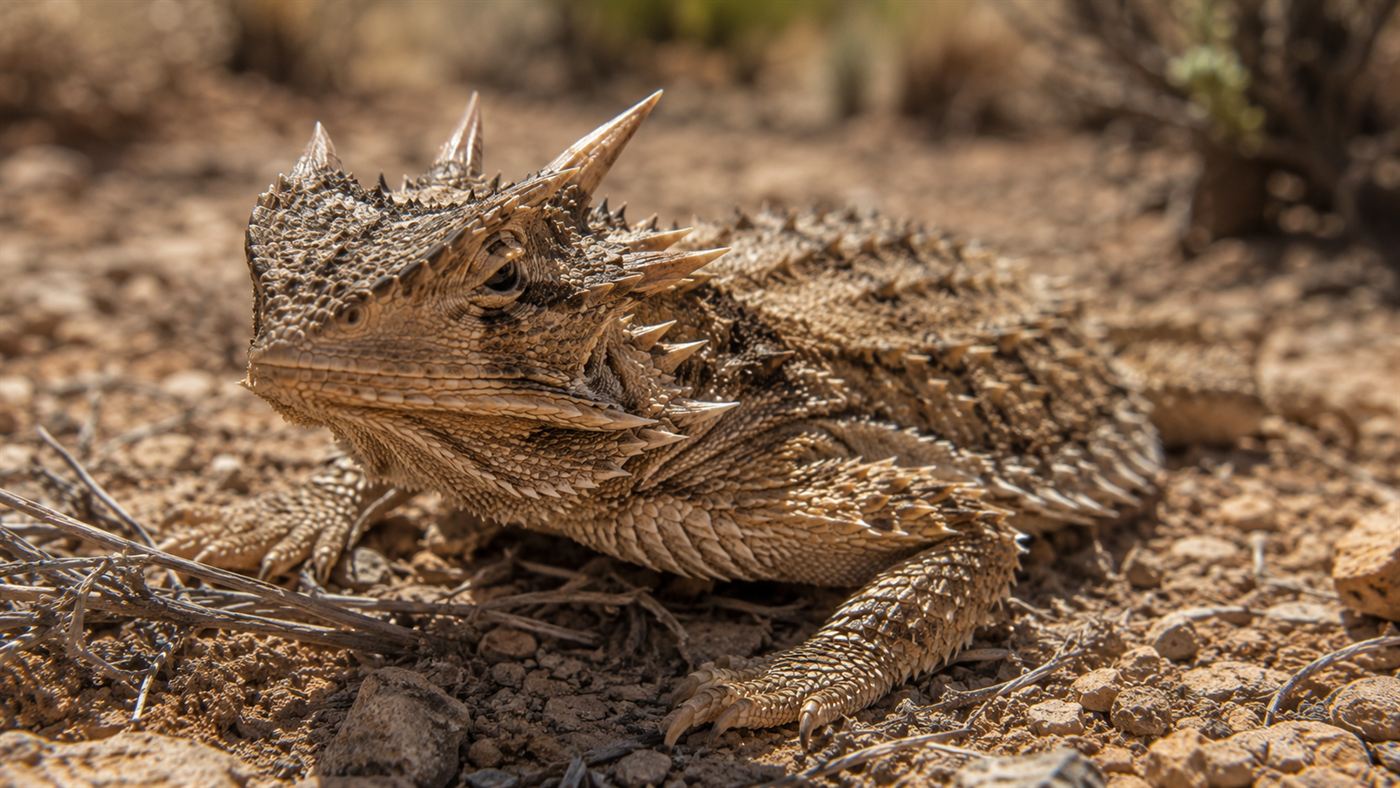
The horned lizard is armored, spiny, and holds a startling final trick. Illustration: Watts & Wild.
The deserts of the American Southwest are full of animals that have found strange ways to survive, but few are stranger than the squat, spiky little reptile that ranchers and children have long called the horny toad. It looks like a tiny dragon that has been stepped on, all horns and armor, ambling slowly across the sand in search of ants. It hardly seems dangerous. And then it is cornered.
What the horned lizard does when it truly runs out of options is one of the most jaw-dropping defenses in the animal kingdom, and for a long time people who described it were simply not believed. It does not bite or sting. It aims its eyes at the attacker and fires a stream of its own blood. And astonishingly, it works.
The short version: The horned lizard of the American Southwest defends itself with a ladder of tricks, ending in an extraordinary one, squirting a jet of blood from its eyes up to five feet at a predator. The blood is foul-tasting because it is loaded with toxins from the ants the lizard eats, and it repels coyotes and foxes. Yet despite this defense, the lizards are quietly vanishing.
The horny toad that isn't a toad
Despite the nickname, the horned lizard is not a toad at all. It belongs to the genus Phrynosoma, a group of flat, wide-bodied lizards crowned with real bony horns and studded with spines, found across the deserts and scrublands of the American Southwest and Mexico. Their round shape and blunt faces give them their toad-like look, but they are reptiles through and through.
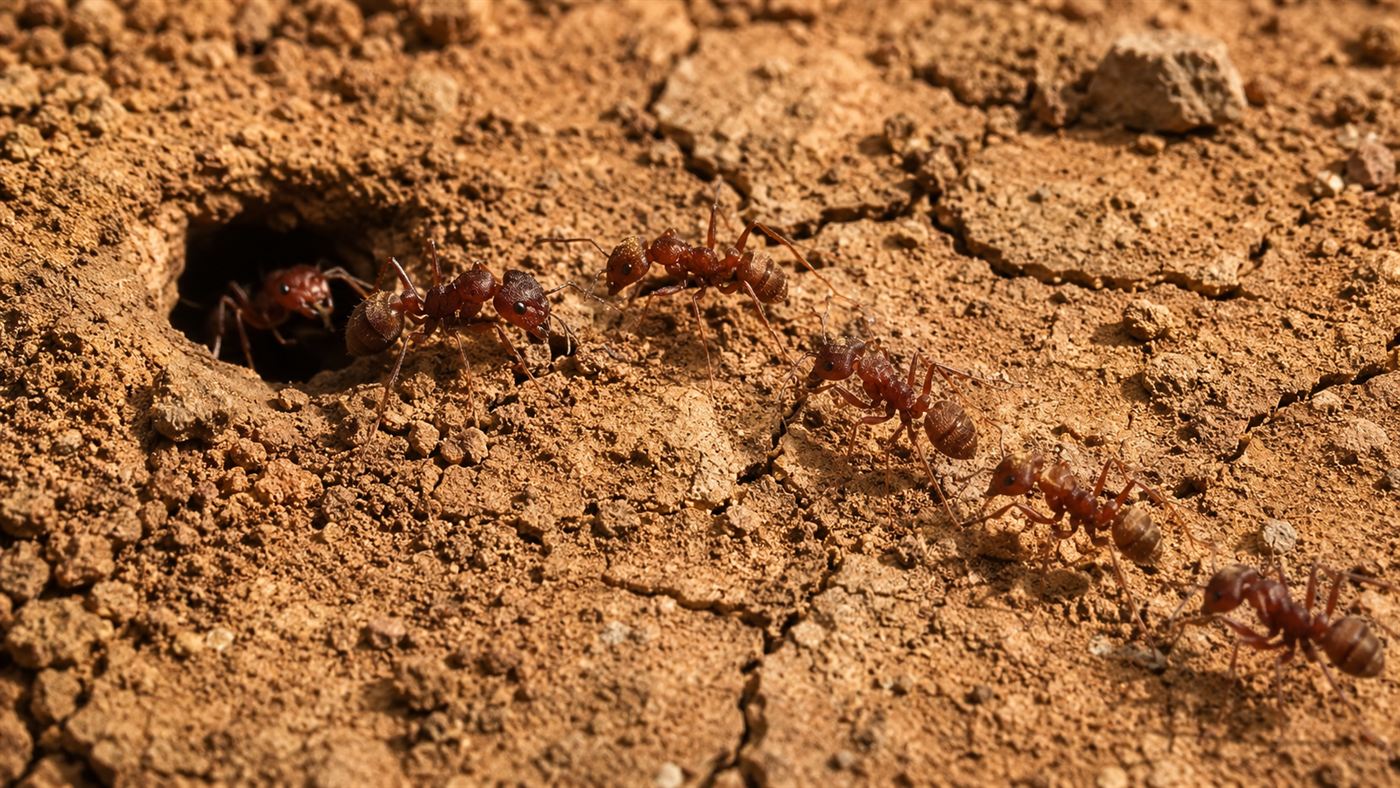
They live life in the slow lane, sitting patiently and eating ants by the hundred, especially large harvester ants. That diet, as we will see, is central to both their strangest weapon and their greatest weakness. For now, picture a slow, mild, well-armored little lizard that would much rather not be noticed at all.
A ladder of defenses
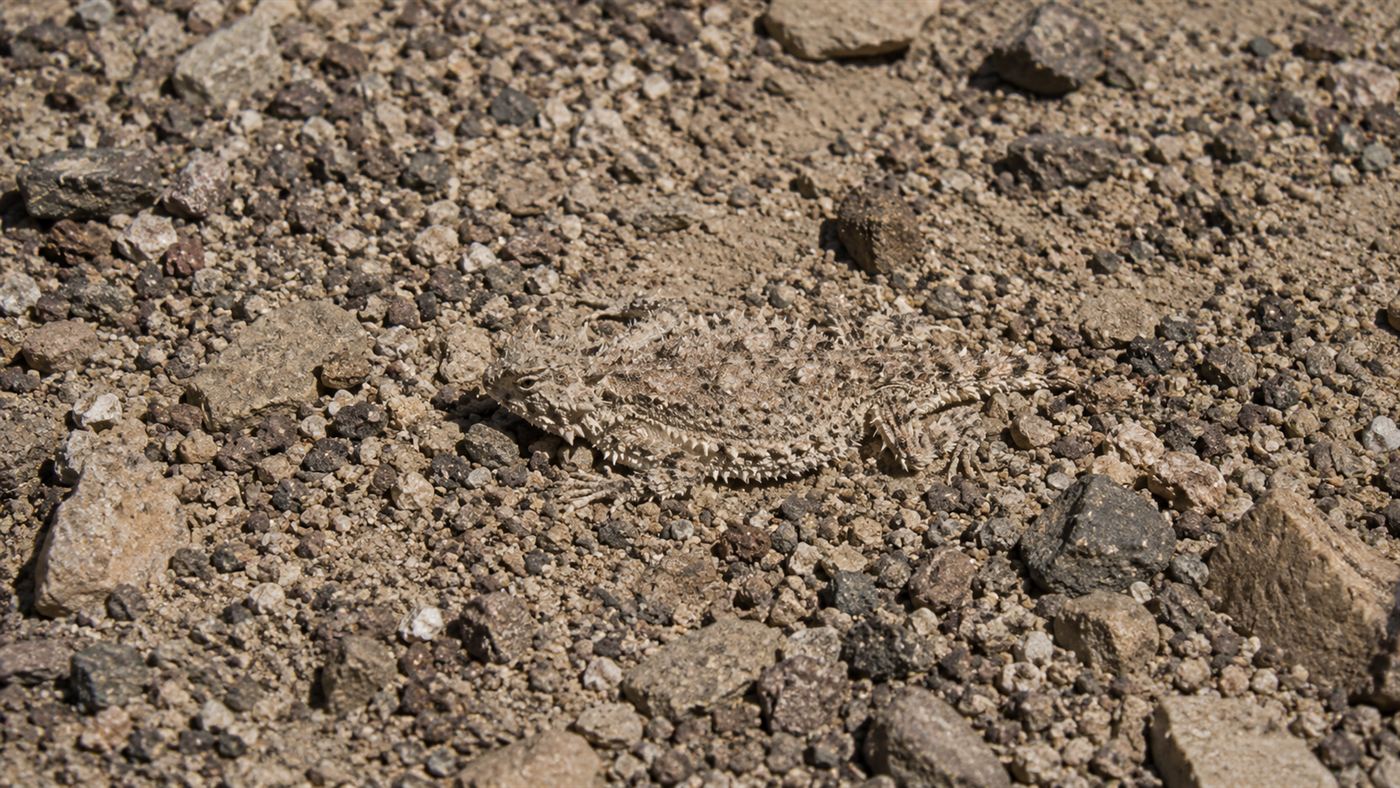
The blood-squirting is famous, but it is actually the horned lizard's last resort, the final rung on a whole ladder of defenses. Its very first strategy is simply not to be seen. Its mottled, sandy coloring is superb camouflage, and its instinct when danger appears is to freeze and trust that it blends into the ground.
If that fails and something comes closer, the lizard has more tricks. It can puff up its body with air, doubling its apparent size and turning itself into a spiky ball that is very hard to swallow. It may dart away in short bursts and stop dead, exploiting a predator's difficulty tracking a target that keeps vanishing against the desert floor. Only when all of that fails does it reach for its most desperate and spectacular option.
How the horned lizard shoots blood
The technical name for the trick is autohemorrhaging, the deliberate release of one's own blood, and the way the horned lizard does it is remarkable. As AskNature describes, the lizard restricts the flow of blood leaving its head, which raises the pressure until tiny vessels near its eyes rupture and send blood shooting outward.
The stream can travel a surprising distance, in some cases up to five feet, aimed squarely at the face of whatever is threatening it. It is a startling, almost theatrical act of self-defense, a small reptile that responds to a predator not by fleeing or fighting but by exploding a jet of red from around its own eyes. For a moment the attacker is confused, splattered and thoroughly put off, and that moment is often all the lizard needs.
Blood that tastes of ants
Startling a predator would not be much use on its own, so the horned lizard adds a chemical punch. Its blood is genuinely foul, and that is thanks to its diet. By eating enormous numbers of harvester ants, whose bodies are rich in noxious compounds, the lizard concentrates those chemicals in its own blood.
As ScienceABC explains, the blood is specifically repellent to members of the dog family, coyotes, foxes and domestic dogs, which react with head-shaking, gaping mouths and hasty retreat when they get a taste. Tellingly, the trick is not used against birds, which are unbothered by it. The horned lizard has evolved a weapon precisely tuned to one kind of enemy, built entirely out of the ants it eats.
A specialist in trouble
Here the story turns sad. For all its armor and its astonishing defense, the horned lizard is disappearing across much of its range, and the Texas horned lizard, the state reptile of Texas, has vanished from huge areas where it was once common. The cause is not coyotes, which it can handle, but something far smaller.
The main culprit is the invasive red imported fire ant. These aggressive newcomers wipe out and outcompete the native harvester ants that horned lizards depend on, starving the reptiles of their specialized food, and the fire ants make poor eating in return. Add in pesticide use that kills off native ants, habitat loss, and a history of the lizards being scooped up for the pet and curio trade, and a once-common desert creature has slipped into serious decline despite legal protection.
The honest catch
The blood-squirting is so wonderfully gruesome that it tends to hog the spotlight, so it is worth being honest about it. It is a genuine last resort, not an everyday superpower, and it only really works on canine predators. Against the birds and snakes that do much of the actual hunting, the lizard's exploding eyes do nothing, which is exactly why its true first defense is the far less dramatic act of holding perfectly still. The squirt is also costly, using up blood the small animal can ill afford to lose.
More importantly, the fame of the trick can obscure the real and sadder story. The horned lizard is not being defeated by predators at all. It is being undone by an ecological chain reaction, an invasive ant quietly dismantling the food web it was built around. It is a sharp reminder that being a specialist, superbly adapted to one narrow way of life, is a gamble that only pays off as long as that world holds together. A lizard that can shoot blood from its eyes turns out to be helpless against a change it never evolved to face, and no defense in its arsenal can squirt away the loss of its ants.
A lizard that fires blood from its eyes can scare off a coyote, but not an invading ant that erases its dinner. Does the horned lizard's plight change how you think about invasive species, the quiet way one small newcomer can unravel a whole desert? Tell us what you think in the comments.
Related reading: the bombardier beetle, which fights back with a boiling chemical spray.
More from Watts & Wild
More in Energy & the Wild →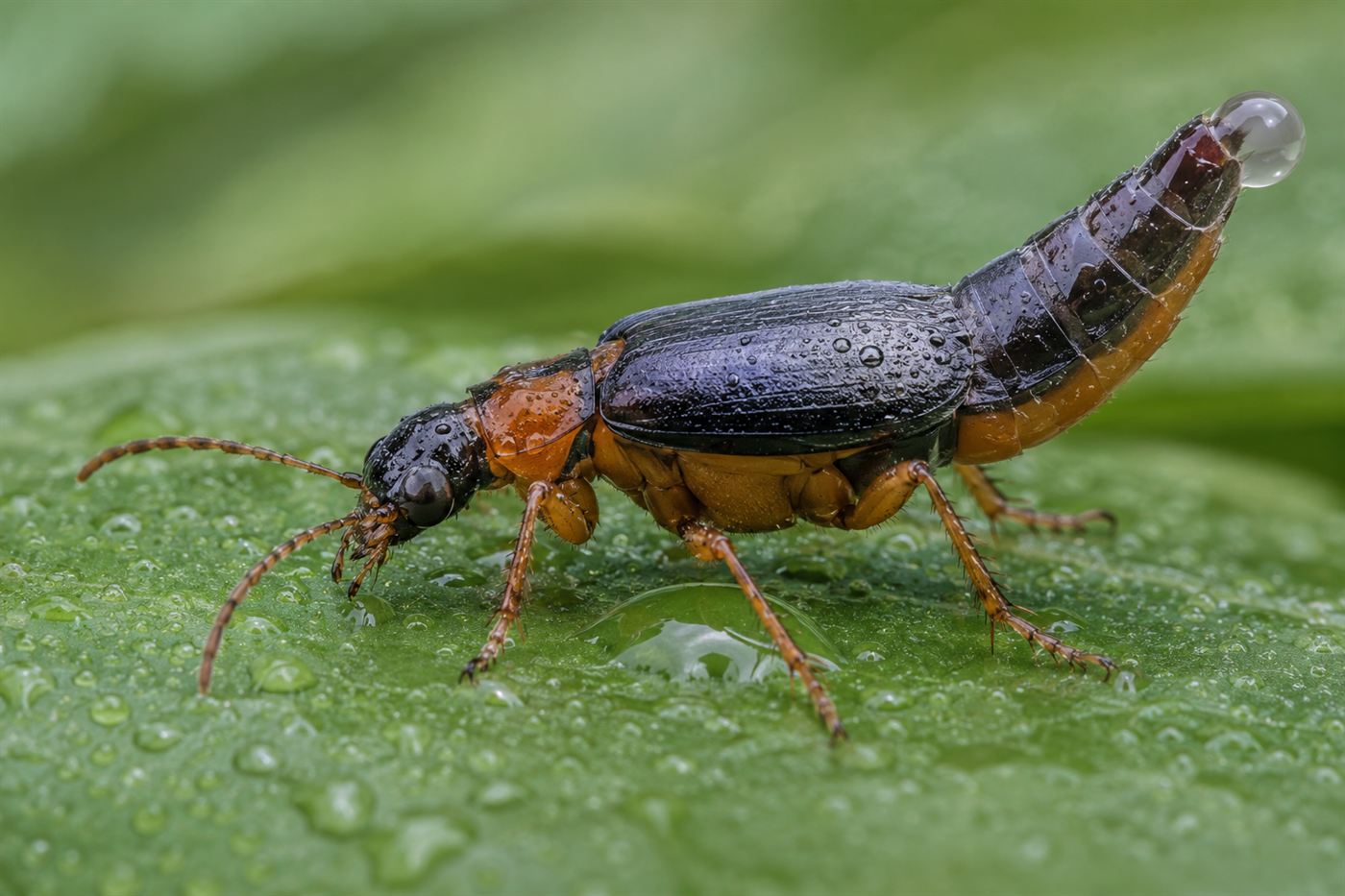

Maria writes about wildlife, ecology, and the strange places where nature and human history collide. She is based in Brazil.