The Vasa warship had 64 cannons and sank twenty minutes into its maiden voyage in 1628, and when divers found it 333 years later at the bottom of Stockholm harbor it was almost perfectly intact
On August 10, 1628, the Vasa warship sailed out of Stockholm harbor on its maiden voyage and sank roughly 1,300 meters from shore, killing at least 30 of the crew on board. Stability tests conducted weeks before the launch had already shown the ship was dangerously top-heavy, but no one told the king who had commissioned it.
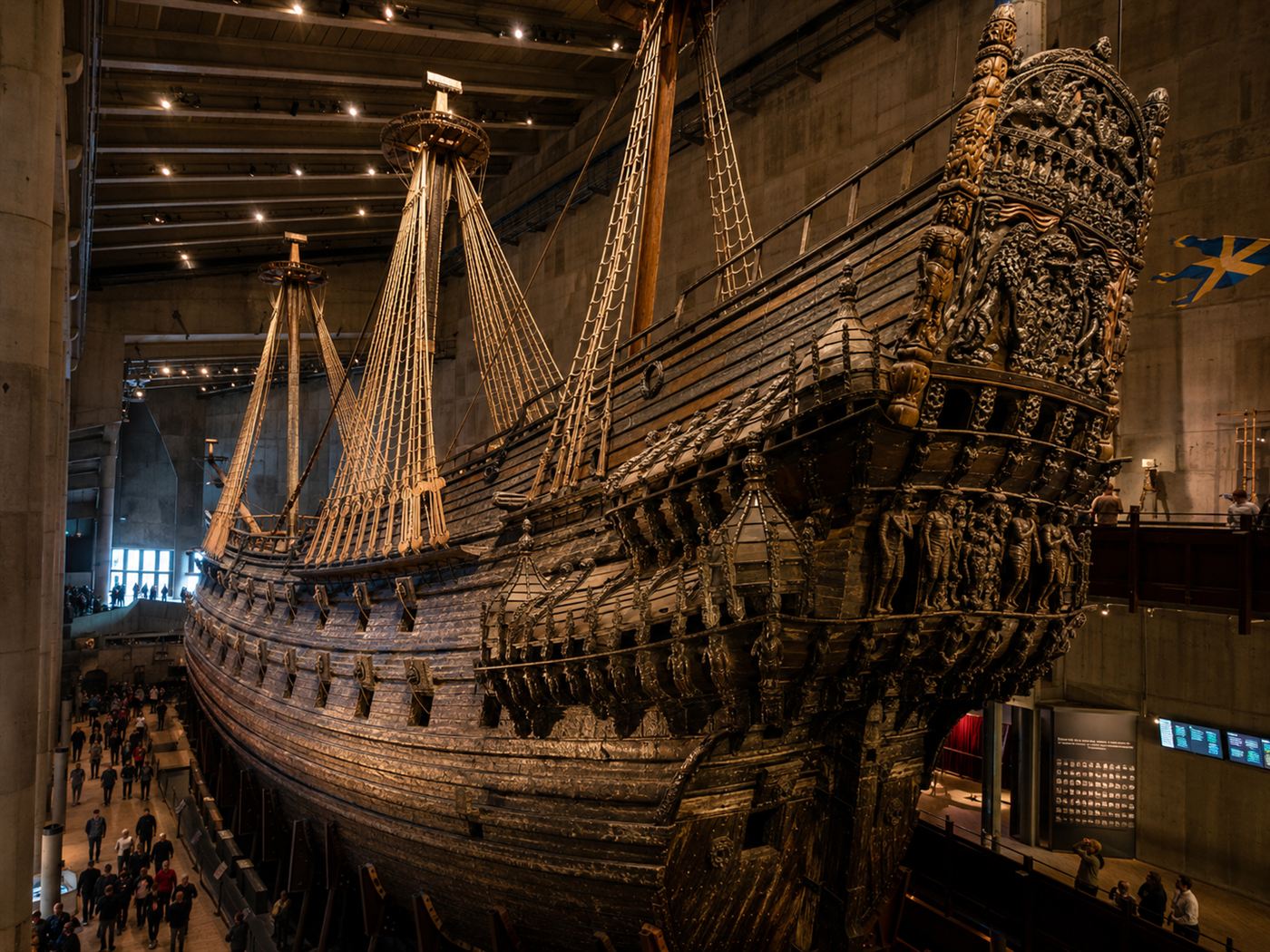
The Vasa warship today at the Vasa Museum in Stockholm, where it has been on display since 1988. The ship sank in 1628, lay on the harbor floor for 333 years, and was raised in 1961 in near-perfect condition. Illustration: Watts & Wild.
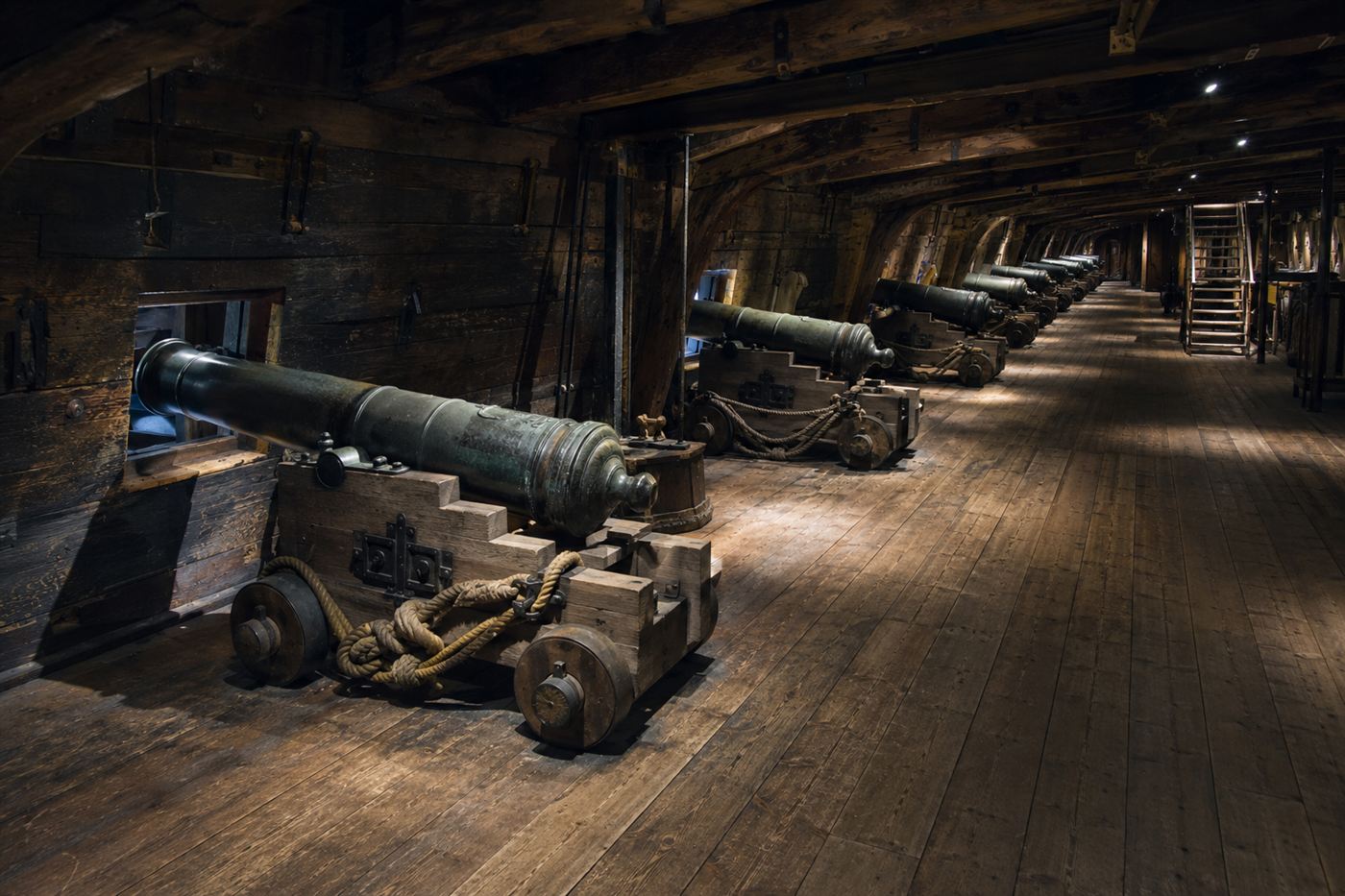
The Vasa warship was meant to be the most powerful warship Sweden had ever built. King Gustav II Adolf ordered it constructed in 1626 as the centerpiece of his navy during the Polish-Swedish War, a symbol of Swedish imperial power in the Baltic Sea. Two decks of cannons instead of one, 64 bronze guns in total, elaborate carved sculptures covering the stern and sides, painted in red and black and gold.
The ship was 69 meters long, carried a crew of 145 sailors and 300 soldiers, and was the largest warship in the Swedish fleet. According to the Vasa Museum in Stockholm, which has housed the ship since 1988, the vessel represented the cutting edge of 17th-century warship design and cost a fortune in timber, bronze, and labor. On August 10, 1628, it sailed 1,300 meters and went to the bottom of the harbor.
A king who would not hear no
The decision that doomed the Vasa warship was made before the first plank was laid.
Gustav II Adolf wanted a two-gun-deck configuration, which meant stacking two rows of cannons on top of each other along the ship's sides.
The problem with stacking guns is weight.
The more weight above the waterline, the more unstable the vessel.
The shipwright Hendrik Hybertsson, who had designed the original plans, understood this constraint and built accordingly.
When the king revised his demands midway through construction, requiring the lower gun deck to be widened and the upper gun deck added, Hybertsson could not simply redesign the hull to compensate.
He died in 1627, before the ship launched, and never saw what his successor produced.
The men who inherited the project knew the dimensions were wrong.
A stability test conducted in the weeks before the maiden voyage required 30 sailors to run from side to side across the upper deck while the ship was docked.
After three passes, the ship was rolling so violently that Admiral Klas Fleming ordered the test stopped before it capsized at the pier.
The result of the test was not reported to the king.
No one involved in the construction was willing to tell Gustav II Adolf that his warship would sink in calm water.
Twenty minutes into the voyage
The August 10, 1628 launch was a public ceremony.
Crowds gathered on the Stockholm waterfront to watch the Vasa warship depart.
Diplomats, officials, and common citizens watched from the shore as the ship moved away from the quay under partial sail, guns loaded and flags flying.
A light wind came in from the southwest.
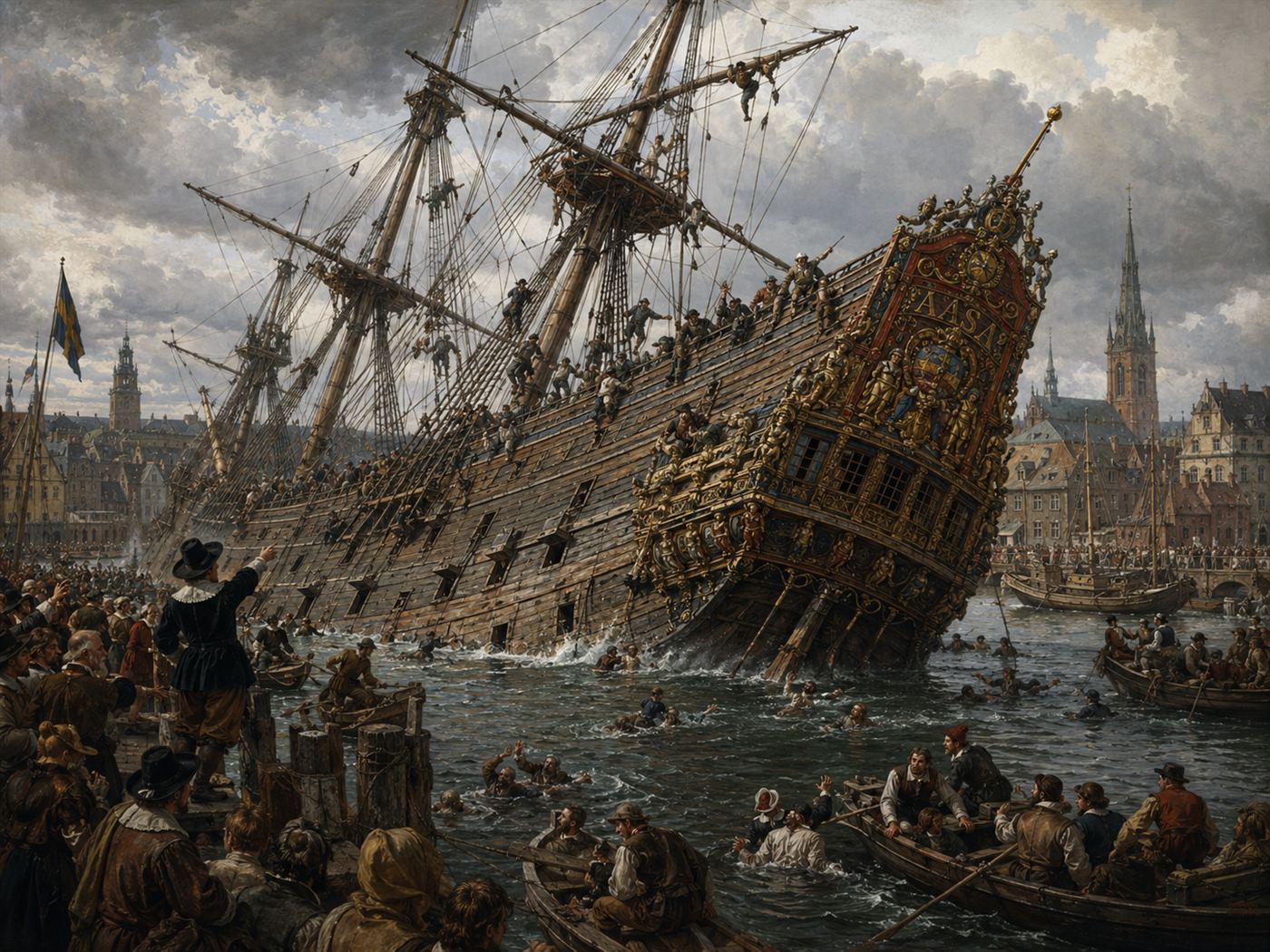
The Swedish warship heeled to port.
Water entered through the lower gun ports, which were open for the ceremonial cannon salute.
The ship continued to heel, the water continued to pour in, and within minutes the Vasa was on the harbor floor in about 32 meters of water, a short distance from the island of Beckholmen.
The death toll is uncertain.
At least 30 people died, based on skeletons recovered during the 1961 raising, but estimates range as high as 150 given the number of crew and the chaos of the sinking.
Most of the officers survived by swimming or being rescued by small boats.
Captain Söfring Hansson was placed under house arrest and faced a court of inquiry.
The inquiry spent months questioning officers, builders, and sailors about who was responsible.
No one was ultimately convicted.
The builder was dead, the king was at war in Poland, and the investigators could not establish a clear chain of negligence under 17th-century Swedish law.
Why the Vasa warship's crew said nothing
The question that historians and engineers return to is why everyone who knew about the stability test said nothing.
The answer is the political reality of working for an absolutist king who had personally approved every modification to the ship.
Raising doubts about the Vasa warship was raising doubts about Gustav II Adolf's judgment.
In 17th-century Sweden, that was not a safe position.
The men who ran the stability test had already watched the ship rock dangerously.
They stopped the test not because it was inconclusive but because continuing it would have sunk the ship in dock.
Admiral Fleming's response, recorded in contemporary documents, was that the king's builders would know their business.
It was a deflection that allowed the launch to proceed.
Anders Franzén and 25 years searching the harbor
The Vasa warship lay undisturbed on the floor of Stockholm harbor for more than three centuries.
In the 1650s and 1660s, salvagers using a primitive diving bell recovered most of the bronze cannons, which were the most valuable pieces.
After that, the wreck was largely forgotten.
Anders Franzén was a Swedish naval engineer and amateur archaeologist who became obsessed with finding the ship in the early 1950s.
He had studied historical accounts of the sinking and calculated a search area based on period maps and witness descriptions.
In September 1956, using a hand-operated core sampler lowered from a rowboat, he brought up a plug of black oak from the bottom.
Black oak, dense and dark from long submersion, was exactly what the hull of a 17th-century Swedish warship would look like after 328 years underwater.
Subsequent dives confirmed the wreck.
The raising operation began in 1961 and took two years of preparation.
Divers cut tunnels beneath the hull to thread six steel cables under the ship, which was then lifted by pontoons in stages, moved into shallower water, and finally pumped dry on September 24, 1961.
Why 333 years in cold water preserved the ship
The 17th century shipwreck that emerged from Stockholm harbor in 1961 was startling in its completeness.
The hull was largely intact.
Carved wooden sculptures were in place on the stern.
Personal belongings of crew members were found inside, including clothing, tools, backgammon pieces, a sailor's chest, and the remains of a meal.
The preservation was not accidental.
Stockholm harbor in the 17th century had salinity levels too low to support Teredo navalis, the shipworm that destroys submerged wood in saltwater environments.
The cold water slowed decomposition further.
The harbor mud sealed the lower portions of the hull against oxygenation.
The combination of low salinity, cold temperature, and anaerobic sediment created conditions that preserved the oak almost as well as dry storage would have.
The Vasa Museum in Stockholm was purpose-built to house the ship at the correct temperature and humidity, and the conservation team spent years impregnating the waterlogged wood with polyethylene glycol to prevent it from shrinking and cracking as it dried.
The process took 17 years.
The ship opened to the public in 1988 and is now Sweden's most visited museum, receiving more than a million visitors per year.
The honest catch
The story of the Vasa warship is often told as a morality tale about speaking truth to power, and that framing is essentially correct.
But some of the details that circulate are overstated.
The death toll of 30 is a minimum from skeleton evidence, not a confirmed count.
Some accounts put the number much higher, but the 1961 salvage recovered only 25 complete or partial skeletons, and many of the crew would have survived in the calm harbor conditions.
The stability test story, though well-documented, is sometimes retold as if the result was obvious and immediate disaster was guaranteed.
In reality, the Vasa had sailed in calm conditions inside the harbor before August 10 without incident.
A sudden gust of wind on a poorly designed ship is the proximate cause.
The design flaw created the vulnerability; the wind exploited it.
The conservation of the Swedish warship also remains an ongoing challenge.
Decades after the polyethylene glycol treatment, the wood is showing signs of slow deterioration from sulfur compounds absorbed during the centuries on the harbor floor.
The Vasa Museum has been running a long-term monitoring and treatment program since the 1990s to slow this process.
The ship that survived 333 years on the seabed may require more intensive conservation in the centuries ahead just to maintain what the harbor preserved.
A warship built for a king who wanted more cannons than the hull could support sank in 1628 in front of hundreds of witnesses, twenty minutes into the voyage it had been built for.
The people who knew it would sink said nothing.
The ship sat on the harbor floor for 333 years while a city grew up around it.
A man with a core sampler and a rowboat found it in 1956, and the Vasa warship that arrived at the Vasa Museum in 1988 still had a sailor's backgammon set inside.
The Vasa's engineers knew the ship would fail and said nothing because the king had signed off on the design. Do you think modern engineering projects face the same pressure to stay quiet when something is wrong? Tell us in the comments.
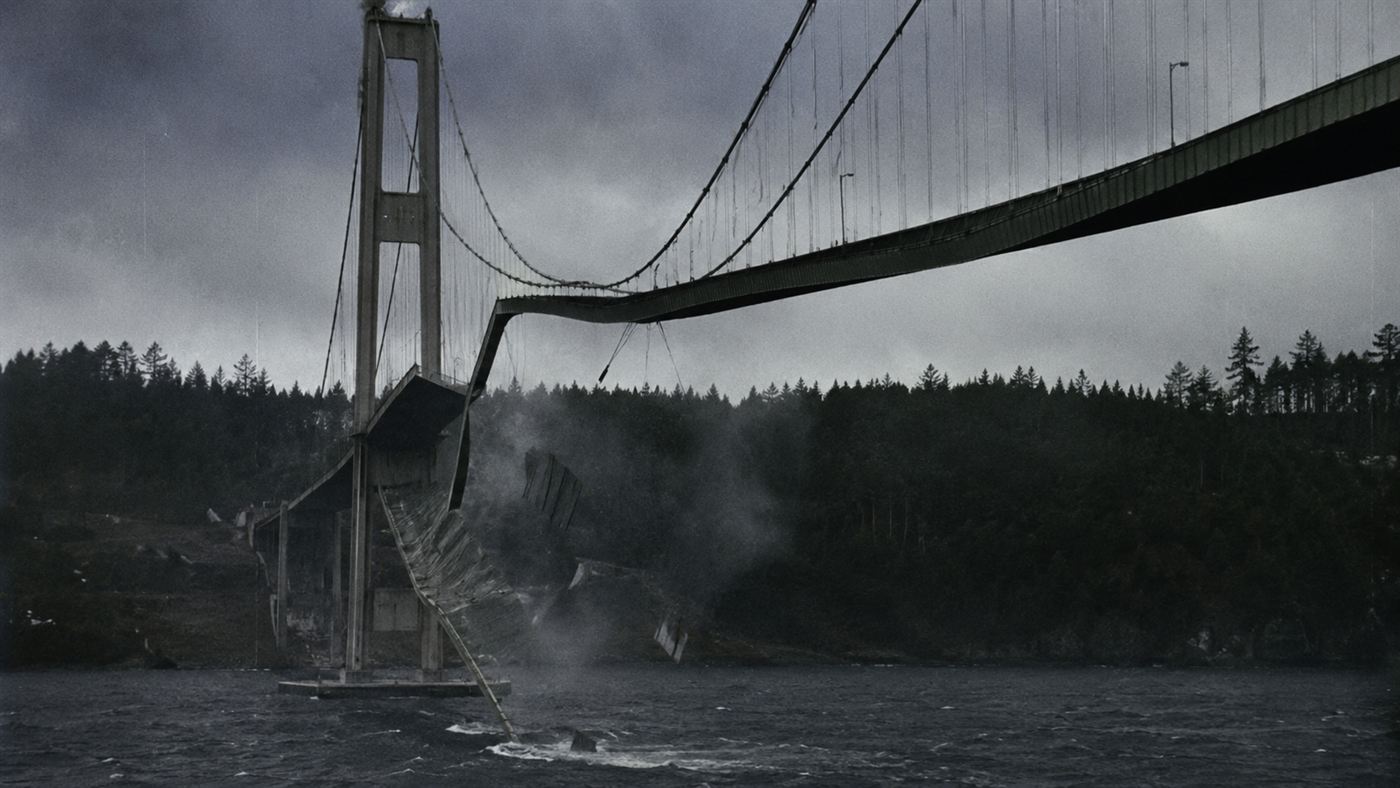
Related reading: The Tacoma Narrows Bridge collapsed in 1940 while film crews were on site to capture the failure that every engineer on the project had hoped would not happen.