A Vermont blacksmith built the first electric motor in 1834, then died broke because the world had no power to run it
Almost everything that moves in your home runs on an electric motor, from the fan to the fridge to the car in the garage. The man who built the first practical one was a village blacksmith named Thomas Davenport, and his wife gave up the silk of her wedding dress to help him wind it. He would die penniless, decades before the world was ready for what he had made.
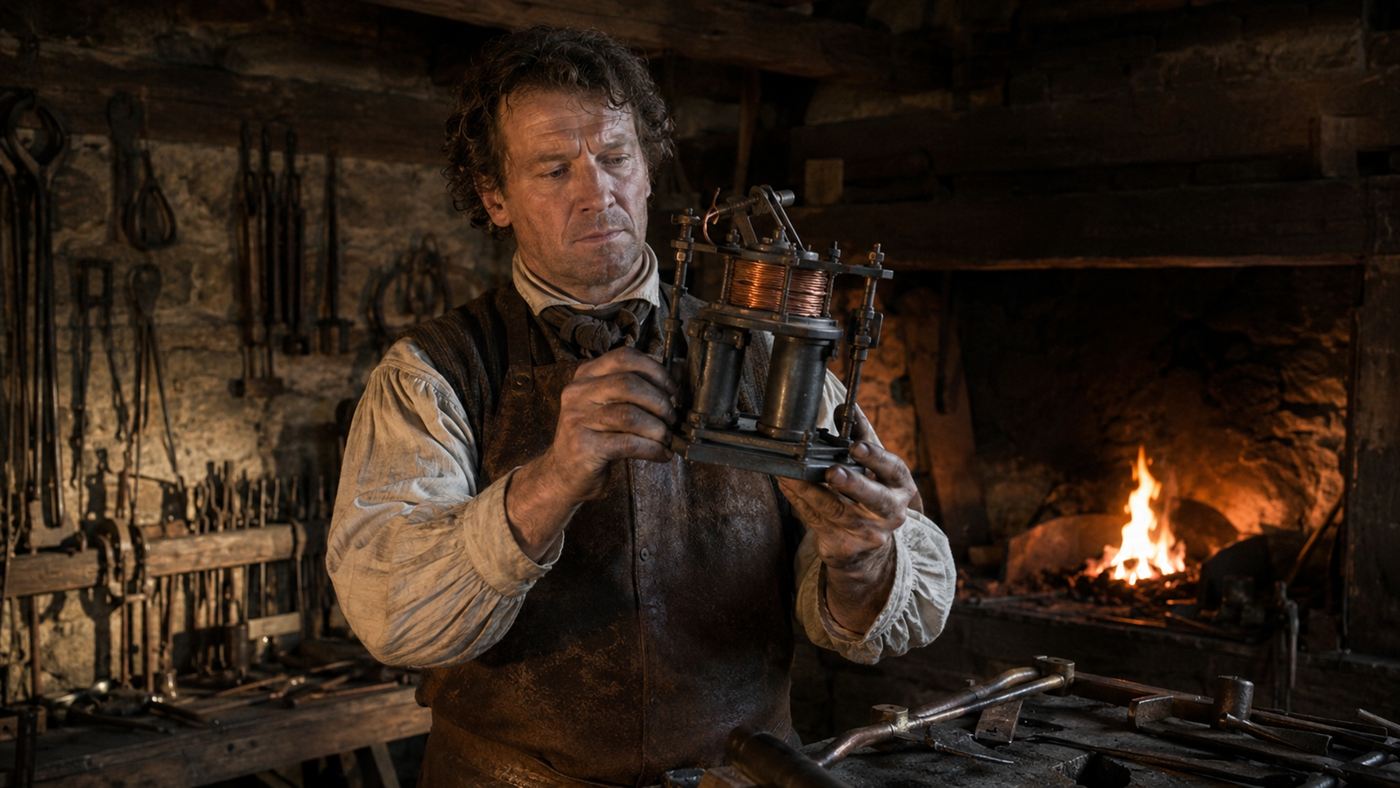
A blacksmith at his forge, building the machine that would one day run the modern world. Illustration: Watts & Wild.
In 1831, Thomas Davenport was a 29-year-old blacksmith in Brandon, Vermont, shoeing horses and forging tools like his father before him. Then he travelled to an ironworks across the state line in Crown Point, New York, and saw something that changed his life: an electromagnet, lifting heavy iron as if by magic. He was so transfixed that he sold his brother's horse to buy one of his own, purely so he could take it apart and understand it.
What he did next is the reason his name belongs in any history of the Thomas Davenport electric motor. He did not just study the magnet. He asked a question nobody had turned into a working machine: if a magnet can pull, could you arrange magnets to spin something, round and round, forever? Out of that question, in a blacksmith's shop with no formal training, came a small revolution.
How Thomas Davenport built his electric motor
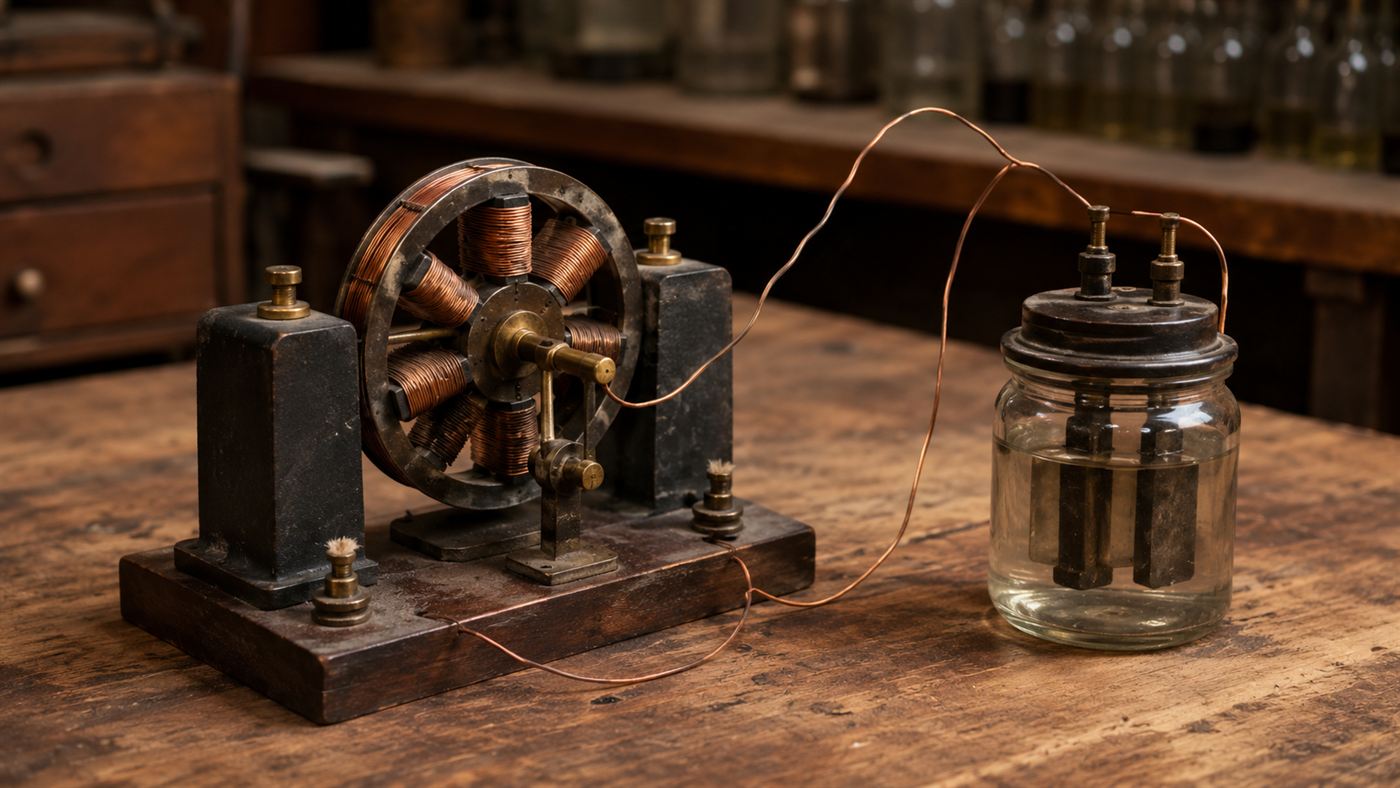
By 1834, working with his wife Emily, Davenport had built it. His motor was a wheel whose spokes were electromagnets, set between two fixed magnets. A clever switch, a commutator, flipped the current at just the right moment so the wheel was always being pushed onward, turning smoothly instead of jerking to a stop. It was, in essence, the same trick that spins the motors in your walls today.
The homemade detail that people never forget is the wire. To insulate the coils he needed to wrap the windings in something, and the couple had almost no money. So Emily Davenport cut up the silk of her own wedding dress and gave it to the machine. There is no better image of how personal this invention was: the first electric motor in America was wound, in part, with a wedding gown.
The patent, and a train that ran on lightning
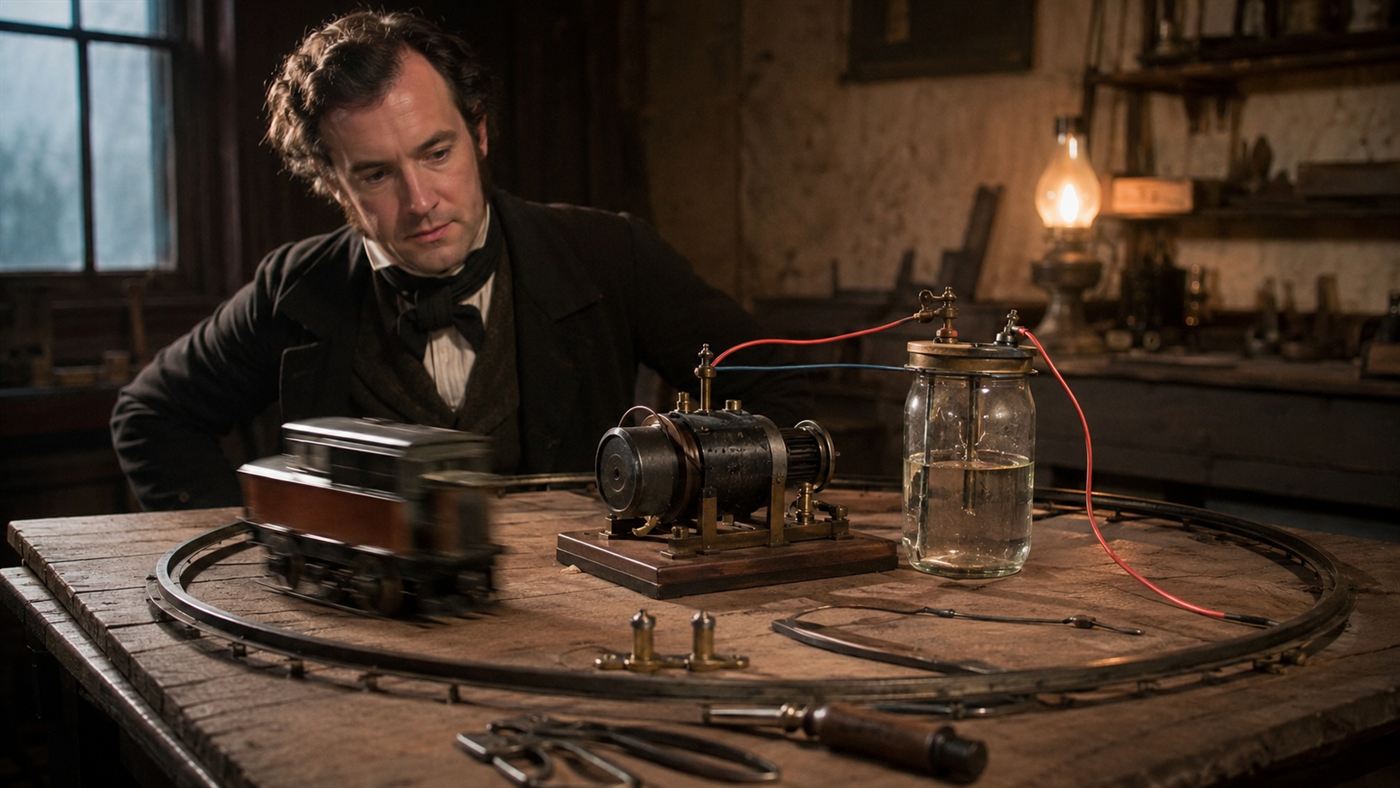
In 1837 Davenport was granted the first United States patent ever issued for an electric motor. He did not stop at proving it could spin. The next year he mounted one of his motors on a small car and ran it around a circular track, powered by a battery, in what is now counted as one of the first electric railways in the world. He even built a little electric printing press and used it to print a journal about the coming age of electricity.
Read that back for a moment. In the 1830s, when most of America still moved by horse and river, a self-taught blacksmith was running an electric train and printing with an electric press. He could see the whole future clearly. The tragedy is that he was standing in it fifty years too early.
Why the future would not arrive in time
Davenport's motor had one fatal problem, and it was not the motor. It was the power. The only way to feed it in the 1830s was with primitive chemical batteries that were costly, weak, and drained fast. There was no power station, no grid, no cheap electricity of any kind, because the generators that would make it did not exist yet.
So against the steam engine, which burned cheap coal and wood everyone already had, an electric motor was a beautiful answer to a question no customer was asking. Davenport had invented the perfect tool for an electrical world that had not been built yet. Investors drifted away, his partnerships soured, and the money ran out.
The honest catch
It is tempting to crown Davenport the lone inventor of the electric motor, and that would not be quite fair. Others in Europe, working at the same time, were building their own experimental motors, and the modern motor is the child of many hands. What Davenport can truly claim is the first practical American machine and the first patent, plus a vision of electric transport that was uncannily right.
He died in 1851, bankrupt and just short of his forty-ninth birthday, at work on a book about the electric future he was certain would come. He was completely correct and completely too soon. Within a generation of his death, generators and power grids arrived, and the machine a Vermont blacksmith wound with his wife's wedding dress quietly went on to run the entire modern world.
A blacksmith and his wife built the ancestor of nearly every motor on Earth, then lost everything because the power to run it did not exist yet. Who else in history got the invention exactly right but arrived far too early? Tell us what you think in the comments.
Related reading: Alessandro Volta and the pile of coins and cloth that became the world's first battery.
More from Watts & Wild
More in Electric →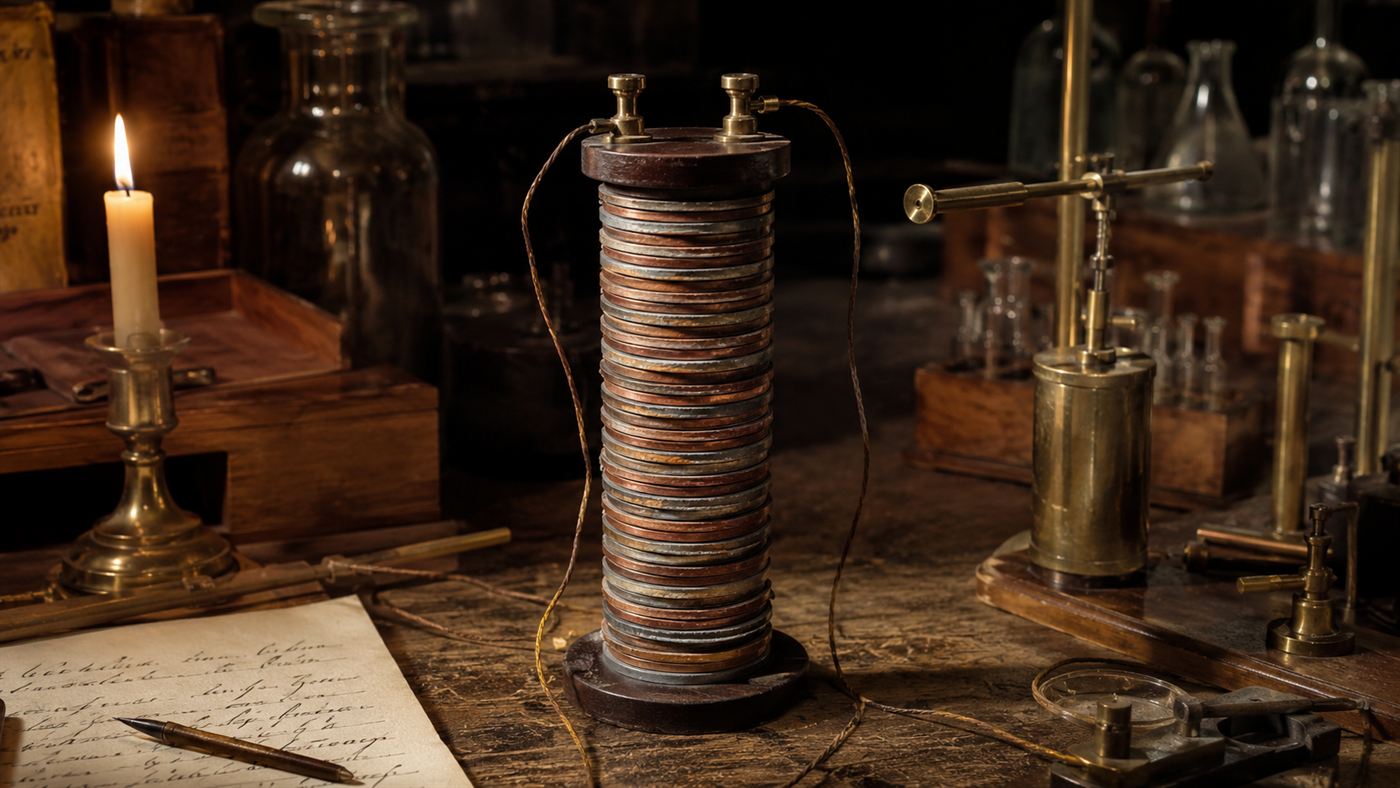

Maria Heloisa Barbosa Borges covers heavy industry, mega-builds, and the places where engineering meets the natural world for Watts & Wild.