France pushed a train on ordinary rails to 574.8 km/h, almost catching the floating trains
For years the assumption was simple: if you wanted a train to go faster than about 550 kilometres an hour, you had to lift it off the track and float it on magnets, because steel wheels on steel rails could never keep up. On a spring afternoon in 2007, France set out to prove that assumption wrong. It sent an ordinary kind of train, riding on wheels, screaming down the line at 574.8 km/h.
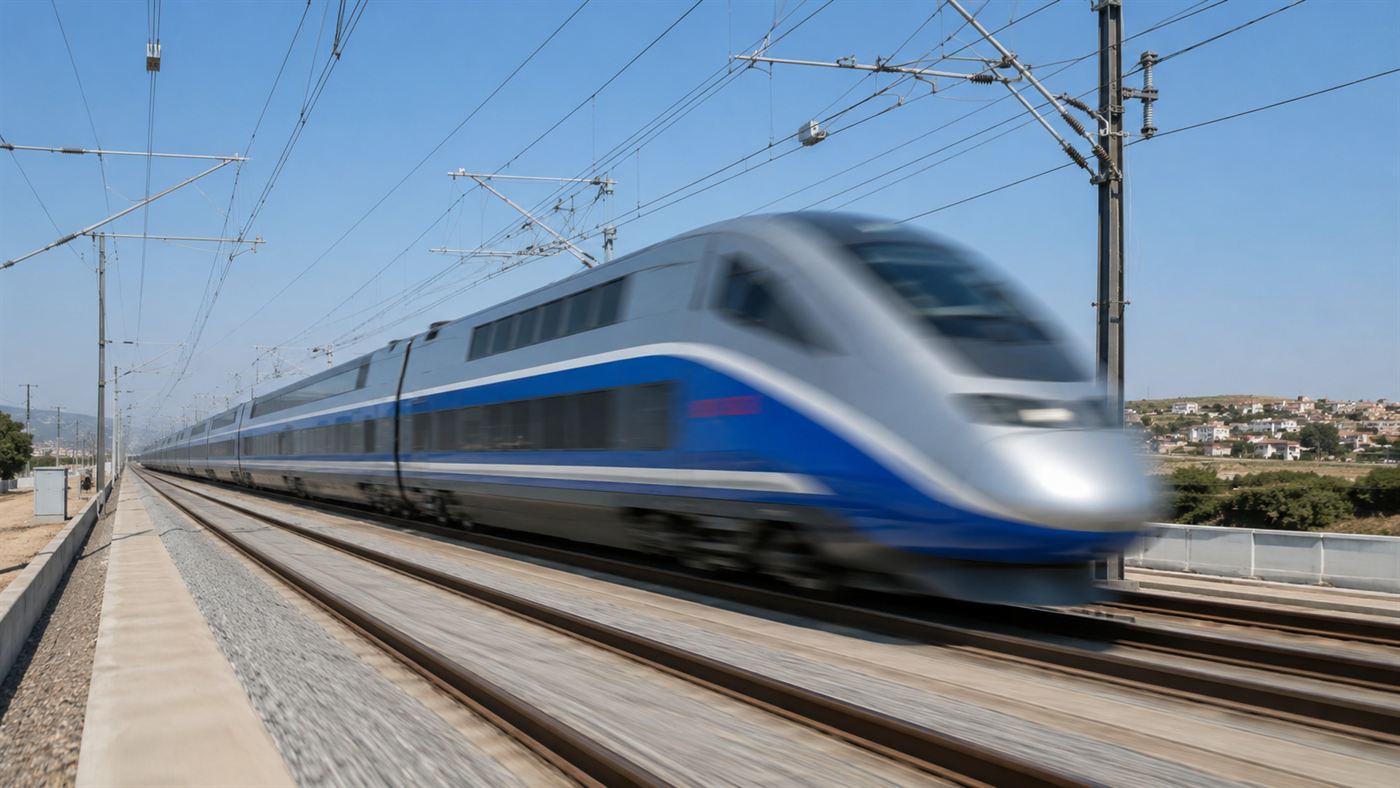
The V150 was a stripped-down TGV built for one purpose: to go faster than any wheeled train ever had. Illustration: Watts & Wild.
The train was a TGV, France's famous high-speed service, but not one you could ever ride. It was a special machine called the V150, put together purely to chase a record on a brand-new stretch of line east of Paris that had not yet opened to passengers. On 3 April 2007, at thirteen minutes past one in the afternoon, it touched 574.8 kilometres an hour, about 357 miles an hour.
That number still stands today as the fastest speed ever reached by a conventional train, one that rolls on wheels rather than floating in the air. It was a moment of pure national showmanship, watched live on television, and behind the spectacle sat a great deal of clever, careful engineering.
A train built to break a barrier
The V150 took its name from a target of 150 metres per second, which works out to 540 km/h, a mark it comfortably beat. To get there, the engineers stripped a normal TGV right down. They used just five cars, two power units at the ends with three double-decker carriages between them, so that an enormous amount of power had very little weight to haul.
The whole train weighed around 265 tonnes, light for something so powerful, and every part of it had been chosen to squeeze out speed. This was not a faster version of a service train so much as a one-off racing machine wearing a TGV's familiar skin.
How they made a TGV go that fast
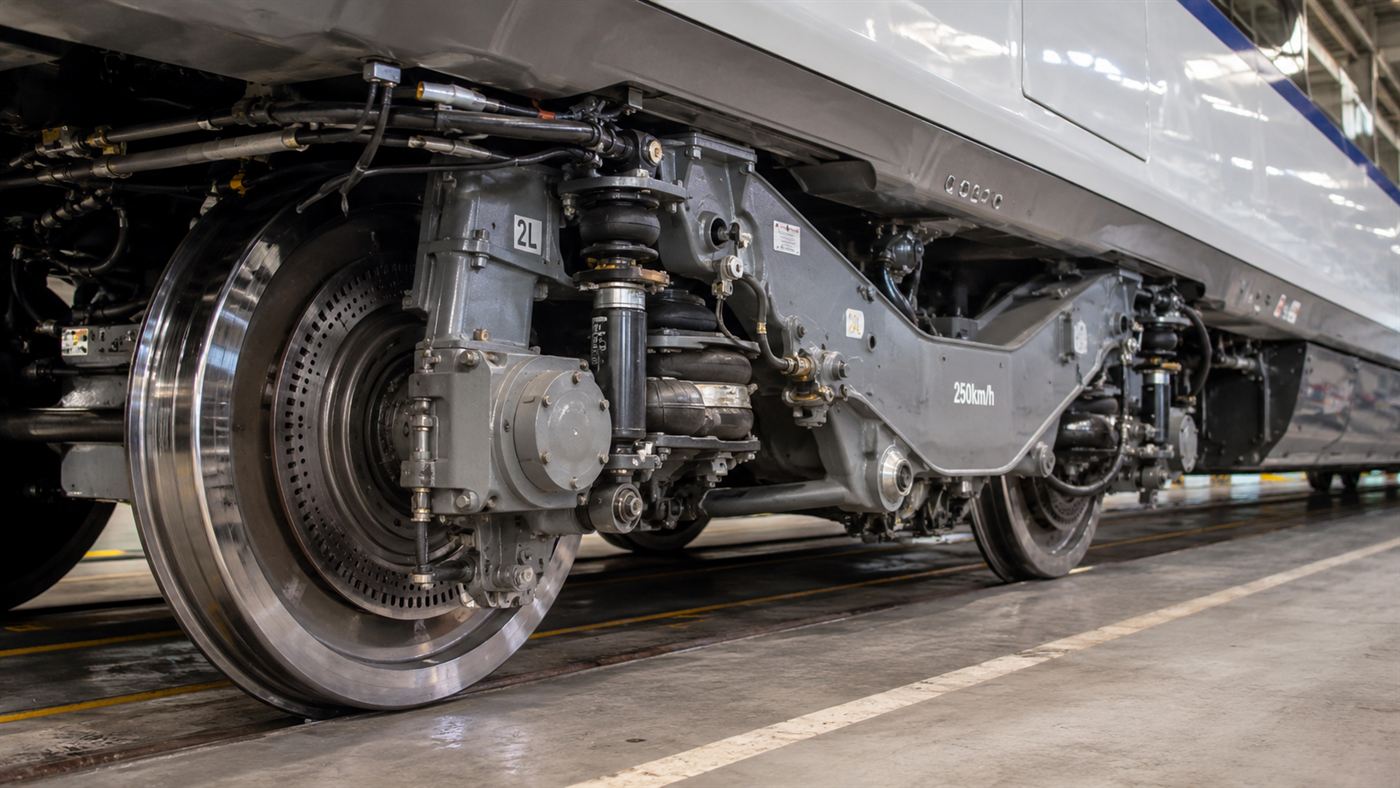
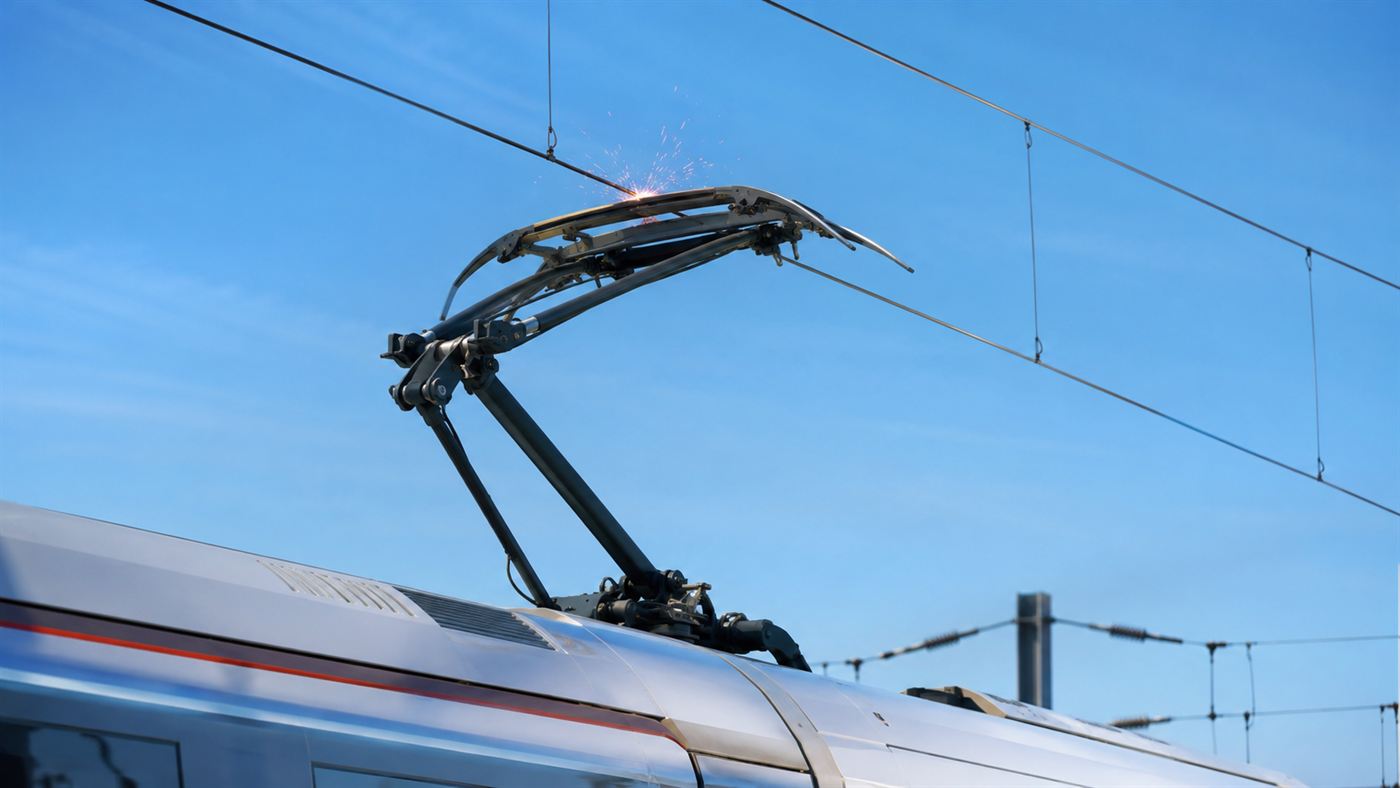
Three changes did most of the work. First, the wheels were made bigger, around 1,092 millimetres across instead of the usual 920, so that each turn of the wheel carried the train further down the track. Second, the power was more than doubled, to roughly 19.6 megawatts, well over 25,000 horsepower. Third, the electricity feeding the train through the overhead wire was cranked up from the standard 25,000 volts to 31,000 volts, with the wire itself pulled tighter so it would not whip out of the way at speed.
Even the line was prepared, smoothed and tuned for the attempt. It was a joint effort between the railway operator, the train builder and the network owner, and the driver, Eric Pieczak, eased the machine up to its peak under the eyes of a watching nation. For a few seconds, a French train on steel rails was moving faster than most light aircraft fly.
Steel wheels chasing a floating train
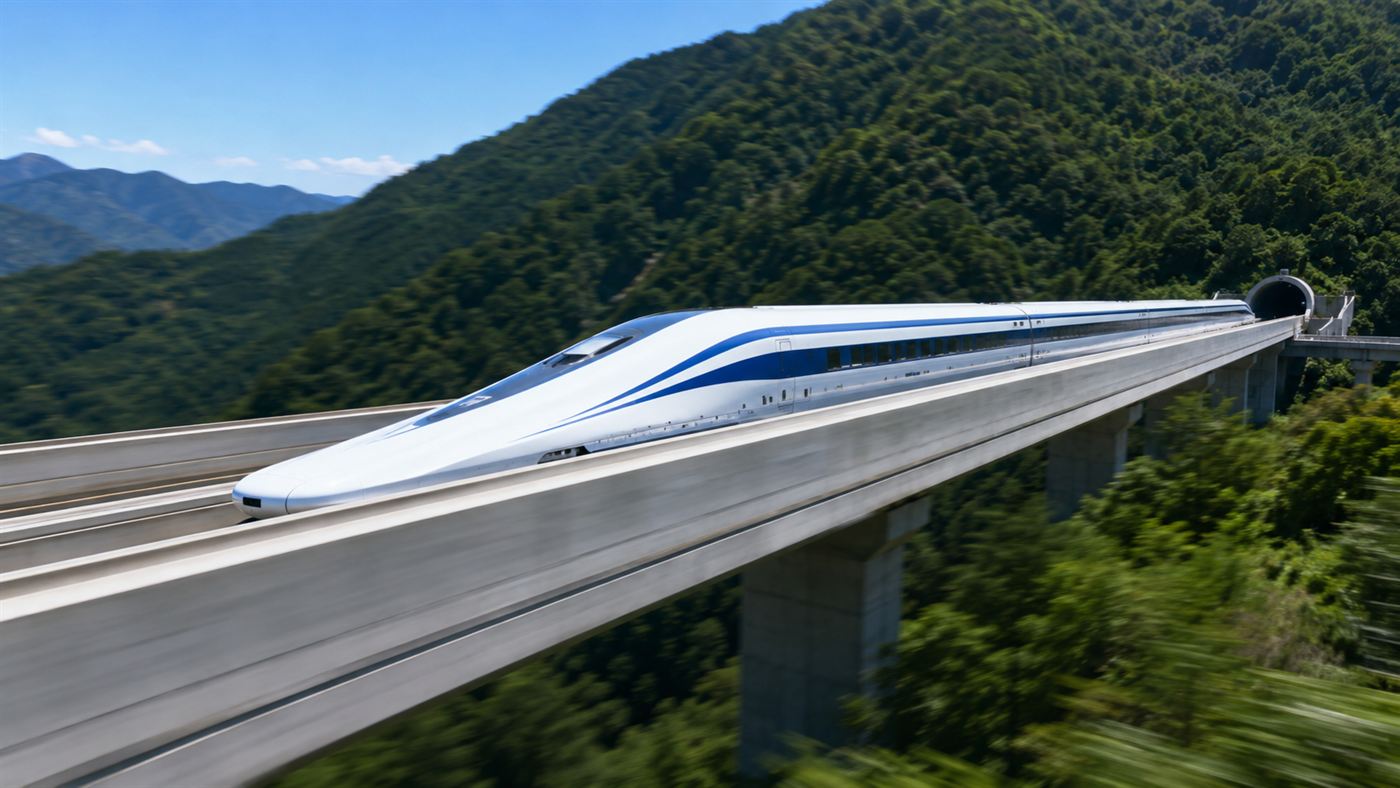
The real drama was the contest the record represented. Japan had long pursued magnetic levitation, where a train floats clear of the track on magnets and has no wheels to wear out or skip. The widespread belief was that only maglev could break into the high 500s, and that wheeled trains had hit a natural ceiling. The V150 came within striking distance of the maglev figures while still rolling on plain steel rail, which nobody had thought possible.
It mattered because France had built its prestige and its export business on the TGV, on the idea that conventional high-speed rail was good enough to rival anything. The record was a statement to the world: you do not need exotic floating trains to go astonishingly fast, you can do it on tracks much like the ones already crossing the country.
The honest catch
Spectacular as it was, the run deserves some perspective. The V150 was a one-off stunt, not a glimpse of an everyday journey. Real TGVs in service top out at around 320 km/h, barely more than half the record, because running at the limit is hard on everything. At those extreme speeds the wheels, the rails and the overhead wire all take a beating, and pushing a whole fleet that fast, day after day, would be ruinously expensive and unsafe.
It is also worth being clear that the TGV is not the fastest train in the world, only the fastest wheeled one. Japan's experimental maglev reached 603 km/h in 2015, floating above its guideway, and that remains the outright record. The V150's achievement was narrower but, in its way, more surprising: it showed how far you can still push a simple, century-old idea, a wheel turning on a rail, when you throw enough power and care at it.
How fast did the TGV go in 2007?
The modified V150 train reached 574.8 km/h, roughly 357 mph, on 3 April 2007, on the LGV Est line between Paris and Strasbourg before it opened to the public. That figure is the official world record for a conventional train, and no wheeled train has beaten it since.
Is the TGV the fastest train in the world?
Not outright. The TGV holds the record for trains that roll on steel wheels, but Japan's SCMaglev, which floats on magnets and has no wheels touching the ground, went faster still at 603 km/h in 2015. So the TGV is the fastest of the ordinary trains, while the maglev is the fastest of all.
A train on ordinary steel rails reached the speed of a small plane, and nearly caught the floating maglevs everyone assumed were untouchable. Is it more impressive to float a train at 603, or to make plain wheels roll at 575? Tell us what you think in the comments.
Related reading: Japan's SCMaglev, the floating train that holds the outright world speed record.