Most of us see about a million colors, but a rare few people, almost all of them women, have a condition called tetrachromacy that may let them see a hundred million
We tend to assume everyone sees the world in the same colours we do. But colour is built inside the eye and brain, and a tiny number of people may be built to see far more of it. tetrachromacy hints that the rainbow you know might be only a fraction of the one that exists.
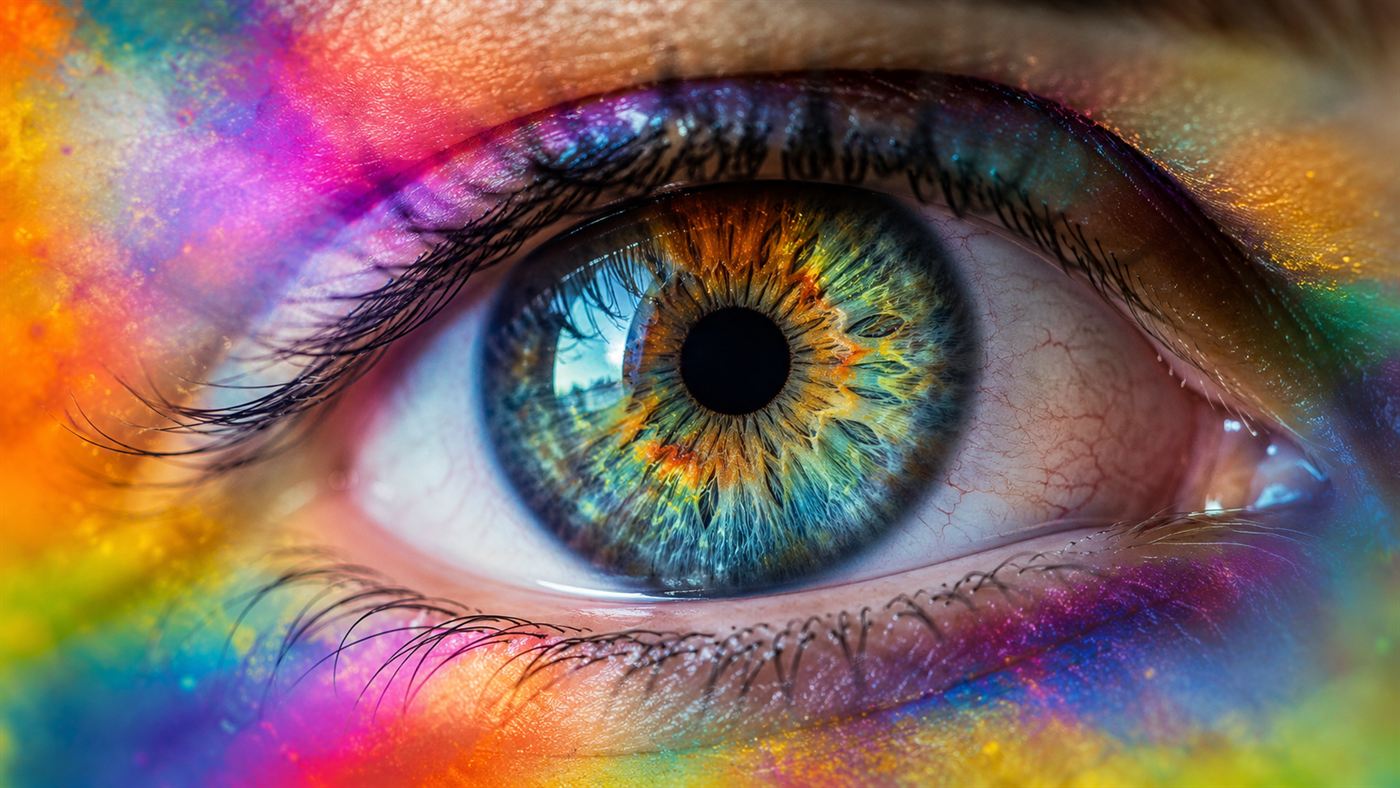
Tetrachromacy could open up a dimension of colour most of us never see. Illustration: Watts & Wild.
Imagine being told that the sky, the sea and the leaves outside contain colours you have never seen, and never will, but that the person sitting next to you can see them plainly. That, roughly, is the possibility raised by tetrachromacy. It is the presence of a fourth type of colour receptor in the eye, and if it works as some scientists believe it can, it would let a person perceive a range of colour so much richer than ours that we cannot really picture it.
As ScienceAlert reported, researchers identified a woman whose eyes carry a whole extra kind of colour receptor, making her a genuine tetrachromat. She may see distinctions in colour that are simply invisible to the rest of us. The strangest part is that people like her can walk among us for a lifetime, and neither they nor anyone else may ever realise their eyes are quietly extraordinary.
The short version: Most people are trichromats, with three types of colour cone that together let us see about a million colours. Tetrachromats have a fourth cone, which in theory could let them distinguish up to 100 million colours. It occurs almost only in women, for genetic reasons, but merely having the fourth cone is not enough, and truly functional tetrachromacy is extremely rare and very hard to confirm.
How we see color
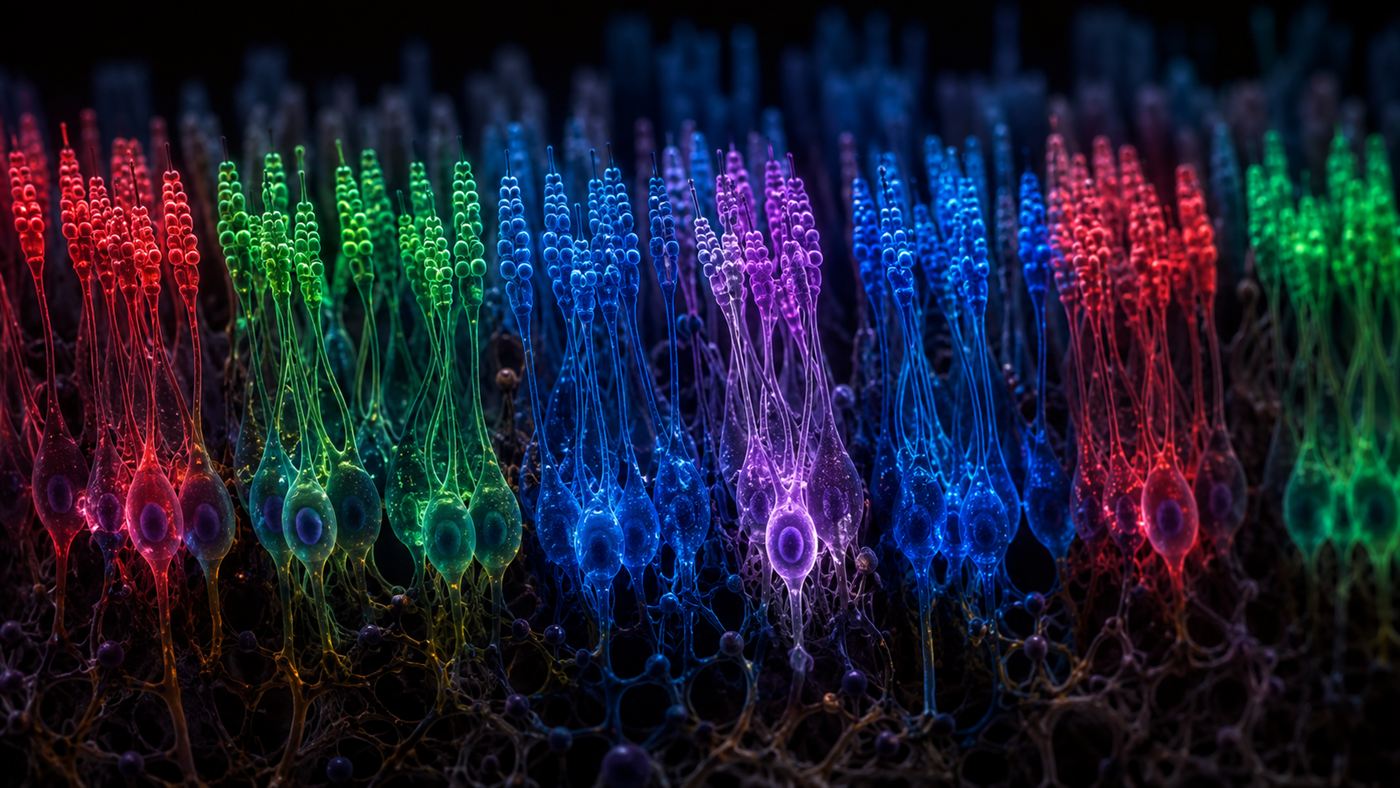
Colour is not really out there in the world, it is manufactured in your head. At the back of the eye sit cone cells, and most people have three kinds, each tuned to a different part of the spectrum, roughly red, green and blue. When light hits them, they send signals in different proportions, and the brain blends those three streams into the sensation of a particular colour.
With three cones, a person can distinguish somewhere around a million different shades, which already feels like a lot. This ordinary three-cone color vision is called trichromacy, and it is the standard human setup. Every painting, screen and dye you have ever seen is designed around it, mixing three primary signals to fool those three cones into perceiving the full range of colour we know.
A fourth channel
Now add a cone. A fourth cone, tuned to a slightly different slice of the spectrum, would give the brain a fourth independent stream of colour information to work with. Because each new channel multiplies the number of distinguishable combinations, the jump is not small. Where three cones yield about a million colours, four could in principle yield on the order of a hundred million.
That is a staggering difference. It would mean seeing subtle gradations where the rest of us see a single flat colour, telling apart shades that look completely identical to trichromats, perceiving a texture and depth in ordinary scenes that we cannot even imagine. In theory, a tetrachromat looking at a plain wall, a forest or a face would find them shimmering with distinctions invisible to everyone around them.
Why it is almost always women
The reason tetrachromacy shows up almost exclusively in women comes down to genetics. The instructions for building two of the three normal cones, the red and green ones, are carried on the X chromosome. Women have two X chromosomes, men only one.
That means a woman can inherit a normal version of a cone gene on one of her X chromosomes and a slightly different, shifted version on the other. If those two versions are different enough, her eyes may end up with four distinct cone types instead of three. A man, with a single X, cannot gain a bonus cone this way, he can only lose one, which is why colour blindness is far more common in men. The very same genetic quirk that leaves some men unable to tell red from green may, in some women, do the opposite and hand them an extra colour altogether.
Hunting for a true tetrachromacy
Here is the crucial catch, and it is a big one. Having a fourth cone is not the same as using it. As the science of tetrachromacy makes clear, a sizeable share of women may carry the genes for a fourth cone, but only a tiny fraction show any sign of functional tetrachromacy, the ability to actually perceive the extra colours. Estimates suggest a fourth cone gene may be present in around one in eight women, yet true functional tetrachromats appear to be vanishingly rare, perhaps fewer than one in a hundred thousand people.
Finding a real one is painstaking work. The British scientist Gabriele Jordan spent years testing candidates with careful colour-matching experiments, and eventually identified a woman, known in the studies by a code, who could reliably tell apart colours that looked identical to everyone else. She is one of only a handful of people ever shown, under controlled conditions, to have genuine tetrachromacy in action. For most four-coned women, the extra cone seems to sit there unused, its potential locked away.

A hidden world of color
Some suspected tetrachromats are artists, which makes a kind of poetic sense. The most famous is the painter Concetta Antico, who has been reported to possess a fourth cone and who fills her canvases with a riot of subtle colours she says she sees in shadows, skin and light where others see only grey or brown. Whether or not every claim about her holds up, her work hints at what such a gift might look like turned into paint.
And that leads to the deepest mystery of all, one science may never fully answer. Even if we confirm that someone sees more colours, we can never truly climb inside their eyes and experience it. Colour is a private sensation, and there is no way to know what another person's extra colour actually looks like to them. A tetrachromat could describe a hue they can see and we cannot, and we would simply have no reference for it, the way a person blind from birth cannot be told what red is. Somewhere out there may be people living inside a richer rainbow, and the rest of us can only stand at its edge and wonder.
The honest catch
This is a subject where it pays to be careful, because the wonder easily outruns the evidence. The headline figure of 100 million colours is a theoretical calculation, not a measured fact about anyone's experience, and even the best-studied tetrachromats have only been shown to make certain fine distinctions, not to perceive some wholesale explosion of new colour. Popular stories about tetrachromats, including some claims about famous cases, are compelling but not all firmly proven, and the field is still young and genuinely hard to study.
There is also a quiet irony. Our entire visual world, screens, cameras, paints and printing, is engineered for three cones, so even a real tetrachromat spends her life surrounded by images built to fool trichromats, giving her fourth cone almost nothing to do. To use the gift at all, the brain has to learn to read that extra channel, which most apparently never do. So the honest version is more modest than the dream, but arguably more interesting: hidden in the ordinary crowd may be a few people wired to see a version of the world the rest of us cannot reach, and we are only just beginning to find them.
A few people may quietly see a hundred times more colours than the rest of us, and we can never truly picture what they see. Does tetrachromacy show how much of reality our senses leave out, or is the idea of a hidden super-rainbow more beautiful than the cautious science behind it? Tell us what you think in the comments.
Related reading: The cuttlefish, which is colour-blind yet camouflages itself perfectly against any colour.
More from Watts & Wild
More in Science & Tech →





Maria writes about wildlife, ecology, and the strange places where nature and human history collide. She is based in Brazil.