A 33-year superconductor record just fell, edging us closer to electricity that flows without loss
In March 2026, physicists quietly did something the field had not managed for a third of a century: they raised the temperature at which a material becomes a superconductor under ordinary pressure. It is a modest-sounding step toward one of science's grandest prizes, current that flows forever without losing a drop.
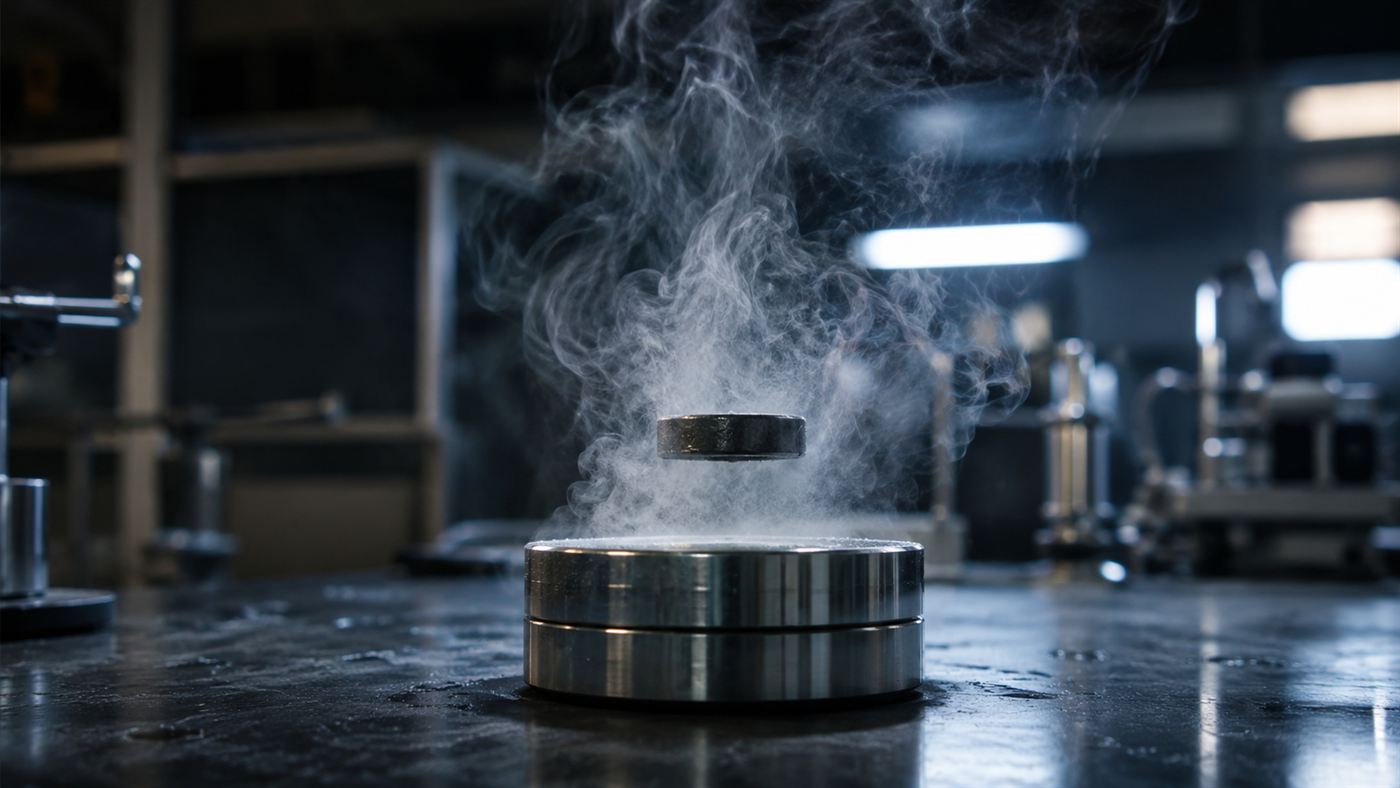
A superconductor floating above a magnet, the classic sign of the state in action. Illustration: Watts & Wild.
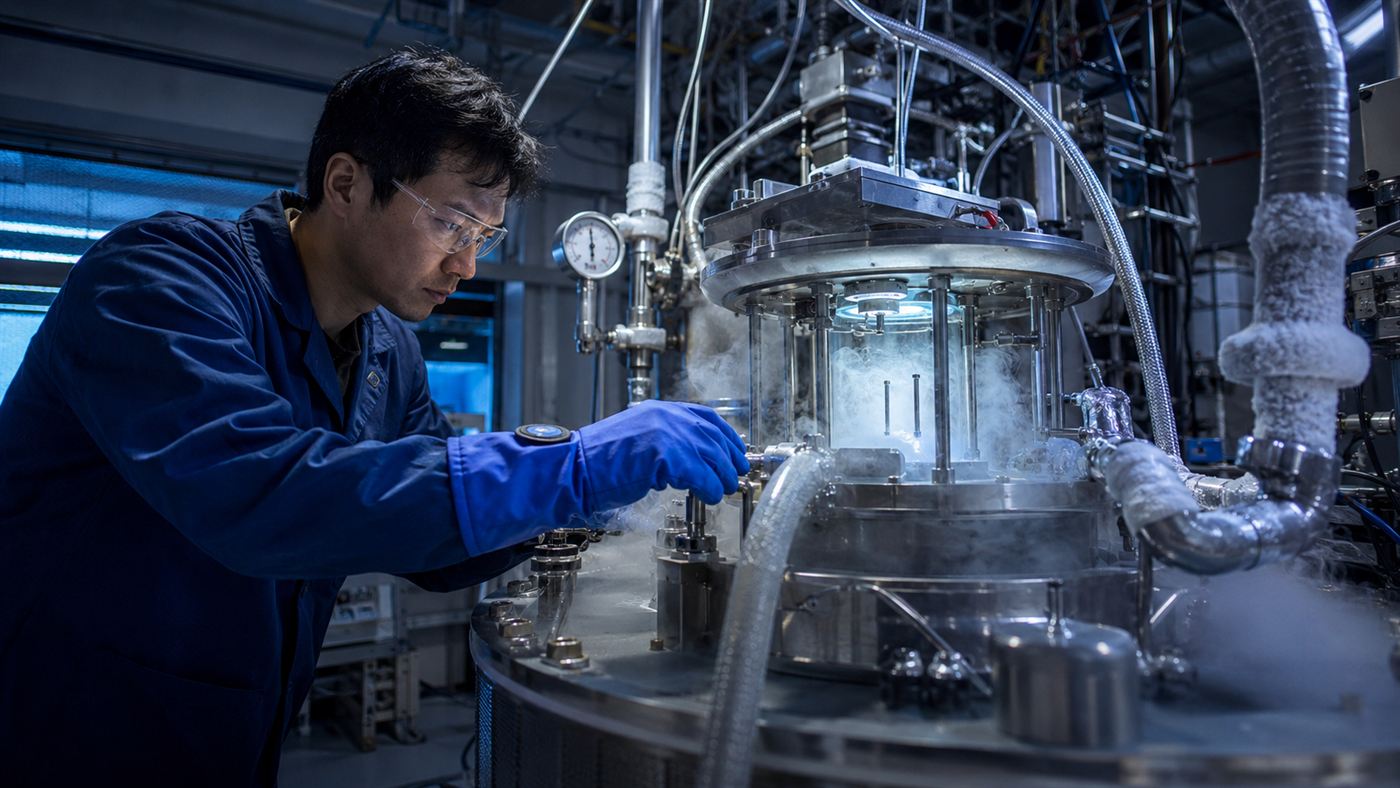
The work came from the University of Houston, where a team led by Paul Chu and Liangzi Deng showed a mercury-based copper-oxide ceramic superconducting at 151 kelvin, about minus 122 degrees Celsius. That may sound frigid, but it beats the old benchmark of 133 kelvin, a record set by Chu's own group back in 1993 and unbroken for the next 33 years.
Crucially, they did it at ambient pressure, in ordinary air, not by crushing the material under the extreme forces that some flashier claims have relied on. That distinction is the whole point, and it is why serious scientists sat up rather than rolled their eyes. Reported in a leading journal, this is careful, checkable progress, not a viral sensation.
The short version is that a barrier which had stood since the year of the first web browser has finally moved, and it moved in the direction that actually matters for building real machines.
What a superconductor actually does
A superconductor is a material that, when cooled below a certain point, carries electric current with exactly zero resistance. In an ordinary wire, some energy is always lost as heat, which is why power lines sag warm and phone chargers get hot. In a superconductor that loss simply vanishes, and a current once started can, in principle, run round a loop a dream chased since a Dutch lab first saw it in 1911.
The catch has always been temperature. This magic only switches on when the material is made painfully cold, and for a century the great quest of superconductivity has been to raise that switch-on point higher and higher, ideally up toward room temperature, somewhere a machine could reach cheaply. Every degree gained widens the range of things superconductors can practically do.
Why breaking the record at ambient pressure matters
In recent years, headlines have trumpeted materials that superconduct at almost balmy temperatures, but only when squeezed between diamonds at pressures like those deep inside the Earth. That is a fascinating laboratory trick and utterly useless for a power cable or a train, because you cannot run a city under that kind of crush.
The Houston result is different because it holds at normal pressure, using a clever technique the team call pressure quenching: they briefly squeeze the material to coax it into a better state, then release the pressure while it is cold to lock that state in. What is left behind works in ordinary conditions, which is exactly the kind of result that can actually be studied, improved and, one day, used.
What could lossless electricity change?
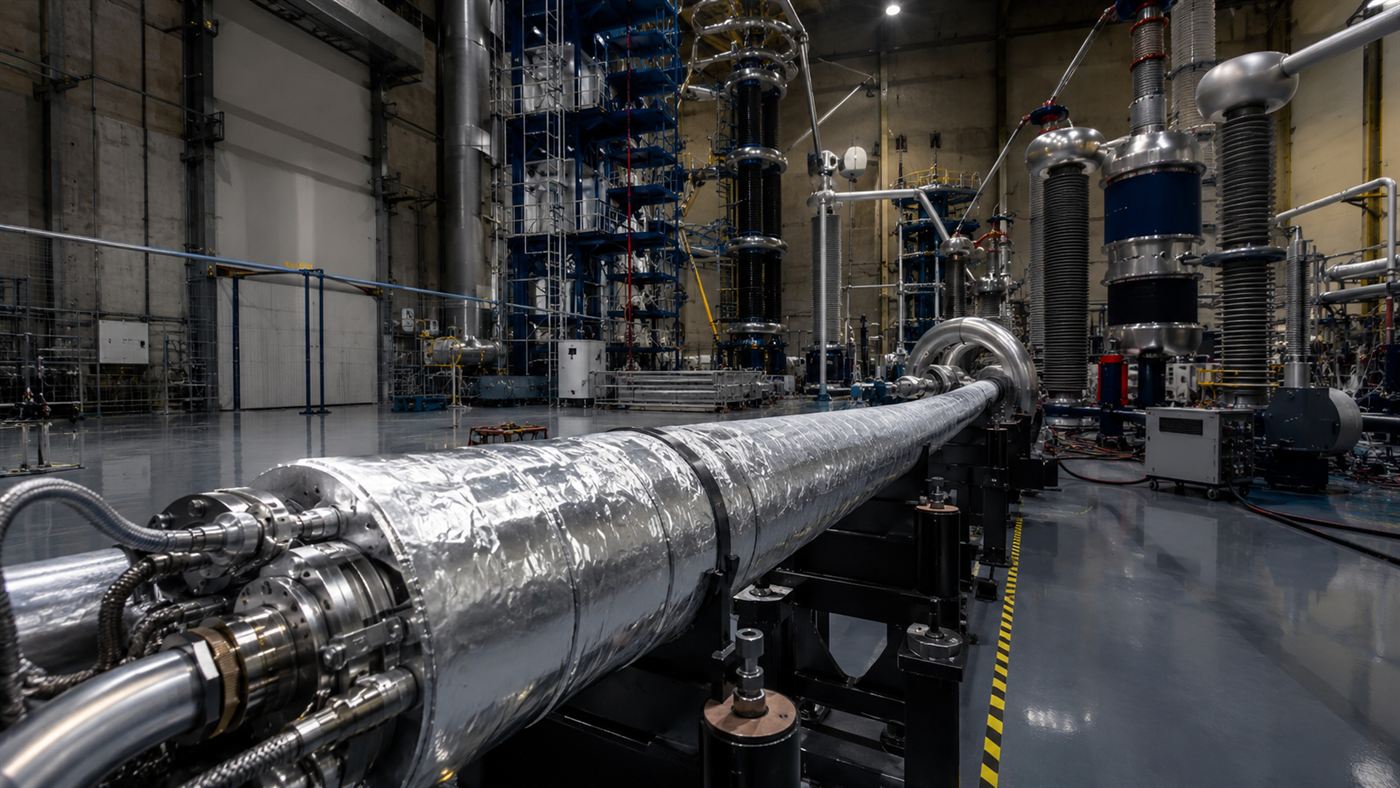
The reason this quest matters is the payoff. A practical, easily cooled superconductor would let power flow across a country with none of the energy that ordinary lines bleed away as heat, quietly wasting a slice of everything we generate. It would mean smaller, stronger magnets for medical scanners and fusion reactors, and trains that float frictionless above their tracks.
The world already uses superconductors in a few costly niches, chilled with expensive liquid helium. Push the switch-on temperature high enough to use cheap coolants, or none at all, and the technology could spill out of the lab into the everyday grid, a change that would ripple through energy, transport and medicine at once.
The honest catch
It is tempting to read a record like this as the eve of a superconducting future, and after the circus of exaggerated claims in recent years, a solid, peer-reviewed advance is genuinely refreshing. This is real science done carefully by the very group that set the previous mark, and it deserves the quiet respect it is getting. Progress, unglamorous and checked, is still progress.
But the catch has to be plain. At 151 kelvin the material is still colder than the coldest night ever recorded on Earth, and roughly 140 degrees short of room temperature. It is a laboratory sample made by a delicate trick, not a wire you can buy, and the road from a pinch of special ceramic to a working cable is long, expensive and strewn with failures. A record on a lab bench is not a revolution in the grid. This is a real and hopeful step toward electricity without loss. It is a step, not the destination, and it is worth cheering precisely because it is honest about how far there still is to go.
Sources: Phys.org on the superconductivity record, the study in PNAS, and the University of Houston physics department.
A quiet lab in Houston just nudged one of physics' oldest dreams a little closer, without a whisper of hype. Would a material that finally carries power without loss at everyday temperatures be the biggest energy breakthrough of the century, or is it still decades off? Tell us what you think in the comments.
Related reading: the LK-99 superconductor claim that gripped and then deflated the world. See also Japan's maglev train, which floats on superconducting magnets, and the giant buried power line carrying clean electricity to New York.