Astronomers just found two planets so light they would float in a bathtub big enough to hold them
In June 2026, astronomers confirmed two of the strangest worlds ever seen: a pair of super-puff planets circling a distant star, each roughly the size of a giant planet yet almost weightless by comparison. They are less dense than cotton candy, and the first people to notice them were not professional scientists at all.
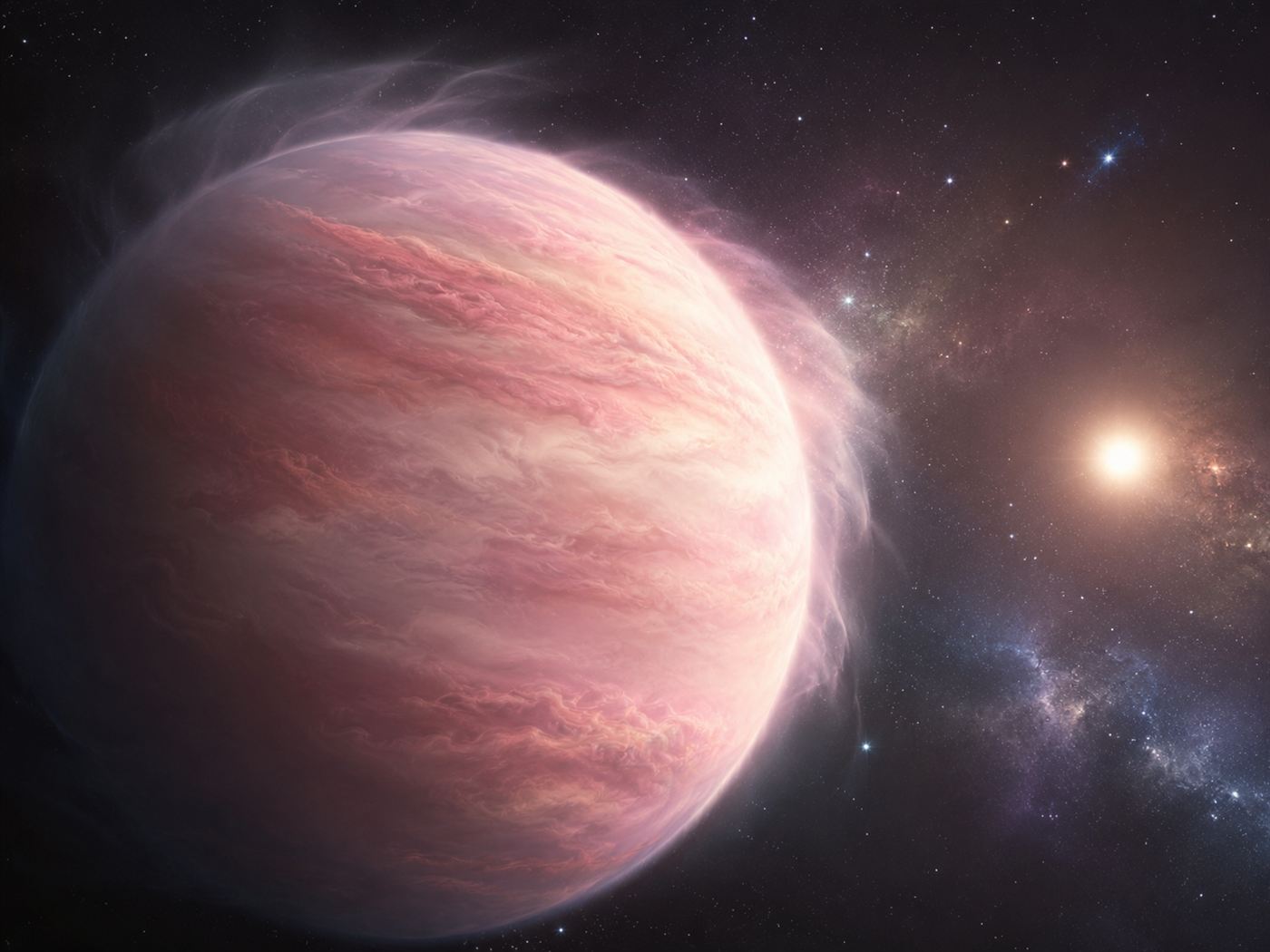
An impression of a super-puff world, huge in size but wispy in weight. Illustration: Watts & Wild.
The star is called TOI-791, and the two planets around it, TOI-791 b and TOI-791 c, now hold a peculiar record. A team led by the University of Oxford reported them in the journal Monthly Notices of the Royal Astronomical Society as the lowest-density exoplanets ever confirmed, worlds so puffed up and insubstantial that they barely qualify as solid at all.
The comparison being used everywhere is candy floss, and it is not an exaggeration. Cotton candy has a density of roughly 0.05 grams per cubic centimetre. These two planets come in below that, which means that if you could find a body of water large enough, they would bob on the surface like a cork.
The short version is that the universe has just produced two more objects that should not really work, and a group of hobbyists staring at telescope data found them before anyone with a professorship did.
What super-puff planets actually are
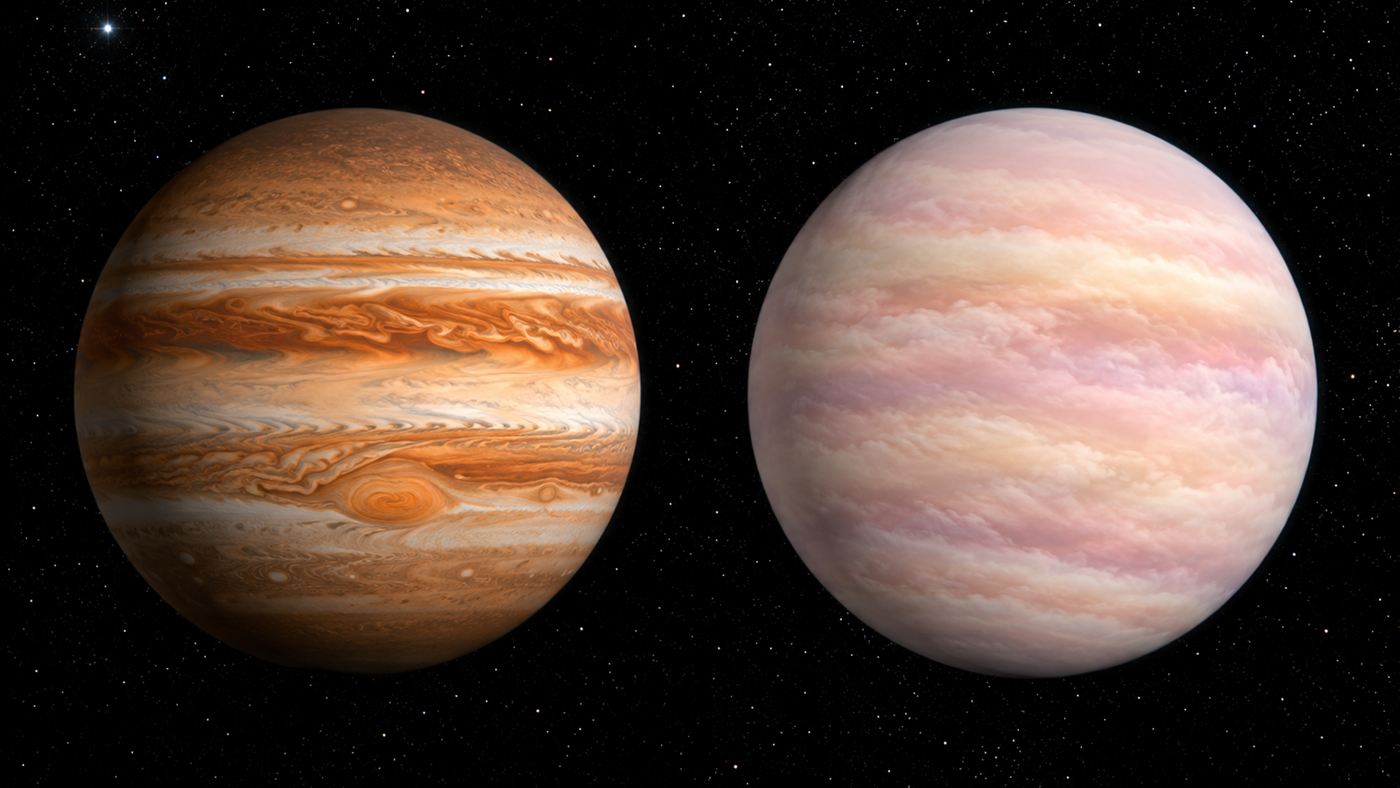
To see why these worlds are so odd, hold two facts side by side. TOI-791 b is almost exactly the same width as Jupiter, the biggest planet in our own solar system. Yet it carries only about 3 percent of Jupiter's mass. Its companion, TOI-791 c, is even larger than Jupiter, and still musters just under 6 percent of that mass.
Imagine inflating a beach ball to the size of a boulder while keeping it nearly as light as it started. That is roughly what nature has done here, taking a huge envelope of gas and spreading a tiny amount of material across an enormous volume. The result is a planet you could almost pour from one container to another, held together by little more than its own faint gravity.
How can a planet be lighter than candy?
The honest answer is that astronomers are still working it out. One likely part of the story is heat. Both planets sit fairly close to their star, and that warmth bloats their atmospheres outward, the way hot air swells a balloon, puffing a modest amount of gas into a vast, low-density cloud. A cooler planet of the same mass would sit far more tightly packed.
There may be more to it, including thin high hazes that make the planets look bigger than their true edge, and these are exactly the sorts of puzzles that make super-puffs so useful. Because their atmospheres are so spread out and airy, starlight shines through a thick slice of them, giving telescopes an unusually good chance to read what they are made of. In a strange way their flimsiness is a gift to science.
The volunteers who found a world
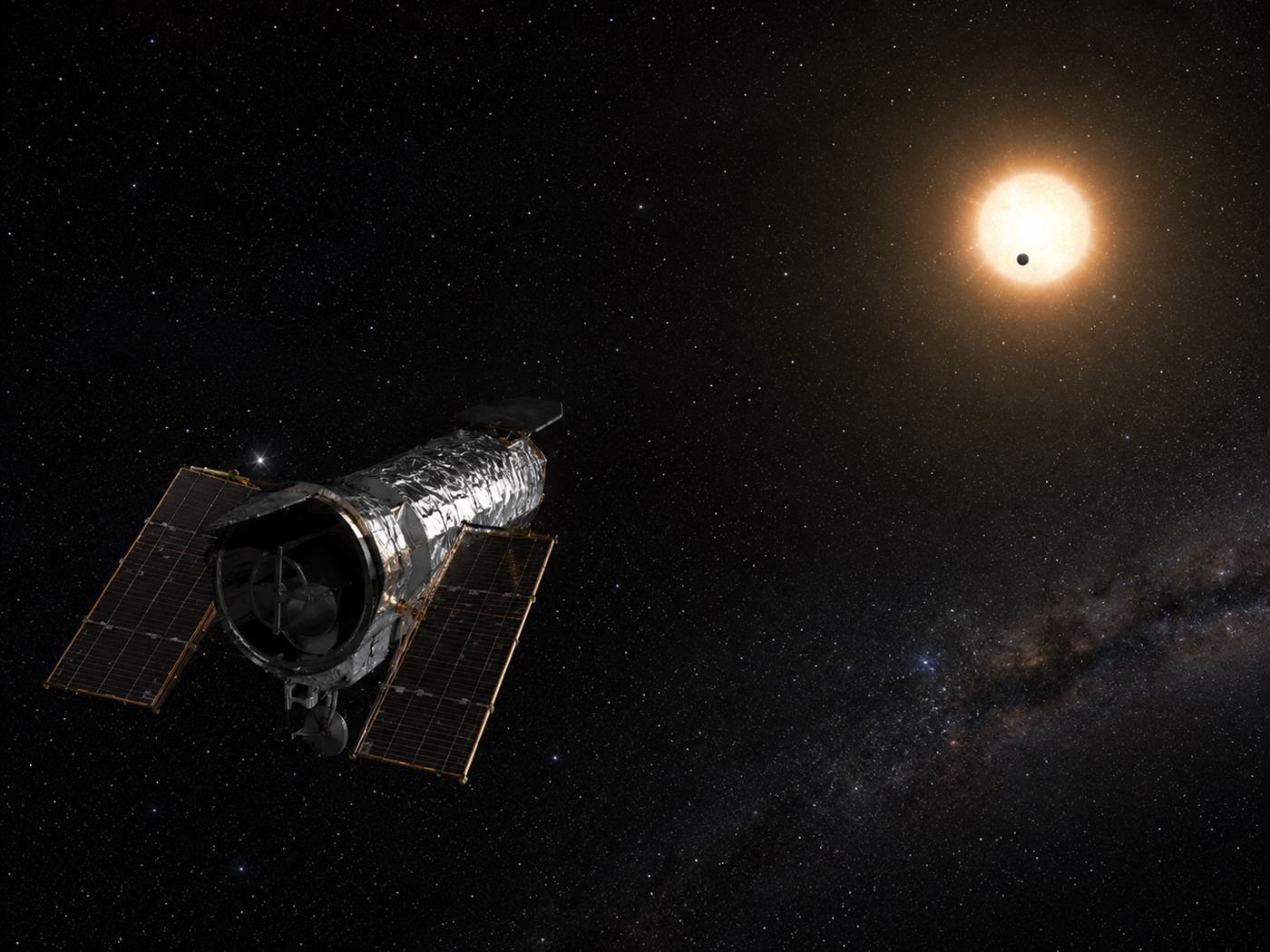
The most charming twist is who spotted them. Both planets were first flagged as candidates, in 2019 and 2023, by members of the public taking part in the Planet Hunters TESS project, a citizen-science effort where volunteers comb through data from NASA's TESS telescope looking for the tiny, telltale dips in starlight that betray a passing planet.
TESS watches for those dips, the transit method, the same trick that has uncovered most known exoplanets. But software still misses things a careful human eye can catch, and here ordinary people spotted a signal that led to a record-breaking discovery. A world lighter than candy floss was first noticed by hobbyists scrolling through starlight, which is a lovely reminder of how open the sky still is.
The honest catch
It is worth being clear about what has and has not been shown. The sizes of these planets are well measured, because their transits are clear, but their masses are far harder to pin down, and the team leaned on subtle timing tweaks in the planets' orbits to estimate how heavy they are. Those numbers could shift as more data comes in, and a super-puff's headline density always carries an asterisk.
There is a gentler catch too, about the pictures. Every dreamy image of a pastel, fluffy planet is an artist's impression, not a photograph, because we cannot yet see these distant worlds directly. Nature keeps refusing to stay inside our tidy categories, and that is the real delight here. Not the cotton-candy headline, charming as it is, but the fact that the cosmos still hands us objects strange enough to make us rewrite what a planet is allowed to be.
Sources: Phys.org on the super-puff planets, NASA Science, and Space.com.
Somewhere out there, two planets the size of giants drift along weighing almost nothing, and amateurs found them first. If you could stand on a world too flimsy to hold you, would you want to see it for yourself? Tell us what you think in the comments.
Related reading: the giant gold telescope reading the air of distant worlds. See also the tiny animal that can survive the vacuum of space, and the sports car that has been orbiting the Sun since 2018.