In the 1950s American scientists seriously planned to ride atomic bombs into space, and Project Orion was a spaceship that would blast itself toward the planets one nuclear explosion at a time
It sounds like a fever dream, but it was real engineering: a spaceship the size of a building, pushed upward by dropping nuclear bombs out of its back and surfing the blasts. The Project Orion spaceship was the most audacious rocket ever seriously designed, and brilliant people thought it would work.
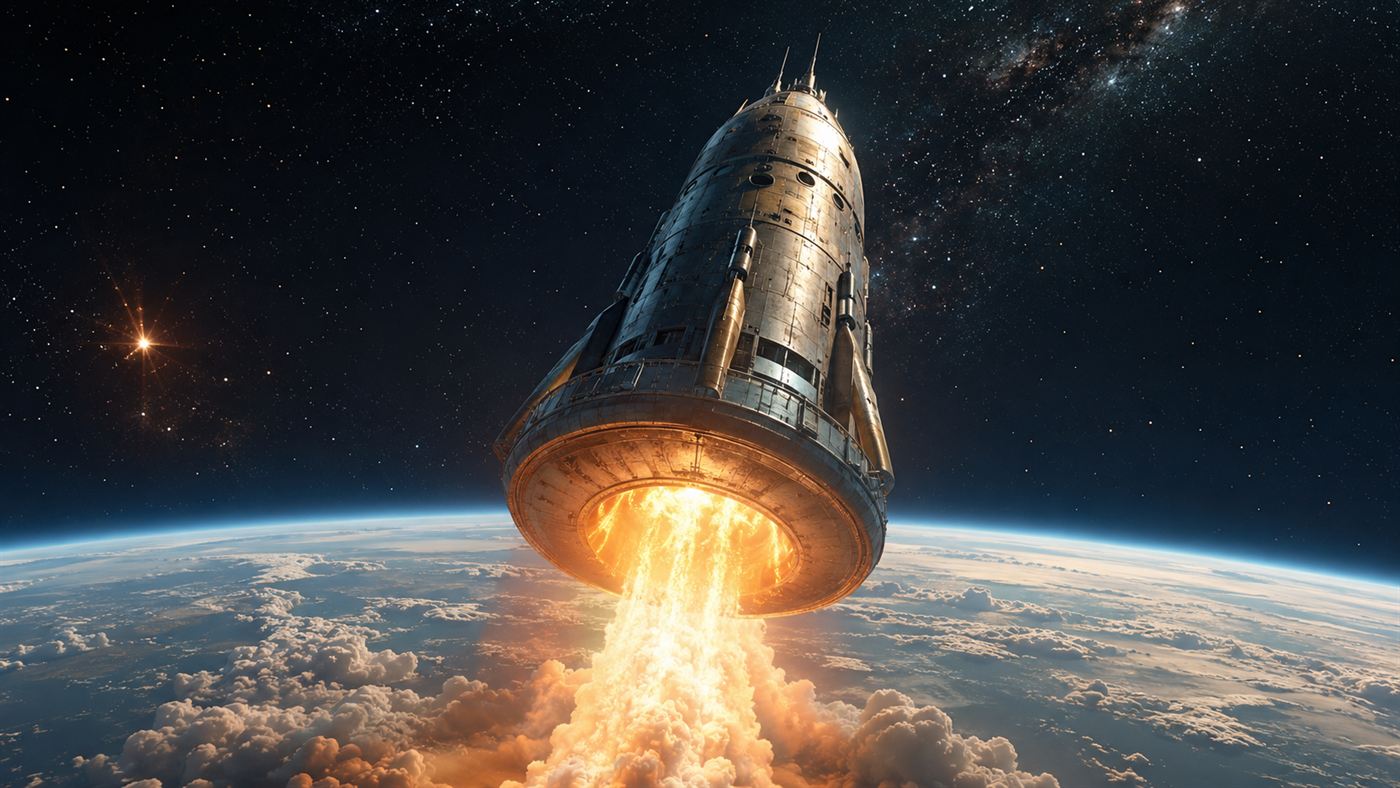
Project Orion would have ridden a string of nuclear blasts into orbit and beyond. Illustration: Watts & Wild.
Imagine standing on a metal plate and setting off a bomb under your feet to launch yourself into the sky. Now scale that up to a spaceship the size of an office block.
That, almost exactly, was Project Orion, one of the strangest and boldest ideas in the history of spaceflight, and it was developed by serious physicists, not science-fiction writers.
What was Project Orion? It was a real project in the late 1950s and early 1960s to build a spaceship driven by nuclear pulse propulsion, dropping atomic bombs behind a heavy pusher plate to blast the craft forward. It was abandoned after a 1963 treaty banned nuclear blasts in the atmosphere.
How do you ride a bomb into space?
Ordinary rockets burn chemical fuel, which is feeble compared with the energy locked inside an atom.
The idea behind Project Orion was to skip the gentle approach and use the most violent energy humans had: the nuclear bomb.
A craft using nuclear pulse propulsion would eject a small atomic bomb out the back, let it explode a short distance away, and catch the blast on a massive armoured pusher plate.
Giant shock absorbers would smooth that brutal kick into a steady push, and then the ship would do it again, and again, riding one nuclear bomb after another.
According to the record of Project Orion, the design promised performance no chemical rocket could ever match.

The men who wanted to ride it
Project Orion came out of General Atomics and was driven by two remarkable people.
One was Ted Taylor, a gifted designer of nuclear bombs who dreamed of turning that destructive knowledge toward exploration.
The other was the physicist Freeman Dyson, and Britannica describes Freeman Dyson as one of the most original scientific thinkers of his generation.
Freeman Dyson was so convinced by the idea that he took leave from academic life to work on it, seriously believing a crewed Project Orion ship could reach Saturn by 1970.
For a few years, these scientists really were planning to send people across the Solar System on a wave of nuclear bombs.
The Project Orion spaceship very nearly flew
What makes Orion haunting is that it was not just paper.
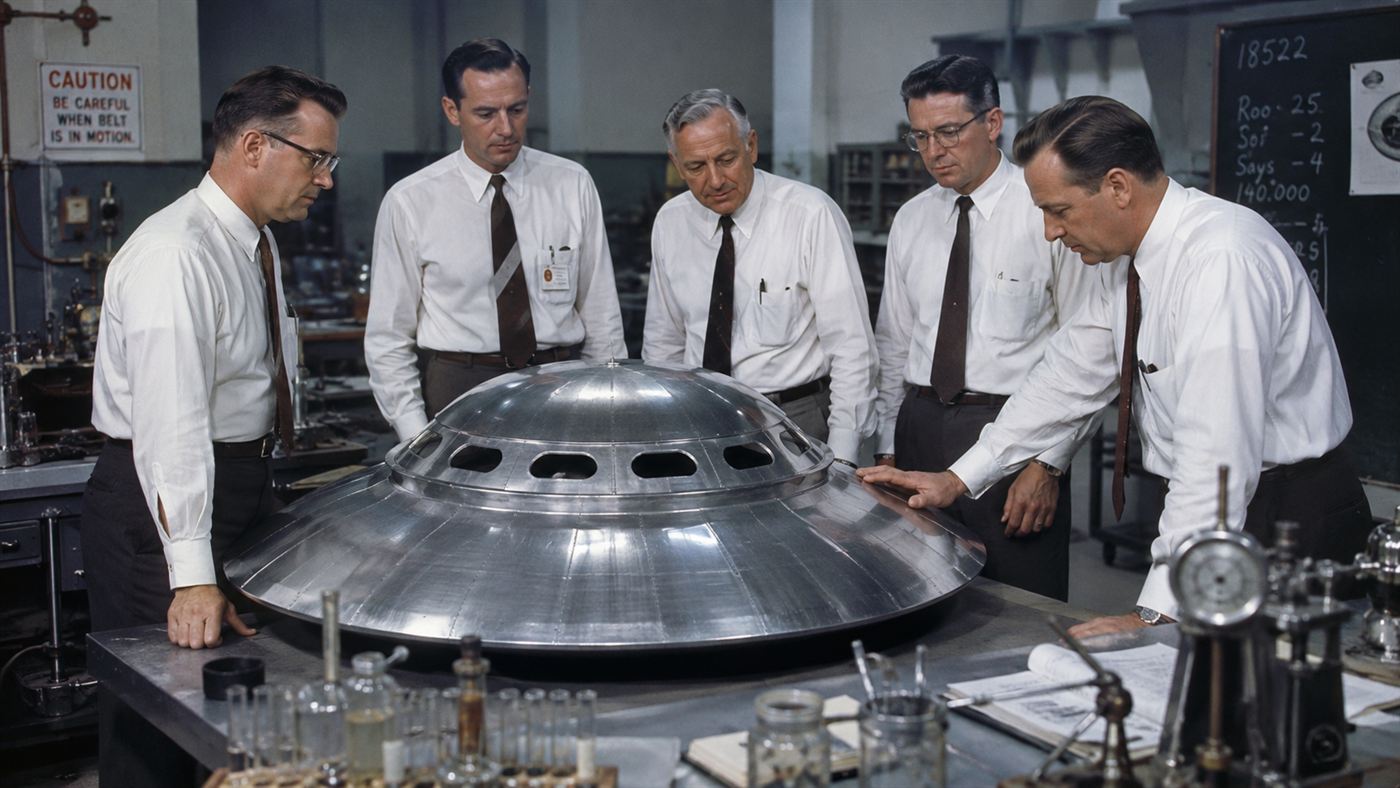
The team built small test models, flown with ordinary chemical explosives, to prove that a pusher plate could be shoved upward in controlled steps without being destroyed.
One of those models, nicknamed Hot Rod, actually flew, hopping into the air on a series of blasts and landing under a parachute.
On paper, a full nuclear pulse propulsion spaceship could have lofted not just a tiny capsule but thousands of tonnes, whole habitats, into orbit in one go.
In raw capability, nothing humanity has built since comes close to what Project Orion promised.
Why it never happened
The thing that killed Project Orion was, in the end, the very thing that powered it.
Launching a spaceship from the ground with nuclear bombs would scatter radioactive fallout into the atmosphere with every flight.
Freeman Dyson himself estimated that the fallout from each launch could statistically cause a number of cancer deaths around the world, a price he came to find unacceptable.
Then in 1963 the Partial Nuclear Test Ban Treaty outlawed nuclear explosions in the atmosphere, in space and underwater, which made a bomb-powered launch illegal as well as dangerous.
With its funding gone and the politics impossible, Project Orion quietly ended.
The honest catch
It is tempting to mourn Project Orion as a lost golden road to the planets, but the catch is serious.
The physics may have worked, yet setting off hundreds of nuclear bombs in the sky to launch from Earth was never going to be safe or acceptable, and the treaty that stopped it also helped protect the whole planet from fallout.
Freeman Dyson, who had pushed so hard for it, later wrote about the project with a mix of pride and unease.
The idea is not entirely dead, though, because a version of nuclear pulse propulsion used far from Earth, where no one is around to be harmed, is still studied for missions to the outer planets and the stars.
Project Orion remains the great what-if of the space age, a spaceship that traded safety for sheer power and lost, but proved how far human ambition was willing to go.
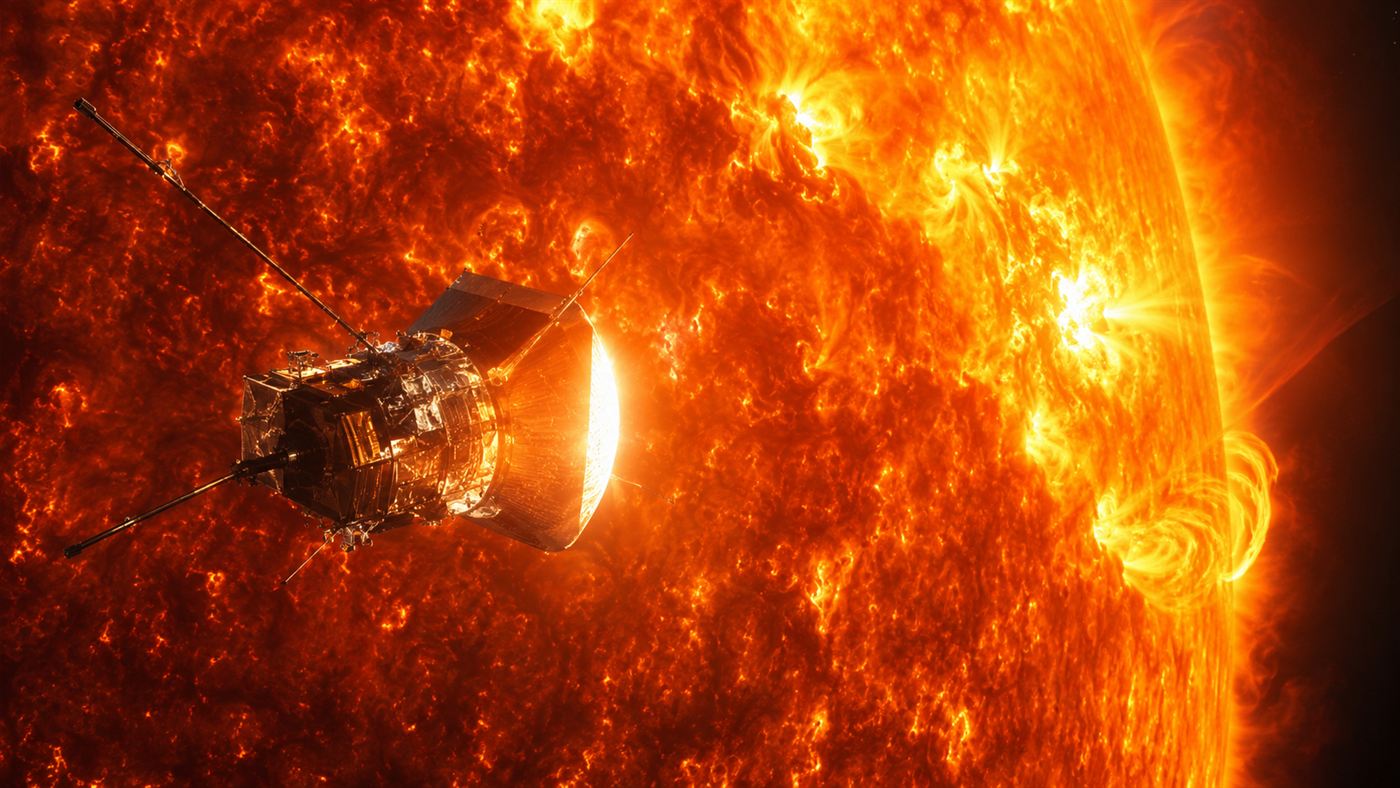
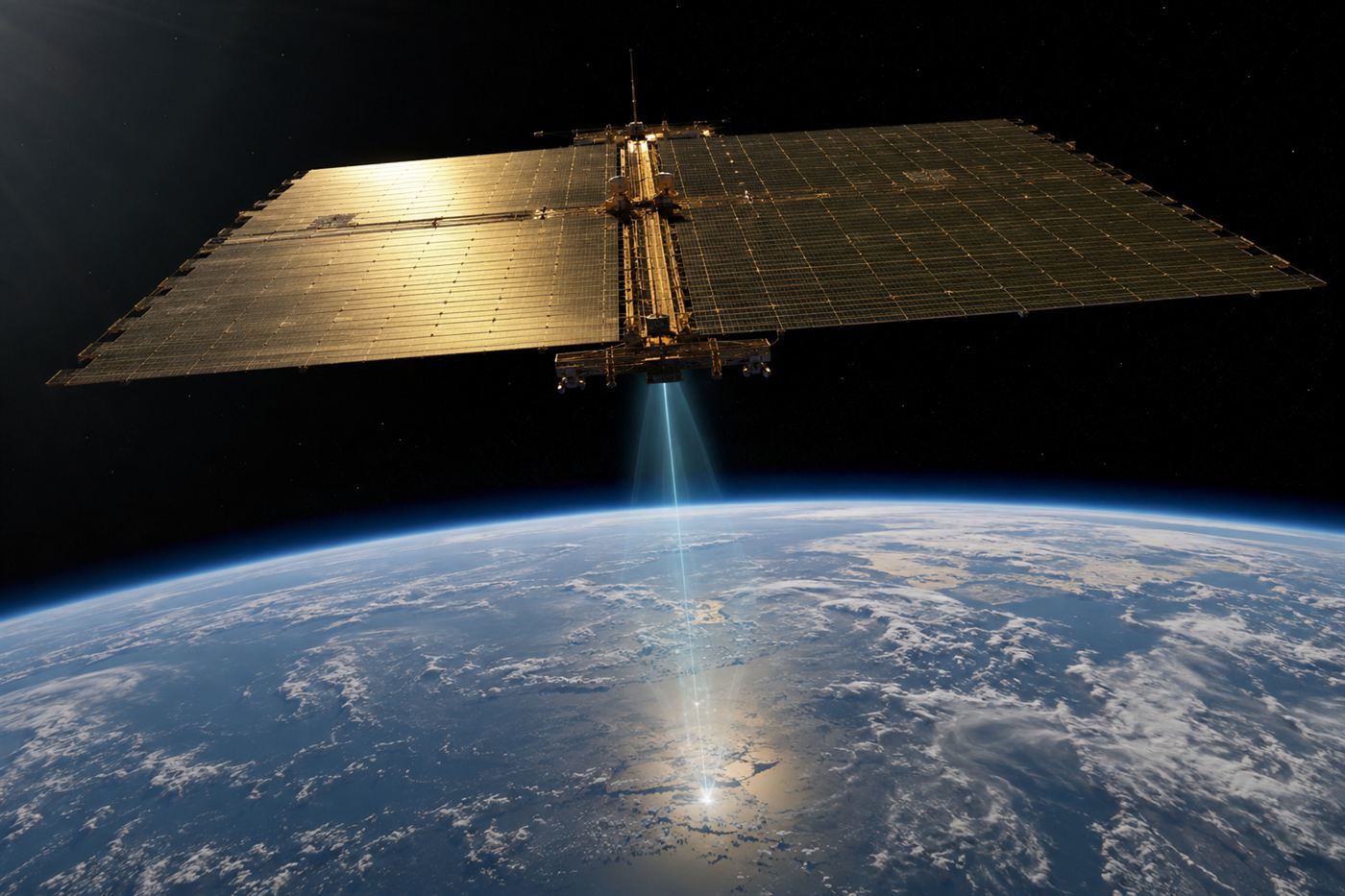
It belongs with the other audacious bids to push past our limits, from the probe built to touch the Sun to the plan to beam solar power down from orbit, and the new nuclear dreams behind reactors like Bill Gates-backed Natrium.
Was Project Orion a tragic missed chance to conquer the Solar System, or a line humanity was right never to cross, and would you ride a spaceship powered by nuclear bombs? Tell us in the comments.
Related reading: the bat bomb, another real and barely believable weapon America built, this one packed with a thousand fire-carrying bats.