An old Kansas City mine was hollowed into the world's largest underground business complex, where trucks drive miles of roads through solid rock and the temperature never changes all year
Below the bluffs of Kansas City, past a set of ordinary-looking tunnel entrances, thousands of people go to work every day in a place with no windows, no weather and no sky. They commute into a mountain. And the strangest part is how much sense it makes.
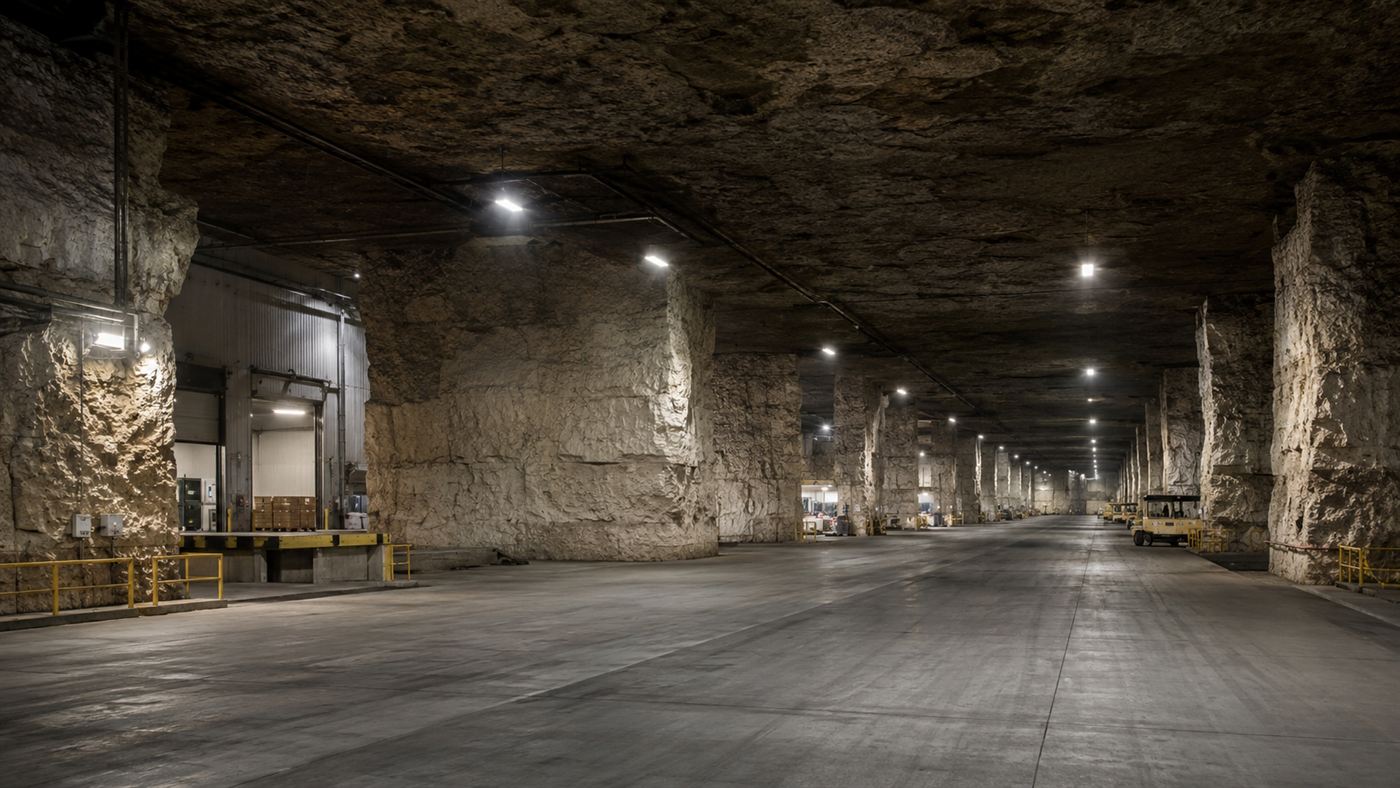
Miles of lit, paved roads run through the rock of SubTropolis. Illustration: Watts & Wild.
North of the Missouri River, dug into a thick bed of limestone, sits a place its owners call the world's largest underground business complex. It is named SubTropolis, and it is exactly what it sounds like: a functioning industrial city, complete with roads, railways, loading docks and offices, carved into a former mine as much as 160 feet below the surface.
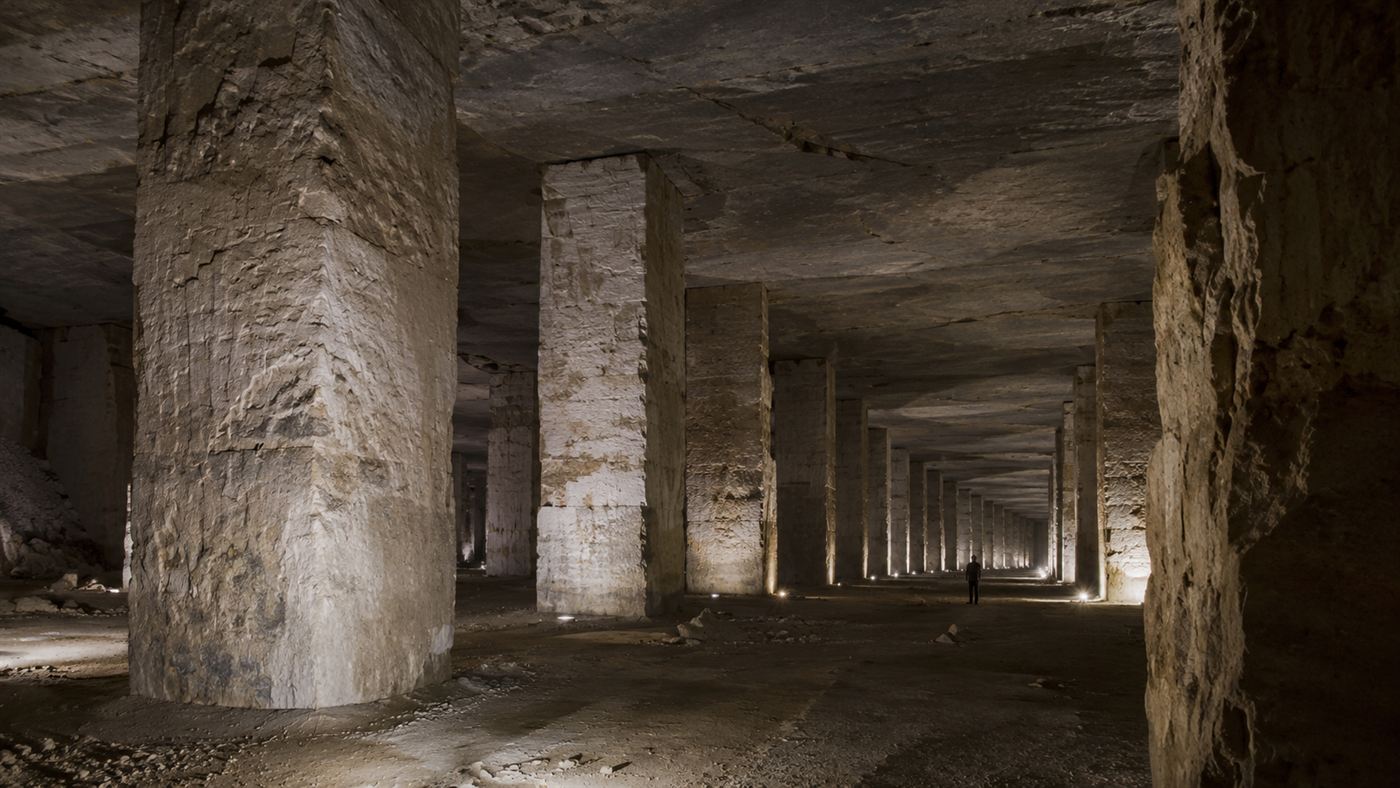
It did not start as a grand vision. For decades, miners simply dug out the high-quality limestone using the room-and-pillar method, chewing tunnels through the rock while leaving massive square columns of stone in place to hold up the roof. When they were done, they left behind something unexpected: millions of square feet of dry, stable, column-lined space, just waiting for a second life.
The short version: a spent Kansas City limestone mine was turned into SubTropolis, a huge underground business complex with miles of paved roads and rail lines. The rock keeps it a steady 65 to 70 degrees all year, so tenants save a fortune on heating and cooling, and companies store everything from film reels to every US stamp ever made down there.
How SubTropolis was carved by mining
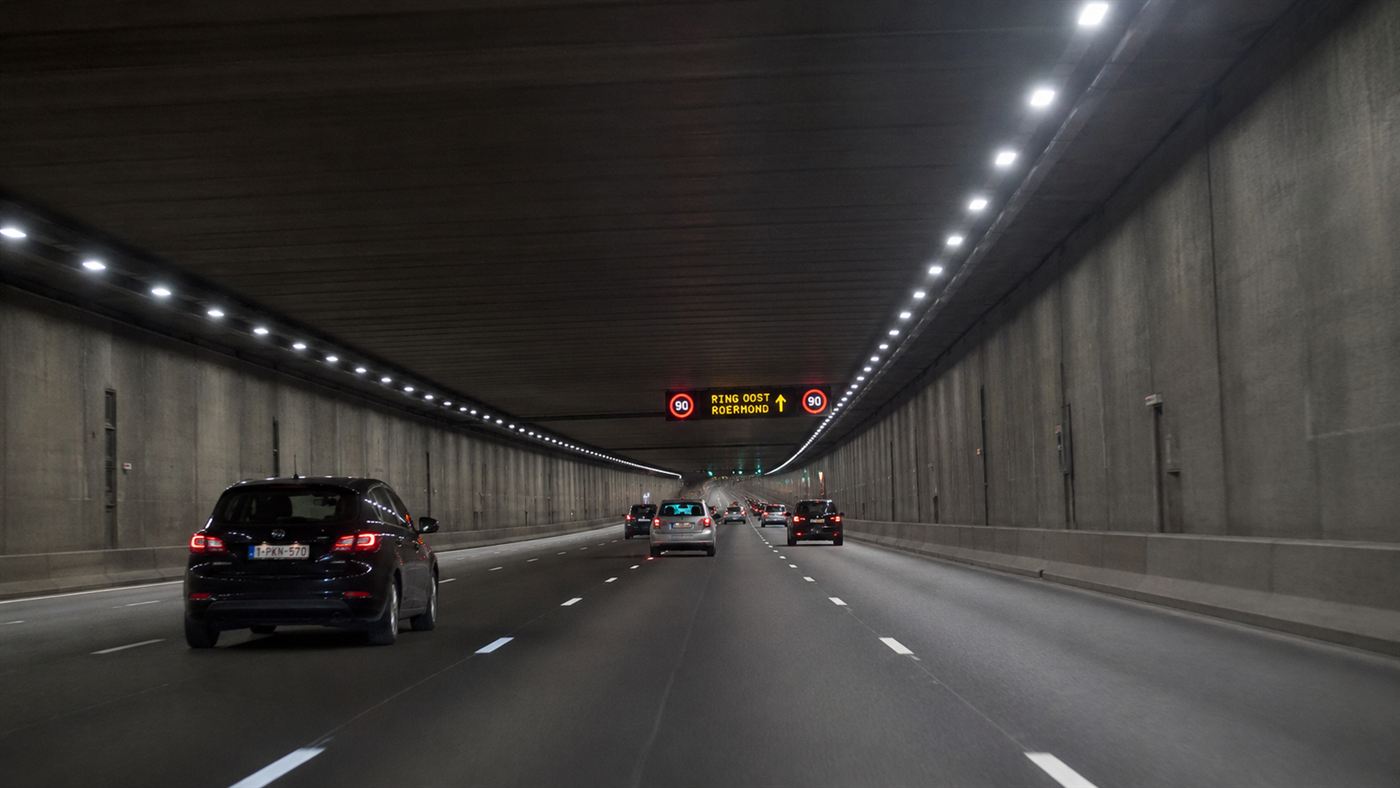
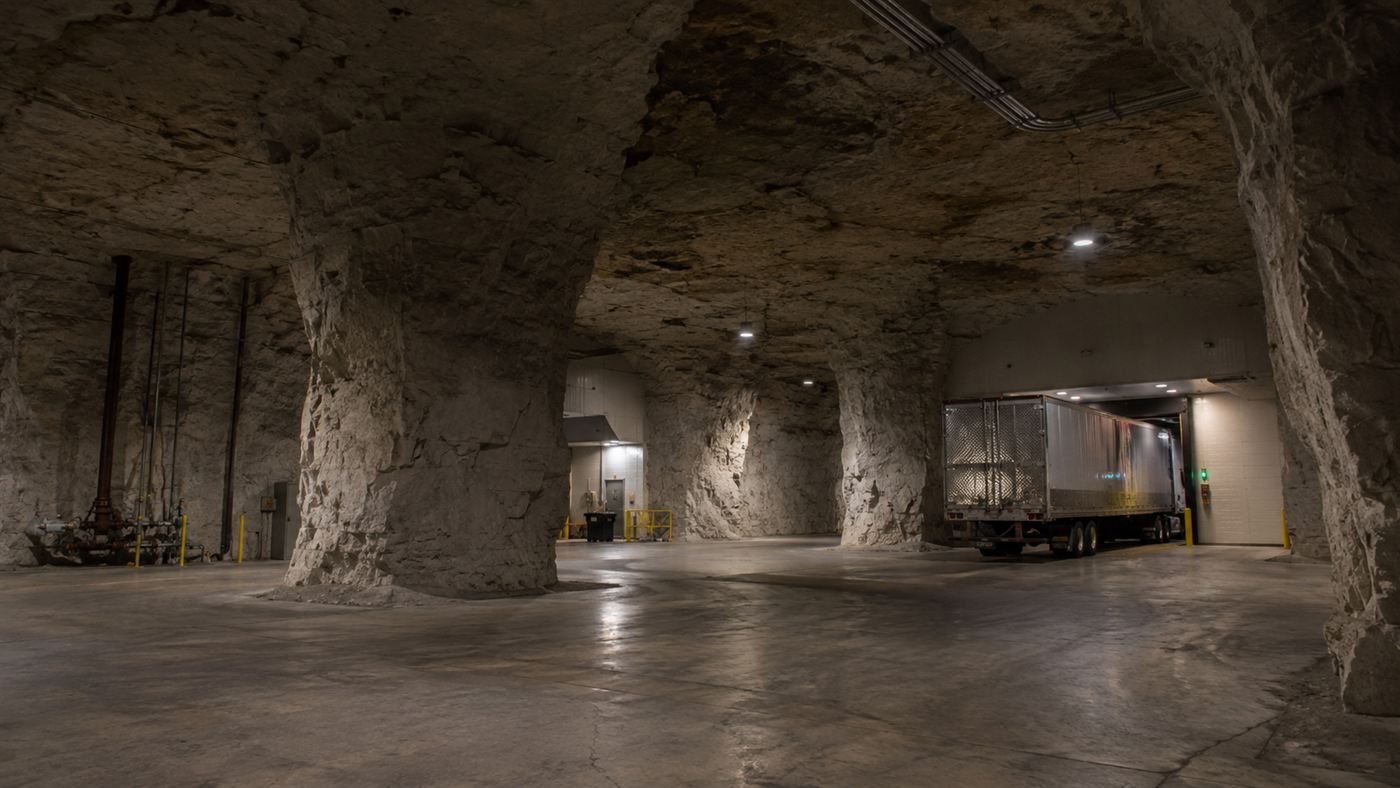
The bones of the place are the mine itself. The tunnels run about 16 feet high and 40 feet wide, separated by 25-foot pillars of solid limestone in a room-and-pillar grid so regular it feels like a street plan drawn underground. Threaded through it are around ten miles of illuminated, paved roads and several miles of railroad track, so semi-trucks and freight cars can drive right up to the loading bays deep inside the earth.
The scheme was the brainchild of Lamar Hunt, the sports magnate who owned the Kansas City Chiefs, whose development company saw that the empty limestone mine was a real-estate opportunity rather than a hole in the ground. Instead of an abandoned pit, they marketed it as premium industrial space, and businesses came.
Why it stays cool without air conditioning
The real magic of SubTropolis is not the tunnels but the temperature. Surrounded on all sides by a vast mass of rock, the complex sits at a natural 65 to 70 degrees Fahrenheit every day of the year, whether it is a hundred degrees or below freezing outside. The limestone is a giant, free thermal battery.
That means tenants barely need to heat or cool their space, which slashes energy bills compared with a surface warehouse baking in the Missouri summer. The rock does for free what would cost a fortune above ground, and the savings are large enough that the site has earned top marks for energy efficiency. It is, almost by accident, one of the greenest big buildings in America.
What is stored down there?
The tenant list reads like a riddle. The stable, cool, dark, secure conditions are perfect for storing things that must last, so the mine has become a vault for the irreplaceable. A federal records center keeps government archives there, and a postal facility stores a copy of essentially every US postage stamp ever issued.
Hollywood uses it too, with a facility that safeguards master film reels for major studios, exactly the kind of fragile, priceless material that hates heat and humidity. Alongside the archives are ordinary warehouses and distribution centers, including operations shipping everyday goods, all humming away beneath the Kansas City hills.
Would you want to work underground?
For all its advantages, the idea of spending a working life underground unsettles a lot of people. There are no windows, no daylight and no view, just the endless geometry of rock pillars and roadway under artificial light. To some workers it feels calm and climate-perfect; to others it feels like a very large, very well-lit basement.
In practice, the people who work there describe it as surprisingly normal, a regular job that just happens to be inside a mountain. The trucks come and go, the archives sit in their steady chill, and the weather that rules the world above simply does not exist down in SubTropolis.
The honest catch
It is easy to present SubTropolis as a tidy win-win, and mostly it is, but the model has limits worth naming. This works because Kansas City happens to sit on a thick, unusually stable, easily mined bed of limestone; most cities do not have that geological gift, so you cannot simply dig a business city under any town. It is a clever reuse of a specific accident of geology.
Still, as a piece of thinking it is genuinely inspiring. Instead of treating a used-up mine as waste, Lamar Hunt looked at the hole and saw a naturally air-conditioned, low-cost, secure city already three-quarters built. In an age obsessed with cutting energy use, the smartest building in Kansas City may be the one nobody had to construct at all.
A worn-out mine quietly became a naturally cooled underground city that saves a fortune in energy and guards the nation's film reels and stamps. Would you take a job with no windows if it meant a perfect temperature and a cheaper, greener workplace all year? Tell us in the comments.
Related reading: Derinkuyu, the ancient underground city in Turkey that once hid thousands of people. See also how Boston buried a highway underground in the Big Dig.