A 16th-century Ottoman bridge was the soul of Mostar until a 1993 war shelled it into the river, and then the city raised Stari Most again, stone by stone, and the divers came back
For 427 years the Stari Most bridge arched over the Neretva river, the heart of the Bosnian city of Mostar. In 1993 a war blew it into the water. Then, stone by recovered stone, the city rebuilt it with the same Ottoman methods, and the young men returned to dive from it.
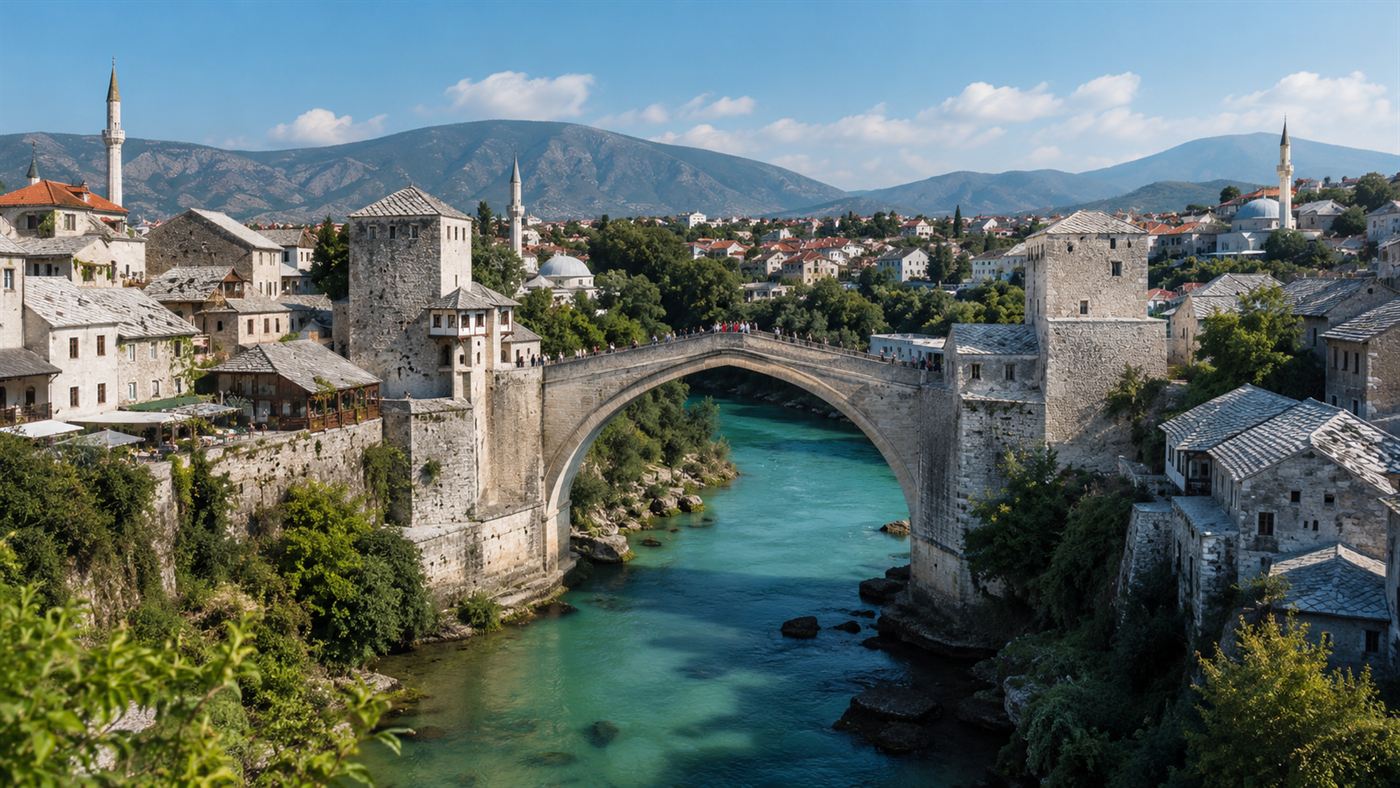
The rebuilt Stari Most arches over the Neretva, exactly where the original stood for 427 years. Illustration: Watts & Wild.
Stari Most, the Old Bridge of Mostar, is one of the most moving comeback stories ever told in stone. The single-arch Ottoman bridge stood for more than four centuries over the green Neretva until it was shelled into the river during the Bosnian war, and as RFE/RL has recounted, the city then spent years raising it again exactly as it had been.
The bridge fell on November 9, 1993, deliberately shelled during the Croat-Bosniak war, and with it went a 427-year-old symbol of a city where Muslims, Croats and Serbs had long lived side by side. Its destruction was not a stray accident of battle but an attack on Mostar's shared memory. Eleven years later, on July 23, 2004, a rebuilt Stari Most reopened, and the divers who had leapt from it for generations climbed back up to jump again.
Why was Stari Most rebuilt stone by stone? UNESCO and the city wanted the Old Bridge restored as faithfully as possible, so builders used the same local stone, the same Ottoman techniques, and even blocks recovered from the Neretva, so the new bridge would be the old one rather than a modern copy.
The bridge that gave Mostar its name
Stari Most was a wonder from the day it opened in 1557.
It was commissioned under Suleiman the Magnificent and designed by Mimar Hayruddin, a student of the great Ottoman architect Mimar Sinan.
Its single stone arch leapt nearly 29 metres across the Neretva in one graceful curve, and for a long time it was one of the widest arches of its kind anywhere.
The bridge was guarded by keepers called mostari, and it is from them that the city of Mostar takes its name.
For four centuries it was simply the center of everything, the place people crossed, met, traded and grew up.
How a war turned the Old Bridge to rubble
Then came the 1990s and the wars that tore Yugoslavia apart.
During the Croat-Bosniak conflict the Old Bridge sat on a front line, and on November 9, 1993, it was shelled until it collapsed into the river.
This was not a power station or a barracks but a 16th-century monument, and destroying it was widely understood as an attempt to erase the idea of a shared Mostar.
Footage of the arch crumbling into the Neretva became one of the defining images of the war.
For a decade afterward the two banks were joined only by a wobbling temporary crossing, a daily reminder of what had been lost.
Rebuilding the Stari Most bridge exactly as it was
The decision to rebuild was also a decision about the future.
Work ran from 2001 to 2004 under the oversight of UNESCO, with a deliberate insistence on authenticity rather than speed.
Hungarian army divers pulled the original stones up from the bed of the Neretva, and although most were too shattered to reuse, they guided how the bridge was remade.
Builders quarried fresh tenelija limestone from the same source the Ottomans had used more than 400 years earlier and shaped it with the old techniques.
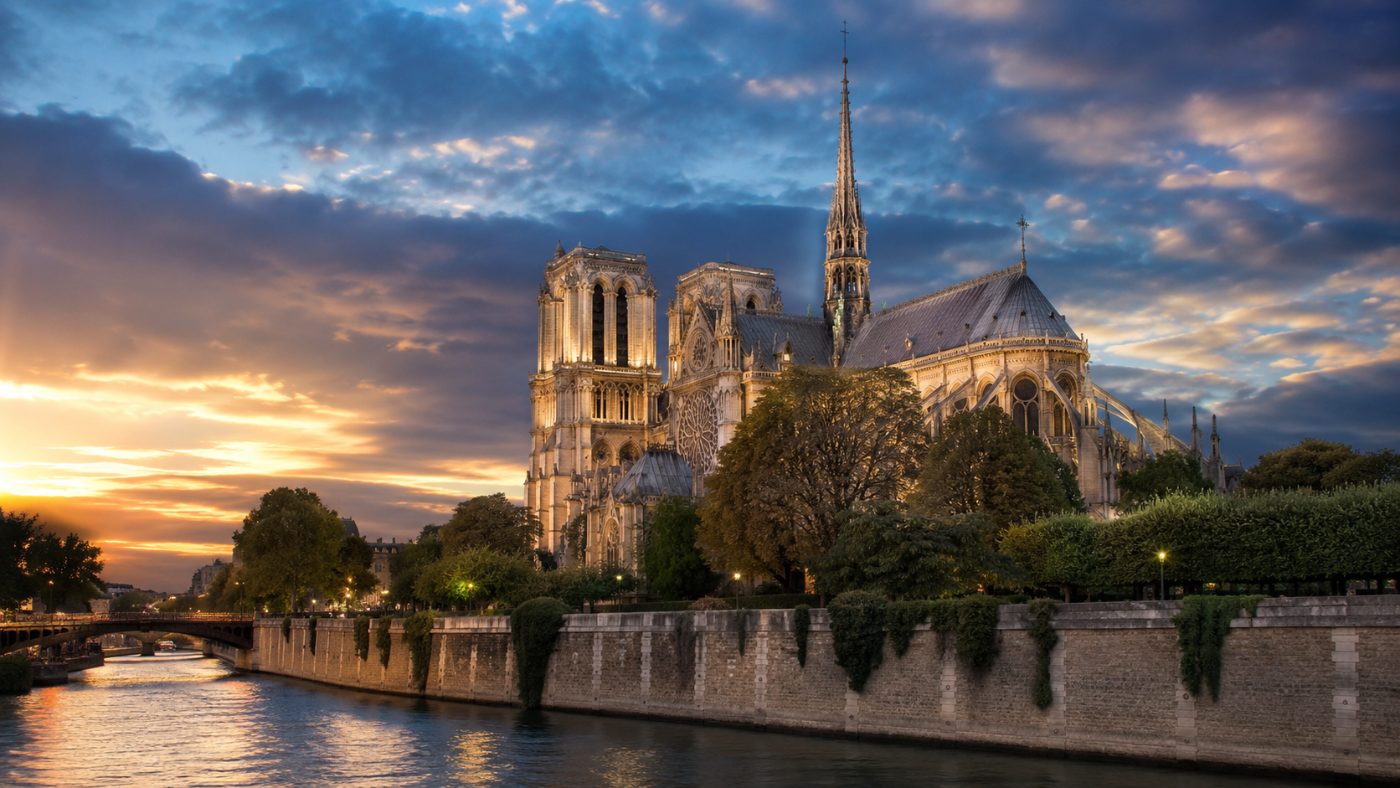
It is the same patient, by-hand philosophy that raised Notre-Dame from the ashes in Paris, choosing to rebuild a treasure the slow, faithful way.
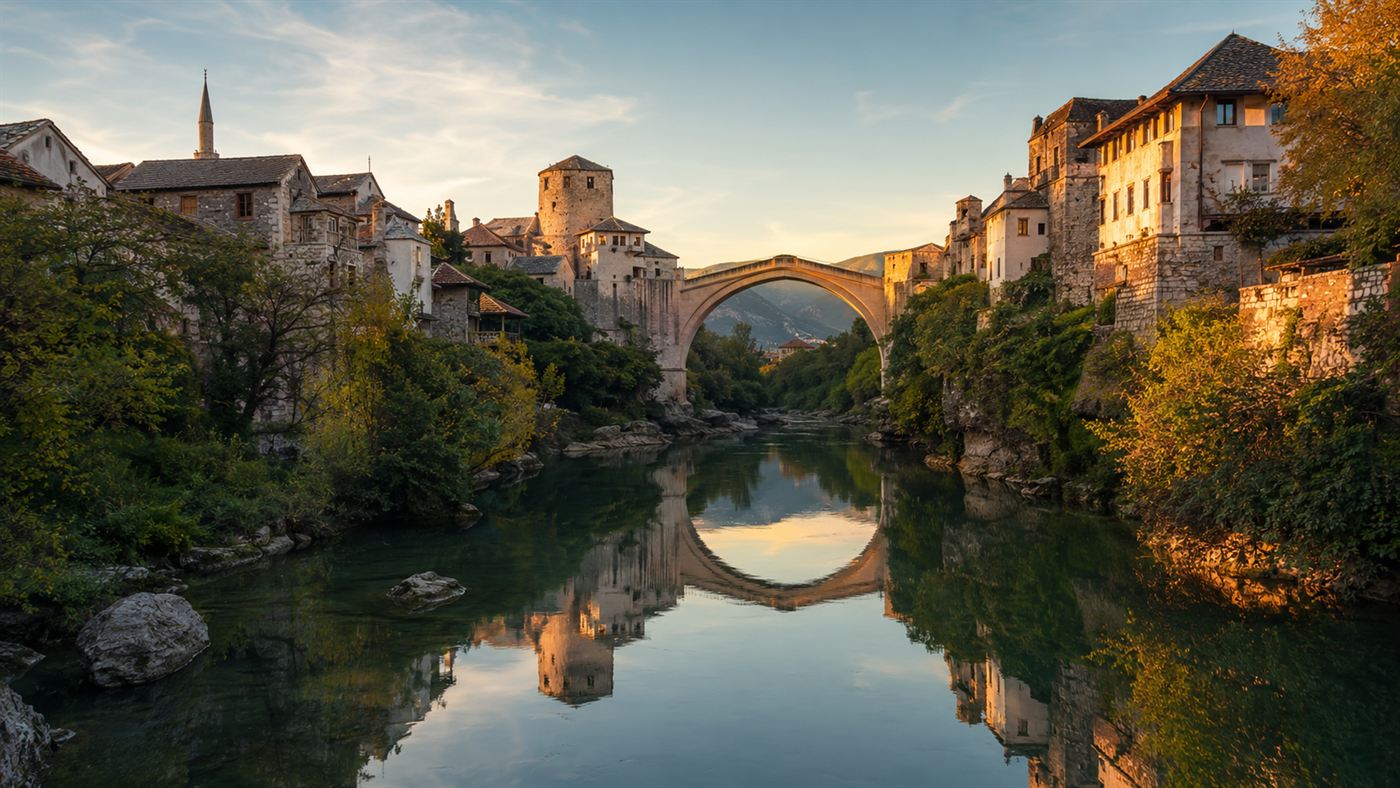
The reconstructed Stari Most reopened on July 23, 2004, and the next year UNESCO made it a World Heritage Site, calling it a symbol of reconciliation.
The divers of the Neretva came home
The truest sign that the bridge was alive again was the sound of bodies hitting water.
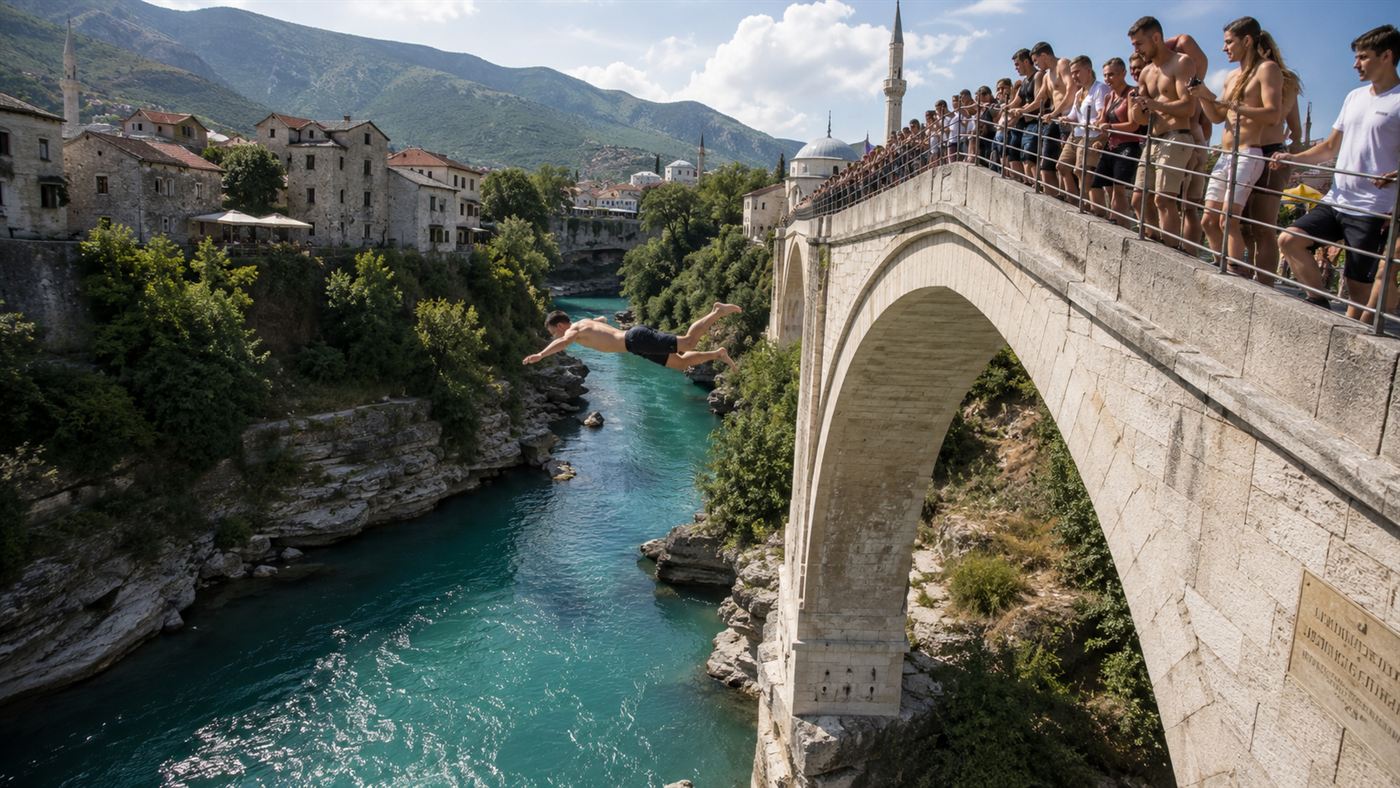
For centuries young men of Mostar have proved their nerve by diving from the parapet, about 24 metres down into the freezing Neretva.
The leap is a rite of passage, run today by a local divers' club and marked by an annual competition that draws crowds and, now, the world's cliff-diving circuit.
When the divers returned to the rebuilt arch, it meant the bridge was not just a monument to be photographed but a living part of the city once more.
The honest catch
A rebuilt bridge cannot rebuild everything it once held together.
Mostar today is still a largely divided city, where Croat and Bosniak communities often live, study and remember apart, sometimes in schools split under one roof.
The Stari Most you cross now is also, unavoidably, mostly new stone, a faithful replica rather than the original that stood for 427 years.
And the crowds the bridge draws can flatten it into a postcard, a backdrop for a photo rather than the hard, unfinished work of living together.
Still, a city that chose to put its broken symbol back, exactly as it was, made a statement that the divers underline every time they jump.
A bridge is the most hopeful thing an engineer can build, a refusal to let a river keep two sides apart.
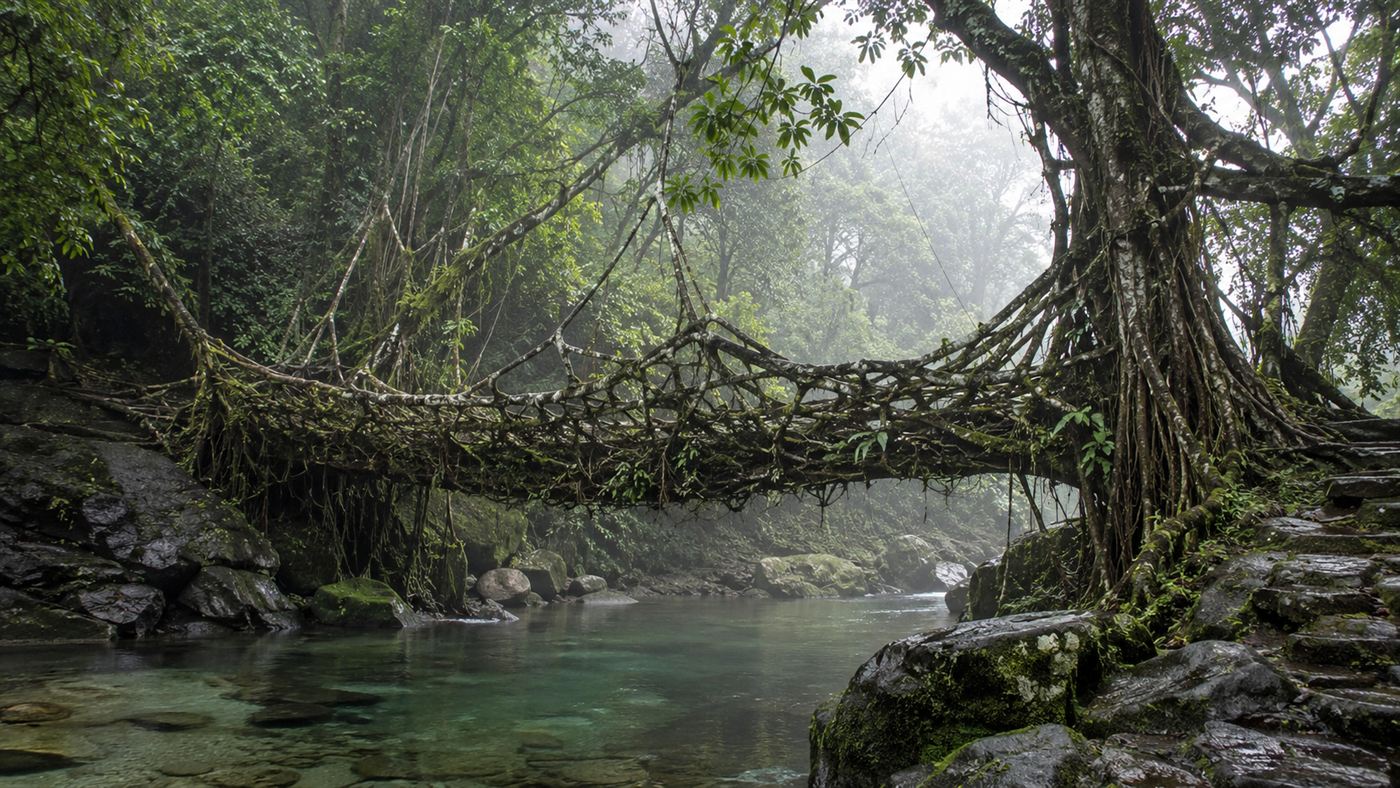
Mostar lost that hope for eleven years and then chose, stone by stone, to build it back, much as the Khasi people keep faith with bridges they grow from living tree roots.
When a monument is destroyed, should it be rebuilt exactly as it was, or does a city need to build something new to truly move on? Tell us in the comments.