A painter learned his wife had died only after she was buried, because news moved so slowly, and his grief helped wire the world for instant messages
Before he was the man whose name we tap out in dots and dashes, Samuel Morse was an artist with a brush, not a wire. What turned him toward the machine that shrank the world was not ambition but a letter that arrived too late.
Samuel Morse turned from painting to the telegraph key after a personal tragedy. Illustration: Watts & Wild.
We remember Samuel Morse as an inventor, the father of the telegraph and of Morse code, tapped out in short and long pulses across wires and radio for more than a century. It is easy to picture him as a lifelong tinkerer of electrical machines. He was nothing of the sort for most of his life.
For his first four decades, Morse was a painter, and a serious one. He studied art in London, dreamed of grand historical canvases, and made his living capturing the faces of the notable people of early America. The wire and the battery came much later, and they came out of the worst moment of his life.
The short version is that one of the great communication technologies in history was pushed into being partly by private heartbreak, and that the tidy tale we tell about its lone inventor leaves out both that grief and the people he leaned on.
The letter that came too late
In 1825, Morse was in Washington, away from home, working on an important commission to paint a famous French general. While he was there, a letter reached him with terrible news: his young wife, back in New Haven, had fallen gravely ill after childbirth.
He rushed home as fast as the roads allowed, but the world moved at the speed of a horse. By the time he arrived, his wife was not only dead but already buried. He had not been there to hold her hand or say goodbye, and the slowness of the news had stolen those final days from him entirely.
From the easel to the wire
It would be too neat to say that grief alone built the telegraph, but that wound clearly marked him. The idea that a message could crawl so slowly that a husband missed his wife's death haunted the era, and Morse, some years later, became gripped by the possibility of sending words instantly over long distances.
The spark came in 1832, on a ship home from Europe, where a conversation about electromagnets set his mind racing. A portrait painter with little formal training in science threw himself at the problem, and over the next decade the man with the brush slowly remade himself into the man with the telegraph key.

What hath God wrought
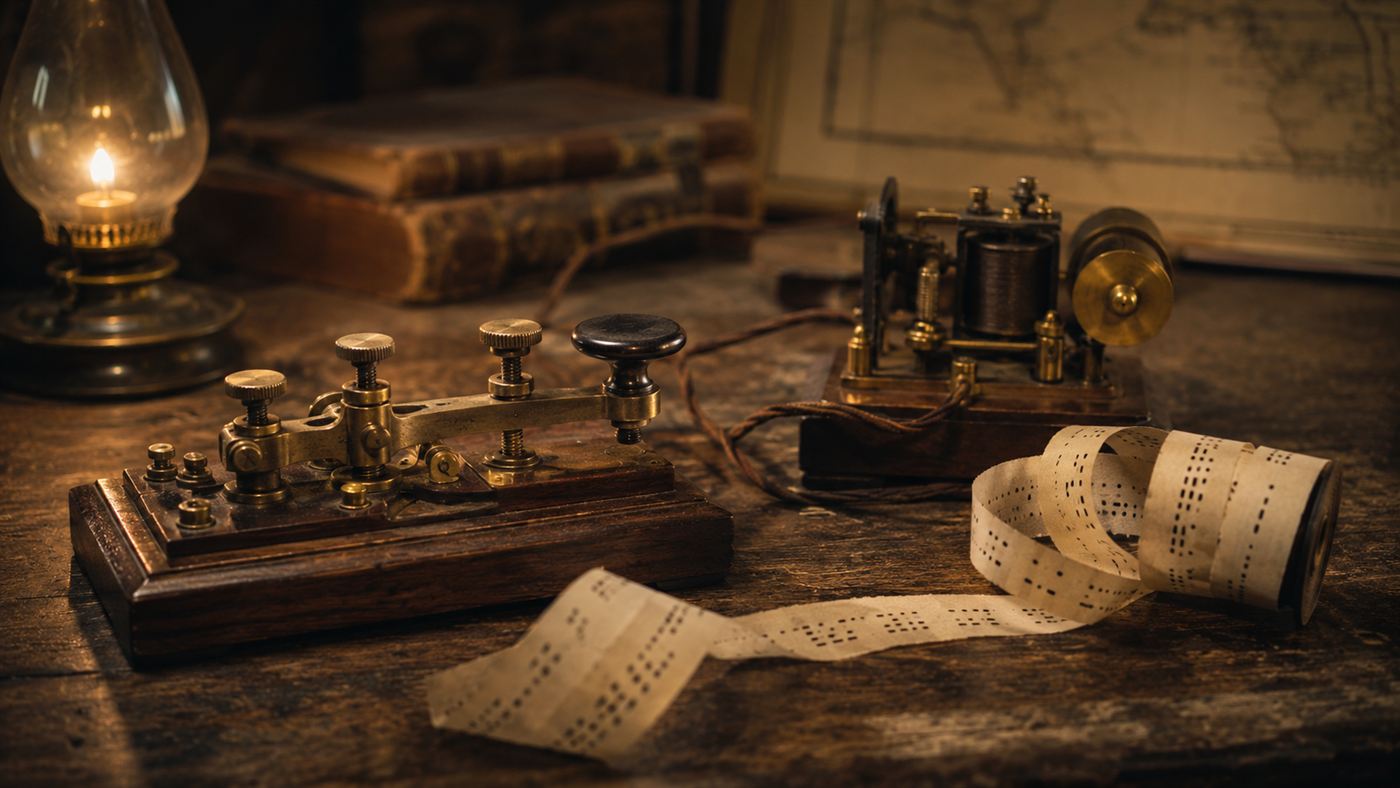
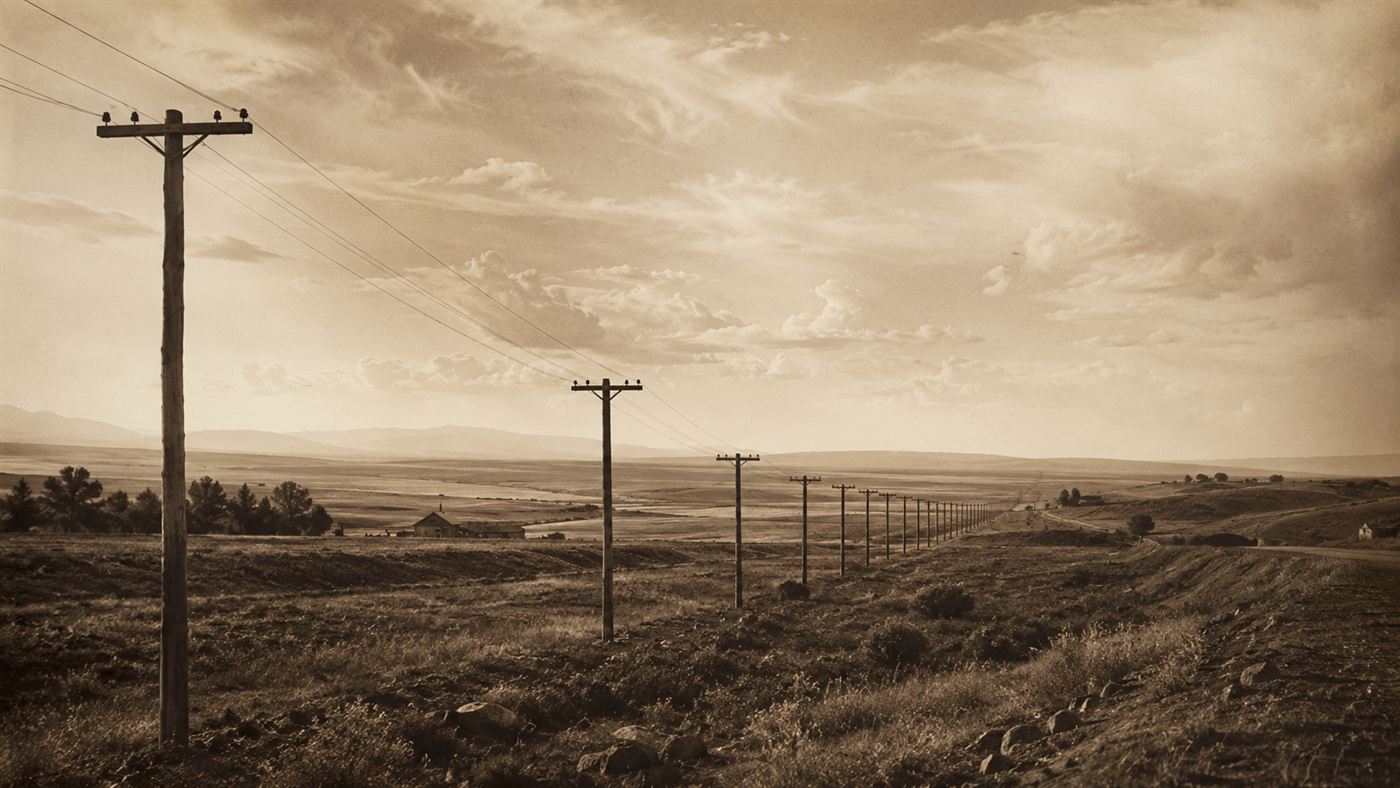
In 1844, a telegraph line strung between Washington and Baltimore carried its first official message, and the words chosen were suitably grand: "What hath God wrought." A tap of a key in one city became marks on a paper tape in another, almost instantly, across a distance that would have taken a rider the better part of a day.
It changed everything. News, orders, prices and personal words could now outrun the fastest horse, and within a generation wires laced the continents together. The kind of slow, cruel delay that had kept Morse from his wife's bedside began, for the first time in human history, to melt away.
Why isn't Samuel Morse the whole story?
Because the lone-genius version is a flattering simplification. Morse leaned on the electromagnetism worked out by the physicist Joseph Henry, who freely shared what he knew. And he relied enormously on Alfred Vail, a skilled mechanic whose hands built practical instruments and who contributed a great deal to the very code we call Morse code.
Alfred Vail, in particular, has been quietly shortchanged by history, his role folded into the fame of the man whose name won out. Morse fought long, bitter legal and public battles to be recognised as the sole inventor, and he largely succeeded, which is a big reason his name, and not Vail's, is the one you know.
The honest catch
The story of grief giving birth to connection is genuinely moving, and it is broadly true, but it deserves two cautions. The neat cause and effect, that a widower's pain directly produced the telegraph, is softer than the legend suggests; the loss was one thread among many, and years of others' science lay between the sorrow and the working machine.
And the man himself was no simple hero. Samuel Morse could be jealous of credit and harsh to his collaborators, and in his public life he held bitter, prejudiced views that sit uneasily with his image as a benefactor of humankind. The tool he helped create genuinely drew the world closer together, which is perhaps the sharpest irony of all: a device that connected everyone, shaped in part by a man who was not always so generous with the people right beside him.
A painter who missed his wife's last days helped build the machine that made such delays a thing of the past. Does knowing the grief behind the telegraph change how you think about the messages we now send in an instant? Tell us what you think in the comments.
Related reading: the telegraph cable that finally leapt the Atlantic Ocean. See also Tesla's dream of sending messages and power through the air itself, and Joseph Swan, another inventor whose name was overshadowed by a louder rival.