One man spent three decades alone in the desert turning a hillside into a glowing painted monument, and keeping it alive means never letting it dry out
Out in the baking flats of southern California, a small hill blazes with colour: rivers of blue and yellow, flowers, and three huge words, God is Love. Salvation Mountain was the life's work of one gentle, stubborn man, and its beauty hides a strange truth about what it takes to keep a dream standing.
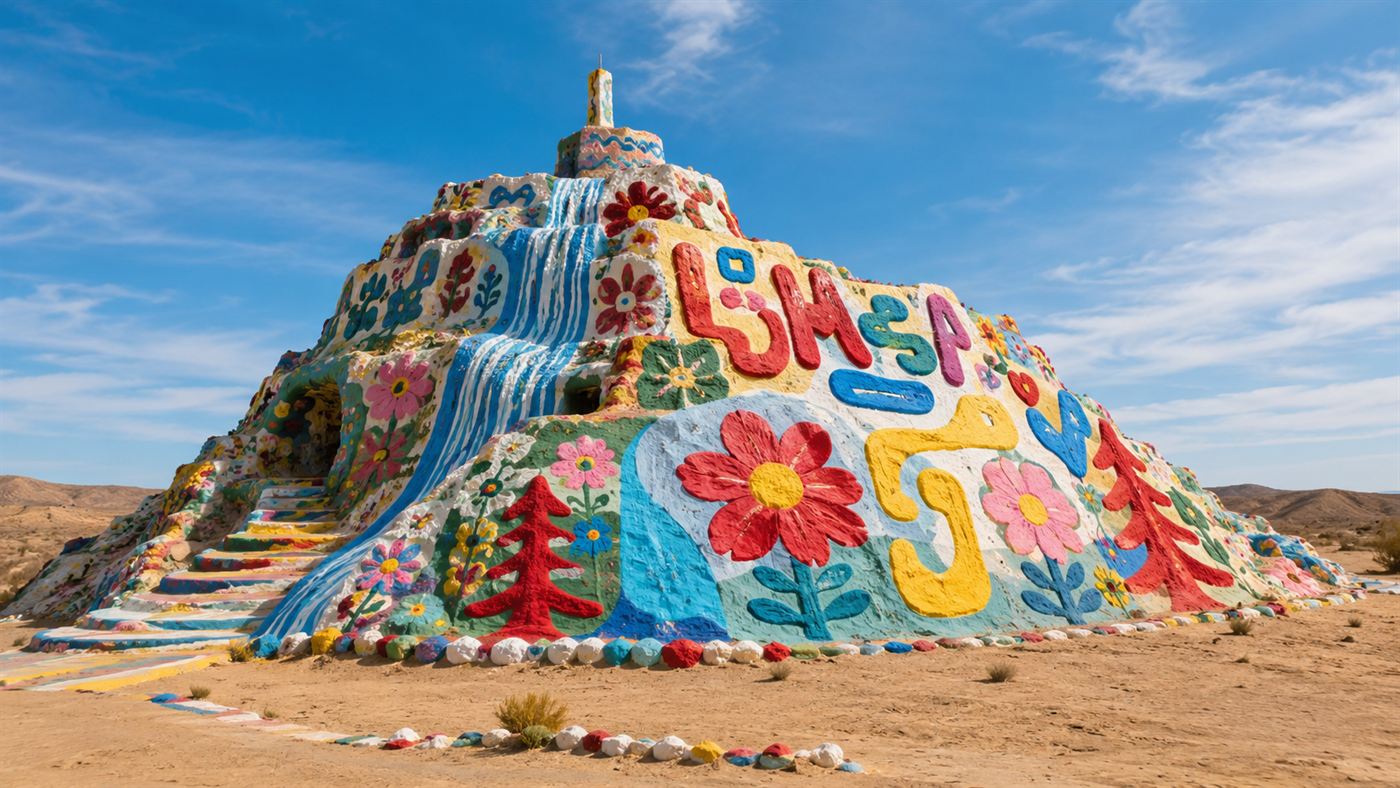
Salvation Mountain glows in the desert near Niland, California. Illustration: Watts & Wild.
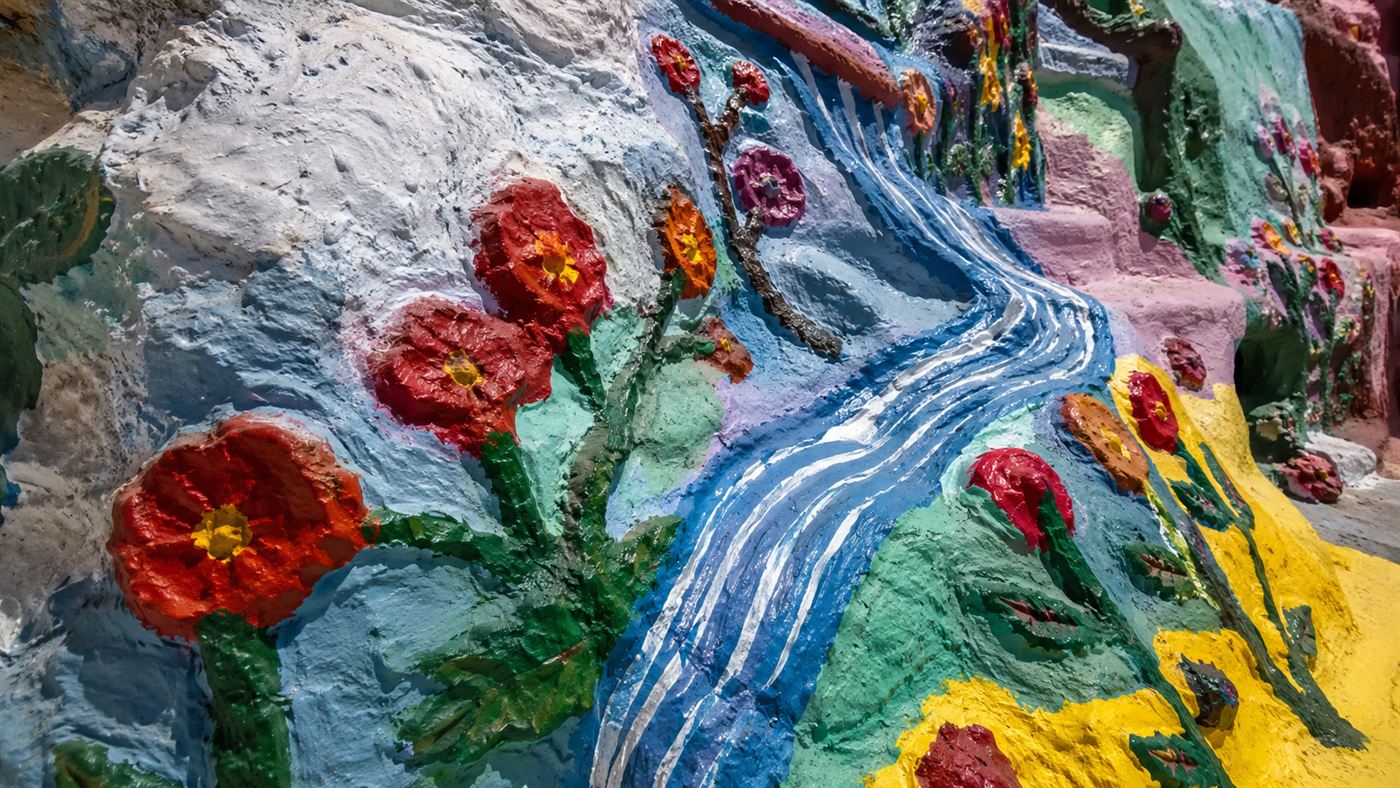
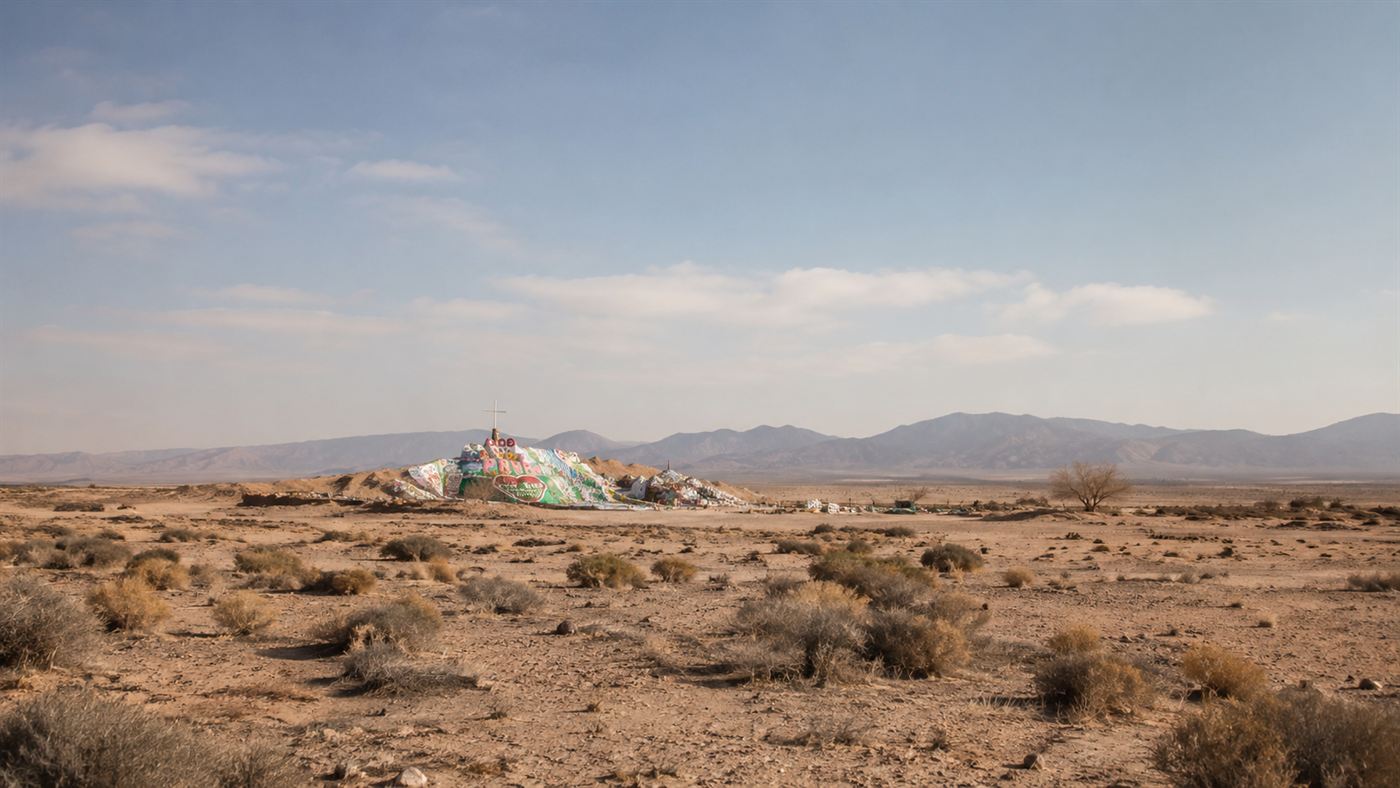
Near the crumbling shore of the Salton Sea, close to the little town of Niland, there is a hill that should not exist. It is only about fifty feet high, but it is painted from base to crown in dazzling colour, a cheerful cascade of blue waterfalls, red flowers and Bible verses, all built up by hand over the course of some thirty years by a man named Leonard Knight.
Knight was not a trained artist or a rich patron. He was a wandering, deeply religious man who arrived in the desert with a simple wish, to tell the world that God is love, and who ended up spending the rest of his life saying it in mud and paint on a single hillside.
The short version is that Salvation Mountain is one of the most joyful things one person ever made alone, and that everything joyful about it is also, quietly, temporary.
How Salvation Mountain was built
The mountain is not solid rock but sculpted earth. Knight built it up out of adobe, the old desert recipe of clay mixed with straw and water, packed over bales of hay, tree branches, tyres and salvaged junk, then sealed and decorated with paint. An early version he made largely of sand and cement grew too big and unstable and collapsed, so he started again with the humbler, sturdier adobe.
Over the years he poured on colour without stint, an estimated hundred thousand gallons of donated paint, layer upon layer, turning the raw brown hill into a glowing garden of imagined rivers and blossoms. He lived on the spot in an old truck, worked almost every day, and asked for little but more paint.
A message anyone could read
What Knight wanted to say could not have been simpler. Across the face of the mountain, in letters big enough to read from far off, he wrote God is Love, and he surrounded it with flowers and streams and open, welcoming words. There was no fine print, no complicated doctrine, just a single warm idea shouted in the brightest colours he could find.
That plainness is a large part of why people fell for it. Visitors of every belief and none drove out into the desert to climb the little painted hill, and the site slipped into American folk culture, appearing in films and photographs and eventually being praised in Congress as a genuine national treasure.
Why it nearly became toxic waste
The mountain's story is not all sunshine. In the 1990s, officials worried that all that paint might have laced the hill with lead and other contaminants, and for a while the beloved landmark was in danger of being condemned as a hazardous site and cleared away entirely.
Later testing and cleanup eased those fears and the mountain was saved, but the scare left a strange lesson hanging in the desert air. The very thing that made Salvation Mountain glow, the endless coats of cheap paint, was also what briefly threatened to have it declared poison and bulldozed.
Why does it fade so fast?
Because the desert is patient and merciless. Sun bleaches the paint, rare hard rains melt the adobe, and wind scours the whole thing day and night, so a mountain made of mud and colour is always quietly dissolving back toward the ground it came from.
When Knight grew too old and ill to keep painting, and after he died in 2014, that erosion should have won. Instead a group of volunteers took up his brushes, and now they repaint and rebuild the mountain constantly, which means that preserving Salvation Mountain does not really mean protecting it. It means making it again, over and over, forever.
The honest catch
It is easy to tell this as a purely heartwarming tale, the lone dreamer and his monument of love, and most of that is true and lovely. But the honest version has to sit with the awkward parts. This is a fragile thing of mud and paint in a poor, hard corner of the country, and its survival now depends on strangers choosing, year after year, to spend their weekends keeping a dead man's vision alive.
There is a deeper puzzle in that. A monument is supposed to outlast its maker unchanged, but Salvation Mountain only lasts by being endlessly changed, repainted by hands other than the one that dreamed it. Perhaps that is the truest thing about it. Leonard Knight built a hill to say that love is worth the trouble, and the only way to keep his answer standing is for other people to keep choosing, again and again, that it is.
One man's painted hill survives only because strangers keep choosing to repaint it. Is a monument that has to be remade forever more alive than one carved in permanent stone? Tell us what you think in the comments.
Related reading: the Stradivarius, another handmade wonder wrapped in myth. See also the Kensington Runestone, a homemade mystery a town refuses to give up, and the Great Salt Lake, drying in the same harsh Western desert.