To get salmon over the dams that block them, engineers fire the live fish through a misted tube at 22 mph, using a machine first built to move apples
It looks like a joke. A live salmon disappears into a soft tube, whooshes up and over a dam, and shoots out the far end into the river beyond. But the salmon cannon is a serious answer to a serious problem, and the tube that flings the fish was first invented to move fruit.
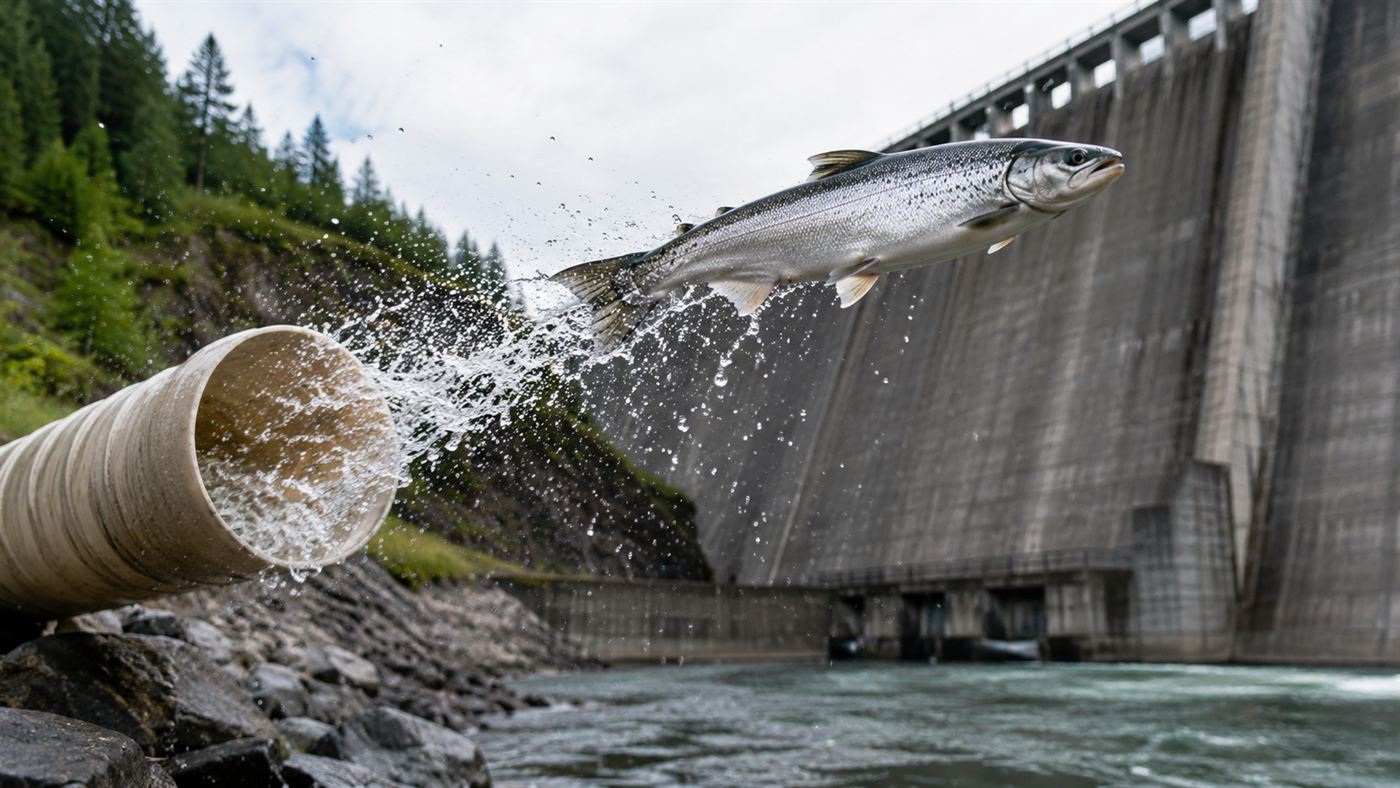
A salmon exits the tube and arcs into the water above a dam. Illustration: Watts & Wild.
A few years ago a short clip began circling the internet: people feeding fish into a tube, and the fish flying out the other end like greased footballs. It was passed around as pure absurdity, the kind of thing that gets remixed into memes. What most people sharing it did not realise was that the contraption, made by a Seattle company called Whooshh Innovations, was built to solve one of the quietest disasters in nature.
That disaster is the dam. Salmon are born in rivers, swim out to the ocean, and years later fight their way back upstream to the exact gravel beds where they hatched, to spawn and die. A wall of concrete across the river breaks that ancient round trip. And there are a lot of walls. As Smithsonian magazine has noted, the United States has around 85,000 dams, and the traditional fix, the fish ladder, is often too hard for the fish to climb and leaves many of them battered or blocked.
How the salmon cannon went from fruit to fish
Here is the part that delights engineers. The salmon cannon was not designed for salmon at all. The underlying technology was created to move fresh fruit, apples and the like, through orchards and packing houses quickly without bruising them. Someone realised that a system gentle enough to carry an apple unharmed might also be gentle enough to carry a living fish.
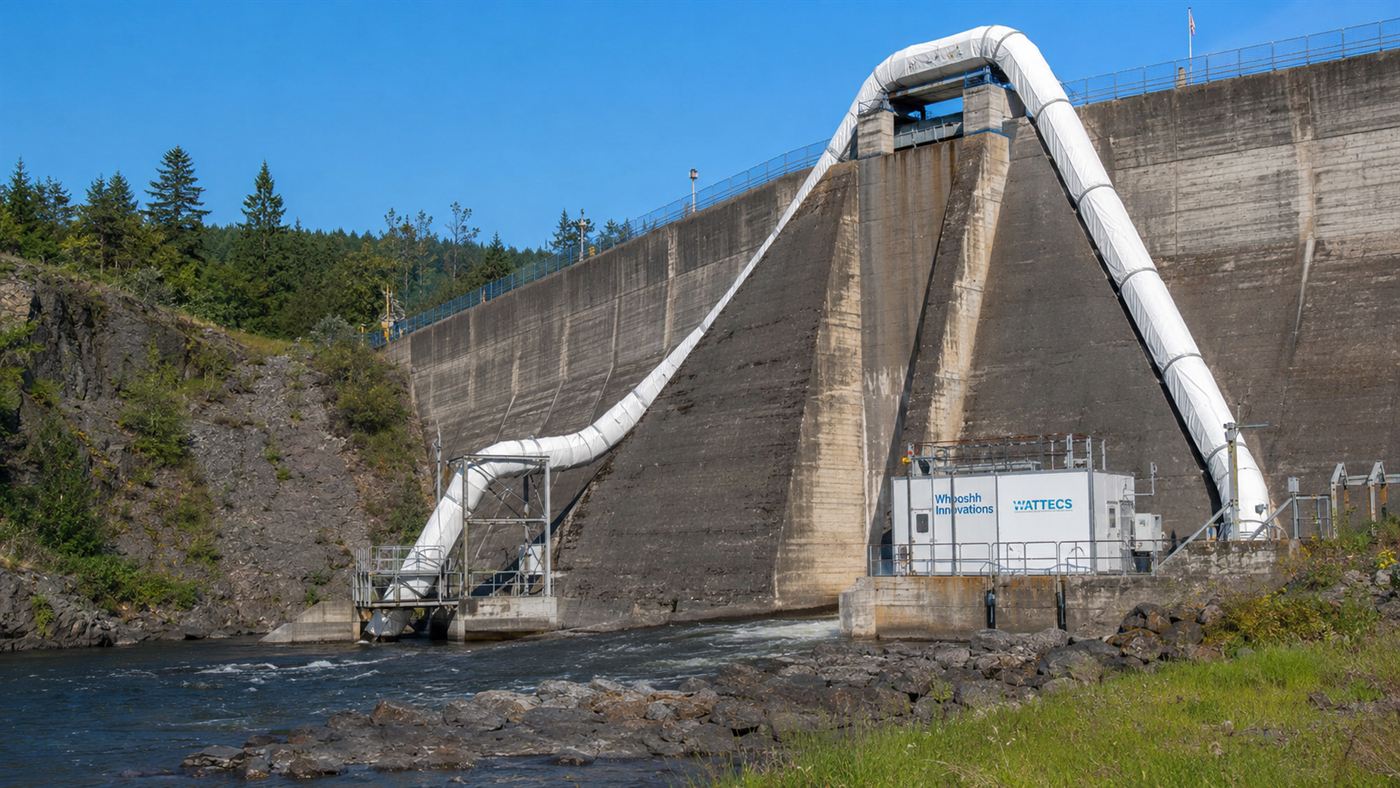
So Whooshh repurposed it. A fish swims or is guided into the mouth of a flexible tube, and a difference in air pressure does the rest, drawing it smoothly through. The tube is misted with water the whole way to keep the fish wet and protected, and it gently expands to fit whatever size of fish is passing through. What looks like a cannon firing a projectile is really closer to a soft, wet straw with a careful pressure gradient inside.
Why salmon need a cannon at all
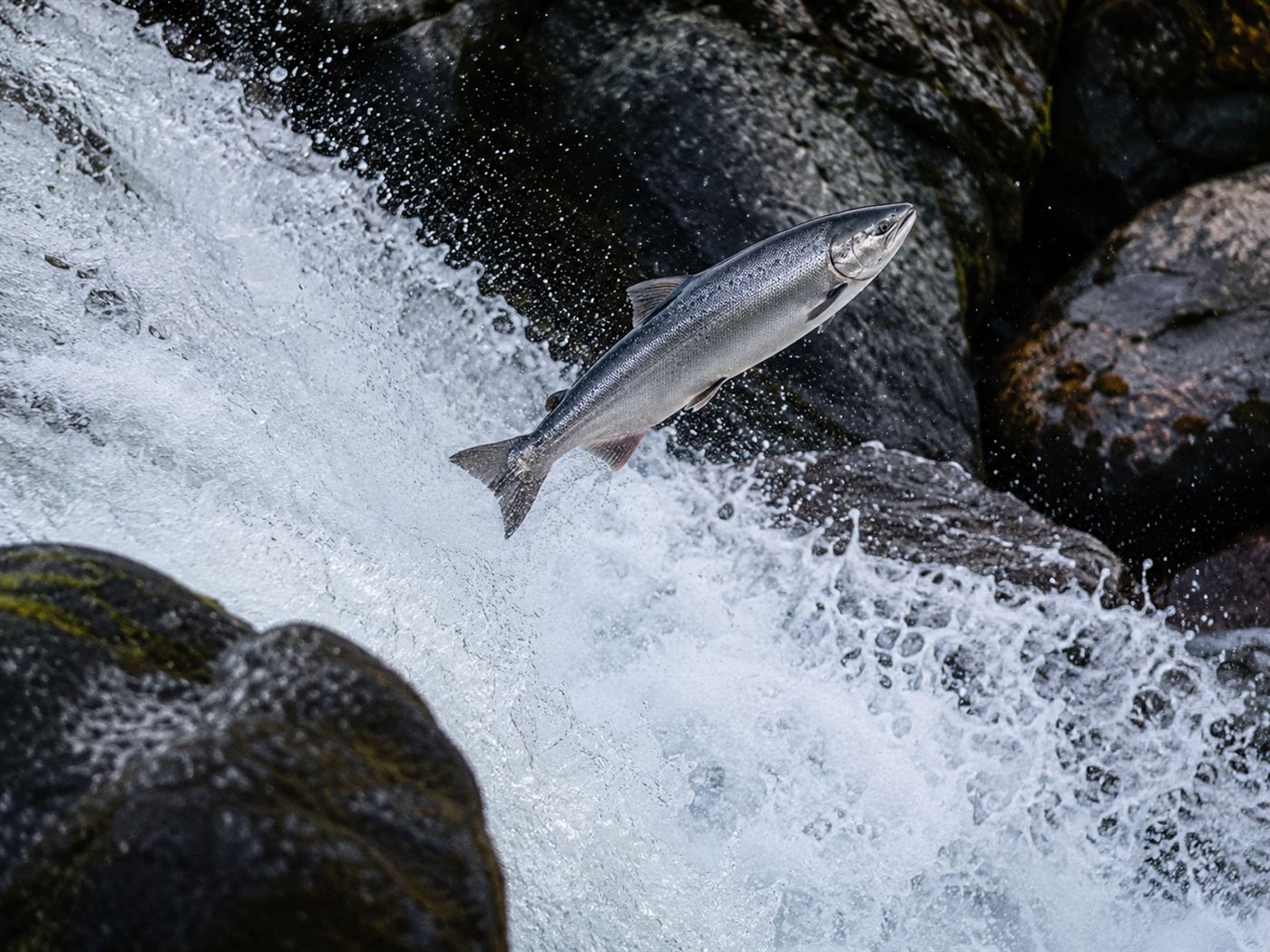
It is worth dwelling on how desperate the problem is. A salmon that cannot get past a dam simply does not breed, and a river slowly empties of the fish that once defined it, taking bears, eagles, orcas and entire fishing cultures down with it. Fish ladders, the stepped channels built beside many dams, help, but as research has found they are imperfect: hard to navigate, exhausting, and used by only a fraction of the fish that need them.
The tube offers a blunt alternative. As Live Science describes, the fish slide through at around 25 feet per second, roughly 22 miles per hour, with a fish going from open water into the tube in about a second. At full tilt a system can move up to 50,000 fish over a barrier in a single day, far more than would ever struggle up a ladder.
Smarter than it looks
The newer versions add a twist that is pure science fiction. Before a fish enters the tube it slides past a scanner with several cameras that photograph it from all sides, measuring its size and even identifying the species. That lets the system wave native salmon through while diverting invasive fish, so the same machine that helps salmon home can also help keep unwanted species out of a watershed.
As for the fish themselves, the welfare evidence so far is encouraging. Whooshh has sold around 20 of its systems to agencies in the United States and Europe, and a study by the Pacific Northwest National Laboratory found that fish came through with very few injuries, the main problem being the occasional fish getting briefly stuck.
The honest catch
For all the cleverness, it would be wrong to call this a happy ending. A tube over a dam is a workaround, not a cure. The dam is still there, still cutting the river in two, still changing the water temperature and flow that salmon evolved with. Many ecologists argue the real answer is to take barriers down where we can, as happened on the Klamath, rather than to keep inventing ways to lift fish over them.
There are gentler doubts too. Critics worry about the stress of being scanned and shot through a tube, even if injuries are rare, and the company itself has quietly moved away from the "cannon" branding, renaming its product to sound less like a stunt and more like the careful passage system it is. The viral video was good for attention, but it undersold how much engineering judgement goes into not hurting the fish.
Why a silly looking tube matters
Strip away the memes and the salmon cannon is a small, honest example of how we try to patch the damage our infrastructure does to the wild. We built tens of thousands of dams for power, water and flood control, and only later fully understood what they did to the creatures that needed those rivers. A fruit tube turned fish launcher is one of the odd, ingenious ways we are now trying to make amends.
It is funny and it is serious at the same time, which is a rare combination. Would you rather see fish shot over our dams in a tube, or see more of those dams come down altogether? Tell us in the comments.
Related reading: The largest dam removal in history just set a river free, and the salmon came back within days.