The man who invented the weather forecast was mocked into ruin for it, took his own life, and only decades later was proved right by the millions who now trust it daily
Every time you glance at tomorrow's weather on your phone, you are using a word and an idea that cost one man almost everything. Robert FitzRoy coined the very term forecast, built the service that still warns ships of storms today, and was laughed at by the scientists of his age for daring to predict the sky. The ridicule helped break him.
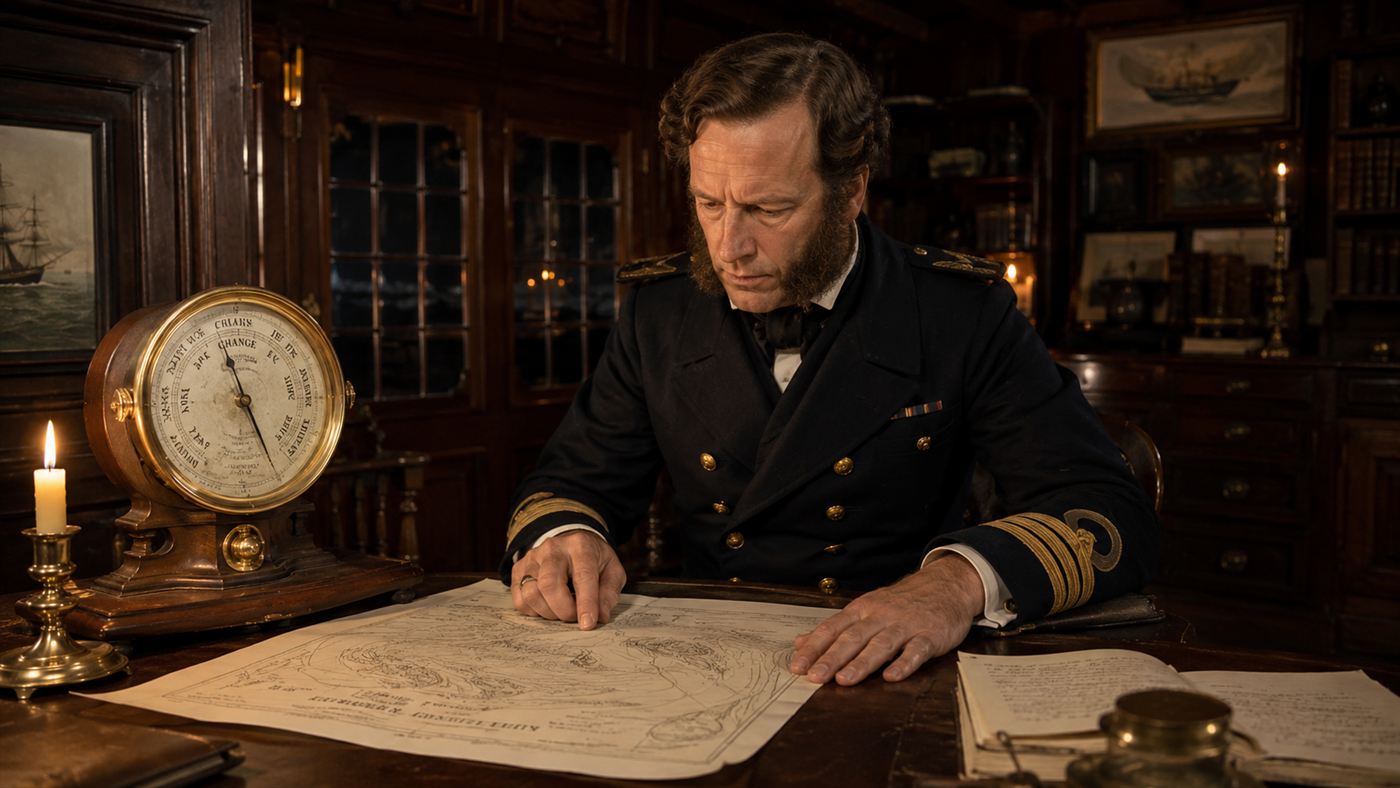
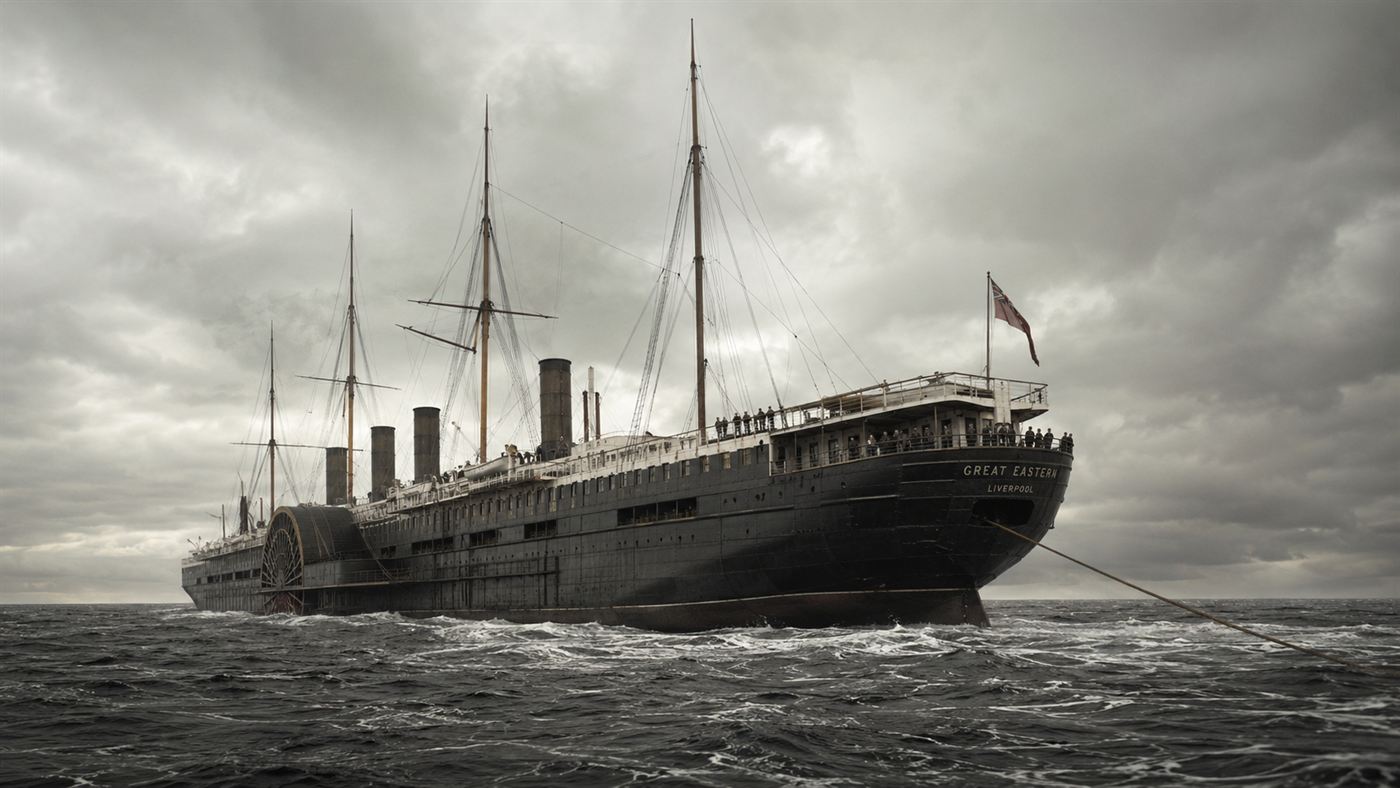
FitzRoy turned scattered telegraph readings into the first daily picture of the coming weather. Illustration: Watts & Wild.
Most people know the name from a different story. Robert FitzRoy was the captain of HMS Beagle, the ship that carried a young Charles Darwin around the world. It is one of history's quiet ironies that the same man who unwittingly helped launch the theory of evolution also went on to invent something we treat as utterly ordinary: the daily weather forecast.
FitzRoy was a brilliant, devout, and deeply anxious man, and the sea had taught him to fear the sky. He had watched storms swallow ships and crews, and he became convinced that the new technology of his century, the electric telegraph, could be used to outrun the weather rather than simply report it after the damage was done.
How Robert FitzRoy built the first weather forecast
The turning point was a single night of horror. In October 1859 a vicious storm, remembered as the Royal Charter Gale, smashed into the British coast and sank dozens of ships, killing hundreds of people in a matter of hours. For FitzRoy it was unbearable proof that those deaths had been, in principle, predictable. He resolved to do something about it.
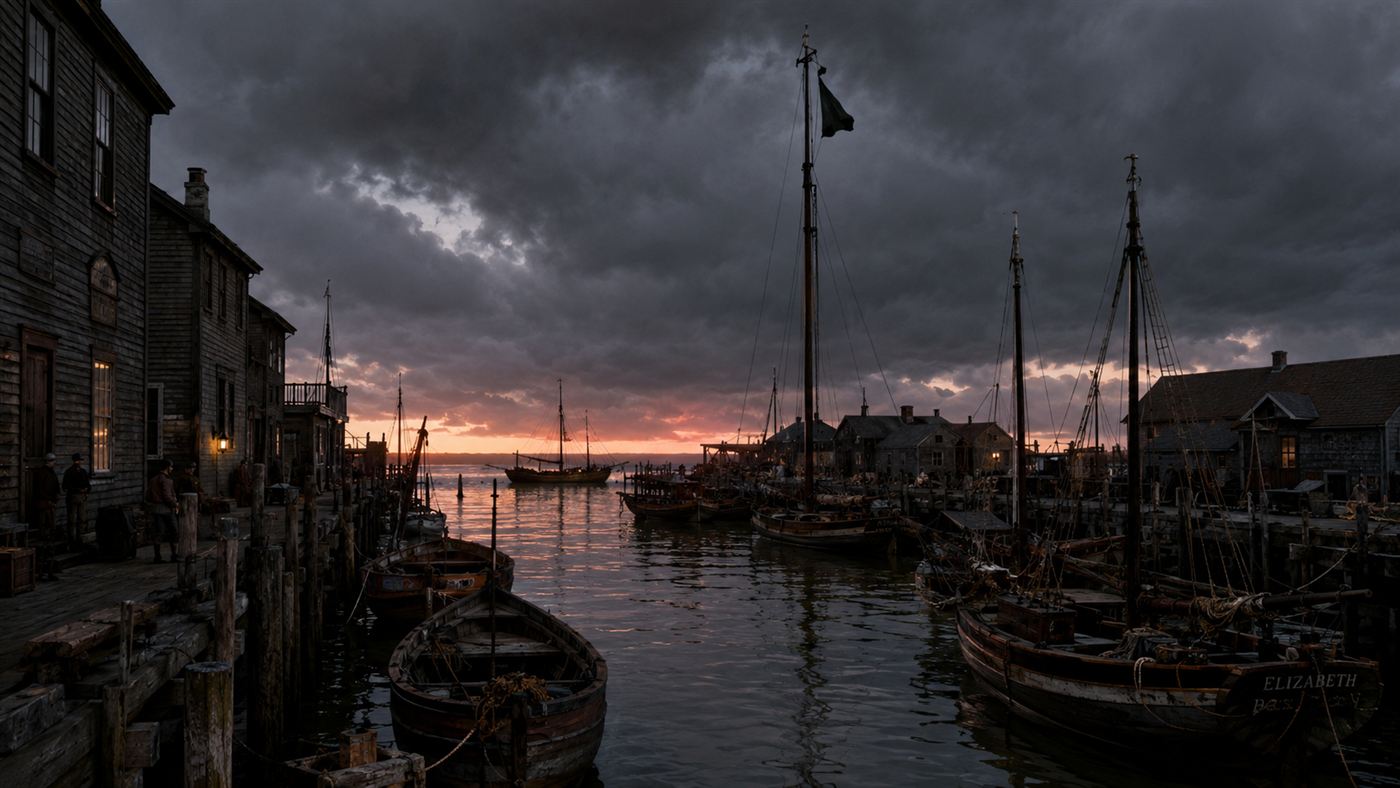
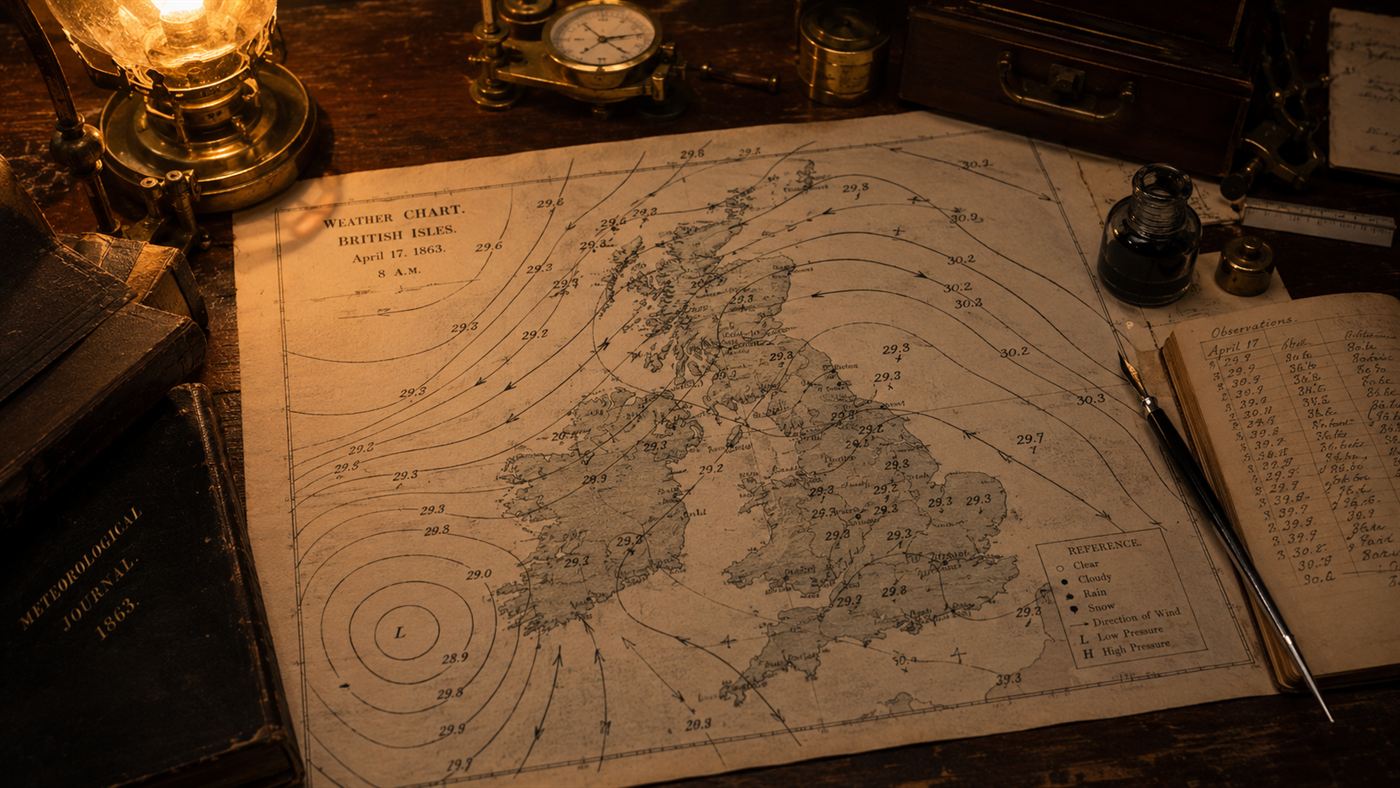
His insight was that weather moves. A storm battering Ireland today would often reach England tomorrow, so if you could gather readings from many places at once and wire them to a central office, you could see the danger coming. As the Met Office records of its own founder describe, he began issuing storm warnings by telegraph from 1861, and ports hoisted cones and drums to tell every skipper that bad weather was on the way. It was the birth of Britain's national storm-warning system.
A new word for a new idea
Soon FitzRoy went further and began publishing daily predictions of the weather to come in the newspapers. He needed a word for them, something that promised a careful estimate rather than a prophet's certainty, and he chose one of his own making: forecast. As the New Zealand MetService has written in its tribute to him, that first newspaper weather forecast appeared in 1861, and the word he invented has been with us ever since.
The office he ran to do all this was the seed of what is now the Met Office, today one of the most respected forecasting bodies in the world. In his own lifetime, though, the weather forecast was treated less as a public service than as an embarrassment, a piece of guesswork dressed up as science. That is where his troubles began.
Why the scientists turned on him
The scientific establishment of Victorian Britain did not believe the weather could be predicted at all, and many of its leading figures thought FitzRoy was making a fool of himself and of science. When his forecasts were wrong, and with the crude data of the 1860s they often were, the criticism was merciless. Newspapers that printed his weather forecast one week would happily mock it the next.
The attacks wore him down. FitzRoy was paying for parts of the work out of his own pocket, his health was failing, and he suffered from the deep depression that had shadowed him for years. On the morning of 30 April 1865, worn out by money worries, overwork and ridicule, Robert FitzRoy took his own life. He died believing, in large part, that he had failed.
The honest catch
It would be too neat to cast FitzRoy purely as a martyr to small-minded critics. The hard truth is that his forecasts genuinely were unreliable, because the science of the atmosphere barely existed yet and he was working far ahead of the data and theory needed to do the job well. His critics were not simply being cruel; some honestly believed he was promising more than anyone could deliver, and on any given day they were sometimes right.
His personal collapse was tangled up in money, faith and illness, not ridicule alone, and it does him no favours to flatten that into a simple tale of genius versus fools. What is fair to say is that he was reaching for something real before the tools to grasp it had arrived. The idea was sound even when the individual predictions were not, and that gap between a true idea and the means to prove it is exactly what made his life so painful.
Why a broken captain still matters
The vindication came, as it so often does, too late for the man himself. After his death the authorities tried to shut the forecasting work down, but the public would not have it. Sailors and ordinary people demanded their storm warnings back, and within a couple of years the warnings returned, with daily public forecasts following soon after. The thing FitzRoy had been mocked for turned out to be something people could not live without.
More than a century on, the shipping forecast still murmurs across the British airwaves, and as Wikipedia notes, in 2002 one of its sea areas was renamed FitzRoy in his honour, a small piece of the ocean carrying his name forever. Every weather forecast you have ever trusted is a quiet monument to a man who saw the future of the sky clearly, and paid for the privilege of being early.
A naval captain invented the weather forecast to save sailors, was ridiculed into despair for it, and only after his death did the world admit he had been right all along. Do you think the critics were cruel, or were they fair to doubt a forecast that was so often wrong? Tell us in the comments.
Related reading: The MP who fought to put a single painted line on every ship and stop greedy owners sending sailors to drown.