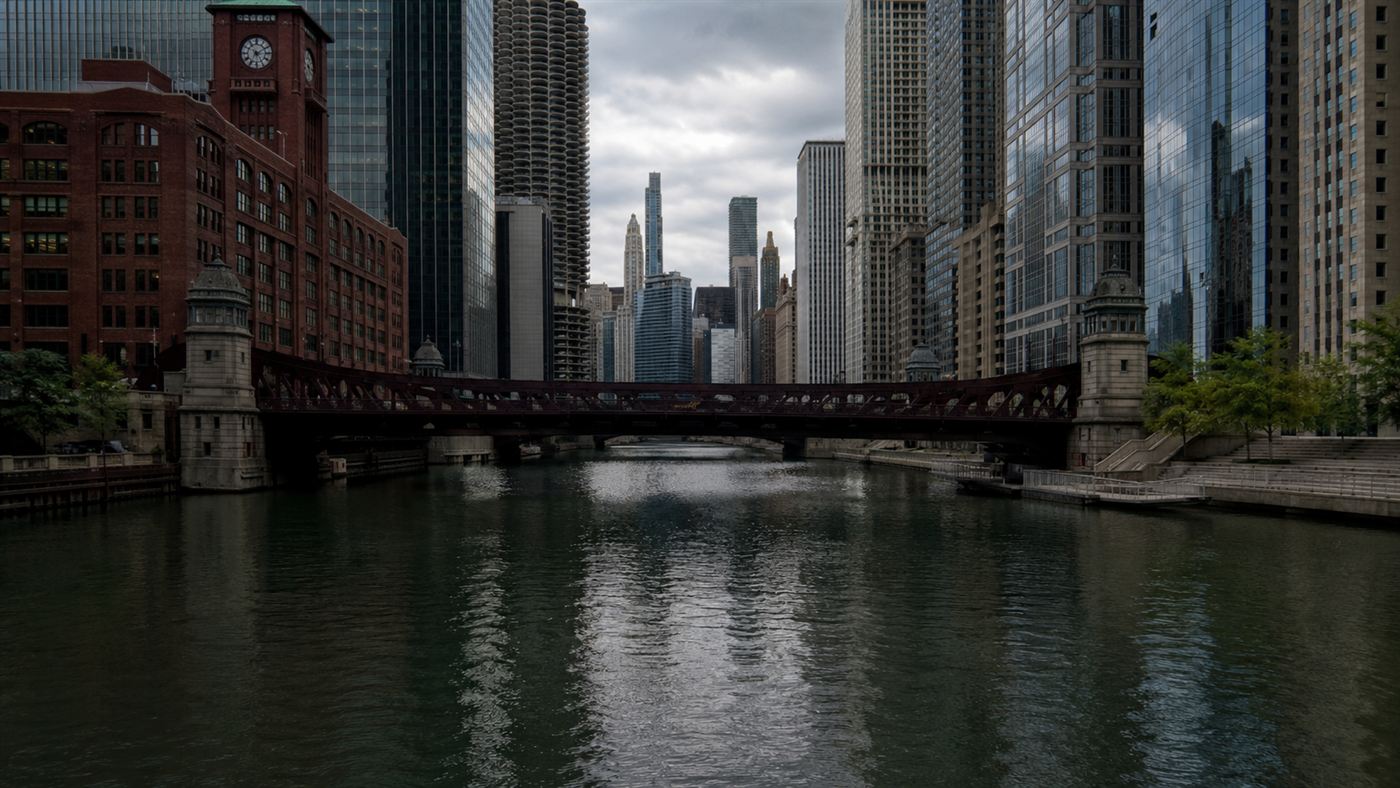
In the 1850s Chicago was sinking into its own mud, so the city jacked its buildings and streets several feet into the air, lifting entire brick blocks while shops and hotels stayed open inside them
It is one of the boldest things any city has ever done to itself. Faced with drowning in filth, Chicago decided not to move and not to rebuild, but to lift itself bodily out of the swamp, hoisting hotels, stores and whole blocks of brick into the sky, sometimes with the customers still inside.
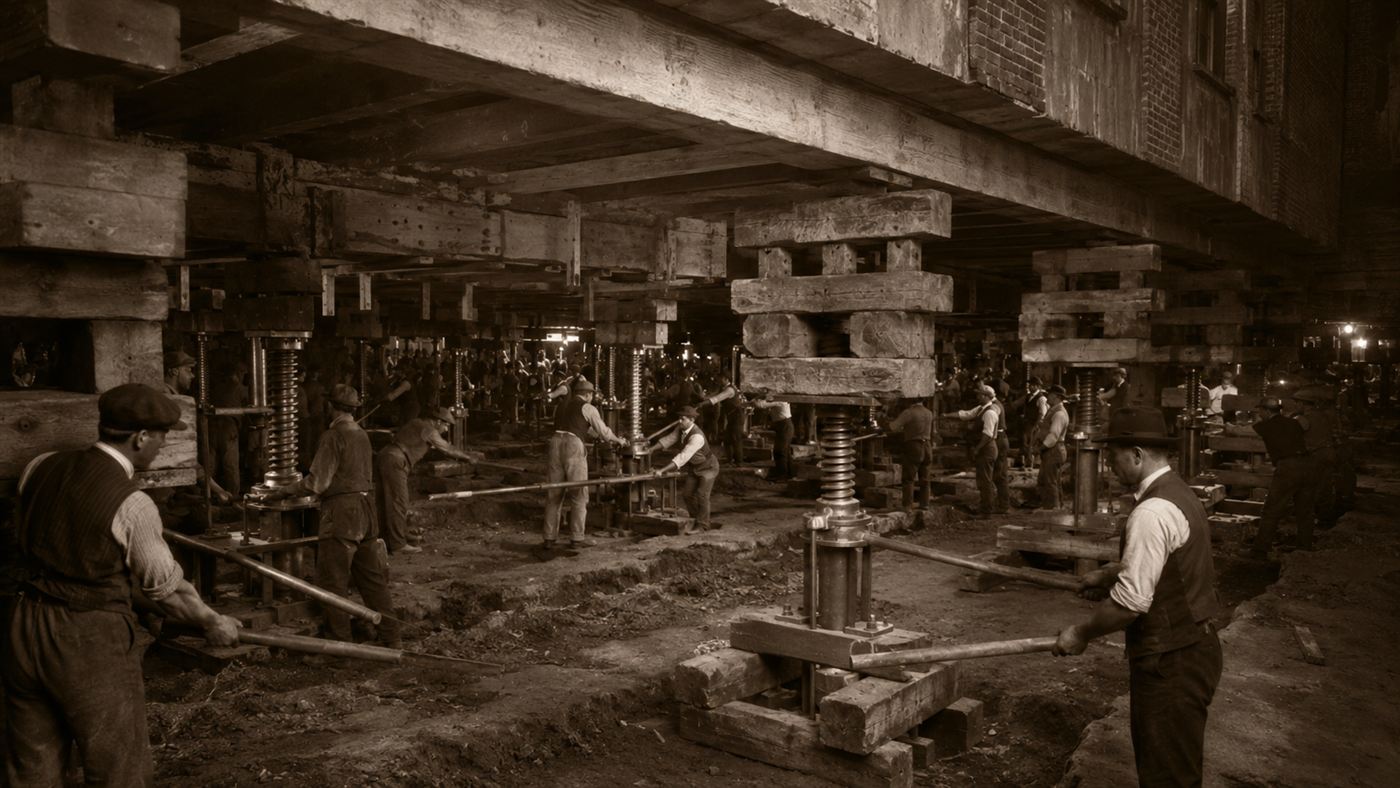
Hundreds of men turned jackscrews in unison to lift a building intact. Illustration: Watts & Wild.
By the middle of the nineteenth century, Chicago was booming, but it was built in the worst possible place: flat, soggy land barely above the level of Lake Michigan, with nowhere for water to drain. The streets became bottomless seas of mud, and the standing filth bred cholera and other diseases that killed people every summer.
The young city needed a sewer system, and badly. But there was a catch that would have defeated almost anyone: the ground was so low and so flat that there was nowhere for the sewage to flow to. The only way to make water run downhill was to make the whole city higher, and so began the astonishing raising of Chicago.
The short version: to drain itself, Chicago raised its entire street grade by several feet, which meant lifting thousands of existing buildings to match. Over more than a decade, engineers jacked up everything from small shops to enormous masonry hotels, and the raising of Chicago became one of the greatest and least remembered feats of American engineering.
A great city built in the mud
To understand the scale of the problem, you have to picture Chicago in the 1850s: a fast-growing metropolis planted on a marsh. The land sat only a foot or two above the water, and there was no natural slope at all, so rain and waste simply pooled where they fell and rotted.
Building a sewer system on such ground was impossible by normal means, because sewers need to run downhill to work. The engineers made a radical decision: rather than dig down, which the water table would not allow, they would lift the city up, raising the streets high enough to lay drains beneath them that could finally carry the filth away toward the river and Lake Michigan.
How do you lift a whole city?
They did it one building at a time, and the method was brutally simple in principle. A crew would dig around the foundation of a building and slide a small army of jackscrews underneath it, sometimes many thousands of them for a single large structure, spaced out to share the enormous weight evenly.
Then, on a signal, hundreds of men would each give their assigned screws a tiny fraction of a turn, all at once, over and over. Inch by careful inch the entire building would rise, so slowly and so evenly that the brickwork never cracked, while workers slipped new foundation blocks underneath. The genius of the raising of Chicago was that patience, multiplied across thousands of screws, could lift almost anything.
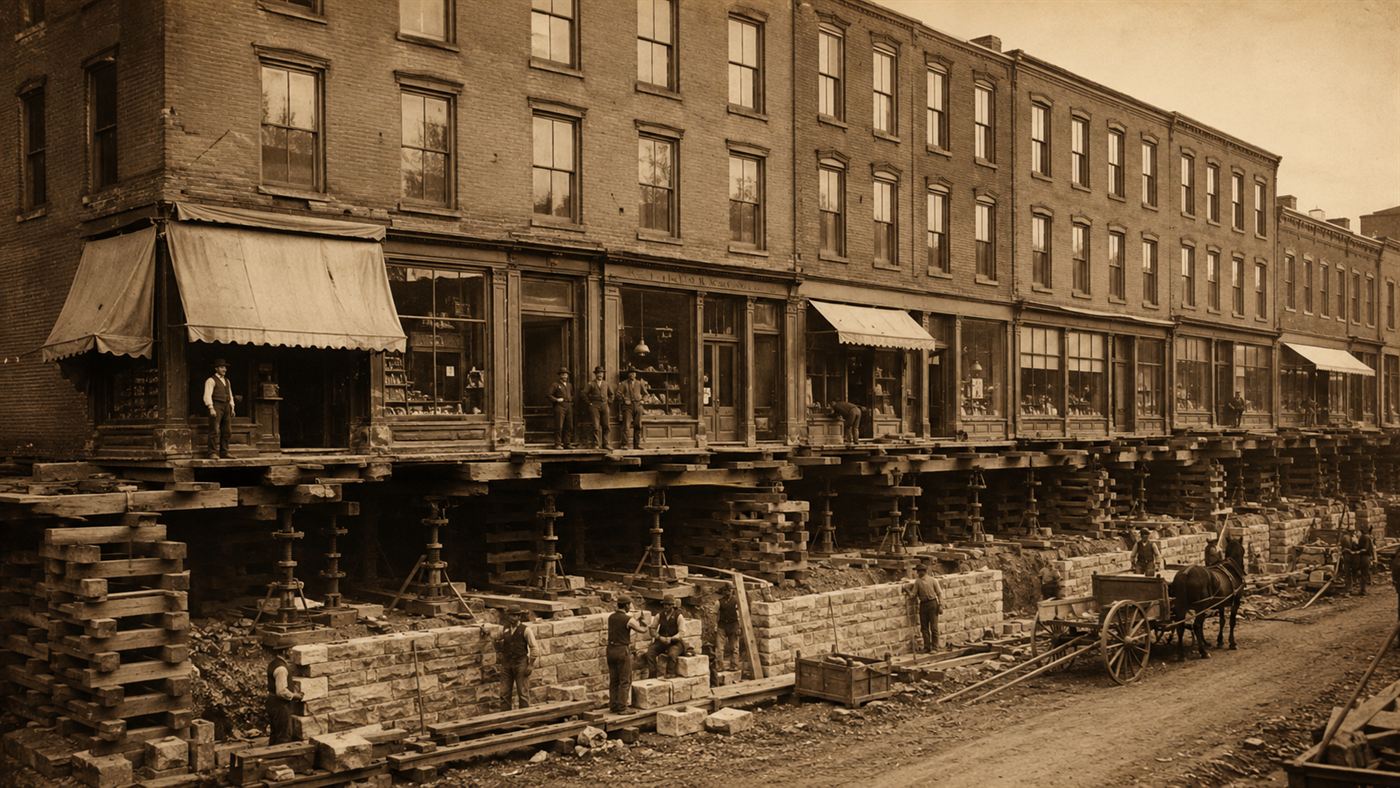
Jacking up a hotel with guests inside
The truly jaw-dropping part is that life often went on as normal during the lift. In one celebrated case, a solid brick row of shops stretching most of a block, weighing tens of thousands of tons, was raised on thousands of jackscrews turned by hundreds of men, and the stores stayed open the entire time.
Grand hotels got the same treatment. Guests reportedly ate dinner and slept in their rooms while the whole building crept upward beneath them, many never noticing a thing. Among the young engineers who made his name on these lifts was George Pullman, and George Pullman would go on to grow famous for his luxury railway cars.
The buildings that walked away
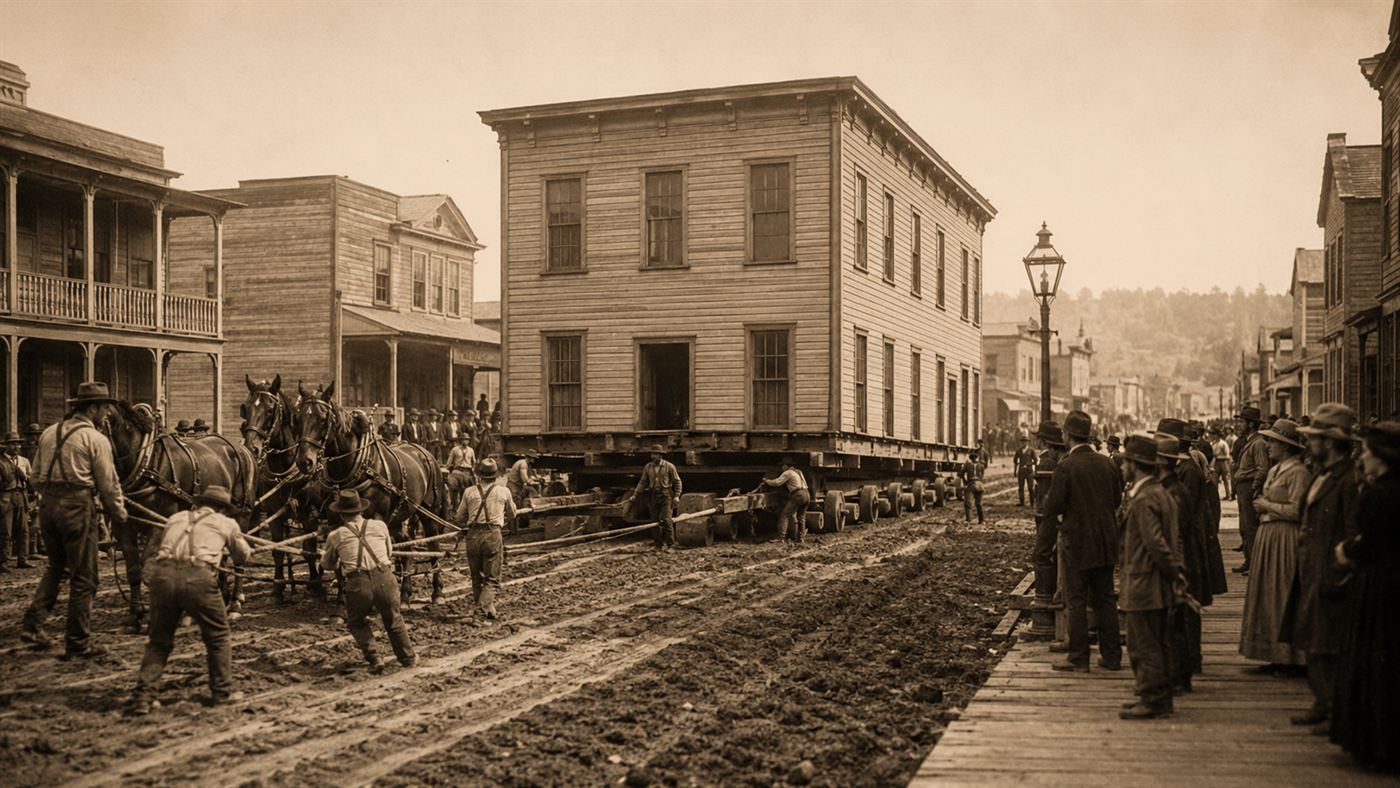
Not everyone chose to go up. For lighter, usually wooden buildings, some owners decided it was easier to move than to raise, and so entire houses and shops were jacked up, set on rollers, and simply hauled away through the streets to new locations on higher ground.
Visitors to Chicago in those years described the surreal sight of whole buildings trundling slowly down the road, past pedestrians who barely looked up, so common had the spectacle become. Between the structures rising in place and the ones rolling across town, the city was quite literally in motion.
The honest catch
The story is often told as if the entire city leapt into the air overnight with everyone inside, and that is a tall tale. In reality the raising of Chicago crawled along building by building and block by block for well over a decade, and plenty of structures, especially the wooden ones, were moved or simply rebuilt rather than lifted intact.
There is a bigger catch, too. The drainage the raising made possible dumped the city's sewage straight into the Chicago River, which flowed into Lake Michigan, the source of the city's drinking water. Solving the mud problem quietly created a poisoning problem, one so bad that Chicago would eventually have to perform another engineering miracle and reverse the flow of its own river.
Why nobody remembers the raising of Chicago
What makes the raising of Chicago so strange is how completely it has faded from memory, given how audacious it was. The reason downtown Chicago sits a few feet above its original ground is this decade of patient, screw-by-screw lifting, yet almost no one who walks those streets today has any idea it happened.
Perhaps that is the mark of really good infrastructure: when it works, it disappears. A whole city hauled itself out of the muck, cured its own epidemics, and launched careers and industries in the process, then let the achievement sink quietly into history beneath the very streets it had raised.
A whole city once lifted itself out of the swamp on thousands of screws, hotels, guests and all, and then forgot it had ever done such a thing. Would any city today have the nerve to jack up its own downtown a few feet just to fix its plumbing? Tell us what you think in the comments.
Related reading: how Chicago later reversed the flow of its own river to stop poisoning its water. See also the full subway Cincinnati built and never used, and the secret pneumatic subway hidden under Broadway.