The United States seriously tried to dig canals and harbors with nuclear bombs, blasting a crater the size of a stadium into the Nevada desert and coming within a whisker of nuking the coast of Alaska
In the heady early years of the atomic age, American scientists asked a genuinely stunning question: if the bomb could destroy a city, why not point that power at a mountain and use it to build? For twenty years, the government tried to turn nuclear weapons into the world's biggest shovels. It very nearly reshaped the map.
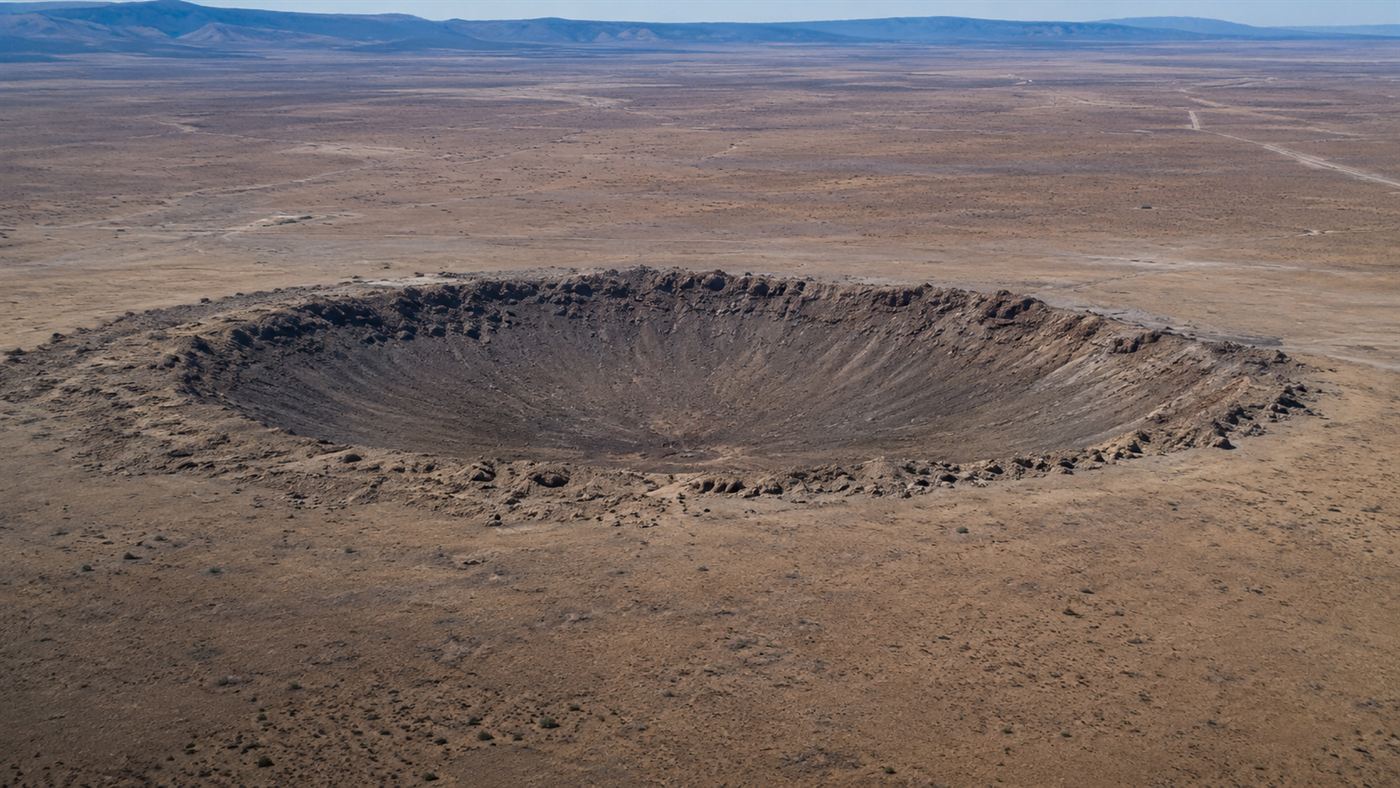
The Sedan crater, blasted by a single nuclear bomb, is the largest human-made crater in the US. Illustration: Watts & Wild.
It began in 1957, when the Atomic Energy Commission launched a program with a name borrowed from the Bible: Project Plowshare, from the verse about beating swords into plowshares. The idea was to find peaceful uses for the very weapons that had ended the Second World War, and the most ambitious of those uses was earth-moving on a scale no bulldozer could ever match.
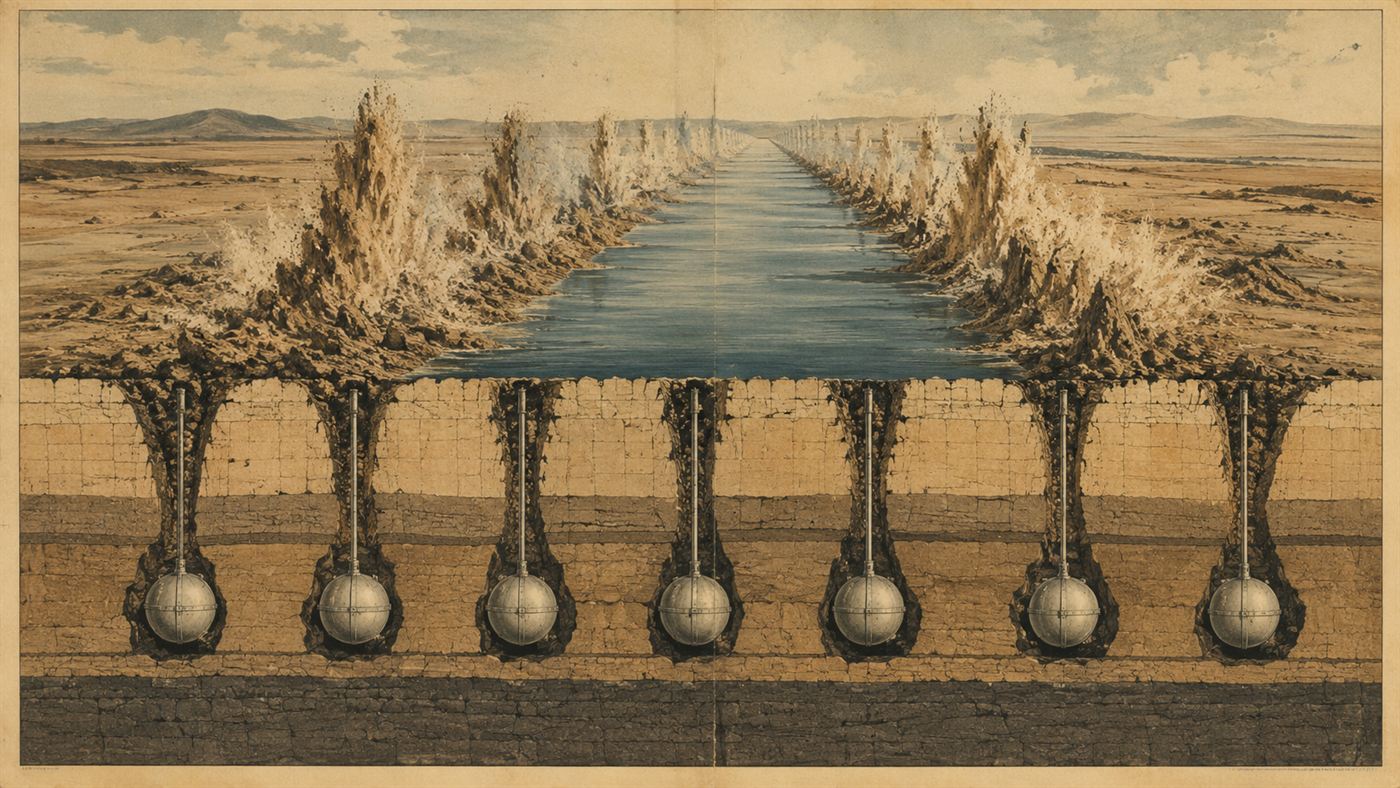
The pitch was seductive. A single nuclear device, buried and detonated, could in theory carve a harbor, blast a canal or dig a reservoir in seconds, doing the work of years of conventional excavation. To a generation that believed the atom would soon power everything, using it to sculpt the land seemed like the obvious next step.
The short version: Project Plowshare was a US plan to dig with nuclear bombs. Its 1962 Sedan test blasted the largest human-made crater in the country, and Edward Teller pushed a scheme to nuke a harbor into Alaska. Radioactive fallout and a total lack of safe uses eventually killed the program in 1977.
The stadium-sized hole in the desert
The centerpiece proof came on July 6, 1962, at the Nevada Test Site, with a shot called Sedan. Engineers buried a device with a yield of 104 kilotons, more than six times the Hiroshima bomb, deep under the desert floor, and set it off to see how big a hole it would make.
The answer was staggering. The blast heaved a dome of earth 300 feet into the air and then blew out, hurling aside some 12 million tons of soil and leaving a crater about 1,280 feet wide and 320 feet deep. The Sedan crater is still the largest human-made crater in the United States, so vast that visitors to the Nevada Test Site today view it from a platform on the rim. As pure excavation, it worked spectacularly.
The plan to nuke a harbor into Alaska
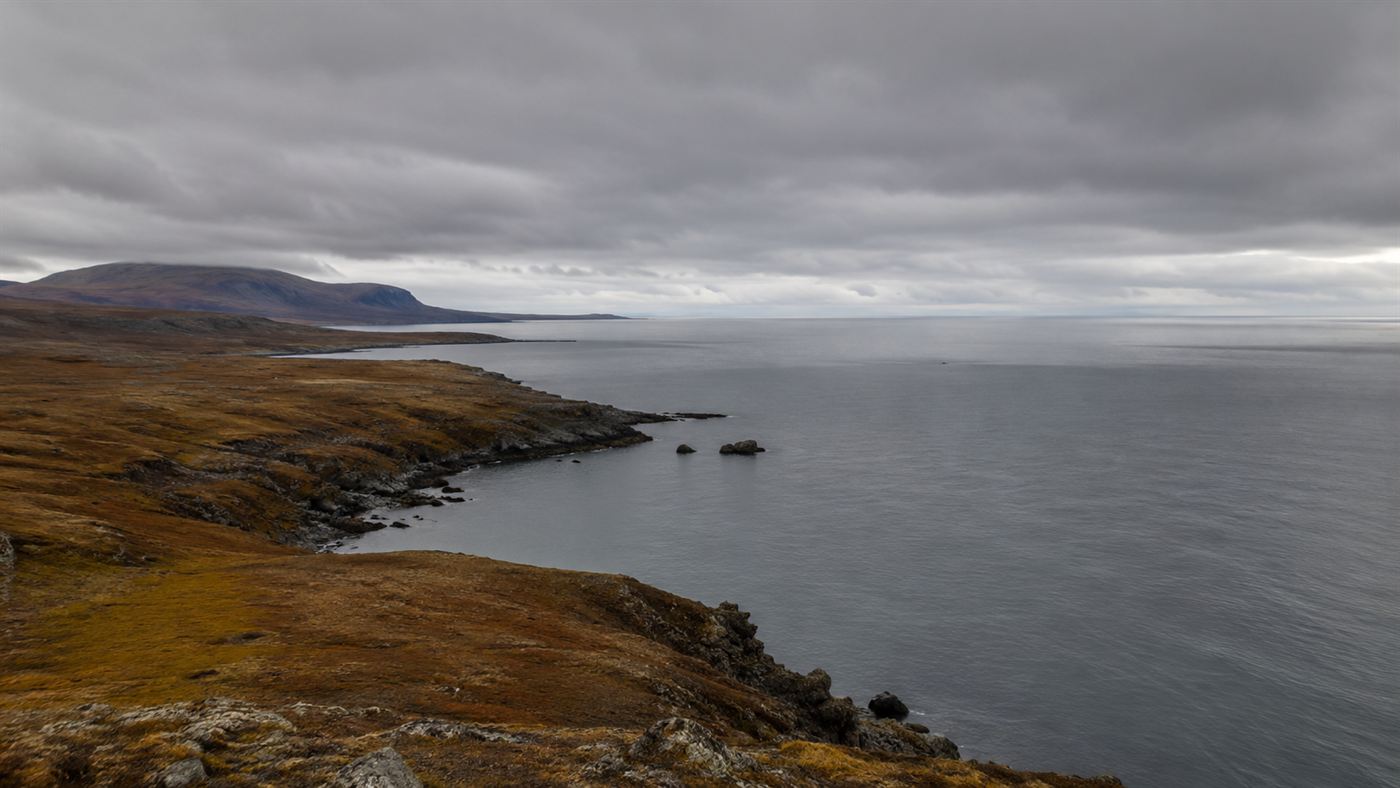
The most audacious idea was not a test but a real construction project. Under the banner of Project Chariot, the physicist Edward Teller, one of the fathers of the hydrogen bomb, championed a plan to detonate a string of nuclear devices to blast a deep-water harbor into the coast of Alaska at Cape Thompson.
Teller toured the state promoting it as a gift of progress to America's newest state. There was just one problem: nobody actually needed a harbor there, in a remote, ice-bound stretch of coast. It was a solution in search of a purpose, a demonstration dressed up as development, and it would be detonated right next to people's homes.
Why did Project Plowshare fall apart?
The dream ran headlong into physics and biology. The Inupiat people who lived near Cape Thompson, along with a small group of scientists, refused to accept the reassurances, and the environmental studies proved them right. Researchers found that fallout radiation was moving with alarming efficiency up the Arctic food chain, from lichen to caribou to the people who ate them.
That finding helped ignite one of the first great environmental fights in America, and in 1962 the AEC quietly shelved Project Chariot. The wider program limped on for years, but the same problem sank every scheme: a "peaceful" nuclear blast still sprayed radioactivity everywhere. The Sedan test alone contaminated more US residents than any other single nuclear detonation.
The honest catch
It is easy to laugh at Project Plowshare as pure Cold War madness, and there was plenty of hubris in it. But the engineers were not stupid, and on the narrow question they set out to answer, they were right: a nuclear bomb really can move an astonishing amount of earth in an instant. Sedan is proof, sitting in the desert to this day. The idea failed on everything except the digging.
What its champions could not admit was that the digging was the easy part. No amount of clever engineering could separate the excavation from the fallout, the contaminated food chains and the simple fact that people do not want radioactive canals in their backyard. Plowshare is a monument to a very specific kind of error: solving a problem so brilliantly that you never stop to ask whether it should be solved that way at all.
The most powerful weapons ever built were very nearly turned into ordinary construction equipment, and only fallout and public fury stopped it. Was this a visionary idea ruined by bad luck, or a disaster the world got lucky to dodge? Tell us in the comments.
Related reading: Project Gasbuggy, the Plowshare test that set off a nuclear bomb underground to free natural gas. See also the wild plan to blast an inland sea into the Sahara with hundreds of nuclear bombs.