During World War II the United States seriously built a bomb packed with a thousand live bats, each carrying a tiny firebomb, and in one test the bats escaped and burned down their own airfield
Some wartime ideas are so strange it is hard to believe anyone signed off on them. This one was approved at the very top, cost a small fortune, and very nearly went to war: a bomb that would open in the sky and release a swarm of bats, each one carrying a fire that would burn a city from the inside out.
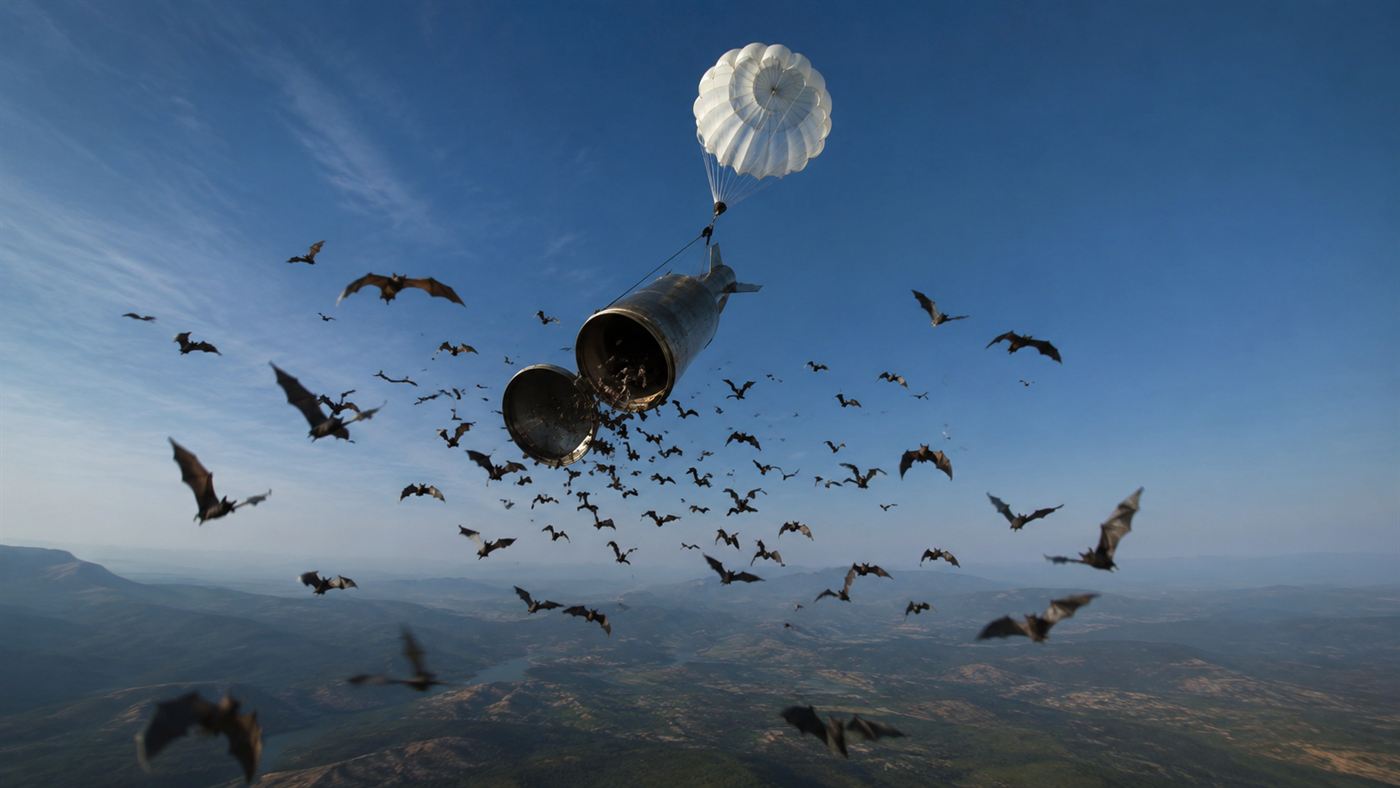
The plan: a falling canister that popped open and set a thousand bats loose. Illustration: Watts & Wild.
In the anxious weeks after Pearl Harbor, the United States government was flooded with ideas for how to strike back at Japan. Most were nonsense. But one letter, from a dental surgeon in Pennsylvania named Lytle Adams, proposed something so bizarre and so oddly logical that it climbed all the way to the desk of President Roosevelt, who ordered it looked into.
The result was the bat bomb, officially Project X-Ray, one of the most improbable real weapons ever developed. It was not a joke or a rumor. It was a funded, tested military program that came remarkably close to being used, and its story is stranger than any fiction.
The short version: an American dentist suggested arming bats with tiny firebombs to burn Japan's wood-and-paper cities, the military actually built it, and it worked well enough in testing to be genuinely frightening, before the atomic bomb made the whole idea obsolete.
A dentist's idea after Pearl Harbor
Lytle Adams had recently visited the vast bat caves of the American Southwest, and the sight stuck with him. When war came, he put two facts together: Japanese cities were built largely of timber and paper, and the caves of Texas held millions upon millions of bats that naturally seek out small, hidden nooks to roost in.
What if, he wondered, you could turn that instinct into a weapon? Give each bat a tiny time-delayed firebomb, release a huge cloud of them over a city at dawn, and they would vanish into the eaves and attics of thousands of buildings before their charges went off. It was macabre, but on paper the logic of the bat bomb was hard to dismiss.
How was the bat bomb supposed to work?
The engineering was ingenious. The chosen carriers were Mexican free-tailed bats, gathered in huge numbers from caves in Texas, small animals that could still carry a surprising load. Each was fitted with a miniature napalm incendiary on a timer, then cooled into hibernation so it would stay calm and still.
Rows of these sleeping bats were packed into trays inside a bomb-shaped casing fitted with a parachute. Dropped from a bomber, the casing would open high over the target, the trays would spread apart, and the warming bats would wake in mid-air, flutter down, and disappear into the buildings below, each a tiny courier for the incendiary strapped to its body.
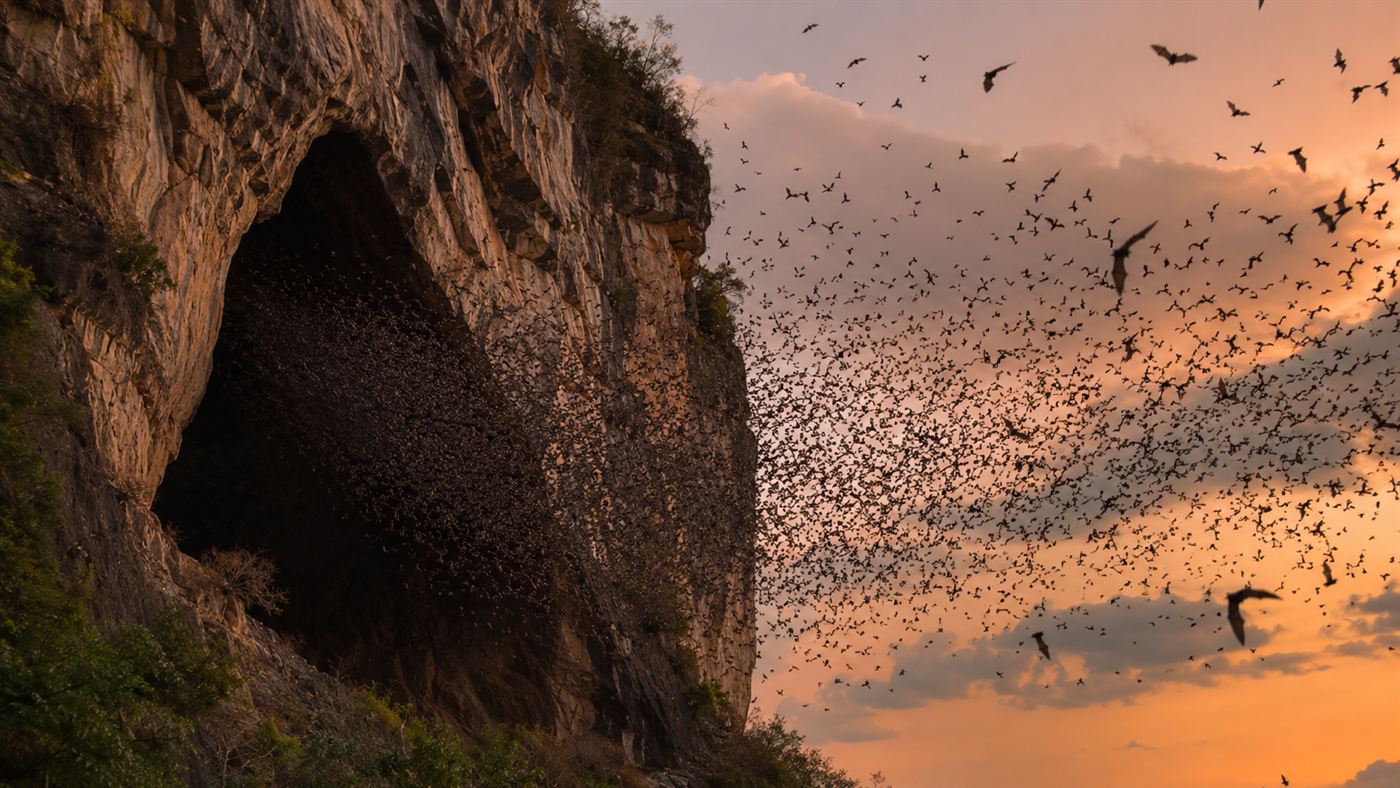
The bats that burned an American base
Testing quickly proved the concept was no fantasy, and also that it was almost impossible to control. During a 1943 trial at an army airfield in New Mexico, a batch of armed bats got loose before anyone intended and did exactly what they were designed to do, just in the wrong place.
The escaped bats roosted under a fuel tank and beneath the airfield's own buildings, and when their little incendiaries fired, they set the base alight. Hangars, a control tower and a general's car reportedly went up in flames. In a grimly convincing way, the accident proved that the bat bomb worked exactly as intended.
Why the bat bomb never flew
By 1944 the program had swallowed around two million dollars and was showing real, alarming promise. Observers estimated that a full attack could start far more fires across a city than an ordinary load of incendiary bombs, because the bats would scatter the flames deep inside countless separate buildings rather than in one blazing cluster.
But it was slow. The weapon would not be ready for combat until the middle of 1945, and by then another secret project had raced ahead. The atomic bomb promised to end the war in a single stroke, and it took the priority, the money and the men. With that, Project X-Ray was quietly cancelled, and the bats were sent home.
The honest catch
It is easy to file the bat bomb under wartime comedy, but that undersells how real and how disturbing it was. This was not a napkin sketch, it was a tested weapon that its own observers believed could have been devastatingly effective against a nation's cities, and it was designed to do horrifying things to the people living in them.
It is also fair to be cautious about the claims. The evidence that it would have worked at full scale rests on a handful of tests, and no one truly knows how it would have performed in a real raid. What is certain is that it was a serious effort, not a myth, and that it was killed by a rival technology, not by failure.
The weirdest weapon that almost was
Project X-Ray sits in a small, strange museum of ideas that were completely real and yet feel impossible, weapons and machines a war was desperate enough to actually build. Its inventor believed to his dying day that the bat bomb could have ended the war with far less loss of life than the atomic bombs that replaced it.
We will never know if he was right, and that is part of what makes the story linger. For a brief moment, the fate of cities was pinned to the sleeping bodies of a thousand Texas bats, and the only reason it never happened is that we found an even more terrible idea first.
A dentist's idea turned into a real weapon of a thousand fire-carrying bats, and it took an atomic bomb to make it look sensible by comparison. Would a war fought with strange contraptions like this have been any less cruel than the one we actually had, or just stranger? Tell us what you think in the comments.
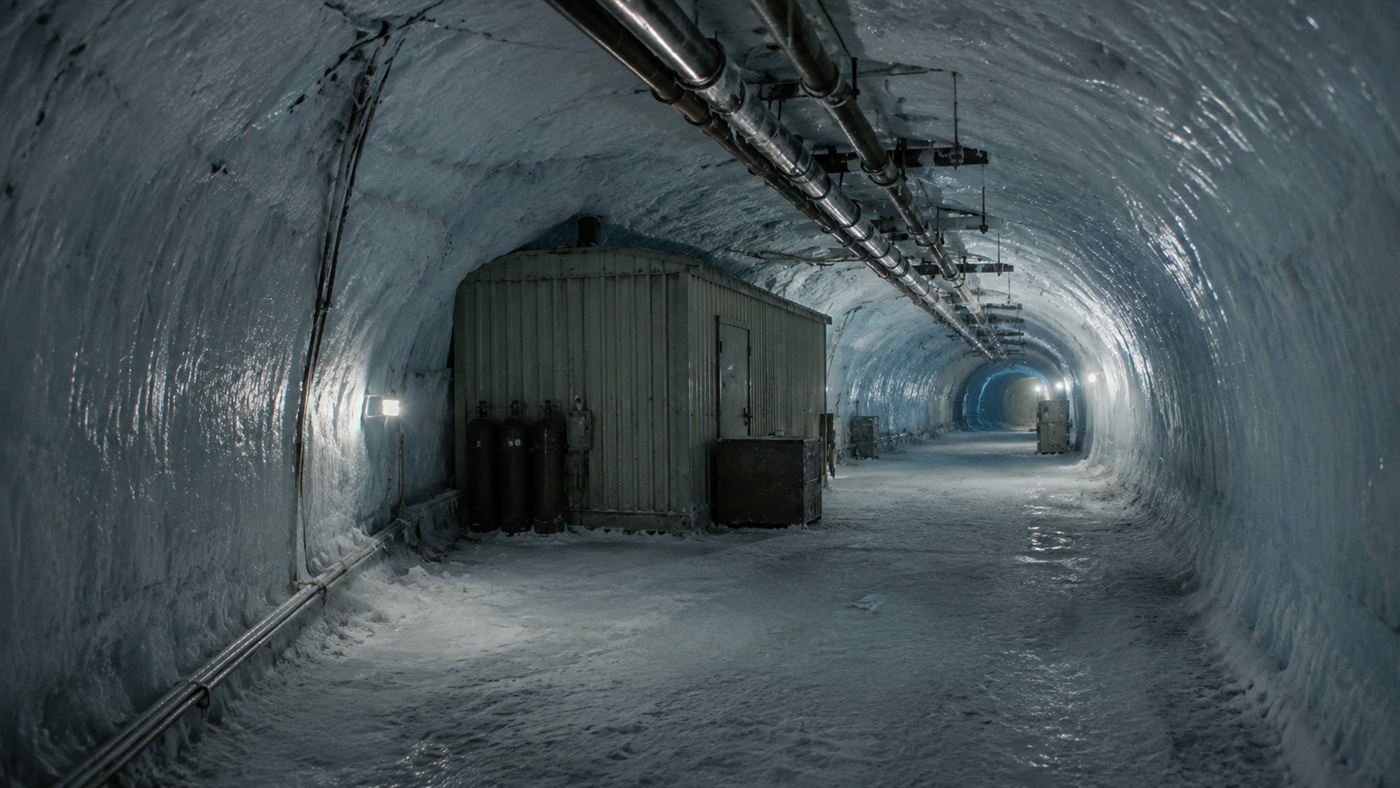
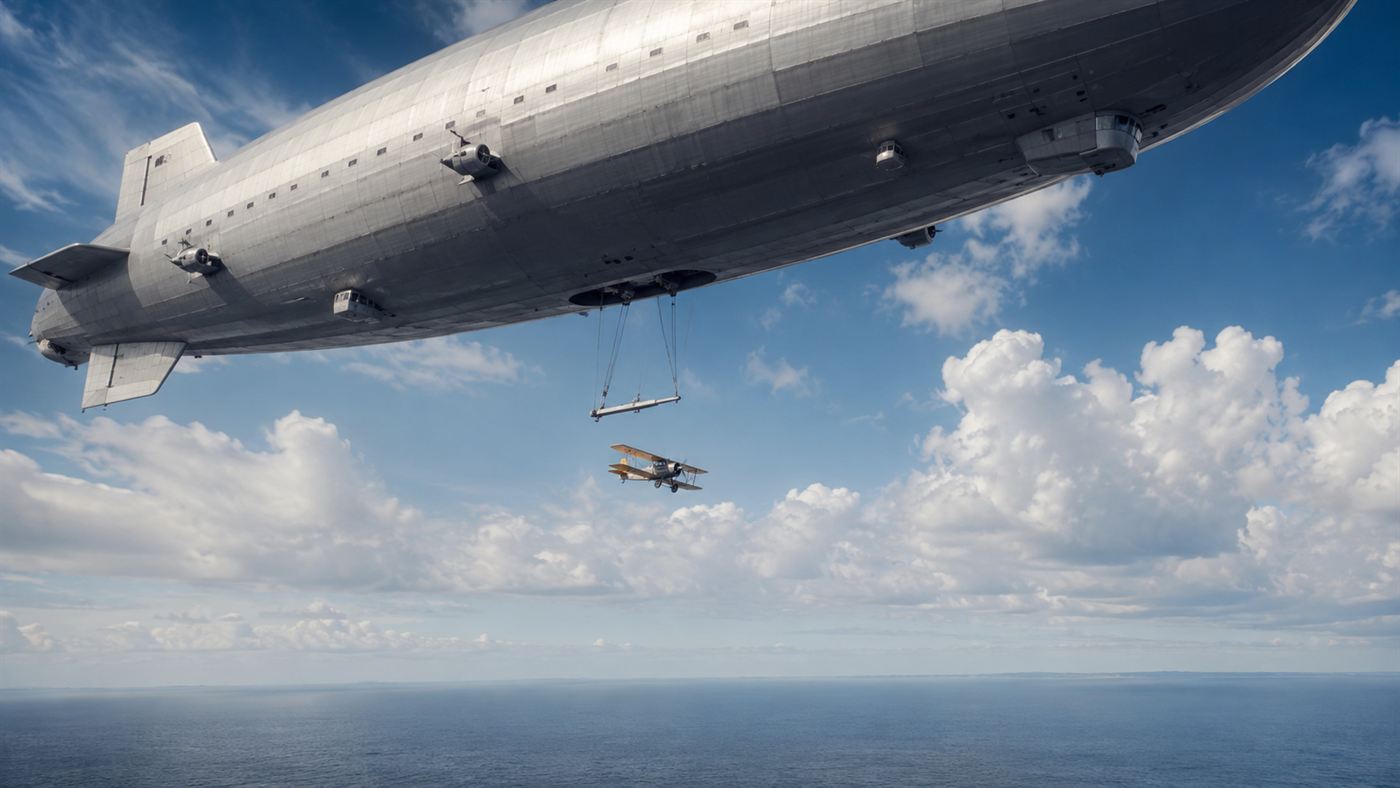
Related reading: Project Orion, the plan to fly a spaceship by dropping atomic bombs behind it. See also the secret US city built inside the Greenland ice, and the Navy airships that carried fighter planes in their bellies.