In the Second World War Britain seriously tried to build a giant, unsinkable aircraft carrier out of ice, and an eccentric inventor very nearly pulled it off
It sounds like something from a cartoon: a warship the size of a small island, carved from frozen water, sailing the Atlantic and shrugging off torpedoes because any hole simply freezes over again. Yet Project Habakkuk was a real, funded plan, backed at the highest levels of the British war effort, to build an aircraft carrier out of ice.
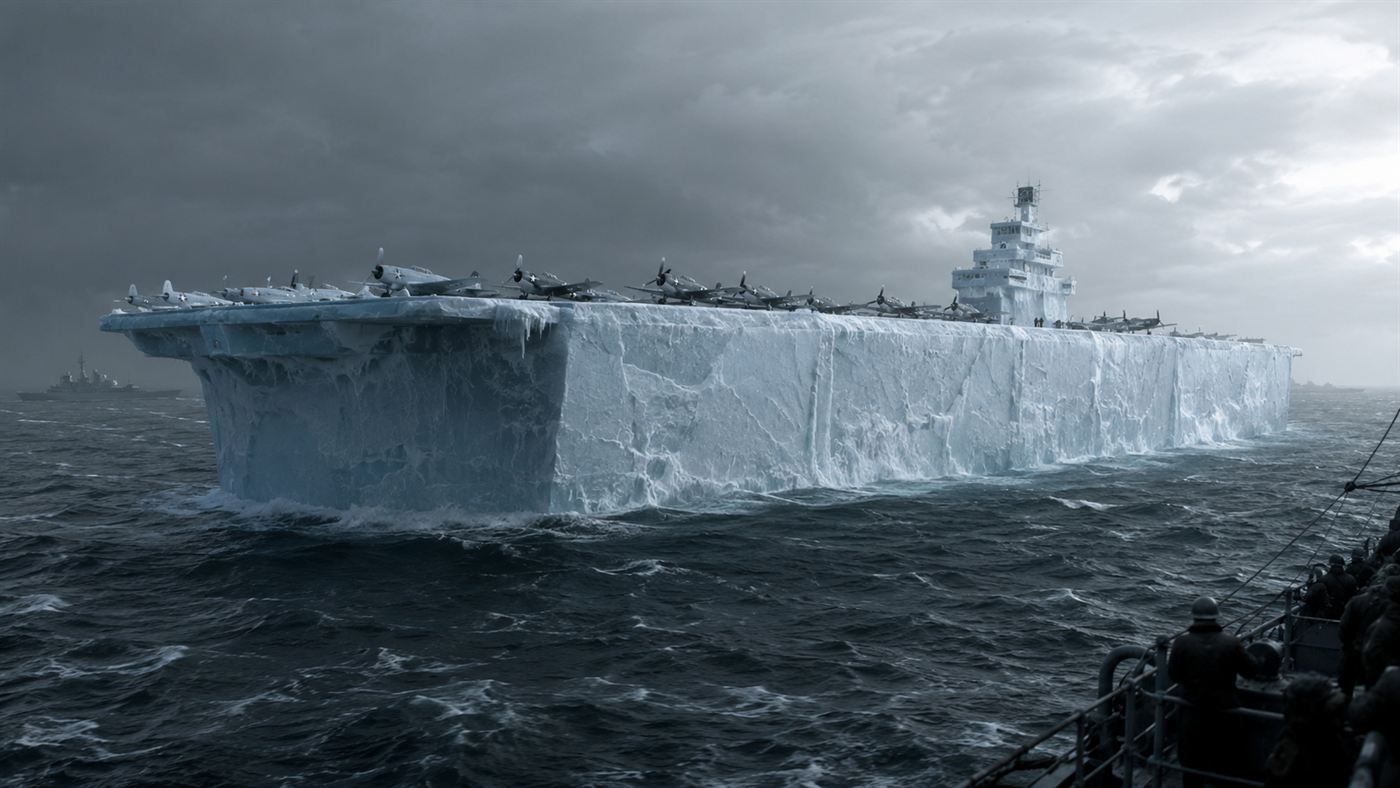
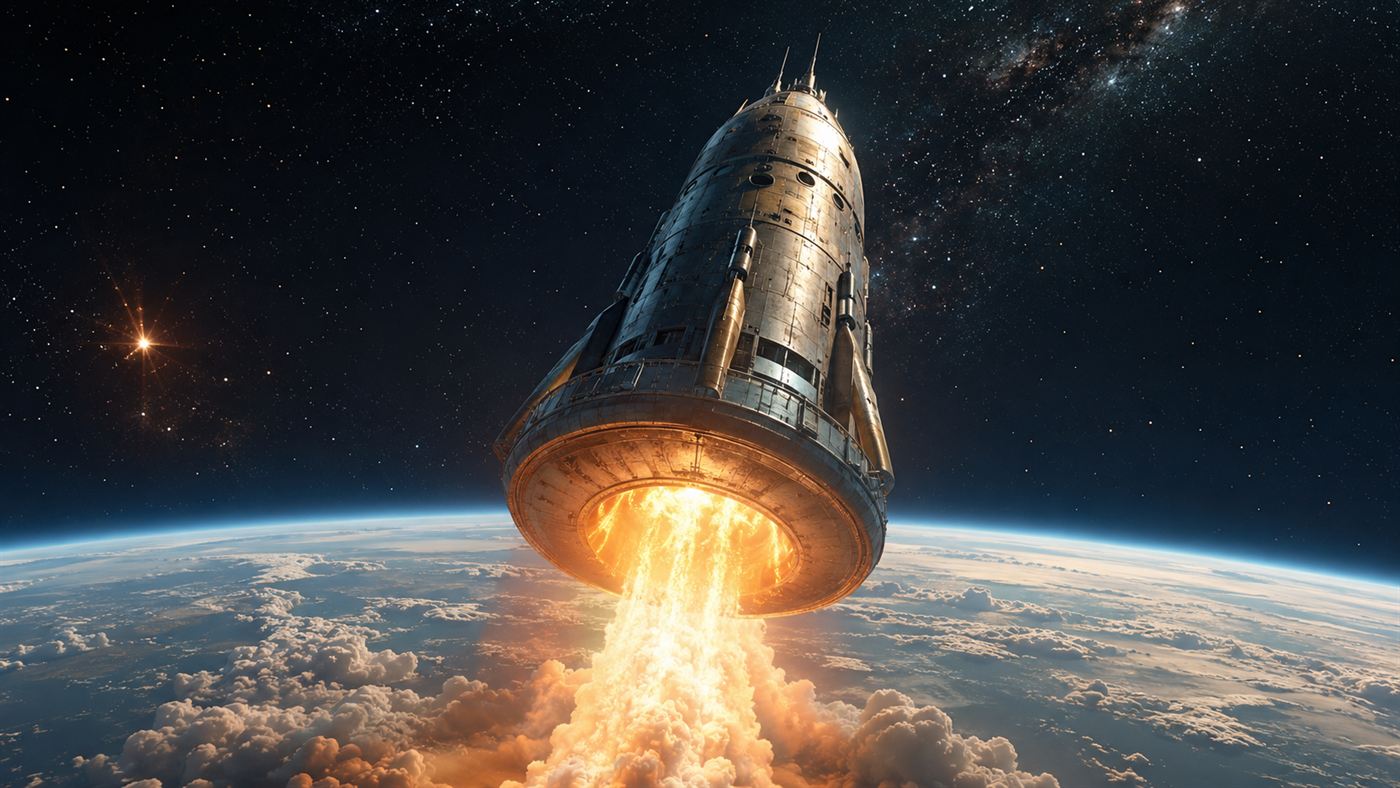
A vast carrier of frozen pykrete, big enough to make torpedoes almost pointless. Illustration: Watts & Wild.
By 1942 the Allies were losing terribly in the Atlantic. German U-boats were sinking merchant ships faster than they could be replaced, and the worst killing ground was the mid-ocean gap that land-based aircraft could not reach. What the convoys needed was air cover in the middle of the sea, and steel for more aircraft carriers was desperately scarce. Into that crisis stepped one of the strangest minds of the war.
His name was Geoffrey Pyke, a brilliant, unconventional British inventor who worked for Combined Operations under Lord Mountbatten. Pyke had a gift for ideas that sounded mad and occasionally were not, and his solution to the carrier shortage was breathtaking in its cheek: as Wikipedia documents, he proposed building an unsinkable airbase out of frozen water, which the enemy can never run short of.
How Project Habakkuk would float
The vision was staggering in scale. The proposed vessel would have been hundreds of metres long and displaced perhaps two million tonnes, dwarfing any ship ever built, with a flight deck broad enough to launch and land conventional bombers. Because it would be made mostly of frozen water, it would be cheap in steel and, in theory, almost impossible to sink, since a torpedo blast in a mountain of ice just makes a dent you can freeze shut.
The genius of Project Habakkuk was also its catch. Ordinary ice is brittle and melts, useless for a warship. The fix came from a discovery that gave the project its secret ingredient, a material that turned a silly idea into a serious one, and it is the part of the story that still surprises engineers today.
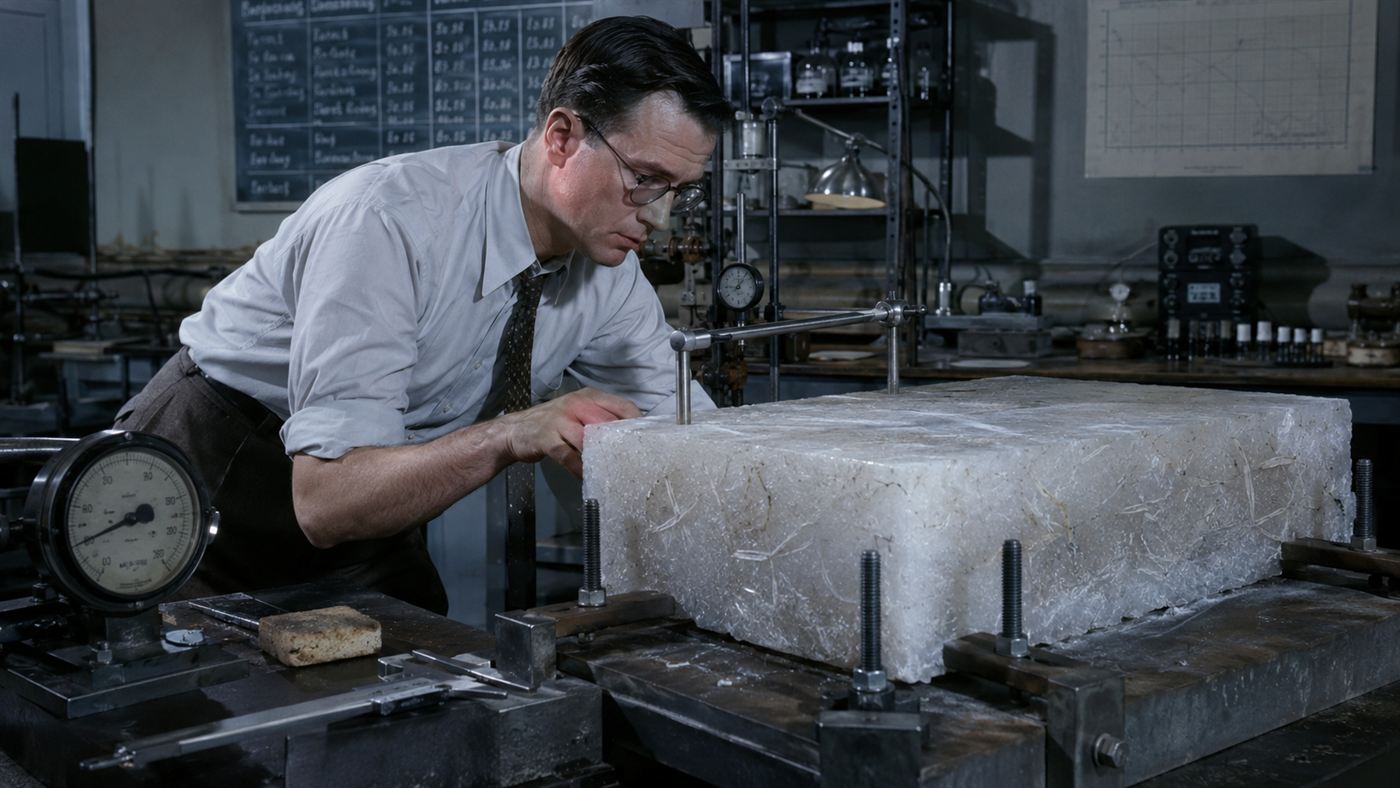
The strange magic of pykrete
As the Imperial War Museum explains, that ingredient was pykrete, named after Pyke himself: ordinary water frozen with about 14 percent wood pulp or sawdust mixed in. The fibres lock the ice together so that pykrete behaves nothing like the stuff on a winter pond. It is far stronger, crushing under load like concrete rather than shattering, and the wood acts as insulation so it melts far more slowly.
It is also startlingly tough. In the famous demonstration that sold the idea, a bullet fired at a block of plain ice smashes it, while a bullet fired at pykrete barely chips it and can ricochet off. Legend has it that Mountbatten dropped a lump of pykrete into a hot bath to prove how slowly it melted, and even fired a pistol at a block in front of startled Allied chiefs at a wartime conference to win them over.
The ice ship that was actually built
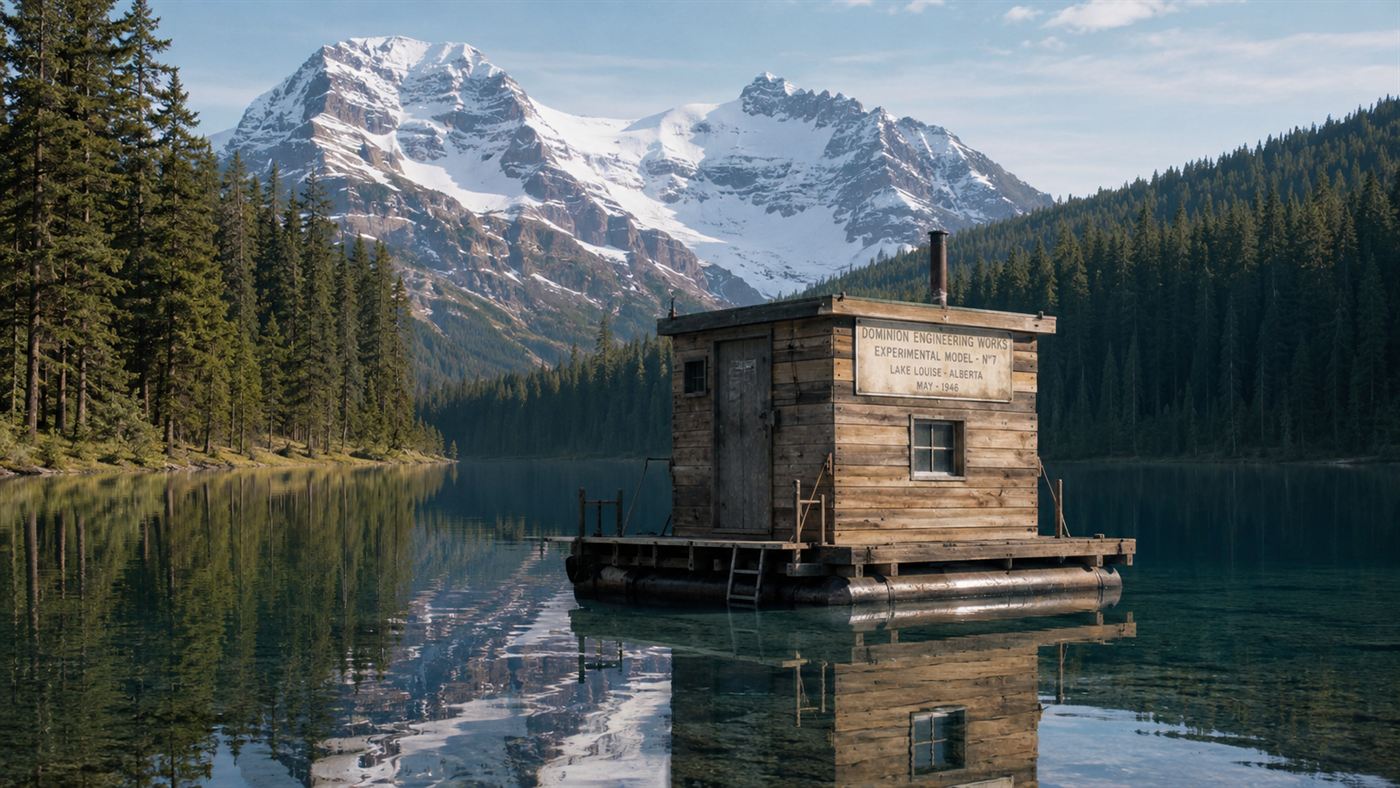
This was not just talk. To test the concept, as Atlas Obscura records, engineers built a 1,000-tonne prototype on Patricia Lake in the Canadian Rockies during 1943. It was a smaller stand-in for the real thing, with a refrigeration plant and insulation, and crucially it worked well enough to prove the principle. The little aircraft carrier of ice sat in the lake and stubbornly refused to melt, taking three whole summers to finally disappear after the project ended.
The name itself hints at the mood of the thing. It was code-named after the prophet Habakkuk, from a biblical line about being utterly amazed at an unbelievable work, and it was reportedly spelled wrong in the paperwork from the start. Even the people building the world's only ice aircraft carrier seemed to half-suspect they were chasing something gloriously absurd.
The honest catch
For all the ingenuity, Project Habakkuk was never close to a real warship, and it is worth being clear about why. The full-size vessel would have needed a colossal refrigeration system running constantly to stop it sagging, an enormous amount of steel and cork after all for insulation and machinery, and some way to steer a floating ice mountain, none of which had been solved. The costs and complications kept ballooning as the engineers looked harder.
The deeper reason it died, though, was that the war moved on. Longer-range aircraft, more small escort carriers, and better tactics steadily closed the deadly mid-Atlantic gap, so by late 1943 the case for a two-million-tonne ice ship had quietly evaporated. The bathtub and pistol stories, charming as they are, have also grown in the telling, so the legend now runs a little ahead of the documented facts.
Why a doomed ice ship is worth remembering
Project Habakkuk never sailed, but it is far more than a wartime joke. It is a window into how desperation breeds radical creativity, how a crisis can make a serious nation pour real money and talent into an idea that sounds ridiculous on its face, and occasionally strike something genuinely clever along the way.
The real legacy is pykrete itself, a reminder that even something as humble as ice can be reengineered into a material with surprising powers. Geoffrey Pyke's floating fortress of frozen water belongs to a noble tradition of magnificent failures, the bold swings that miss but leave behind an idea too good to forget. Few misses in history are quite as cool, in every sense, as a battleship made of ice.
A country at war seriously tried to float a two-million-tonne airbase made of frozen water, and built a working prototype before giving up. Was Project Habakkuk inspired genius or an expensive distraction in the middle of a war? Tell us in the comments.
Related reading: The giant wooden seaplane that flew only once and then never again.