Prelude FLNG is a floating gas factory longer than the tallest skyscraper, built to ride out a category-five cyclone while turning natural gas to liquid on the open ocean
Prelude FLNG is the largest floating structure ever built, a steel island longer than the Empire State Building is tall. It sits 200 kilometres off Australia, chilling natural gas into liquid at sea, and it slowly turns to face the wind so it can survive the fiercest storms.
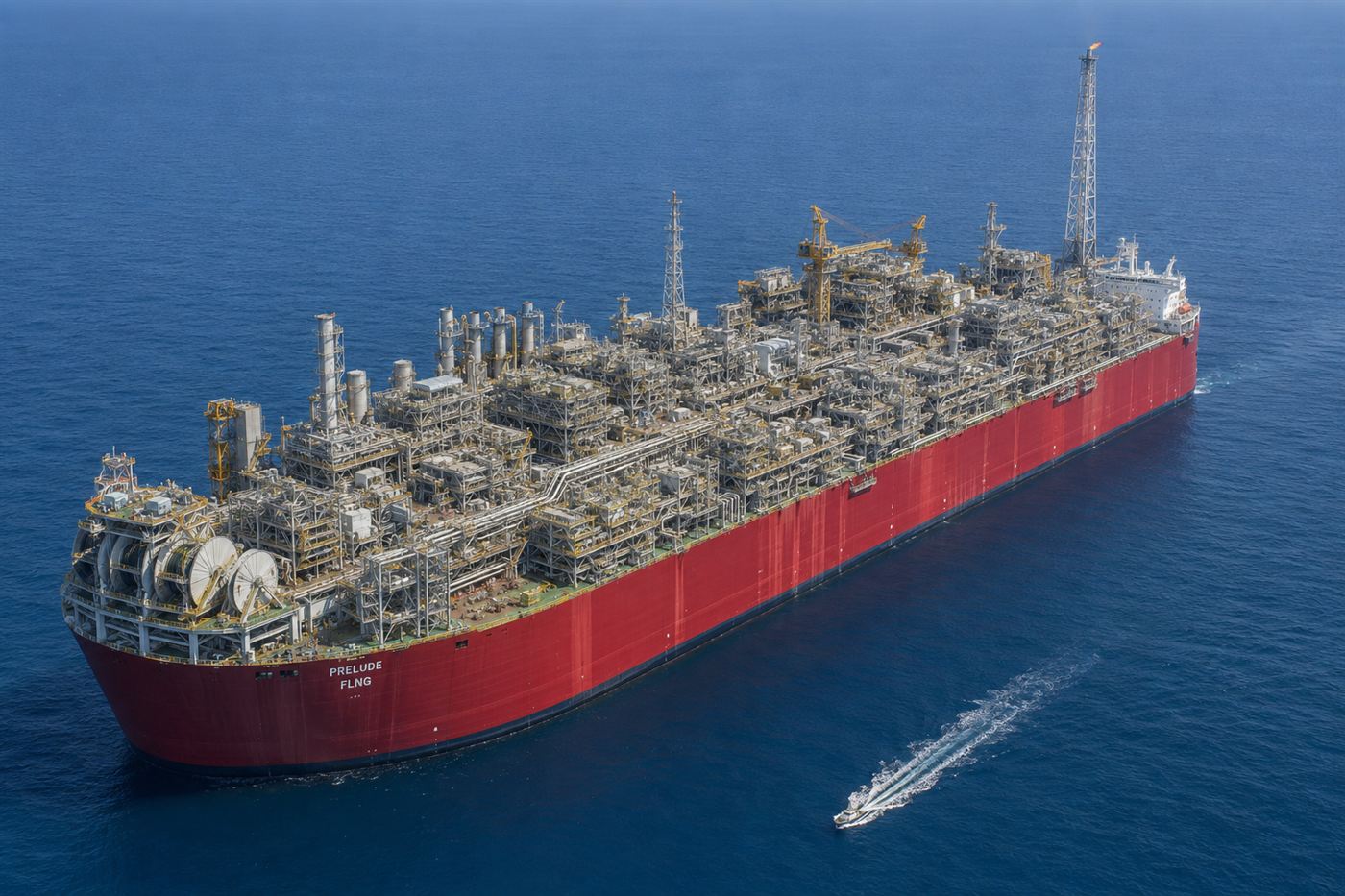
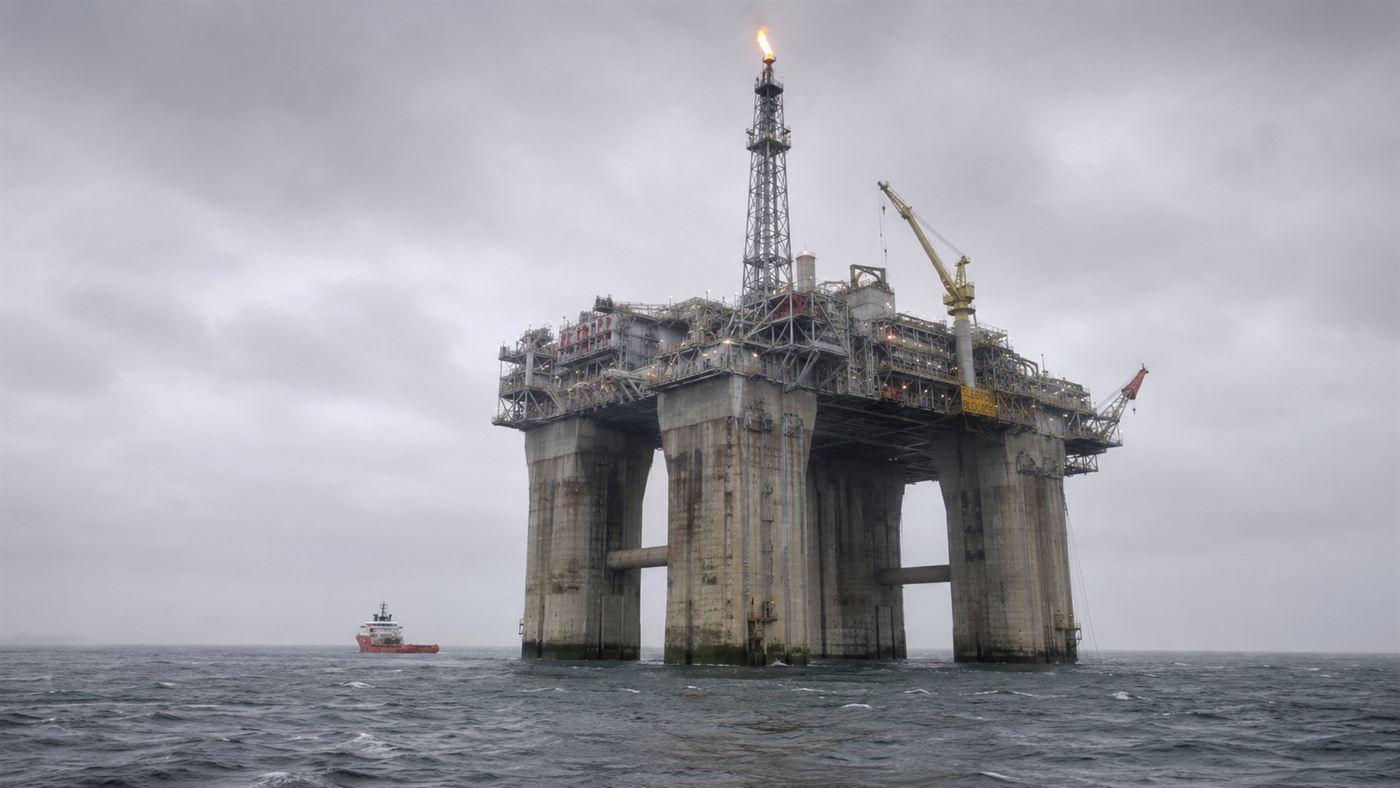
Prelude FLNG, the largest floating structure ever built, at sea off Western Australia. Illustration: Watts & Wild.
Prelude FLNG is so big it is hard to picture. It is a single floating object 488 metres long, longer than the tallest skyscrapers are high and longer than any ship ever built before it, and across that enormous deck sits a complete natural gas refinery, all of it afloat on the open ocean two hundred kilometres from the nearest coast. When it is full, it weighs around 600,000 tonnes, more than five aircraft carriers, and it is held in place not at a dock but by chains driven into the seabed far below.
It was built by Shell to do something the oil and gas industry had never done at this scale: bring the entire processing plant out to the gas, rather than piping the gas back to a plant on land. As the project is documented, Prelude is both the world's largest floating liquefied natural gas plant and the largest floating structure ever constructed, a record that is difficult to imagine being beaten soon.
What is Prelude FLNG? Prelude FLNG is the largest floating structure ever built, a 488-metre Shell facility moored off Western Australia. It extracts natural gas from the seabed, chills it to minus 162 degrees to turn it into liquid, and stores and offloads it at sea, with no need for an onshore plant.
Prelude FLNG, the largest thing ever floated
The numbers behind Prelude FLNG are almost comic. The hull is 488 metres long and 74 metres wide, built from more than 260,000 tonnes of steel, roughly the amount in dozens of Eiffel Towers. Laid against famous landmarks it is longer than the height of the Empire State Building, and it stretches further than the supertanker that had previously held the record for the longest vessel ever made. Standing on its deck, you would struggle to see one end from the other.
All of that bulk is not for carrying cargo across oceans, the way a normal giant ship is. It is for staying in one place and working, a fixed industrial island that happens to float, designed to sit over a gas field for decades.
A gas refinery that floats
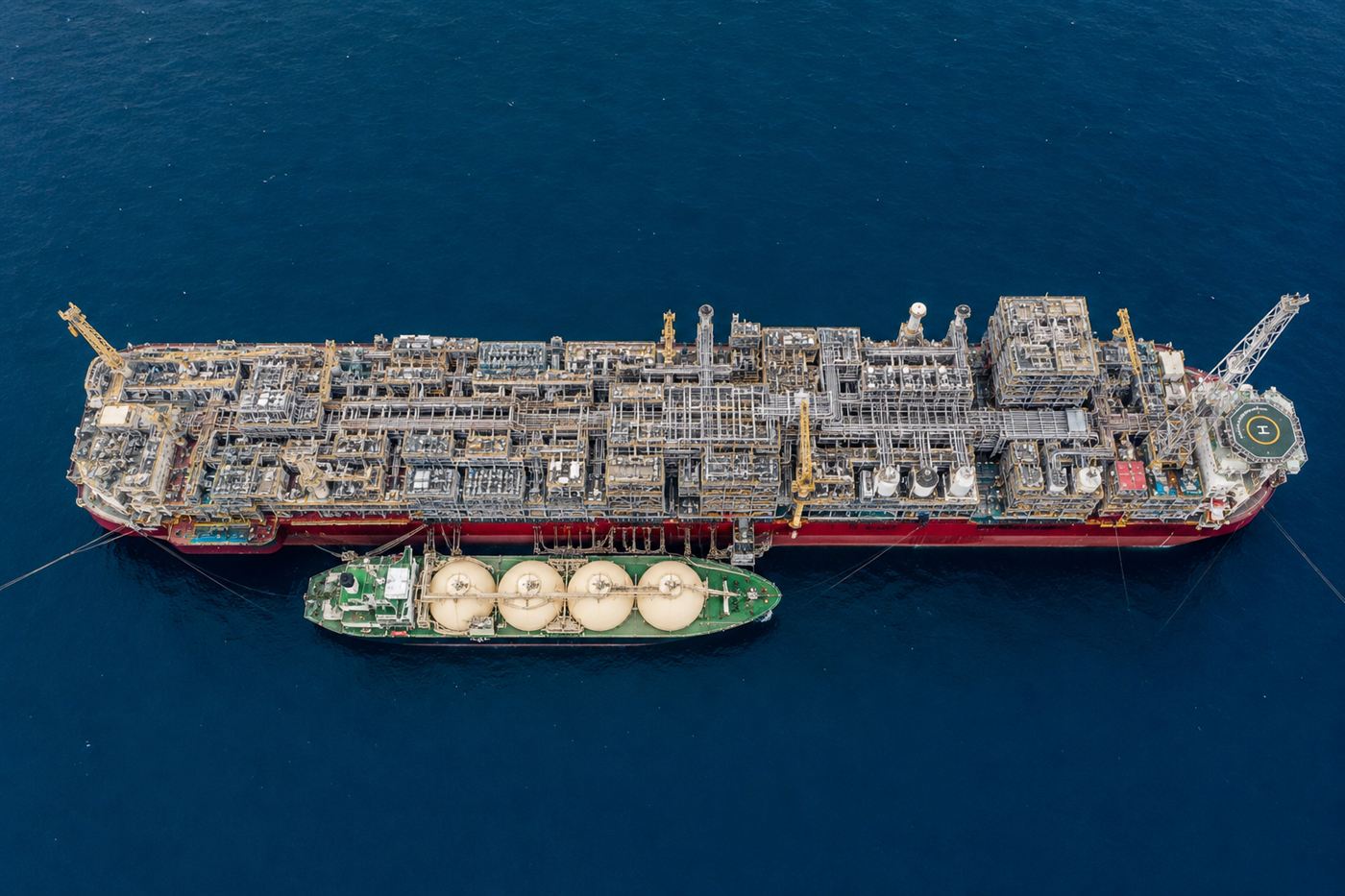
The job of Prelude FLNG is to turn gas trapped deep under the seabed into a liquid that ships can carry away. Natural gas is drawn up from wells beneath the vessel, cleaned and processed on board, and then chilled to about minus 162 degrees Celsius, the temperature at which it condenses into liquefied natural gas, or LNG. As a liquid it shrinks to a tiny fraction of its gaseous volume, so it can be stored in tanks inside the hull and pumped across to carrier ships that pull alongside, all without the gas ever touching land.
Doing this at sea avoids what would otherwise be needed: a long undersea pipeline to shore and a sprawling LNG plant built on the coast, with all the cost and disruption that involves. The factory simply comes to the gas instead.
Turning to face the storm
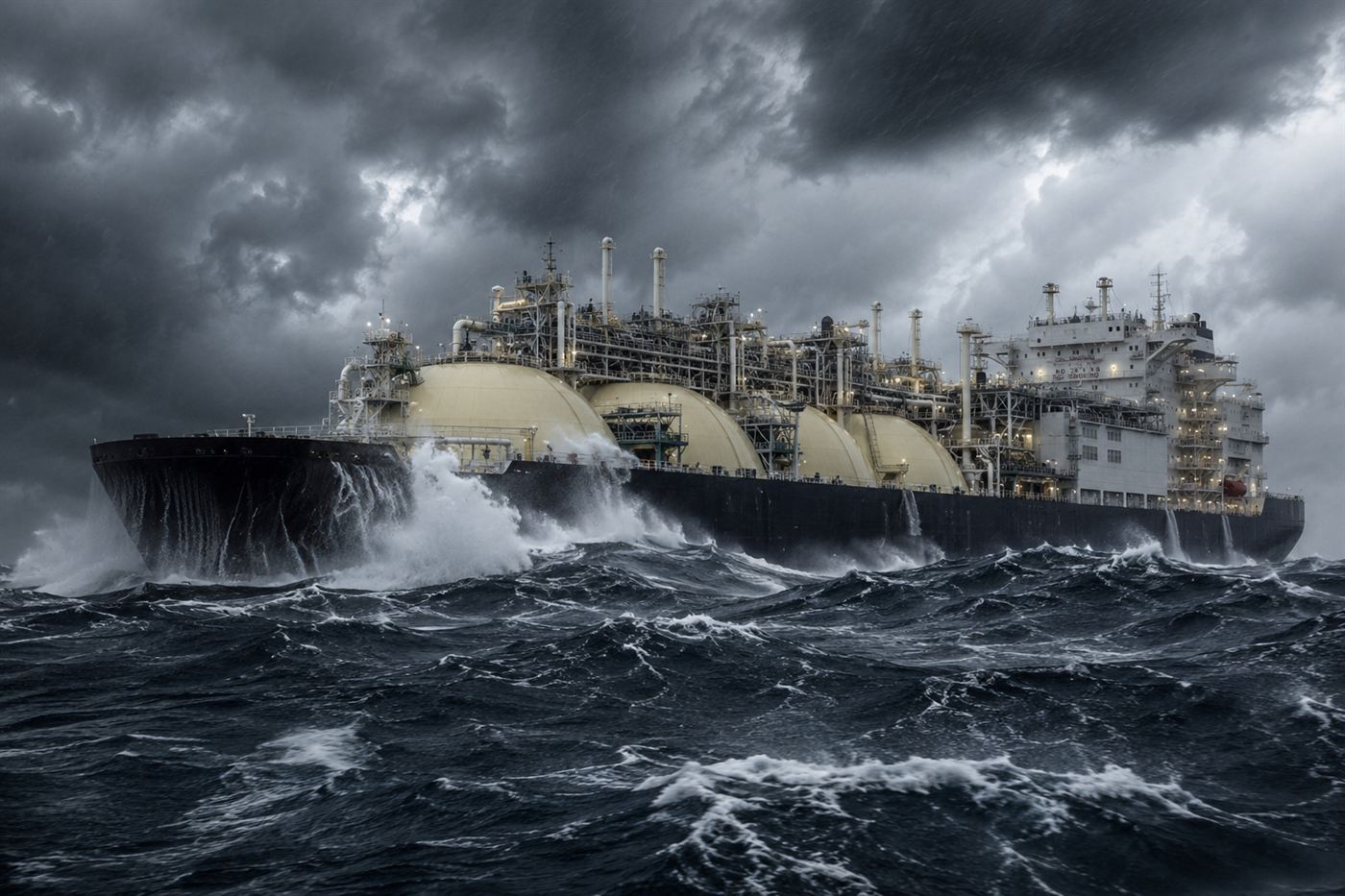
The waters off northwestern Australia are regularly raked by powerful tropical cyclones, and a 488-metre vessel cannot simply sail away from every storm. So Prelude FLNG is built to stand and take them. It is moored in about 250 metres of water by groups of huge chains anchored to the sea floor, all gathered at a single turret nearly a hundred metres tall built into the bow of the ship.
That turret is the clever heart of the design. The entire enormous hull can rotate freely around it, so that as the wind and waves shift, the vessel swings, or weathervanes, to point itself into them, always meeting the weather nose-on like a wind vane. Built to withstand a category-five cyclone, the worst the region can produce, it is meant to keep working, or at least to survive, through storms that would force smaller operations to flee.
Why build it at sea at all?
The logic behind Prelude FLNG is that some gas fields are simply too far from land, or too modest, to justify the traditional route of pipelines and onshore plants. A floating facility can be towed out, moored over the field, and worked for as long as the gas lasts, and in principle it can later be moved on to another field and reused, something a plant bolted to a coastline can never do. For remote offshore gas, it promised a way to reach reserves that would otherwise stay stranded.
The honest catch
The story is not a simple triumph. Prelude FLNG has had a famously rough life: years of delays, enormous cost overruns running into the tens of billions, technical failures, fires and safety incidents, industrial disputes and long shutdowns. For a record-breaking machine, it has spent a great deal of its existence not working as intended, and plenty of people in the industry have questioned whether building something so vast and so complex at sea was ever the right call.
And there is a larger context that the engineering cannot escape: Prelude FLNG exists to produce fossil gas, at a time when the world is trying to burn less of it. As a feat of construction it is genuinely staggering, the biggest thing humans have ever floated, an entire refinery riding out cyclones on the open sea. As an investment and as a piece of the energy future, it is far more uncertain. It is a monument to what we can build, and a reminder that being able to build something is not the same as being sure we should.
A floating steel island longer than a skyscraper is tall, built to refine gas while riding out cyclones. Is Prelude a triumph of engineering, a costly misstep, or both at once? Tell us in the comments.
Related reading: The Troll A platform, the tallest thing humans have ever moved across the sea.