The most powerful rockets begin their journey to space at one mile per hour, riding a 2,700-tonne NASA crawler-transporter built to keep them perfectly upright
Before a rocket can fly, it has to crawl. NASA's crawler-transporter is the largest self-powered land vehicle ever built, and its entire job is to carry a rocket the size of a skyscraper to the launch pad at a walking pace, without ever letting it tip more than a foot.
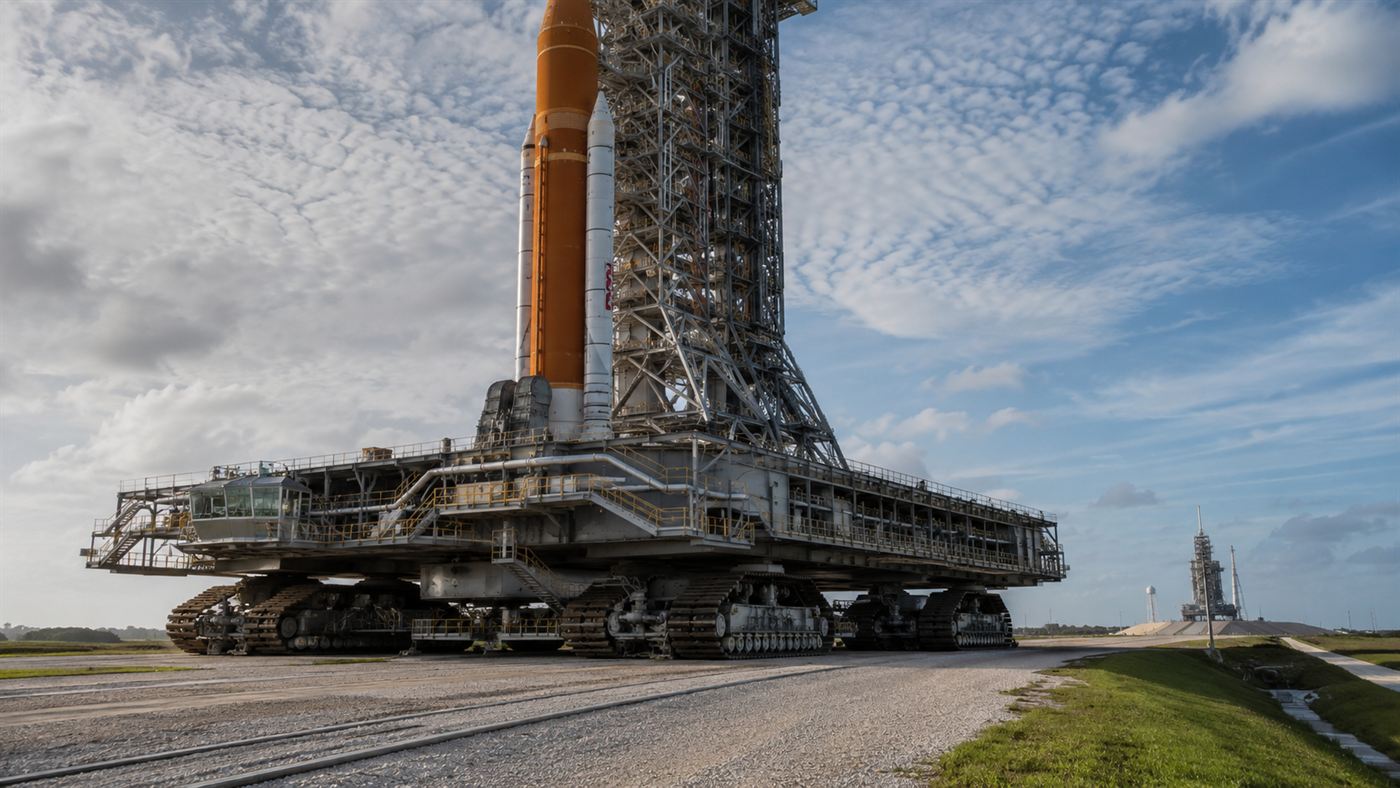
The crawler-transporter carrying a launch platform toward the pad at Kennedy Space Center. Illustration: Watts & Wild.
The crawler-transporter is a machine built around a contradiction. It is one of the heaviest vehicles ever to move under its own power, a steel platform the size of a baseball infield weighing some 2,700 tonnes empty, and yet the single most important thing it does is move gently. Pile a fuelled rocket and its launch tower on top, and this monster has to ferry the whole stack for miles without shaking it, tilting it, or letting it lean more than the width of a dinner plate at the very top.
There are two of them at NASA's Kennedy Space Center in Florida, and they are old. Built in 1965 to move the Saturn V to the launch pad, the crawlers were, on completion, the largest self-powered land vehicles in the world. They have been doing the same patient job ever since, and the strangest thing about them is not their size but their speed.
What is NASA's crawler-transporter? The crawler-transporter is a giant tracked vehicle, weighing about 2,700 tonnes, that carries rockets from NASA's assembly building to the launch pad. Built in 1965 for the Apollo program, it moves at one mile per hour and keeps the rocket level to within about a foot.
A crawler-transporter built to go slowly
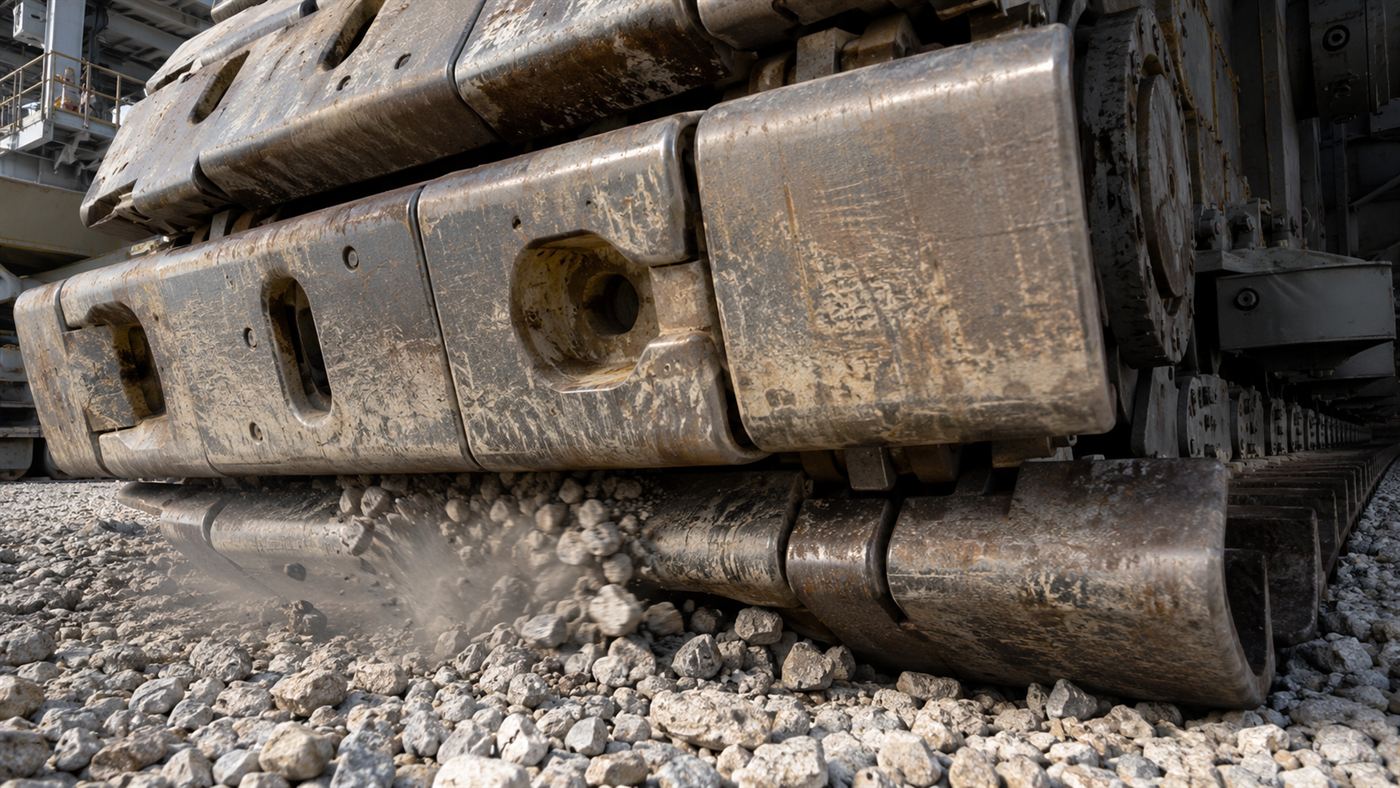
Everything about the crawler-transporter is oversized except its pace. The flat deck measures roughly 40 by 35 metres. It rolls on four double-tracked crawler units at its corners, eight tracks in all, and each individual cleat on those tracks weighs about a tonne on its own, the weight of a small car in a single link of the chain. Diesel engines drive electric generators that turn the tracks, in the same way a diesel-electric locomotive works.
And loaded with a rocket, the whole thing tops out at one mile per hour. Unladen it can manage about two. The trip from the Vehicle Assembly Building, where rockets are stacked upright, out to the launch pad a few miles away is therefore an all-day affair, a slow procession measured in hours, with the rocket swaying gently above a creeping steel island.
Why the biggest land vehicle moves at a crawl
The slowness is the whole point. A rocket stacked vertically is a tall, slender, delicate thing, and the job is to deliver it to the pad in exactly the state it left the building, dead upright and undamaged. Speed would be the enemy of that; gentleness is everything. So the crawler-transporter creeps, and while it creeps it performs a quiet feat of engineering that matters far more than its top speed.
The route up to the launch pad climbs a gentle five percent grade, and a tall rocket carried up a slope would naturally lean backwards. To stop that, the crawler uses a laser-guided leveling system that constantly adjusts the deck, keeping the launch platform flat to within about a sixth of a degree. At the top of a rocket as tall as a Saturn V, that works out to roughly a single foot of movement. A six-million-pound vehicle climbing a hill holds its priceless cargo as steady as someone carrying a brimming glass of water across a room.
The road of river rock
A vehicle this heavy cannot simply drive on tarmac, so it travels on a road built specially for it, the crawlerway. This is a broad track around two metres deep, layered with stone, and the top is covered not with asphalt but with smooth river rock brought from Alabama and Tennessee. The rounded rock was chosen for a very specific reason: it has low friction and crushes quietly under the tracks rather than gripping or, worse, striking sparks near a fuelled rocket.
The price of that safety is that the rock is sacrificial. Every time the crawler-transporter passes, the river stones beneath its cleats are ground down and partly pulverised, and the crawlerway has to be topped up with fresh rock. The road, in effect, is slowly eaten by the machine that uses it, one careful mile at a time.
One hundred and fifty gallons to the mile
Moving this much steel is thirsty work. The crawler-transporter burns on the order of 150 gallons of diesel for every mile it travels, a figure that makes even the least efficient road vehicle look frugal, though spread across a journey of only a few miles a year it is a rounding error next to the cost of the rocket on its back. Inside, it takes a team of nearly thirty engineers, technicians and drivers to run one, working from an internal control room, with a driving cab at each end so the vehicle can be steered in either direction along the crawlerway.
Sixty years and still rolling
What is most remarkable is how long these two machines have lasted. The same crawlers that carried the Saturn V to the Moon also moved Skylab, then every Space Shuttle for thirty years, and after a heavy rebuild one of them now hauls NASA's giant SLS rocket to the pad for the Artemis missions to the Moon. They have outlived the rockets they were designed for, several times over, and at sixty years old they remain the unglamorous, indispensable first step of almost every American launch: the slow ride before the fast one.
The honest catch
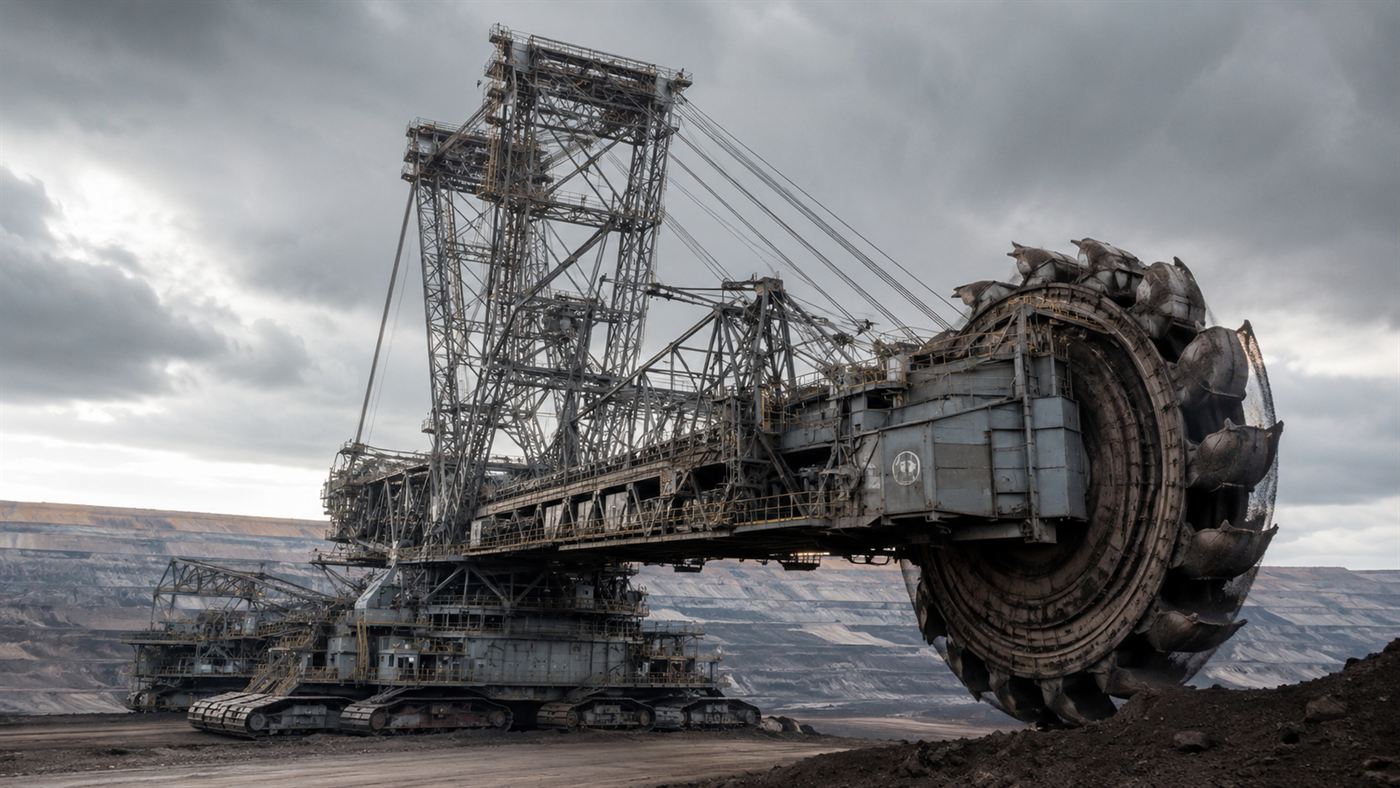
A couple of details deserve precision. The often-quoted figures, one mile per hour and a foot of lean, come from NASA's own specifications, and they describe a carefully maintained, very expensive machine rather than anything magical; keeping the deck level is brute-force hydraulics and constant attention, not a trick. And the title "largest land vehicle" has to be read carefully, because it means the largest self-powered one. Some monstrous mining machines, like the Bagger 288 bucket-wheel excavator, are far larger and heavier overall, but they work in a different way and are not really vehicles in the same sense.
None of that dims the achievement. Two machines built in the mid-1960s, to a brief that sounds almost impossible, still carry the heaviest rockets in the world to their launch pads with the steadiness of a held breath. The crawler does the least dramatic part of spaceflight, the part nobody photographs, and it has done it reliably for sixty years. Sometimes the hardest engineering is simply moving something enormous very, very gently.
The heaviest rockets in the world begin their trip to space at walking pace, on a sixty-year-old machine that crushes the road as it goes. Which impresses you more, the rocket or the slow giant that carries it? Tell us in the comments.
Related reading: The Bagger 288, the largest land machine ever built, which digs by the mountain.