A much-poisoned rodent of the American plains may have the most detailed animal language ever decoded, able to say not just danger but a tall human in a yellow shirt
To most people a prairie dog is a chubby rodent that pops up, chirps and vanishes. To one scientist, that chirp is a sentence. Decades of patient work suggest that prairie dog language can describe a threat in startling detail, including what it is, how big it is, and even the colour it is wearing.
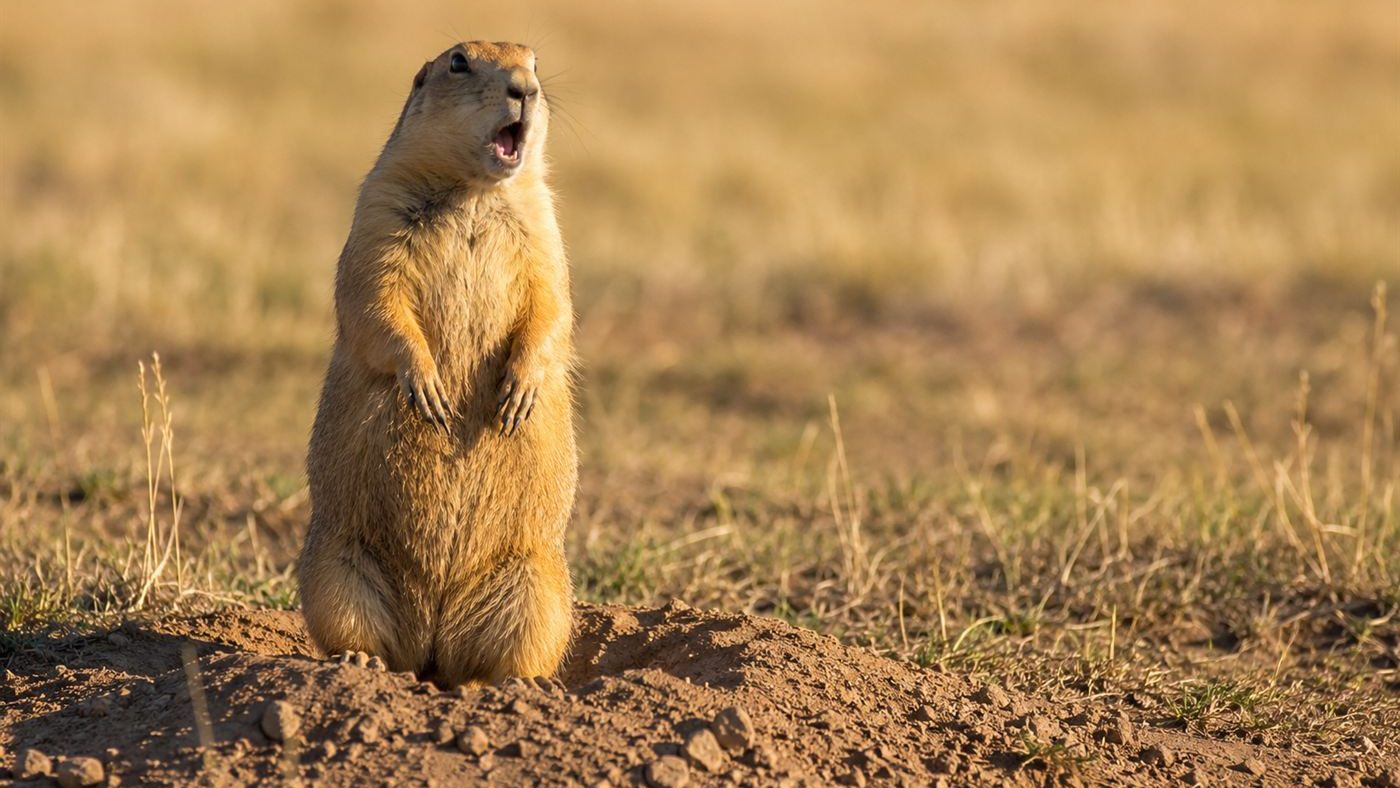
An alarm call that may carry far more than just "danger". Illustration: Watts & Wild.
The scientist is Con Slobodchikoff, a biologist who spent more than thirty years listening to Gunnison's prairie dogs on the high plains of the American southwest. Where others heard a monotonous squeak, he suspected there was structure, and he set out to test it with recordings and computers rather than guesswork.
What he found, slowly and carefully, is one of the most surprising claims in animal behaviour: that this humble, heavily persecuted rodent may be running one of the richest natural communication systems we have ever managed to decode.
What prairie dog language can describe
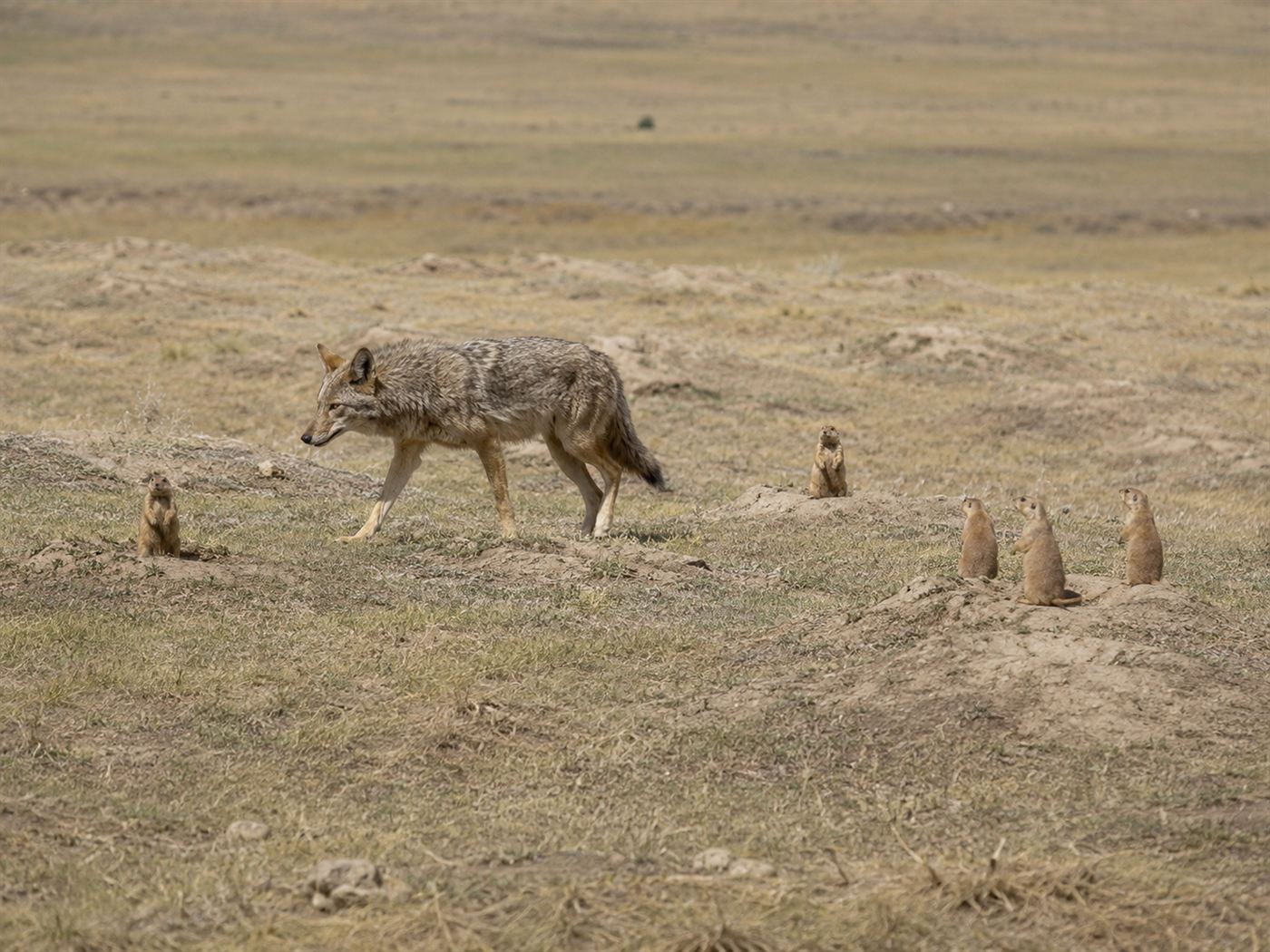
The first discovery was that the calls are not all the same. As Animal Cognition summarises his work, Slobodchikoff found that prairie dogs have distinct alarm calls for different predators, a hawk, a coyote, a domestic dog and a human, and that the colony reacts appropriately to each. A call for a hawk sends them diving instantly into their burrows; a call for a coyote brings them to the burrow edge, alert but watching.
Then it got stranger. Analysing the acoustic structure of the calls, he found they varied not just by the type of predator but by its details. The same kind of threat could produce different calls depending on its size, its shape and how fast it was moving. The prairie dog was not just shouting "hawk", it seemed to be shouting something closer to "big hawk, coming in fast".
Can prairie dogs really describe colours?
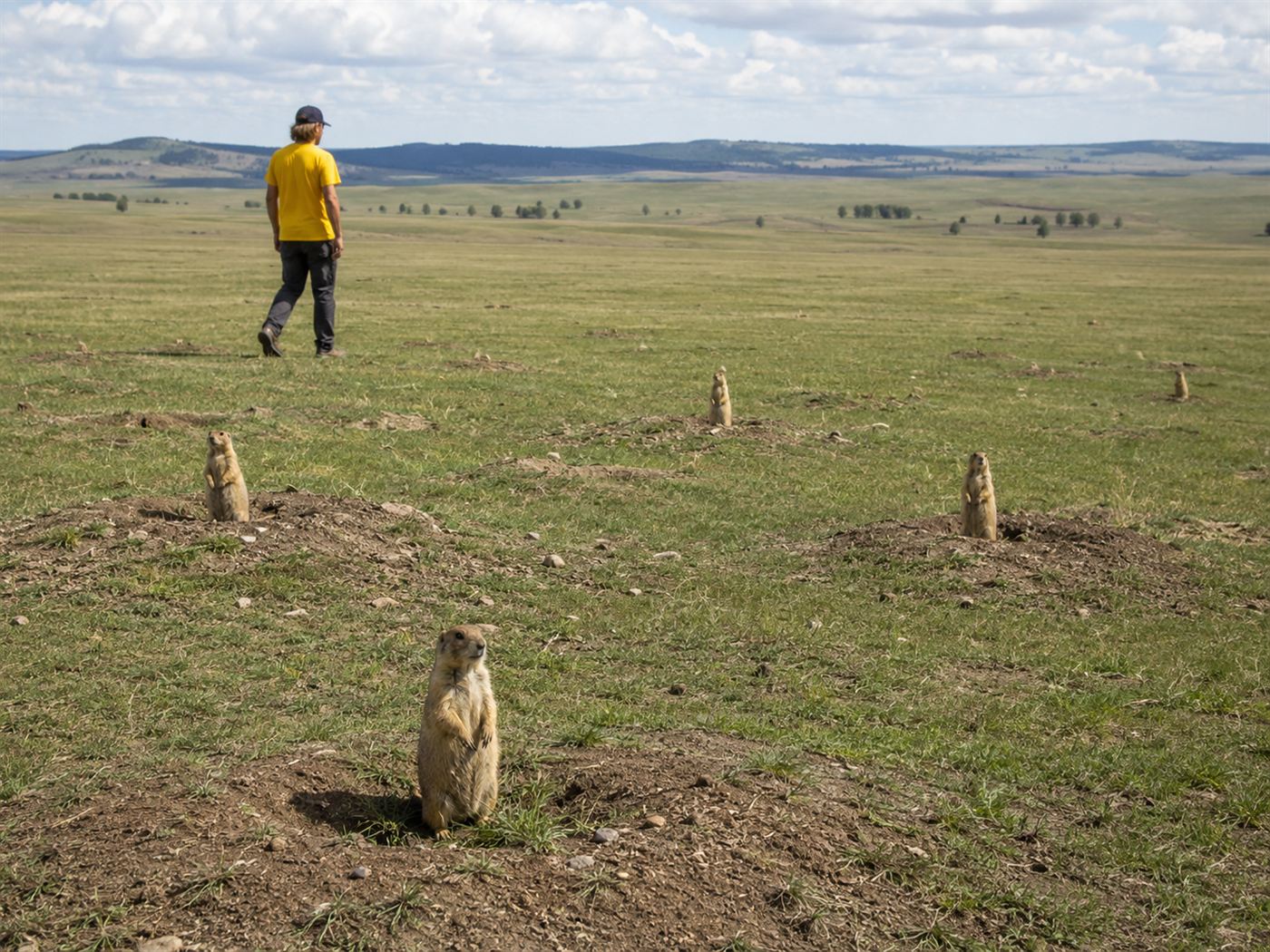
The most famous experiment is also the most charming. To test whether the calls could carry a detail as specific as colour, the team had people walk through a colony wearing different coloured shirts. As NPR reported, the prairie dogs gave measurably different alarm calls depending on the colour of the shirt the human was wearing, with the calls for a blue shirt and a yellow shirt coming out clearly distinct.
Sit with that for a moment. A rodent watching a person cross its town was, apparently, encoding into a single squeak not only "human" but something about the colour of that human, fast enough to be useful to its neighbours. As Slobodchikoff described to the Acoustical Society of America, the calls contain a remarkable amount of decodable information about the intruder, the kind of descriptive detail we normally assume belongs only to words.
Is prairie dog language a real language?
This is where care matters. What Slobodchikoff documented is referential communication of unusual richness: signals that stand for specific things in the outside world, not just a vague alarm. The colony hears the call and acts on its content, which is exactly what you would want from a meaningful message. By any normal measure, the prairie dog is saying something quite precise.
Whether that amounts to a "language" in the full human sense, with grammar and the ability to combine words into endless new sentences, is a genuinely open and contested question. Many scientists are comfortable with "sophisticated referential signalling" but cautious about the word language, with all its human baggage. The prairie dog is doing something remarkable; how we label it is partly a matter of definition.
The honest catch
It is worth being clear about the doubts. Some of the headline results, especially the colour experiments, rest on relatively small samples and clever statistics, and not everyone is equally convinced by every claim. Slobodchikoff is also an enthusiastic advocate for his prairie dogs, and has ambitions around decoding animal speech more widely, which is exactly the kind of passion that makes other scientists want to check the work carefully. That scrutiny is healthy, not a sign the findings are wrong.
And "words" is, ultimately, our framing, not the prairie dog's. We are translating an alien signalling system into human terms because that is how we make sense of it, and some of the magic in phrases like "a yellow shirt" comes from us. The underlying finding, that the calls carry specific, decodable information about a threat, is solid and peer-reviewed. The poetry around it is ours.
Why a chattering rodent still matters
Even at its most cautious, prairie dog language rearranges something in your head. We tend to draw a bright line between human language and mere animal noise, and a small burrowing rodent has quietly smudged it, packing descriptive detail into a sound we used to dismiss as a squeak. The plains are noisier with meaning than we assumed.
It also lands a little uncomfortably, given that prairie dogs have been poisoned and bulldozed across the West for a century as pests. Does it change how you feel about an animal to learn it might be describing you to its neighbours as you walk past? Tell us in the comments.
Related reading: A honeybee tells its hivemates the exact direction and distance to flowers by dancing in the dark, and one man spent 50 years decoding it.