A Nigerian teacher gave families a refrigerator with no electricity, no moving parts and no running costs, just two clay pots and wet sand, and the pot-in-pot kept food fresh for weeks
In the hot, dry north of Nigeria, where the power grid never reached, a teacher named Mohammed Bah Abba built a refrigerator out of two clay pots, wet sand and nothing else. The pot-in-pot uses no electricity at all, yet it keeps vegetables fresh for weeks instead of days.
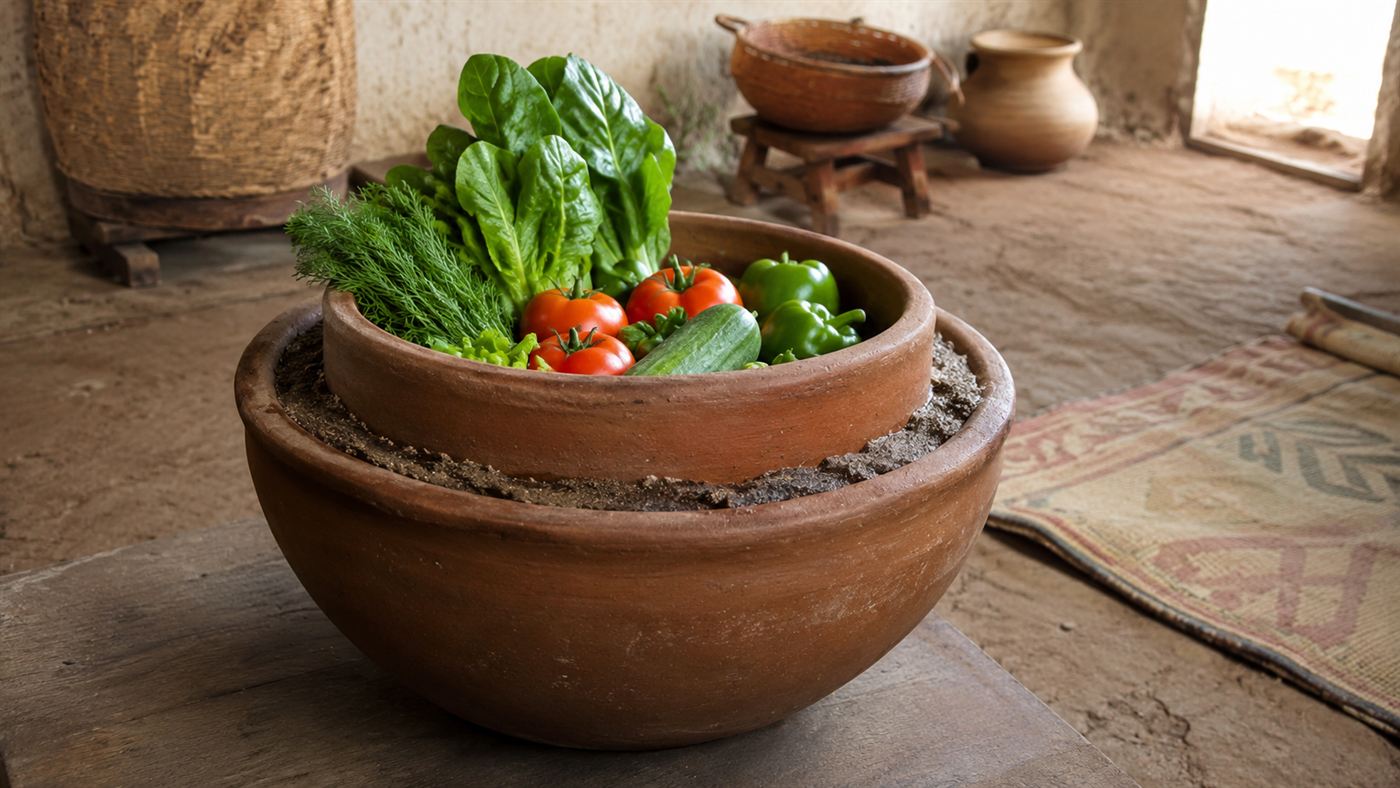
Two clay pots, a layer of damp sand, and no power cord: the pot-in-pot cooler. Illustration: Watts & Wild.
The pot-in-pot is a refrigerator stripped down to almost nothing: two clay pots, a layer of wet sand, and the physics of evaporation. In the 1990s a Nigerian teacher named Mohammed Bah Abba built it for the millions of people the electric grid never reached, and the Rolex Awards, which honored him for the invention, credit it with transforming life across northern Nigeria.
It is gloriously simple. A small pot sits inside a larger one, the gap packed with damp sand, and as that water evaporates through the porous clay it pulls heat out of the inner pot. There is no compressor, no electricity, no part that can break. For a family with no fridge and no power line, it was the difference between selling a harvest over weeks and watching it rot in two days.
How does a pot-in-pot fridge work? Water in the damp sand between two clay pots evaporates through the unglazed outer pot, and that evaporative cooling carries heat away, cooling the inner pot by as much as 14 degrees Celsius. It needs only the pots, sand, water and dry air, never electricity.
How does the pot-in-pot keep food cold?
The trick is the oldest one in cooling: evaporative cooling.
A glazed inner pot holds the food, an unglazed outer pot lets water seep through, and the moist sand between them is the reservoir.
When dry air passes over the outer pot, it pulls water out of the clay as vapor, and turning liquid water into vapor soaks up heat, chilling everything inside.
Evaporative cooling is the same reason sweating cools your skin, and the same principle Egyptians used to chill water in porous jars thousands of years ago.
Cover the inner pot with a damp cloth, keep the sand wet, and the contents can sit a dozen or more degrees below the blistering air outside.

The teacher who built a fridge from clay
Mohammed Bah Abba was not a famous inventor when he started.
Born in 1964 in Nigeria's far north, he came from a family of pot makers and taught at a local polytechnic, watching the people around him lose food and income to the heat.
Most of his neighbors were rural farmers with no electricity, so a conventional refrigerator was not just unaffordable, it was useless without a grid to plug into.
Drawing on the clay-working skills he had grown up with, he spent the mid-1990s refining the humble pot-in-pot into something cheap enough for almost anyone to own.
A single unit cost only a few cents to make, which is the whole point of a tool meant for people the modern economy had skipped.
What the pot-in-pot refrigerator changed
The numbers are striking, but the human story is better.
Tomatoes, peppers and eggplants that used to spoil in two or three days could now keep for about three weeks, which let farmers sell when prices were good instead of dumping everything at once.
There was a quieter revolution too: girls who had been sent to the market every single day to sell perishable produce no longer had to, and many went back to school.
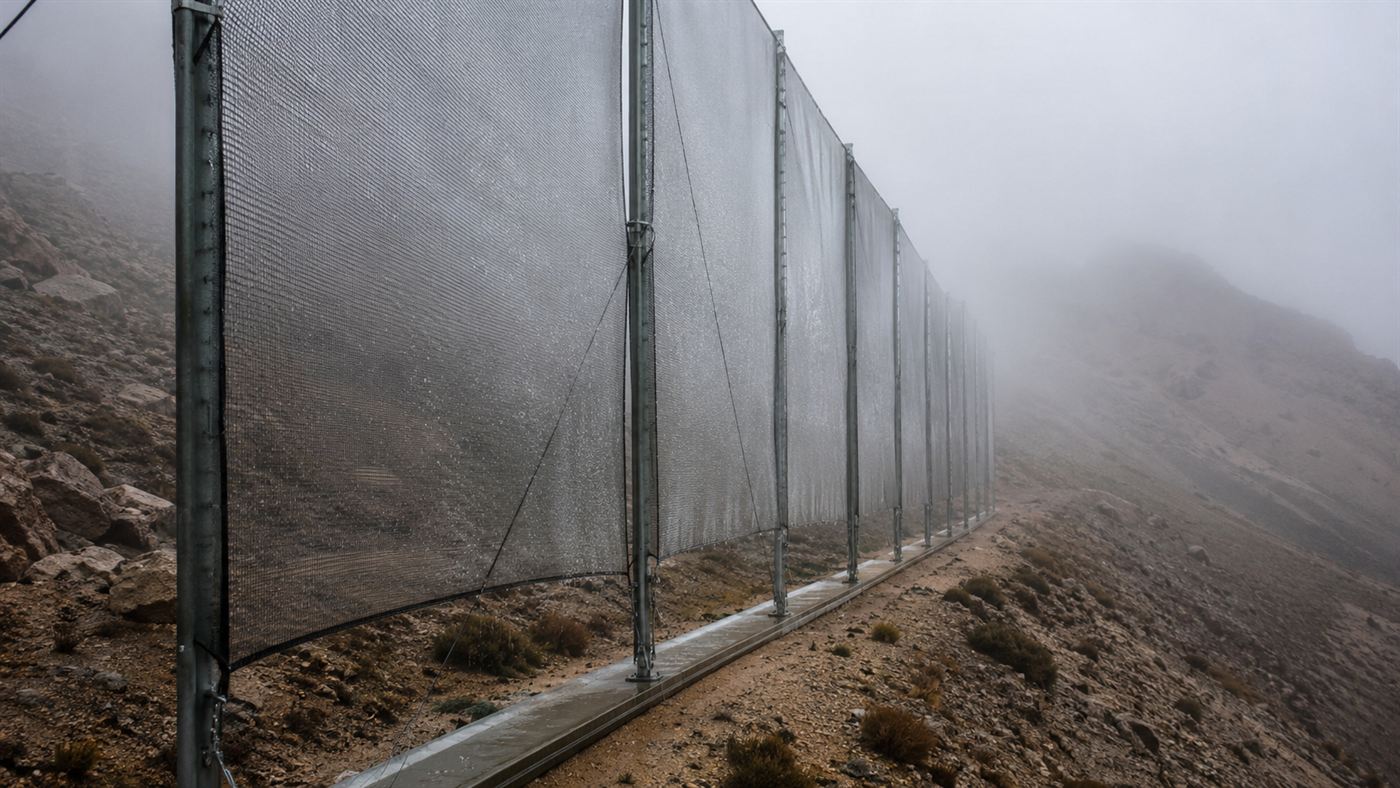
It is the same kind of small, sturdy technology that changed lives in the Moroccan mountains, where nets that harvest water from fog freed women and girls from hauling it by hand.
Cleaner food storage also meant fewer cases of the stomach illness that comes from eating food gone bad in the heat.

From a clay pot to a global prize
Word of the pot-in-pot spread well beyond Nigeria.
Around 2000 Bah Abba won a Rolex Award for Enterprise, and he poured the roughly 75,000 dollars in prize money straight back into making and giving away the coolers.
TIME named the device one of the best inventions of 2001, and by 2005 something like 100,000 pots had reached families across 11 northern Nigerian states and into neighboring countries.
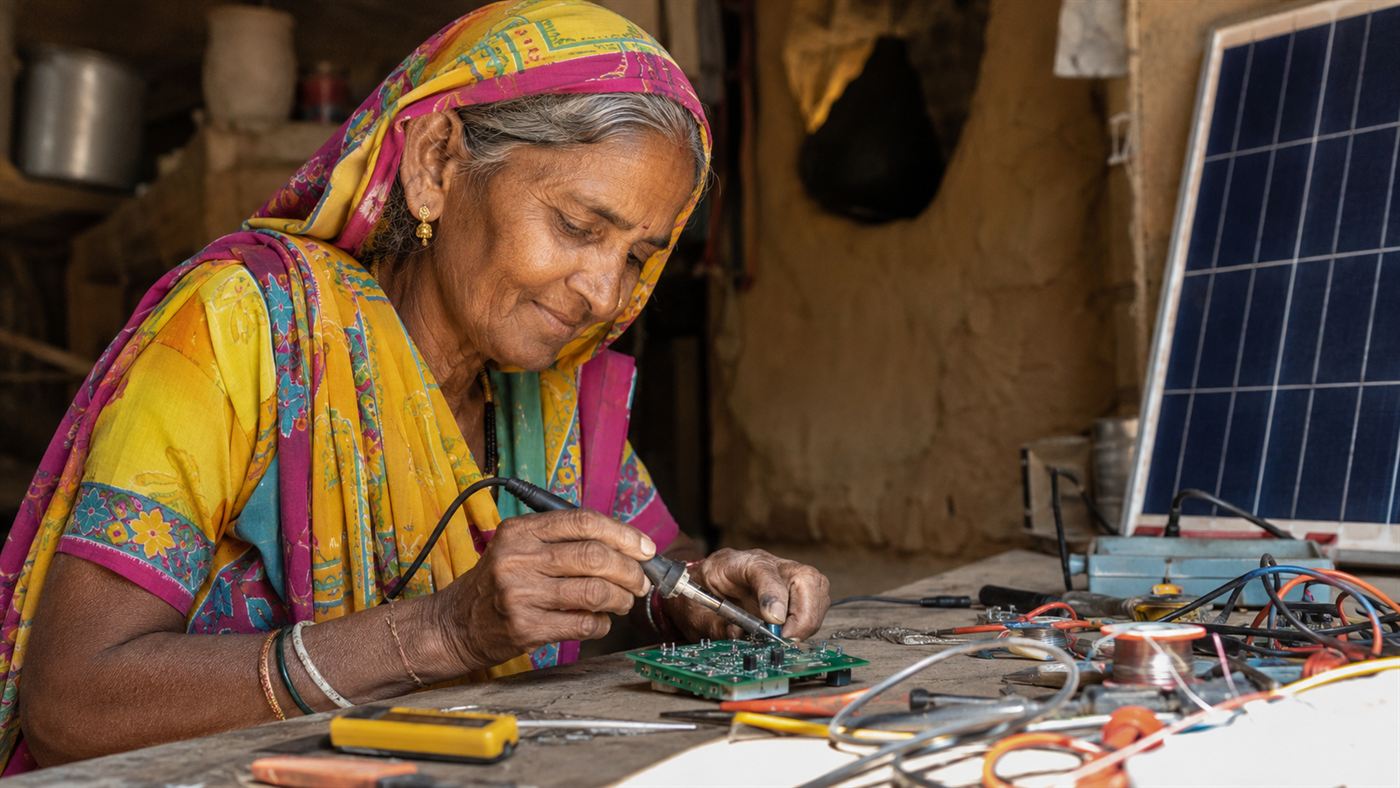
The idea travelled across the dry world, joining the same family of low-tech fixes as the solar suitcase that lit up maternity wards and the grandmothers trained as village solar engineers.
None of it relied on a factory, a grid or a subsidy, only on clay, sand and a good idea.
The honest catch
The pot-in-pot is wonderful, but it is not a refrigerator, and pretending otherwise does no one any favors.
Evaporative cooling only works where the air is hot and dry, so in humid climates the evaporative cooling mostly stops, because water will not evaporate into air that is already damp.
It also drinks water, which is the one thing a semi-desert can least afford to spare, and the sand has to be kept wet day after day.
The inside stays cool but not cold, nowhere near the temperature that keeps meat or dairy safe, so this is for fruit and vegetables, not a weekly meat shop.
And it remained a personal mission more than a system: Mohammed Bah Abba died in 2010, and without its tireless champion the great rollout lost much of its momentum.
The pot-in-pot will not show up in a glossy kitchen, and it was never meant to.
It is proof that the cleverest technology is sometimes the simplest, and that a teacher with two clay pots can change more lives than a factory full of machines.
Would a no-power cooler like the pot-in-pot still be useful where you live, or has cheap electricity made us forget how much clever, low-tech ideas can do? Tell us in the comments.