A chemist accidentally made a glue that barely stuck, spent years unable to find a use for it, and then a choir singer turned the useless failure into the Post-it note
It began with a mistake in a laboratory: a glue that was too feeble to be any good. For five years it sat around as an answer to a question no one had asked. Then one restless Sunday in a church choir, a colleague looked at that failure and saw something the whole world would end up using.

A glue designed to be weak turned into one of the best-selling products ever. Illustration: Watts & Wild.
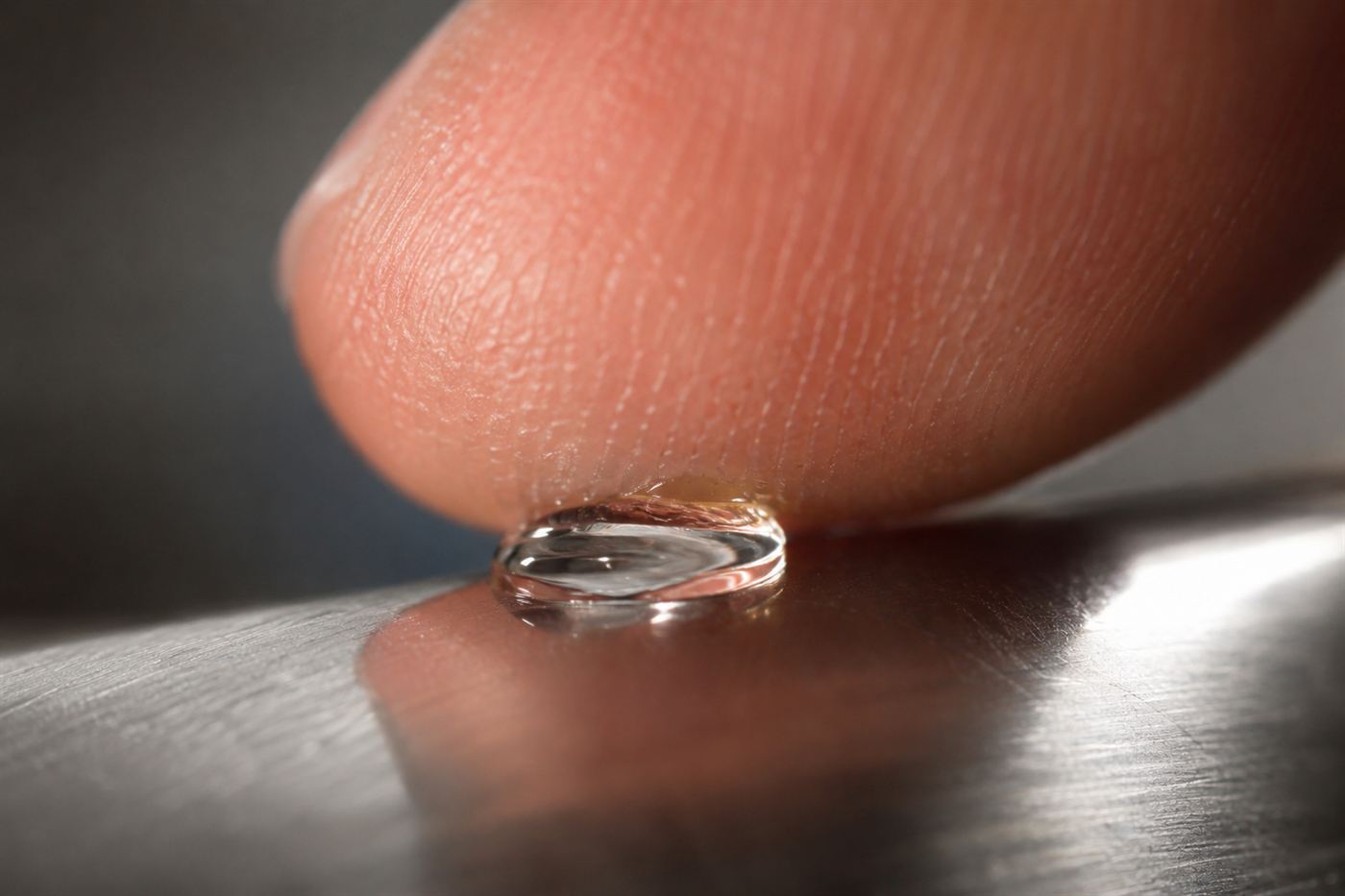
In 1968, a chemist at the American company 3M named Spencer Silver was trying to invent a super-strong adhesive for the aerospace industry. What he got instead was the opposite: a glue made of tiny bouncy spheres that clung lightly to almost anything and then peeled away again without leaving a mark, never gripping hard enough to be a proper glue at all.
By the ordinary rules of chemistry it was a flop. A glue is supposed to hold things together permanently, and this one refused to. Yet Silver was fascinated by his strange, gentle adhesive, convinced it had to be useful for something, even if he could not say what.
The short version is that he was right, but it took another person, another five years, and a very ordinary annoyance to see it. The weak glue nobody wanted would become the Post-it note, and it would sell in the billions.
The glue that would not stick properly
Silver believed in his invention so strongly that he became known around 3M for endlessly promoting it. He gave talks, he showed it to colleagues, he pushed anyone who would listen to imagine a use for a reusable, peelable glue. For years the response was polite bafflement.
The problem was that he had a solution in search of a problem. His weak adhesive was genuinely clever, but no one, including Silver, could name a product that actually needed a glue whose main feature was that it barely held on. So the discovery sat in limbo, admired and unused, waiting for the right pair of eyes.
A bookmark that would not fall out
Those eyes belonged to Art Fry, another 3M scientist who happened to sing in a church choir. Every Sunday he marked the hymns in his hymnal with slips of paper, and every Sunday the slips slid out and fluttered to the floor, leaving him fumbling for his place in front of the congregation.
One day the two ideas collided in his mind. What if he coated a bookmark with Spencer Silver's weak adhesive? It would cling to the page just enough to stay put, then lift off cleanly without tearing the paper. Fry had found the problem that the solution had been waiting for all along, and the Post-it note turned out to be far bigger than bookmarks.

Why did the Post-it note almost never happen?
Turning the idea into a product was not simple. Fry and his colleagues had to work out how to coat only part of the paper, how to make the notes peel off in a neat stack, and how to convince a company to sell a pad of paper whose selling point was that it did not stick very well. Early market tests were lukewarm at best.
What saved it was letting people simply try it. When 3M finally flooded offices with free samples, the reaction changed completely; once workers had the little notes on their desks, they could not imagine going back. The product that surveys had shrugged at became indispensable the moment it was in people's hands rather than described on paper.
What the failure teaches us
The Post-it note is now a fixture of desks, fridges and computer screens all over the world, so ordinary that it is hard to believe it was ever in doubt. It sells by the billions every year, and it exists only because a company let a chemist keep tinkering with something that looked, by every reasonable measure, like a dead end.
That is really the lesson buried in the sticky little squares. The very property that made Silver's glue a failure, its refusal to hold on tightly, was the exact property that made the finished note magical. A great deal depended on people being willing to keep a useless-looking discovery around long enough for its use to arrive.

The honest catch
The story is usually told as pure serendipity, a happy accident that fell into 3M's lap, and that undersells the real work. Spencer Silver spent years refusing to let his odd glue be forgotten, Art Fry spent more years turning a rough idea into a manufacturable product, and it took a deliberate company culture that gave scientists room to chase hunches. The accident made the glue; persistence made the note.
It is also worth resisting the neat moral that every failure is secretly a triumph. Most weak glues really are just weak glues, and most solutions without a problem never find one. What makes the Post-it note special is not that failure always pays off, but that this particular failure met the rare combination of a stubborn inventor, a curious colleague and a company patient enough to wait. That is less a law of nature than a lucky, hard-won exception.
A glue too weak to do its job became a household object precisely because it was weak, once two curious people and a patient company gave it a chance. How many brilliant failures are sitting unused right now, just waiting for someone to notice what they are actually good at? Tell us what you think in the comments.
Related reading: the opposite accident, a glue so strong it was rejected before it became Super Glue. See also the slippery mistake that became non-stick Teflon, and the falling spring that turned into the Slinky.