India drowns in plastic bags it cannot recycle, so a chemistry professor worked out how to shred them into the tar and pave the country's roads with its own rubbish
Most countries treat waste plastic as a problem to be hidden, burned or shipped away. One chemist in southern India looked at the same heap of bags and wrappers and saw the missing ingredient for a better road, then gave the recipe away.
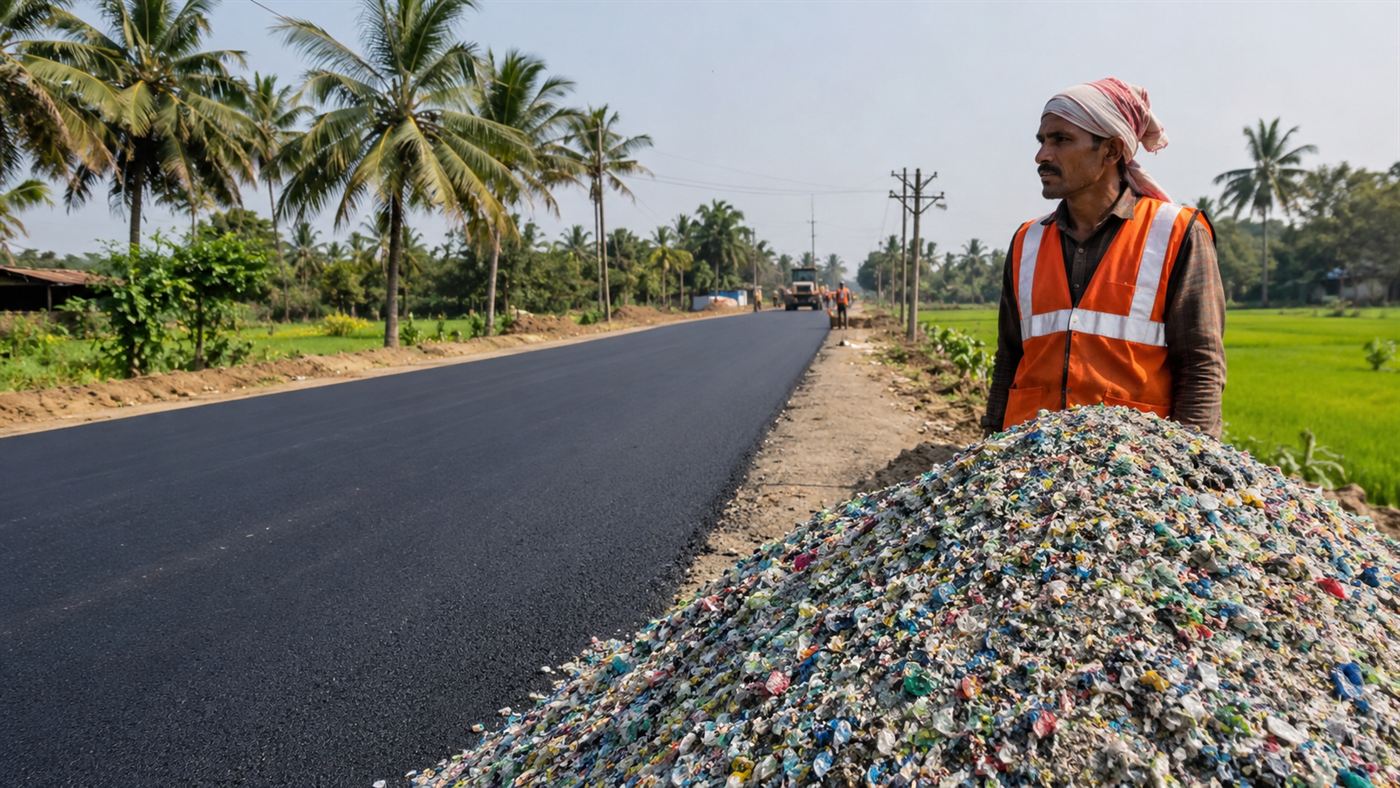
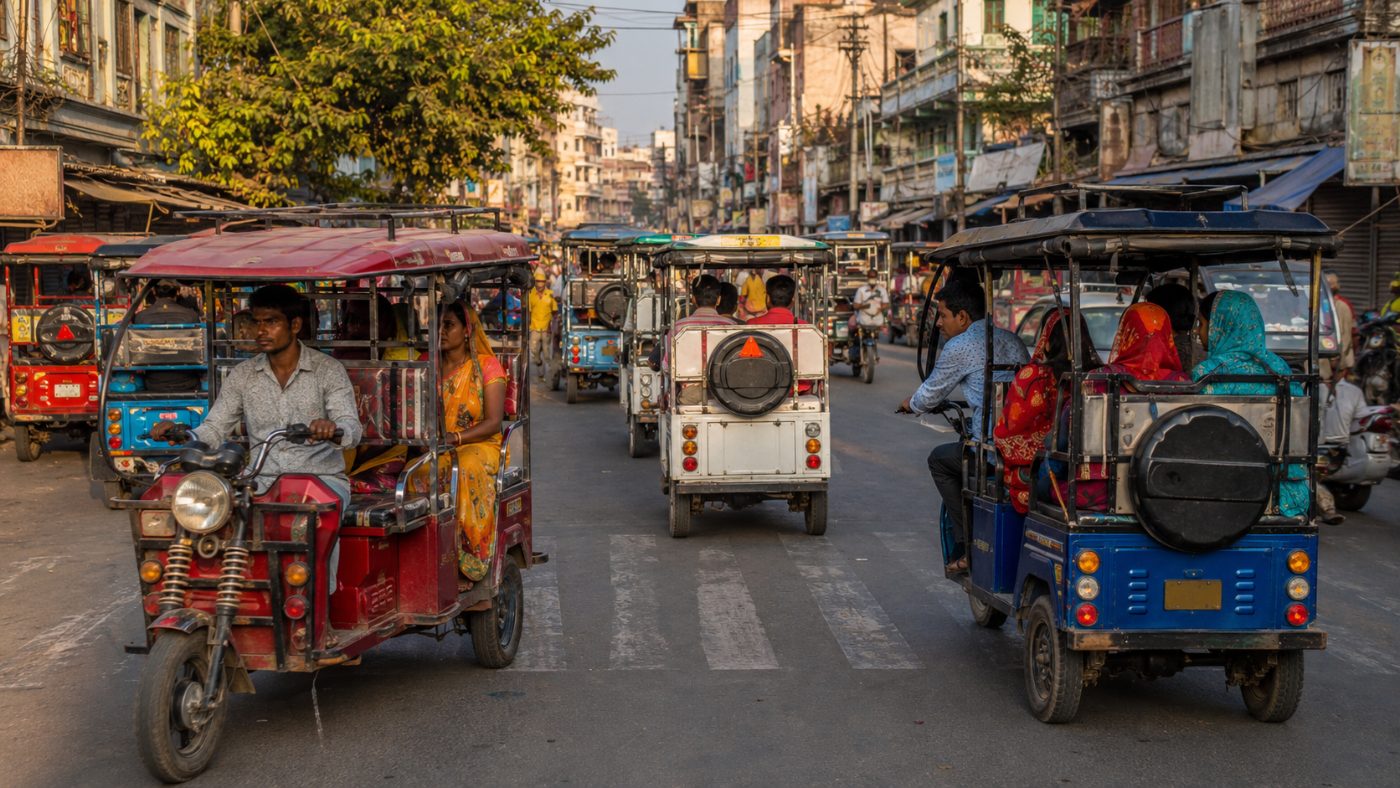
A freshly laid road in India, its tar bound together with shredded waste plastic. Illustration: Watts & Wild.
The story of plastic roads in India starts with a country that produces a colossal amount of plastic waste and recycles very little of it, so the bags, wrappers and sachets pile up in drains, fields and rivers, too flimsy and filthy to be worth much to anyone. As the record of Rajagopalan Vasudevan shows, this chemistry professor at the Thiagarajar College of Engineering in Madurai, the man now known across India as the Plastic Man, worked out around 2001 how to take exactly that worthless rubbish and bake it into the surface of a road. The waste that nobody wanted became the thing that held the road together.
The clever part is how undramatic it is. There is no high tech reactor, just a hot mix and a simple insight about what plastic actually does when you melt it onto stone.
Cooking rubbish into roads
The method is almost insultingly simple. You take the dirty plastic waste, shred it into flakes a couple of millimetres across, and sprinkle it over the crushed stone aggregate that forms the base of a road, which has been heated to around 170 degrees Celsius. At that temperature the plastic does not burn, it melts, and it wraps each stone in a thin, sticky coat. Then the hot bitumen, the black tar that binds a normal road, is mixed in as usual, and it grips the plastic coated stones far better than bare ones.
The result is a road that is tougher than the standard kind. The plastic skin helps the surface shrug off water, resist the heat that softens ordinary asphalt, and hold out longer against the cracks and potholes that plague Indian roads in the monsoon. It also quietly swallows a mountain of garbage. As The Better India has reported, every kilometre of this kind of road uses about a tonne of waste plastic in place of some of the bitumen, which is roughly the plastic from a staggering number of discarded bags, kept out of the landfill and the river and locked into the ground you drive on.
The man who gave it away
What turns a neat chemistry trick into a genuinely moving story is what Vasudevan did with it. The technique was patented through his college, and he could have sat on it and grown rich licensing it to contractors. Instead he handed the process to the Indian government for free, so that any town or state could lay these roads without paying him a rupee, because he wanted the waste cleaned up and the roads built more than he wanted the money.
From that decision the idea spread across the country. As Scroll reported when he was honoured, his plastic roads have now been laid across many thousands of kilometres in numerous Indian states, and in 2018 the once obscure professor was awarded the Padma Shri, one of India's highest civilian honours, for turning the nation's trash into its tarmac.
Why plastic roads in India spread so far
The reason the idea travelled is that it solves two miserable problems with one move. India has too much plastic waste and not enough good roads, and most fixes for either one cost money the country would rather not spend. A plastic road is cheaper than a conventional one because the free waste replaces some of the expensive imported bitumen, it lasts longer so it needs repairing less often, and it makes a use for the single hardest kind of plastic to recycle, the thin films and multilayer wrappers that no recycler wants. For a developing country paving itself at speed, that combination is close to irresistible, which is why versions of the technique are now studied and copied well beyond India.
The honest catch
And yet it would be naive to call it a clean miracle, because heating plastic is never entirely innocent. Critics worry, with reason, about what comes off the plastic when it is shredded and melted on an open roadside at high temperature, from microplastics shed as the road eventually wears to potentially harmful fumes breathed in by the workers laying it, and the long term durability and safety of these roads is still being studied rather than settled. Done carelessly, with the wrong plastics or without protecting the people doing the work, the cure could carry its own quiet costs.
There is a bigger trap hiding underneath, too. If burying plastic in roads becomes a comfortable excuse to keep churning out single use bags and sachets, then the technique stops being a cleanup and starts being a licence to pollute, because the real answer to a plastic flood is to make less of it, not just to find somewhere clever to put it. None of that takes the shine off what Vasudevan did. He looked at the most despised material in the country, the plastic bag, and found it a dignified second life under everyone's wheels, then refused to charge for the idea. The lesson is not that plastic is good. It is that even our worst rubbish might be a resource we have not learned to read yet, and that the person who cracks it does not have to keep the prize.
A professor took the plastic waste choking his country, baked it into the roads, made them cheaper and tougher, and then gave the recipe away for nothing. Would you rather see waste plastic locked into roads like this, or do you think it just lets us off the hook for making so much of it? Tell us what you think in the comments.
Related reading: A teenager who saw more plastic than fish on a dive grew up to build giant machines that scoop it back out of the Pacific and the world's rivers.