China just switched on the world's first gigawatt-hour flow battery, storing its power in tanks of liquid vanadium that cannot catch fire and are built to last 30 years
On the last day of 2025, engineers in the deserts of Xinjiang connected something the battery world had been promising for years: a vanadium flow battery the size of a small power station that holds its energy not in solid cells but in tanks of liquid vanadium. It does not catch fire, it shrugs off the cold, and it is built to keep working for three decades.
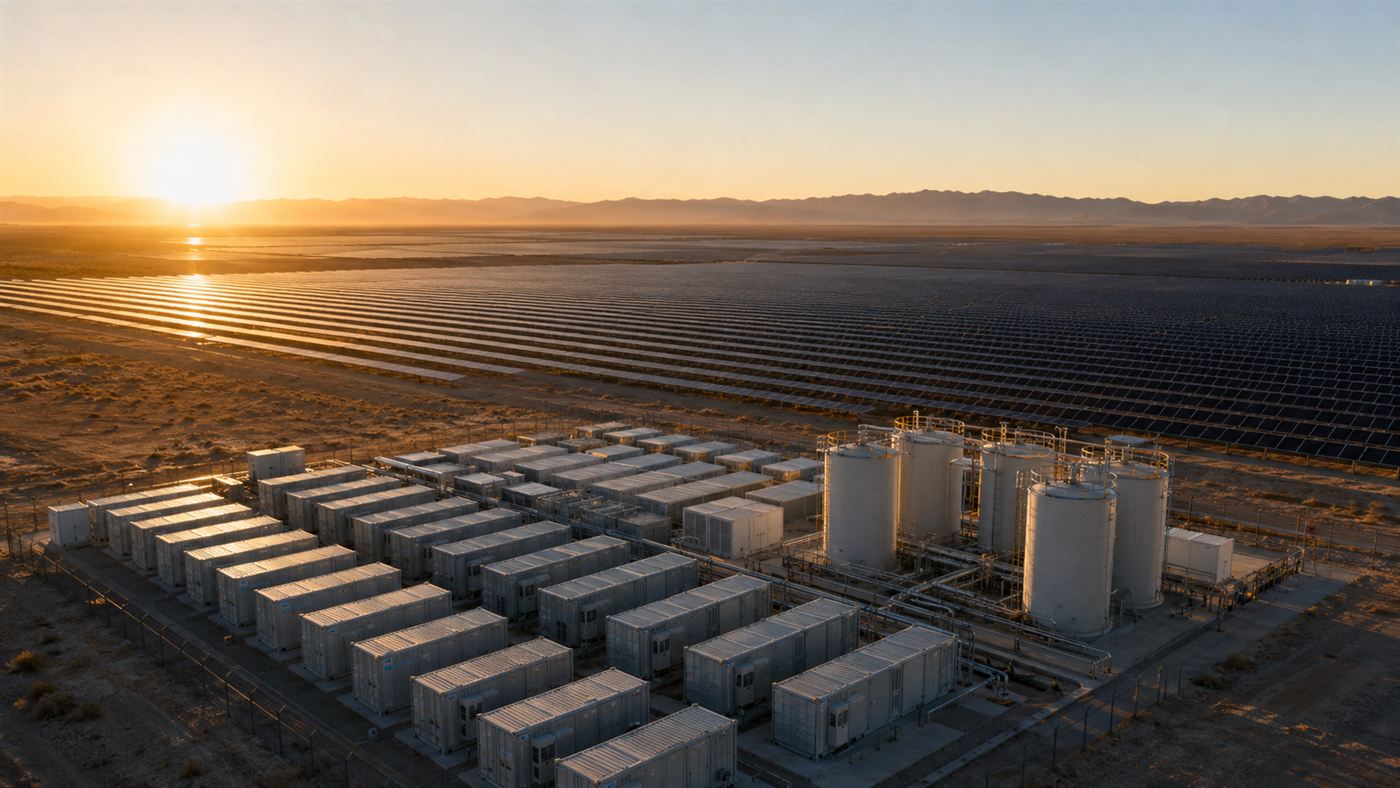
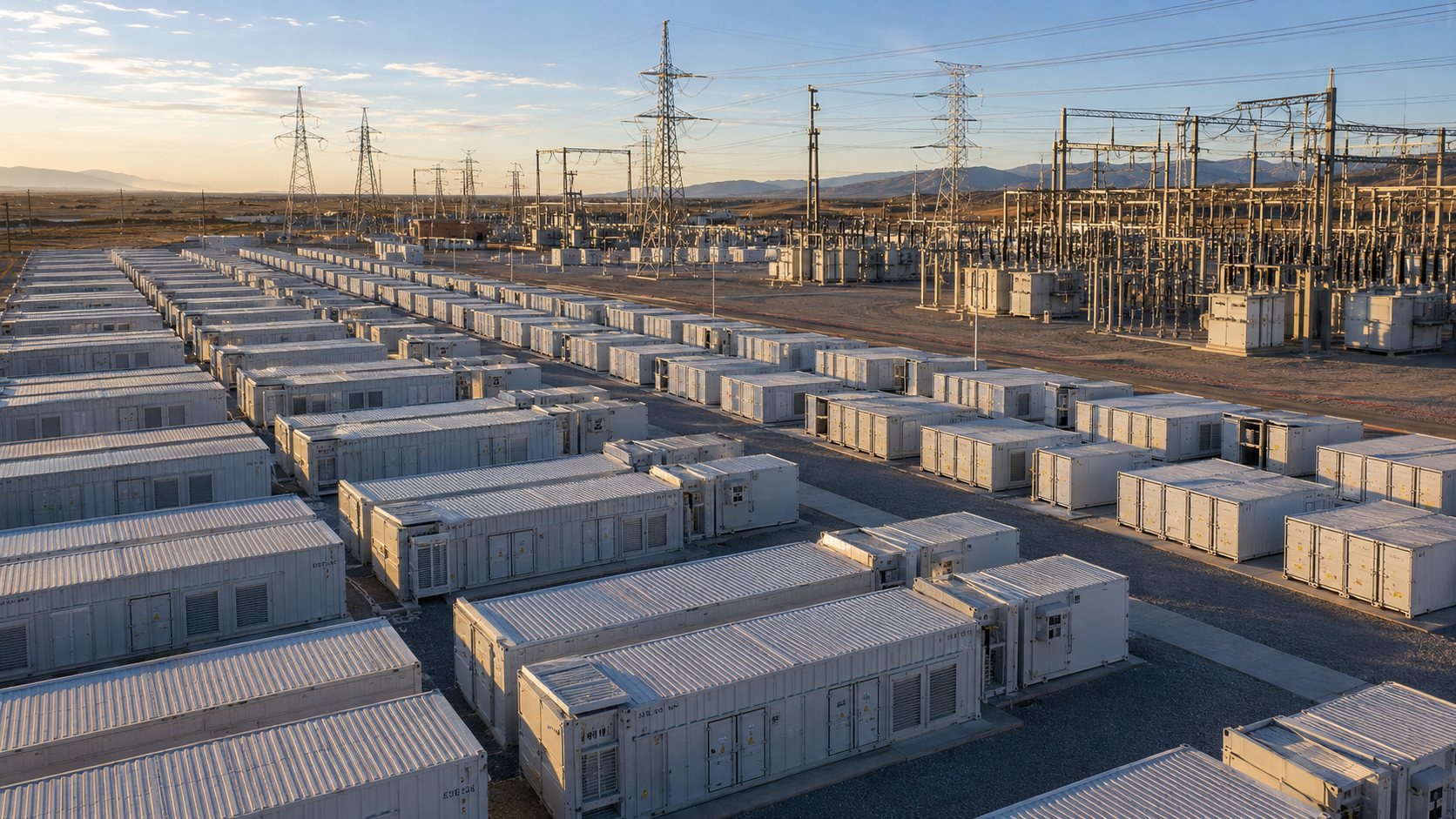
The Jimusaer project pairs a gigawatt of solar with a battery that stores power in liquid, not lithium. Illustration: Watts & Wild.
For most people, a battery is a small, sealed thing that lives inside a phone or a car. The machine that switched on in China's Xinjiang region on December 31, 2025 is a different animal entirely. It is a flow battery, and at 200 megawatts and 1,000 megawatt-hours it is, according to its builders, the first of its kind anywhere to cross the one gigawatt-hour line.
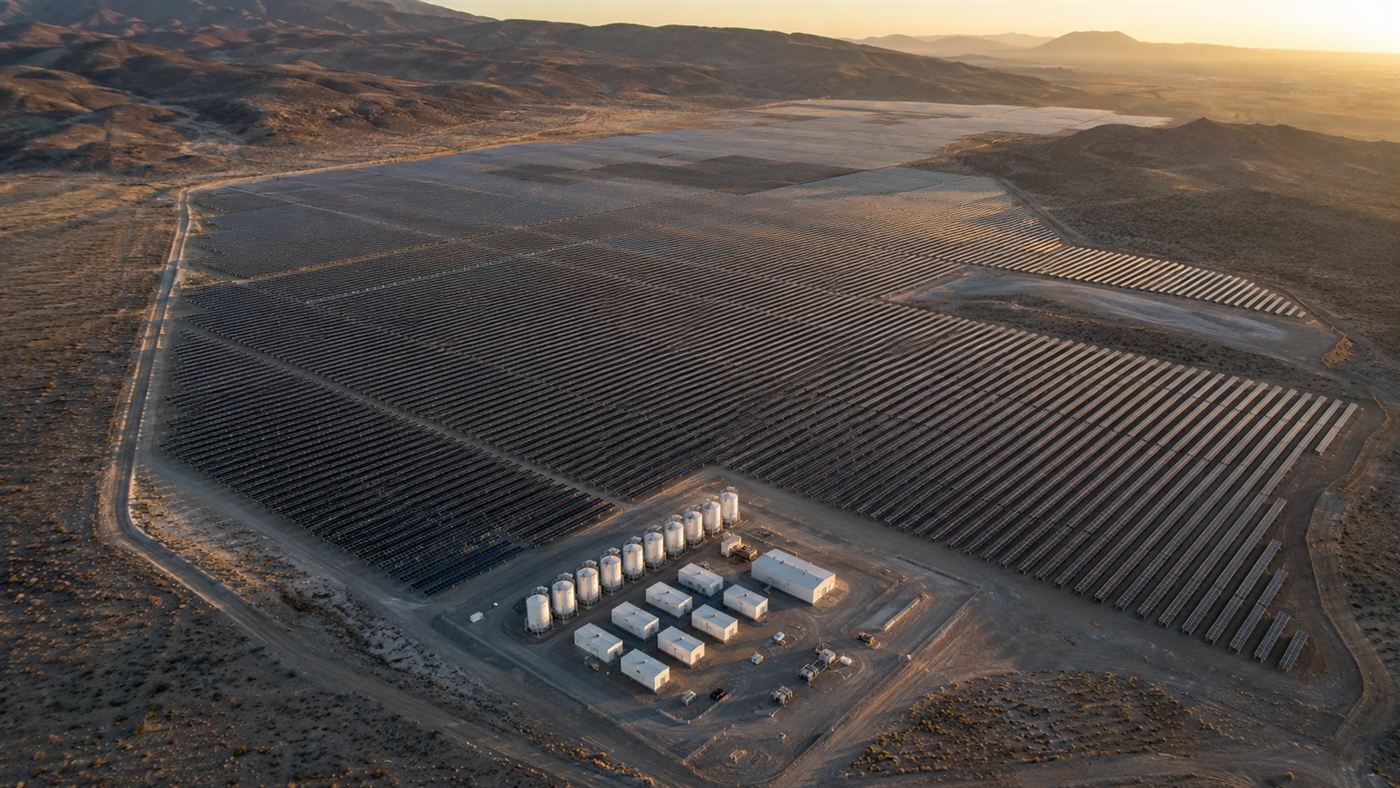
As Interesting Engineering reported, the Jimusaer project was built by Dalian-based Rongke Power and paired with a one-gigawatt solar farm, soaking up sunshine by day and feeding it back to the grid for up to five hours after dark. The numbers are large, but the more interesting story is how the thing actually stores its electricity.
What exactly switched on
The headline figure is the capacity: 1,000 megawatt-hours, enough to run the battery at full power for five straight hours. It sits next to a solar plant rated at a full gigawatt, and the pairing is the point. Solar is generous at noon and useless at night, so without storage a lot of that midday electricity is simply thrown away.
That waste has a name, curtailment, and it is the quiet villain of the renewable boom. According to the project's own figures reported across the energy press, the storage system lets the grid keep more than 230 million kilowatt-hours of clean electricity a year that would otherwise have been wasted. That is the difference between a solar farm that looks good on paper and one that actually keeps the lights on.
Why a vanadium flow battery cannot catch fire
Here is where flow batteries part ways with the lithium packs in your garage. Instead of storing energy inside solid cells, a vanadium flow battery keeps it dissolved in two big tanks of liquid electrolyte. To charge or discharge, pumps push that liquid past a stack of membranes, and charged vanadium ions do the work.
The electrolyte is water-based and does not burn. As pv magazine has covered across China's storage boom, that intrinsic safety is a big part of why utilities are turning to the technology for grid-scale projects. A lithium fire can run away with itself in minutes. A tank of vanadium solution, if something goes wrong, mostly just sits there. For a battery the size of a building, that is not a small detail.
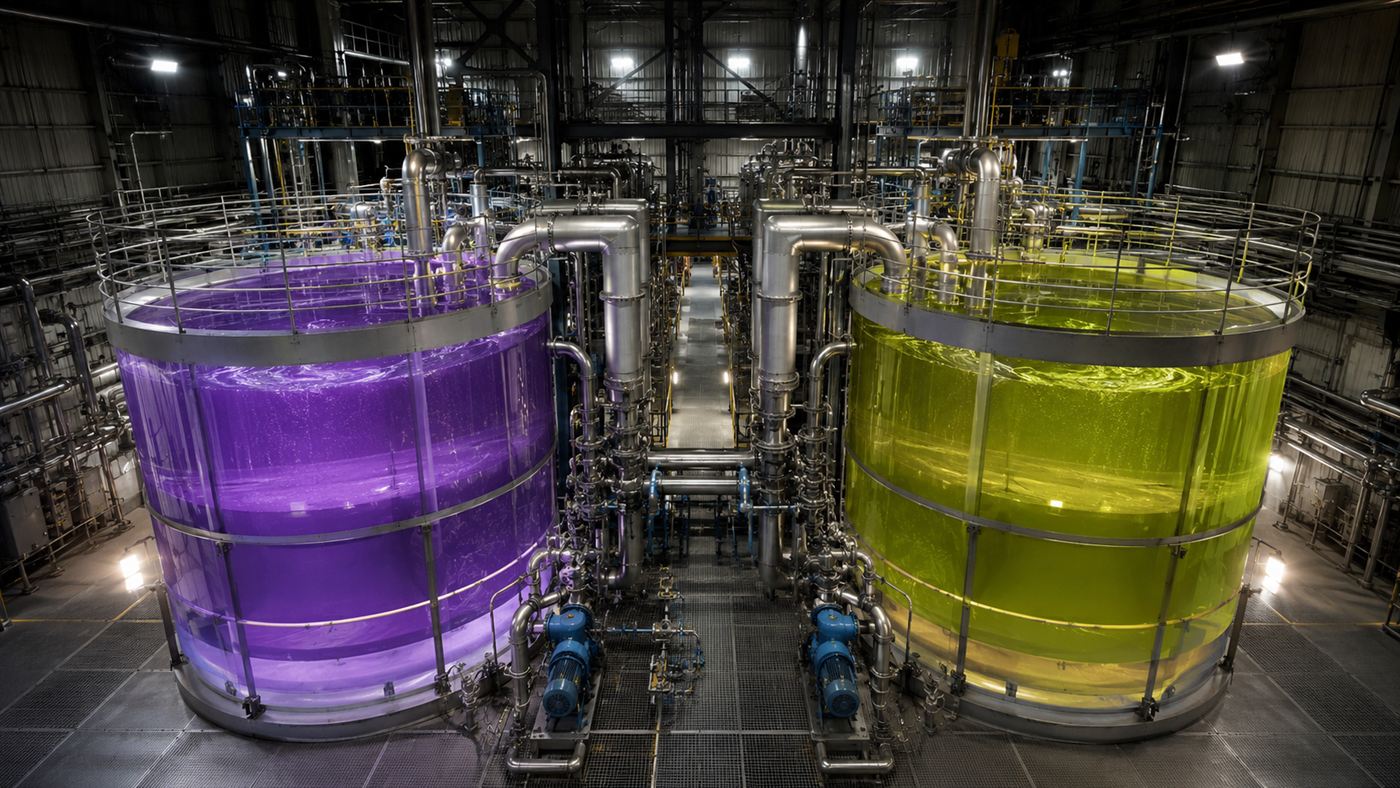
The trick is that the tank is the battery
Flow batteries split two jobs that lithium bundles together. The power, how fast you can push energy in and out, is set by the stack of membranes. The capacity, how much energy you can hold, is set purely by how big the tanks are. Want more storage? Build a bigger tank. That is why scaling one up to a gigawatt-hour is an engineering problem rather than a chemistry one.
The liquid also barely wears out. Where a lithium pack might manage a few thousand charge cycles before it fades, a vanadium electrolyte can be cycled tens of thousands of times and, in principle, refurbished and reused almost indefinitely. Builders routinely talk about service lives of 20 to 30 years, several lithium lifetimes stacked end to end, which changes the whole math of what a battery costs over its life.
The honest catch
None of this makes vanadium a miracle, and it is worth being clear about the trade-offs. Flow batteries are bulky. The same energy that fits in a compact lithium container needs a much larger footprint of tanks and plumbing, which is fine in an empty desert and hopeless in a basement. The round-trip efficiency is also lower, so you lose a bit more of your electricity on the way in and out than you would with lithium.
Then there is the vanadium itself. It is not rare, but it is not cheap, and its price can swing hard, which makes the up-front cost of these systems high even if the long life pays it back later. This is exactly why nobody expects flow batteries to end up in cars or phones. They are built for one job, sitting still on a grid and storing huge amounts of energy for hours at a time, and at that single job they are very good.
Why a tank of liquid metal is a big deal
The renewable grid has an obvious hole in it. The sun sets, the wind drops, and demand does not. Lithium is brilliant at covering the first hour or two of that gap, but it gets expensive and fussy when you ask it to hold a lot of energy for a long time and to do it safely, year after year, in a harsh climate.
That is the gap a gigawatt-hour of liquid vanadium is built to fill. It will not replace lithium, and it was never meant to. But proving that a non-flammable, decades-long, easily scaled battery works at this size is a real step toward grids that can run on sunshine after dark, which is the whole game from here.
A battery that stores its power in tanks of liquid, never catches fire, and is built to outlast three sets of lithium packs has just proved itself at gigawatt-hour scale. Would you rather your grid leaned on compact lithium or on these huge, slow, stubborn tanks of vanadium? Tell us what you think in the comments.
Related reading: The world's largest battery will run on rust, an iron-air design that holds a charge for 100 hours instead of four. See also why a giant lithium battery fire at Moss Landing has utilities rethinking where they build storage. See also why GM is betting on grid batteries made of salt instead of lithium.