America spent five years terrified of the two-inch murder hornet, then a handful of scientists glued radio trackers to the insects with dental floss and quietly wiped it off the continent
The northern giant hornet arrived like a horror-movie villain: two inches long, armed with a sting that can punch through a beekeeper's suit, and able to behead an entire hive of honey bees in an afternoon. In 2020 the country panicked. On December 18, 2024, officials announced they had beaten it, and the weapon was mostly a spool of dental floss.
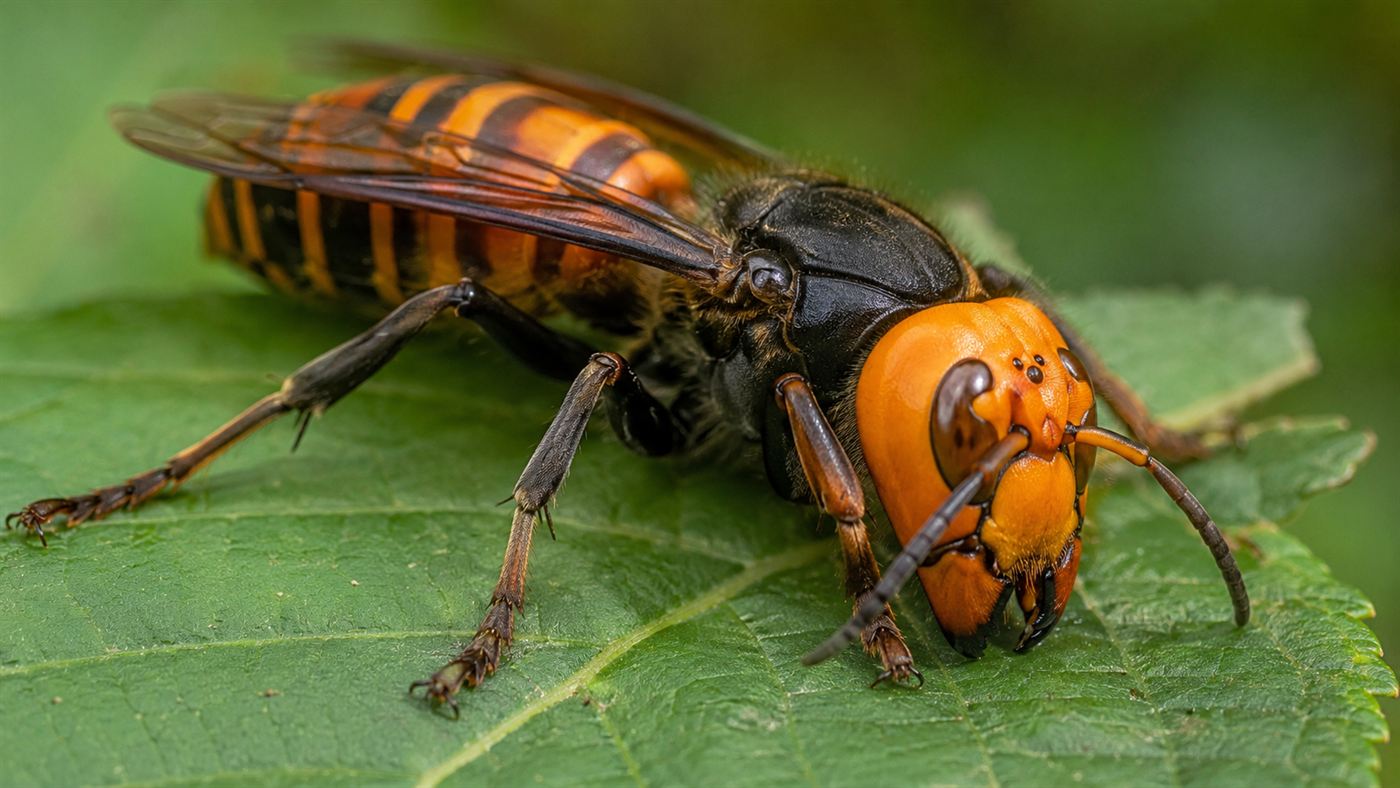
The northern giant hornet, up to two inches long, is the largest hornet on Earth. Illustration: Watts & Wild.
The northern giant hornet spent the spring of 2020 as the most famous insect in America. Newspapers called it the murder hornet, television showed its enormous orange face in extreme close-up, and a country already living through a frightening year braced for one more thing to fear. Then, over the next four years, a small team of state and federal scientists did something quietly remarkable: they hunted the invader down and, on the last count, wiped it out.
As CNN reported when the announcement came, the US Department of Agriculture and Washington State declared the hornet eradicated from the country on December 18, 2024. It is the rarest kind of environmental headline, an invasive species story that actually ends well, and the way they pulled it off is stranger than the panic ever was.
The short version: The northern giant hornet, an invasive Asian giant hornet nicknamed the murder hornet, turned up in Washington State in 2019 and terrified the public in 2020. Scientists tracked live hornets back to their nests using tiny radio tags tied on with dental floss, destroyed the nests, and after three years with no sightings declared it eradicated from the US in December 2024.
How did the northern giant hornet get to America?
The hornet is native to the forests of Asia, from Japan and South Korea to Taiwan, where it has hunted for millions of years. In August 2019 one turned up far from home, in British Columbia, and by that December the first was confirmed just over the border in Washington State. Nobody is certain how it crossed the Pacific, but the leading guess is the same way most invaders travel now, as an unnoticed stowaway in international cargo. However it came, it had landed in a place with no defenses against it.
What made headlines was its size. At up to two inches long, the northern giant hornet is the largest hornet in the world, with a wingspan and a face that look engineered to scare people. The murder hornet nickname, coined as the story broke, did the rest. It was a caricature, but it was rooted in something real, because for one animal in North America this hornet genuinely was a nightmare, and it was not us.
The slaughter phase that terrifies beekeepers
The real victim is the honey bee. When a northern giant hornet finds a hive, it can enter what researchers coldly call the slaughter phase. Using its powerful mandibles, a single hornet can decapitate roughly 40 honey bees a minute, and a small raiding party can wipe out a colony of tens of thousands in about 90 minutes, leaving a carpet of headless bees. The hornets then occupy the hive and carry the bee larvae home to feed their own young.
American and European honey bees have no defense for this. Their Asian cousins have evolved one, mobbing a scout hornet into a vibrating ball and cooking it to death with their body heat, but the bees in a US orchard simply die. For an agriculture that leans on managed hives to pollinate a food system already stripped of one quiet natural service, the arrival of an efficient hive-killer was not a curiosity. It was a threat to the pollinators that put food on the table.
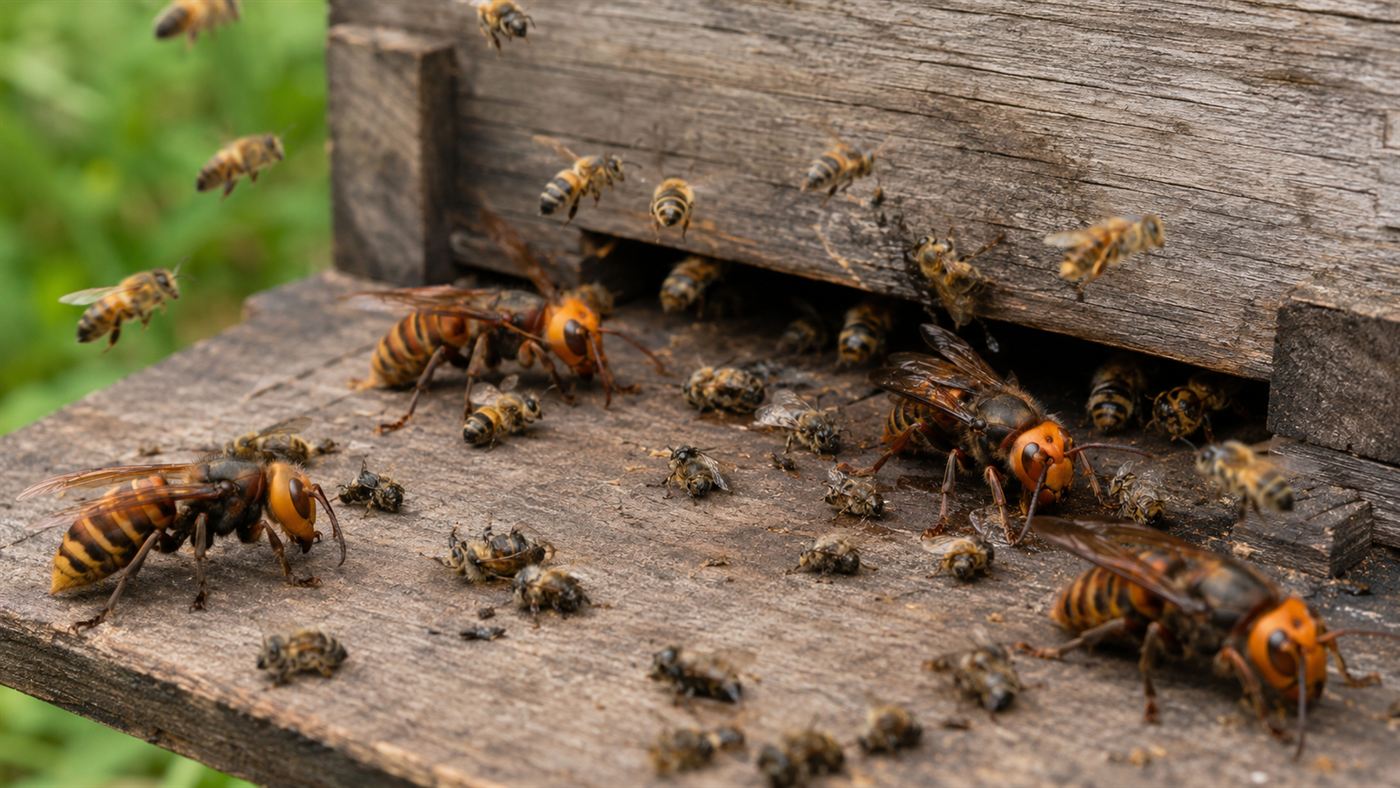
How do you find one nest in a whole county?
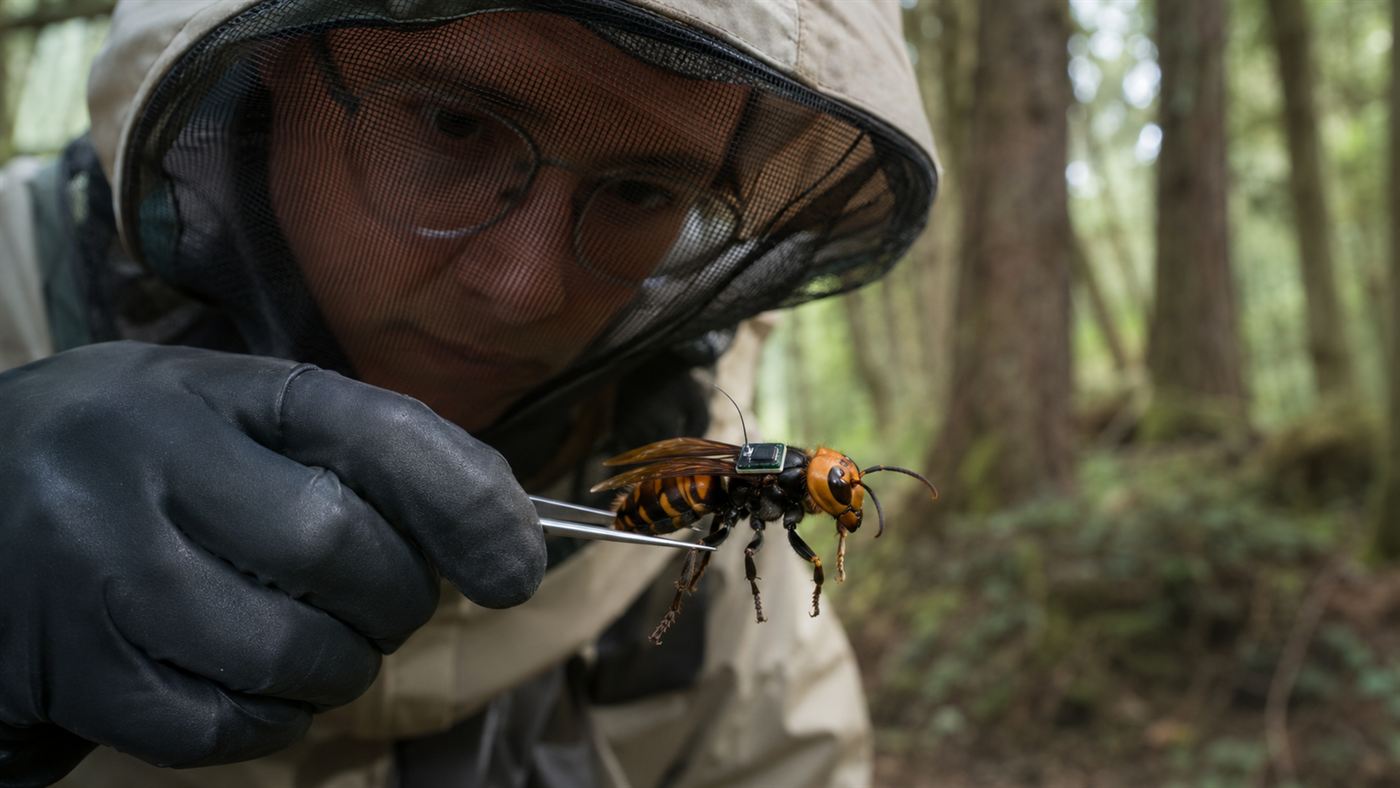
This is where the story turns from horror to ingenuity. A hornet nest can sit hidden in a single tree cavity somewhere across hundreds of square miles of Washington farmland and forest. Searching for it directly is hopeless. So the Washington State Department of Agriculture, working with the University of Washington, decided to let the hornets show them the way. They trapped live ones, and then, with astonishing patience, glued a tiny radio tracker to each hornet and tied it on with a loop of dental floss.
Then they followed. As NBC News documented, one tagged hornet finally led the team to the first nest ever found in the United States, in a tree in Blaine, in October 2020. Crews in thick protective suits sealed the tree's crevices with foam, wrapped the trunk in cellophane, and used a vacuum hose to suck the hornets out. Inside that single nest they counted 112 workers, nine males, and 76 new queens, each one of which could have flown off to start a colony of her own. Managing entomologist Sven Spichiger led the removal, and three more nests were found and destroyed the next year.
The public did half the work
The scientists could not be everywhere, so they turned millions of Washington residents into their eyes. The state built a public reporting system, handed out trap kits, and asked people to send in photos of anything that looked like a giant hornet. It worked better than any budget could have. By the agency's own account, about half of all confirmed hornet detections came from members of the public, and Spichiger said that every single nest they found was traced, directly or indirectly, to a public report.
That is the unglamorous engine behind the win. A frightening invasive species was beaten not by a miracle pesticide but by trapping, tracking, and a flood of ordinary people willing to photograph a scary bug and hit send. It is the same patient, human machinery that drives the best conservation comebacks, from counting the last wild condors one by one to reading the death toll under a single glass building on a migration night.
Declared gone, on December 18, 2024
To call an invasive insect eradicated, the rule is simple and demanding: three straight years with no confirmed detections. Washington hit that mark. After the flurry of nests in 2020 and 2021, the traps went quiet through 2022, 2023, and 2024, and so in December 2024 the state and the USDA made it official. The northern giant hornet was gone from the United States, the first time an established population of the insect had been stamped out anywhere outside its native range.
For beekeepers, it was pure relief. The honey bees of the Pacific Northwest had dodged a predator they could never have fought on their own, and a five-alarm invasion had been shut down before it spread past a single corner of one state. It stands next to the rare wins where humans manage to undo a mistake in time, like a drained California lake filling back to life, rather than just documenting the loss.
The honest catch
Eradicated does not mean gone forever. It means this particular population was wiped out, not that the door is shut. The same cargo routes that carried the first hornets in are still open, and British Columbia continued to log its own detections, so officials in Washington keep their traps out every year on the assumption that another one could always arrive. Vigilance, not victory, is the permanent state.
It is also worth being honest about the panic. For all the murder hornet headlines, this insect was never much of a killer of people. Its sting is genuinely dangerous, delivering far more venom than a honey bee and able to pierce a bee suit, and in its native Japan giant hornets are blamed for an estimated 30 to 50 deaths a year, almost all from allergic reactions. But it does not hunt humans. The real story was quieter and more important than the nickname: a threat to the bees we depend on was spotted early, chased down with dental floss and patience, and beaten. That is a template worth remembering the next time something frightening steps off a boat.
A two-inch invader that could behead a beehive in 90 minutes was chased down with radio tags, dental floss, and thousands of phone photos, and beaten. Does the murder hornet win make you more hopeful that we can stop the next invasive species, or was it just luck that it landed in one small corner? Tell us what you think in the comments.
Related reading: How a single cheap drug erased India's vultures and cost half a million human lives.
More from Watts & Wild
More in Energy & the Wild →



Maria covers heavy industry, mega-builds, and the natural world where energy and engineering meet wildlife, for Watts & Wild.