Nearly 1,000 migrating birds died in a single night against one Chicago building's glass
On the morning of October 5, 2023, volunteers walked the sidewalks around a glass convention center on Chicago's lakefront and found a horror: the ground carpeted with small dead songbirds, hundreds and hundreds of them. In one night, close to a thousand migrating birds had flown into a single building. The most haunting part is how ordinary, and how preventable, the cause was: bird collisions with lit glass.
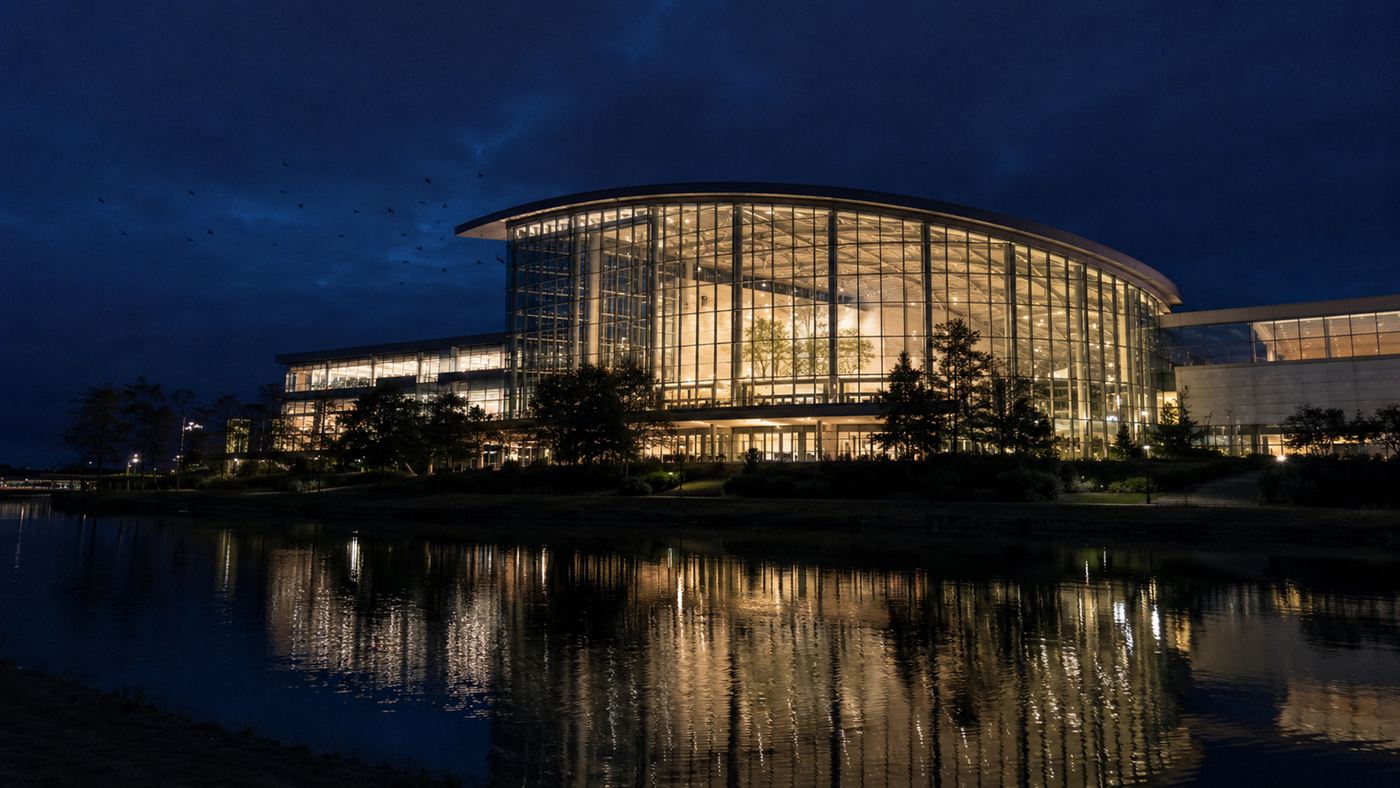
A brightly lit glass building on a migration night, the exact recipe for a mass bird collision. Illustration: Watts & Wild.
The building was McCormick Place Lakeside Center, a vast wall of glass sitting right on the shore of Lake Michigan, directly in the path of one of North America's great bird migration routes. That week, huge numbers of small songbirds, warblers, sparrows, and thrushes, were moving south under cover of darkness, as they have for thousands of years, navigating by the stars.
Two things went wrong at once. Low cloud and weather pushed the flying birds down closer to the city, and inside the convention center the lights had been left blazing all night while crews set up for an expo. To a bird flying in the dark, a giant glowing box of glass is not a warning, it is a beacon, and they poured toward it. By dawn, more than 300 Palm Warblers alone lay dead, among nearly a thousand birds in total.
Why bird collisions happen
Glass fools birds in two different ways, and both are deadly. In daylight, a window reflects the sky and the trees so perfectly that a bird sees open air or habitat where there is really a solid pane, and flies straight into it at full speed. It has no concept of an invisible wall, because nothing in nature works that way.
At night, the danger is light. Migrating songbirds steer by the moon and stars, and artificial light scrambles that ancient compass. Bright buildings pull them off course and trap them, circling in the glow until they collide or drop from exhaustion. Put a lit glass tower on a migration route and you have built, without meaning to, a machine for killing birds. The scale is staggering: studies estimate glass kills up to a billion birds a year in the United States alone.
The people who count the dead
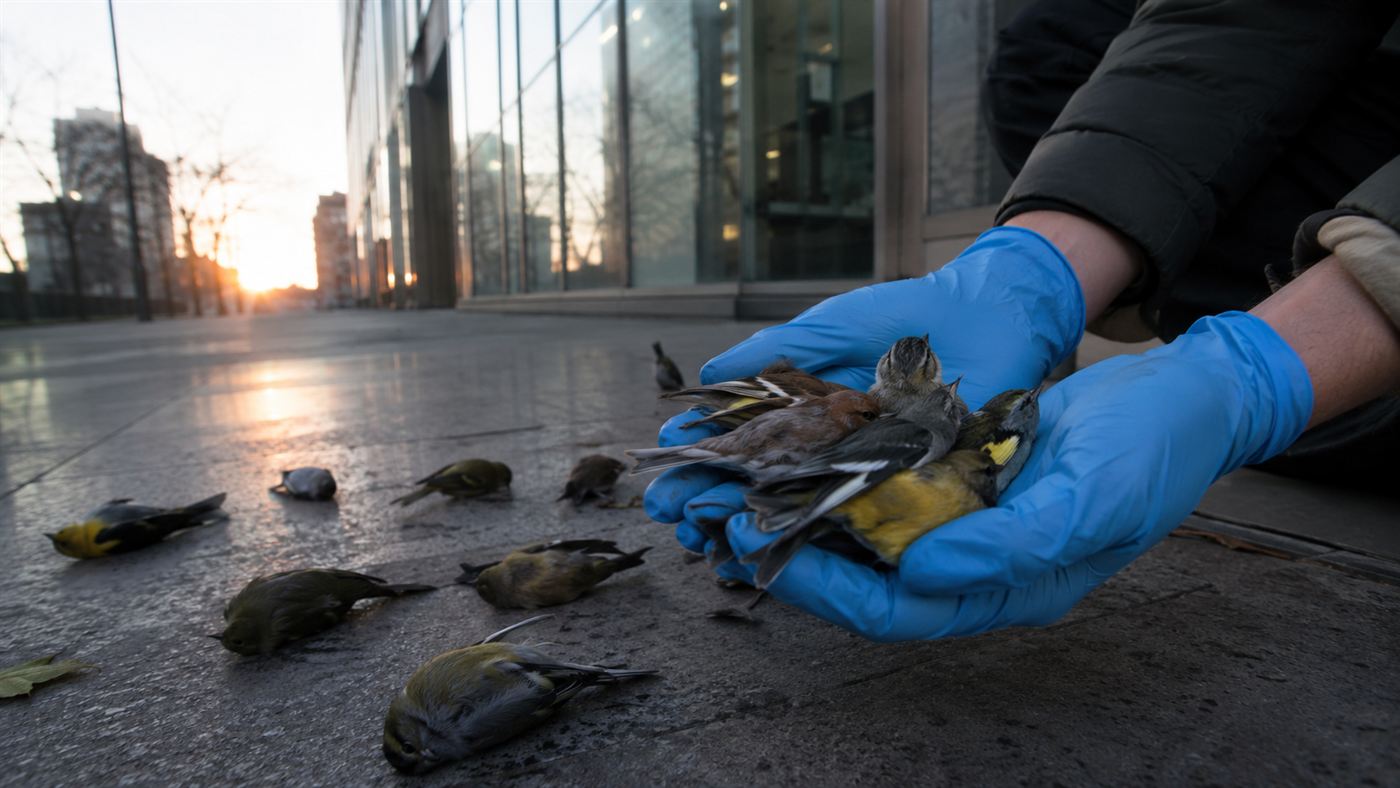
The reason we know the true scale is a small army of volunteers who do a quietly heartbreaking job. In Chicago, the Bird Collision Monitors walk downtown at first light through migration season, picking up the injured to be treated and the dead to be recorded. At McCormick Place, a scientist from the Field Museum has been logging the fallen birds there for more than 40 years.
On a normal migration morning, he might find a handful, zero to fifteen birds. On October 5, 2023, he and others found hundreds, laid out in rows that made the numbers impossible to look away from. That single, awful tally did what four decades of steady counting had struggled to do: it forced a mostly invisible slaughter into the daylight and onto the front pages.
The fix is almost embarrassingly simple
Here is the part that should give us hope. Unlike so many threats to wildlife, this one has cheap, proven answers. The first is just to turn the lights off. Lights Out programs, where downtown buildings dim or kill their lights during migration season, dramatically cut the number of birds drawn to their deaths, and they save on the electricity bill at the same time.
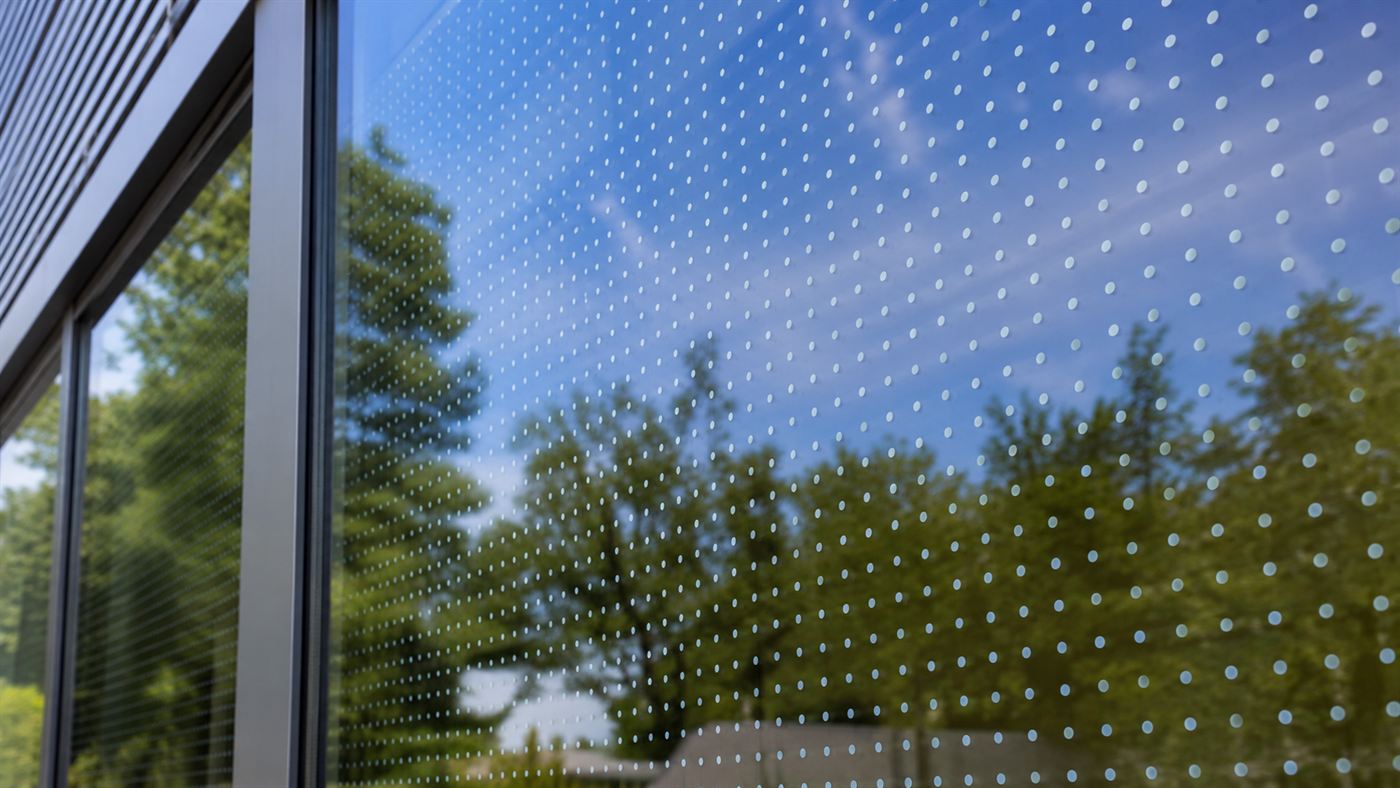
The second is to make glass visible to birds. Covering windows with a subtle pattern of dots or lines, spaced closely enough that a bird will not try to fly through, lets them see the barrier for what it is. After its catastrophic night, McCormick Place did exactly that, adding bird-safe film to its glass, and collisions there dropped by around 95 percent. A problem that killed a thousand birds in a night was very nearly switched off.
The honest catch
It would be nice to say the problem is solved, and it is not. McCormick Place was one dramatic building with a clear owner and a clear fix, but most bird collisions do not happen at famous towers. They happen at ordinary houses, low offices, and glass walkways, spread across millions of buildings where no volunteer is counting and no film is going up. That diffuse, everyday toll is the hard part.
Still, the lesson of that terrible Chicago morning is a genuinely hopeful one. This is a slaughter we understand completely, and one we already know how to stop, cheaply, with a light switch and a roll of dotted film. The billion-bird problem will not vanish overnight, but for once the fix is not a mystery. It is just a matter of deciding the birds are worth it.
A thousand birds died in one night against a single wall of glass, and the cure was as simple as turning off the lights. Would you support making bird-safe glass and Lights Out rules mandatory for big new buildings? Tell us what you think in the comments.
Related reading: The wind farm that became a death trap for golden eagles, and the fix that meant tearing it down.
More from Watts & Wild
More in Energy & the Wild →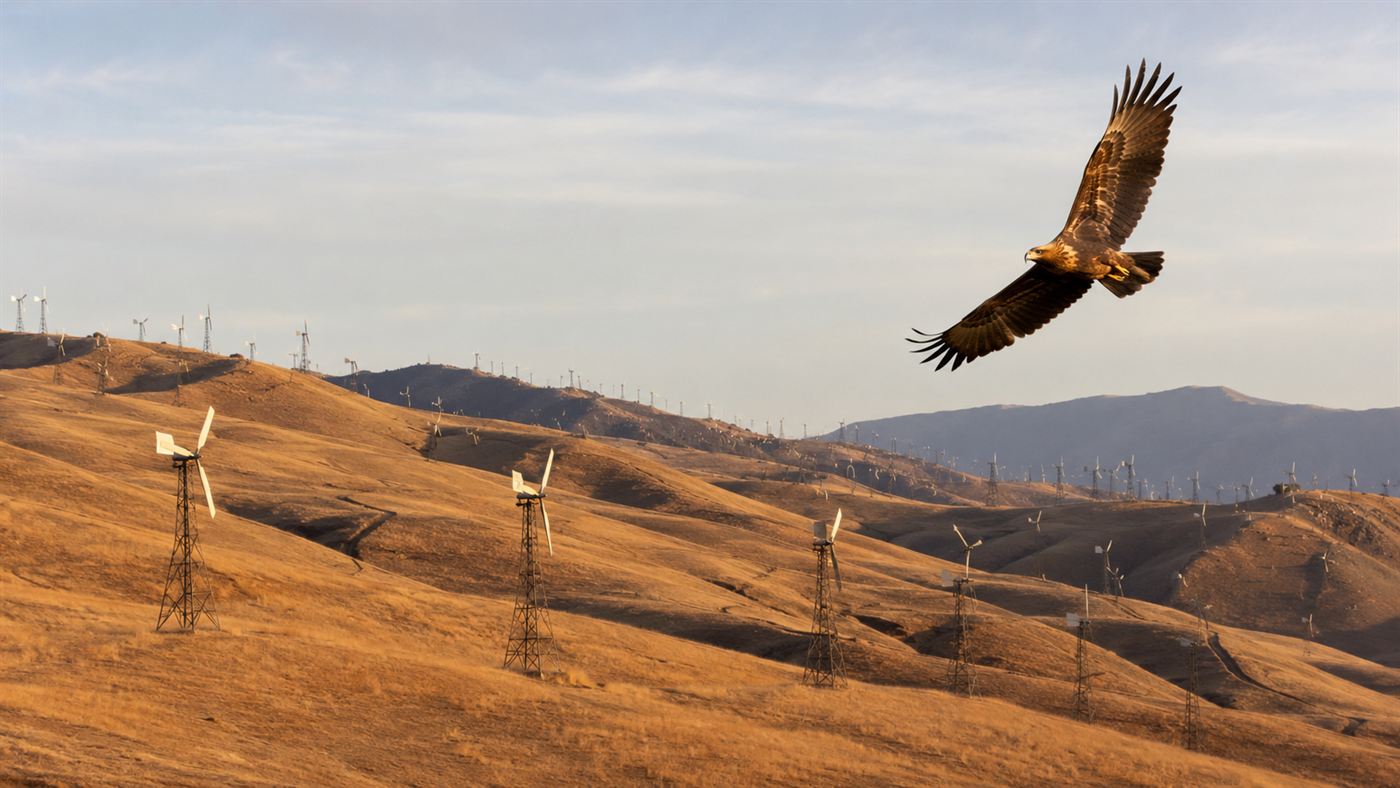


Bruno writes about energy history, industrial disasters, and the people who shaped the technologies we take for granted. He is based in Brazil.