He drove the world's first electric car in 1881, then was thrown into a pauper's grave
Years before the petrol engine took over the road, a Paris jeweller quietly built a vehicle that ran on a battery and an electric motor, and steered it through the heart of the city. His name was Gustave Trouve, and almost no one remembers him. The man who arguably started the electric car ended up tipped into a common grave, his life's papers later lost to a fire.
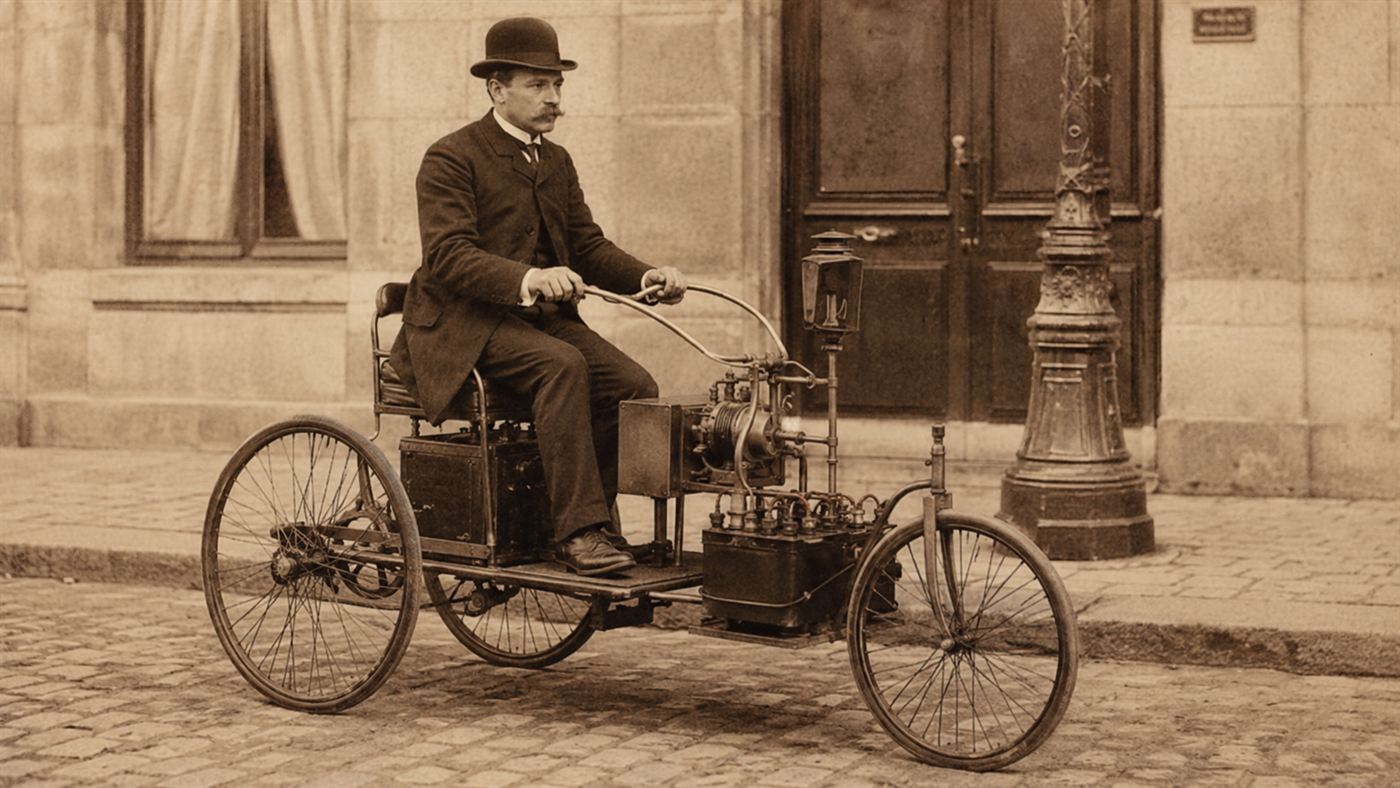
In April 1881 a battery-driven tricycle rolled along a Paris street, the first electric vehicle in the world. Illustration: Watts & Wild.
We tend to treat the electric car as a recent idea, a clean answer to the noisy petrol age that came before it. The truth is almost exactly backwards. The electric vehicle is older than the petrol car, and one of the very first was built by Gustave Trouve, a self-taught French inventor working out of a small workshop in central Paris. He got there before Karl Benz patented his petrol motorcar, and he did it almost as a side project among hundreds of others.
Trouve is the kind of figure history is strangely careless with: wildly inventive, admired in his own time, and then dropped so completely that you can ride electric cars your whole life without ever hearing his name.
The jeweller who electrified everything
Born in 1839, Trouve trained around clockmakers and jewellers, learning to build tiny, precise mechanisms by hand. From the mid 1860s he ran his own Paris workshop, and he turned that watchmaker's patience on the new force of the century: electricity. Over his life he took out dozens of patents on an almost comic range of devices, from medical instruments to stage effects.
His genius was for the small and the portable. While other engineers thought in terms of huge dynamos and factory machines, Trouve obsessed over shrinking electricity down to something a person could carry, wear, or ride. That instinct led him, in 1880, to a problem nobody had yet cracked: making a vehicle move on stored electric power alone.
How Gustave Trouve built the first electric vehicle
The pieces had only just become available. A usable electric motor existed thanks to Siemens, and the rechargeable lead-acid battery had recently been invented in France, meaning electricity could finally be stored and used again rather than drained once and thrown away. Trouve improved the efficiency of a small Siemens motor and paired it with those new rechargeable cells.
Then he bolted the whole arrangement onto a British-made Starley tricycle. On 19 April 1881 he ran it along the Rue Valois in central Paris, and it worked, a self-propelled electric vehicle moving under its own stored power through a public street. Maddeningly, French law at the time would not let him patent a road vehicle, so the single most historic thing he ever made earned him no protection and no fortune.
A boat motor you could carry
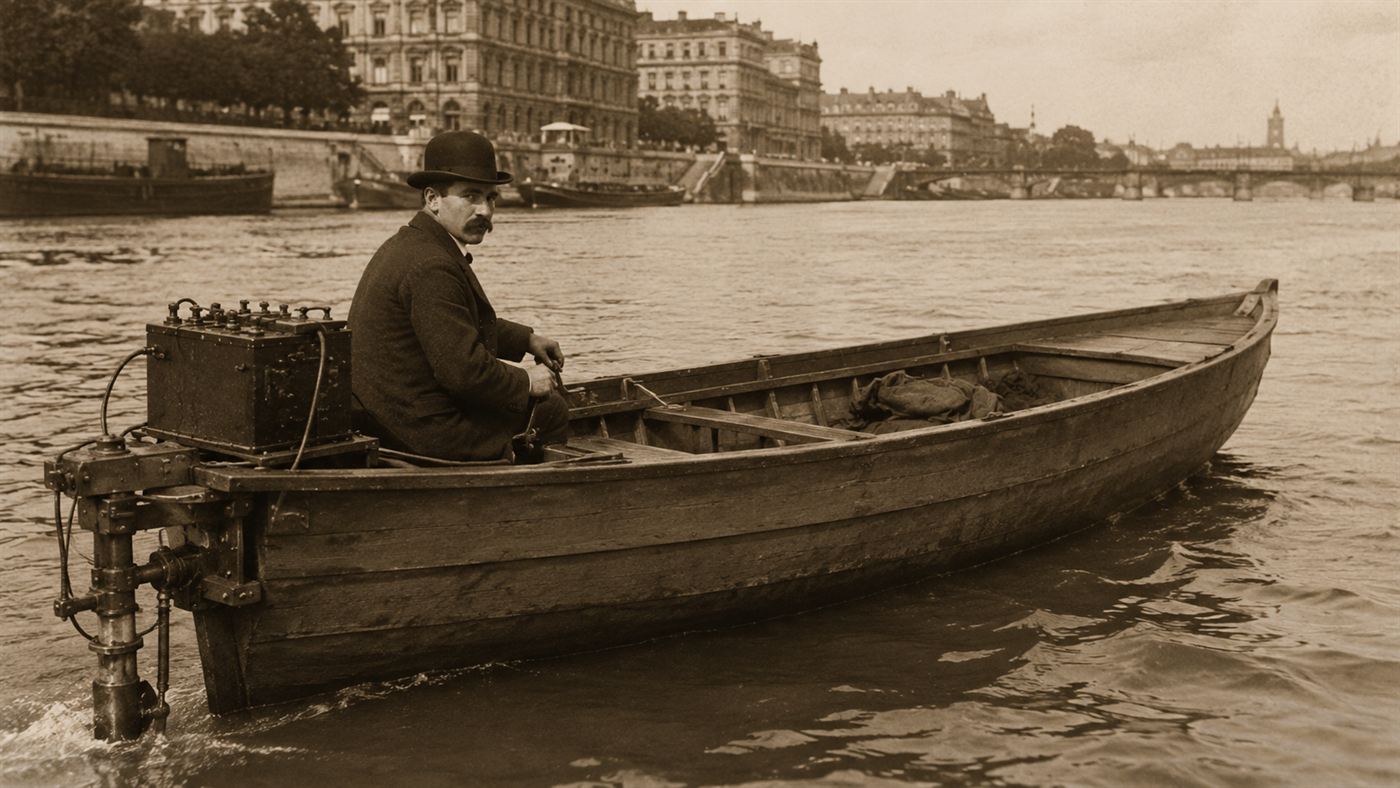
What he did next tells you everything about how his mind worked. Within weeks he took the same battery and motor down to the River Seine and fitted them to a small boat. To make the heavy parts easy to lug between his workshop and the water, he built the motor as a single removable unit that clamped onto the back of the hull, and in doing so he invented the outboard engine.
On 26 May 1881 his little electric launch, named Le Telephone, puttered up and down the Seine. The same restless idea, electricity made small and portable, had now produced both the first electric vehicle on land and the first practical electric boat motor in barely five weeks.
Jewellery that glowed in the dark
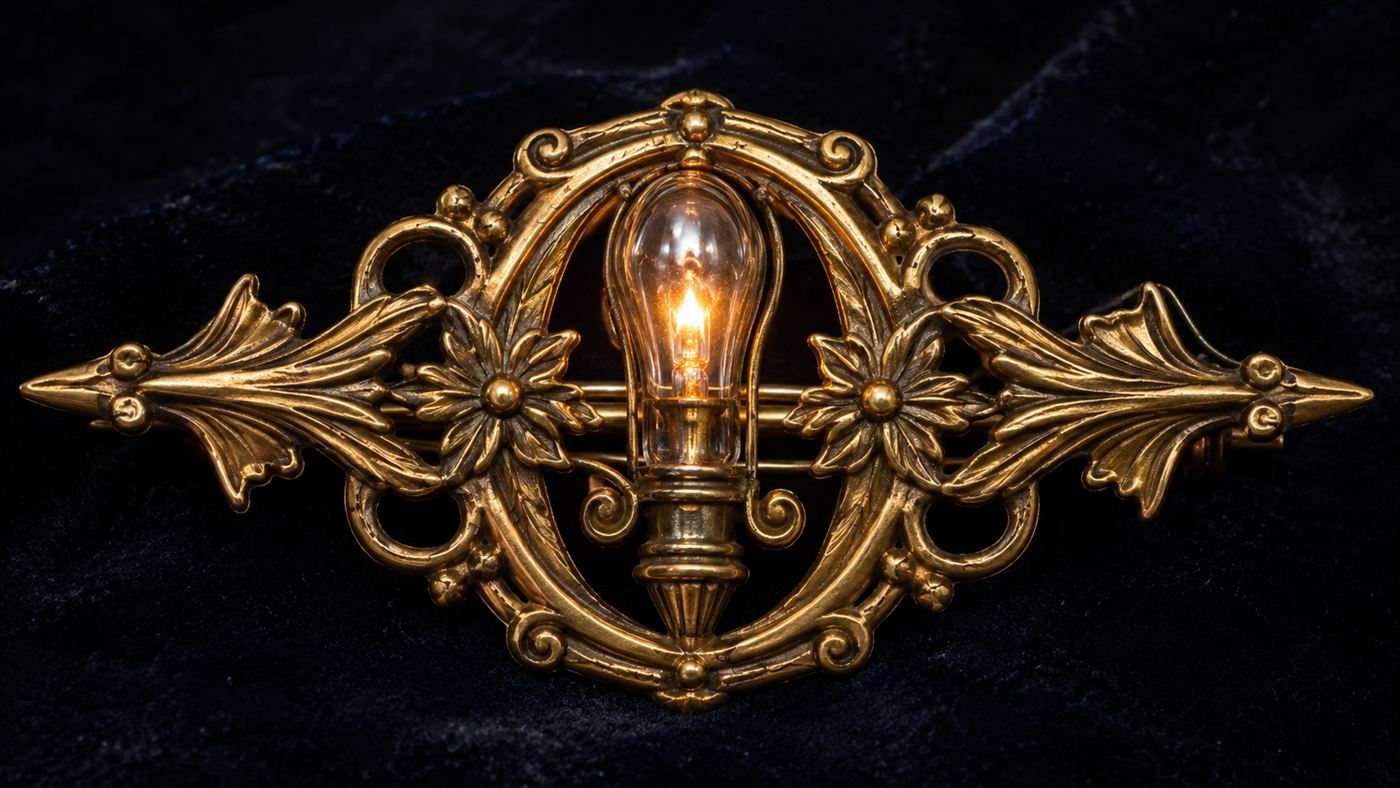
Trouve was also a showman, and some of his strangest inventions were meant to dazzle. He built electric jewellery: pins, brooches and hat ornaments fitted with tiny bulbs and even small moving figures, powered by a hidden rechargeable battery in the wearer's pocket. At a time when most homes still ran on gas lamps and candles, wealthy Parisians could walk into a ballroom wearing a jewel that sparkled with its own electric light.
The same miniaturising touch produced serious tools too, including a portable headlamp and an early endoscope that let doctors light up and look inside the body. He even built dancing electric figures and luminous fountains for the stage. To his contemporaries he was a marvel; to us he reads like a one-man preview of the entire battery-powered world to come.
Did Gustave Trouve really invent the electric car?
Here honesty matters. Trouve was not the first person ever to put electricity and wheels together. Inventors in the 1830s had built crude electric carriages, but they ran on simple cells that could not be recharged, so they were laboratory curiosities rather than usable machines. What set Trouve's tricycle apart was the rechargeable battery, which made it the first electric vehicle you could actually drive, recharge, and drive again.
That is why historians tend to credit him with the first practical electric vehicle rather than the first electric idea. It is a careful distinction, but it is the honest one, and it takes nothing away from how far ahead of his time he was.
Why was Gustave Trouve forgotten?
The sad part is how completely the world let him slip away. He worked alone, never built a lasting company, and could not patent his most famous creation, so there was no Trouve Motor Company to keep his name alive the way Benz or Ford would later manage. In 1902, while developing a device to treat skin with ultraviolet light, he cut his hand, ignored the wound, and died of the infection at 63.
When the lease on his grave in his home town was not renewed, his remains were simply moved into a common pit, and in 1980 a fire in the local town hall destroyed much of his surviving archive. A pioneer of the electric age was very nearly erased twice over, once in the ground and once on paper.
A jeweller built the electric car, the outboard motor and the lit-up brooch before most of the world had a single electric lamp at home, and then vanished from the story almost entirely. Should Gustave Trouve be remembered alongside the famous names of the motor age, or was being early and alone always going to cost him? Tell us what you think in the comments.
Related reading: the electric torpedo that broke 100 km/h in 1899, when electric cars still beat petrol.