Venice spent six billion euros and a decade fighting corruption to build MOSE, a wall of 78 hidden gates that rise from the seabed to hold back the floods drowning the city
MOSE is Venice's answer to the rising sea: 78 enormous steel gates that lie hidden on the lagoon floor and swing up to seal the city off from the Adriatic when a dangerous tide comes. It cost six billion euros, ran ten years late, and was nearly sunk by scandal before it ever saved the city.
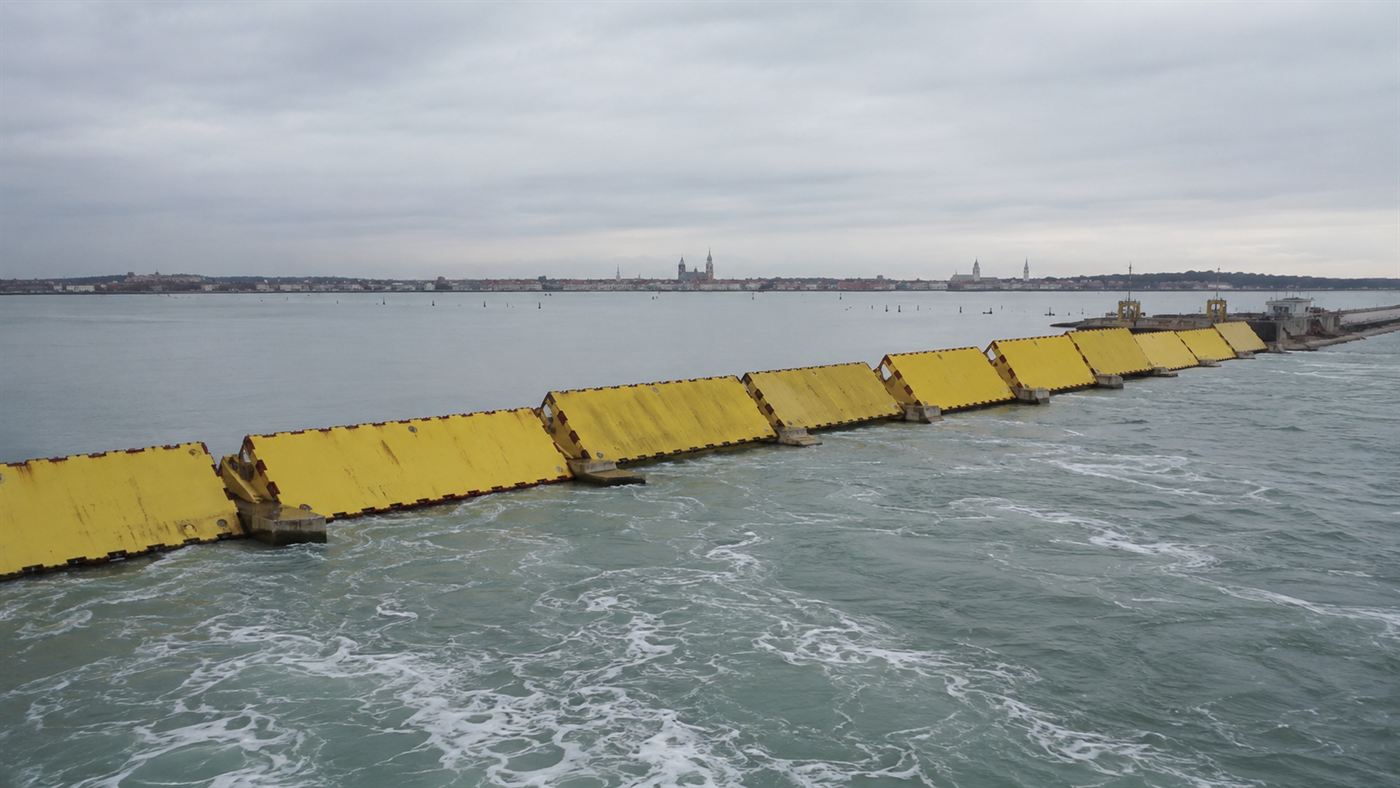
MOSE's gates raised at a lagoon inlet, a temporary wall between Venice and the Adriatic. Illustration: Watts & Wild.
MOSE is the most ambitious thing Venice has ever built to save itself from the water that made it. For more than a thousand years the city has flooded, the acqua alta creeping up through drains and over quaysides to swamp St Mark's Square, and for most of that time Venetians simply lived with it, laying duckboards and pulling on rubber boots. MOSE is the city's attempt to finally say no.
The system is a row of 78 hollow steel gates laid across the three gaps where the Venice lagoon meets the open sea. As CGTN has reported on the long-delayed project, most of the time the gates lie flat and invisible, filled with water, resting in housings on the seabed. When forecasters see a dangerous high tide coming, compressed air is blown into them, the water is forced out, and the great panels tilt up out of the waves in under half an hour to form a temporary dam.
What is MOSE in Venice? MOSE is a system of 78 mobile flood barriers protecting Venice from high tides. The hollow steel gates normally lie hidden on the lagoon floor and rise within about 30 minutes when compressed air is pumped in, sealing the lagoon from the sea. It cost about six billion euros and first worked in 2020.
How MOSE rises from the sea
The cleverness of MOSE is that it is meant to be invisible until the moment it is needed. The gates sit in concrete caissons sunk into the floor of the three inlets, Lido, Malamocco and Chioggia, full of seawater so they lie flat and out of sight, leaving the lagoon mouths open for ships and tides on ordinary days. Nothing about the famous skyline is touched. The barriers only exist when the city is in danger.
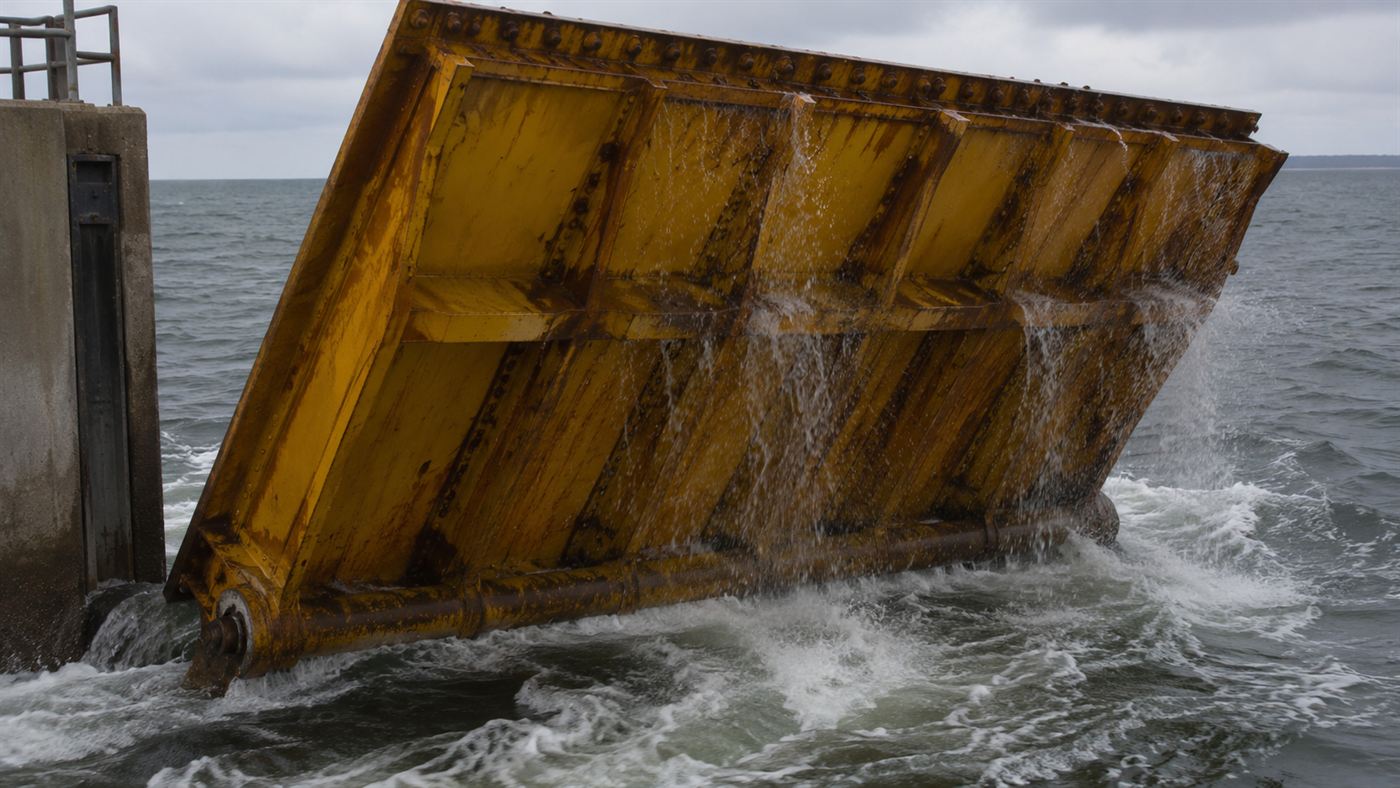
To raise them, operators pump compressed air into each hollow gate, driving the water out until the steel box becomes buoyant and pivots upward on a hinge at its base, rising until its top breaks the surface at an angle. With all 78 up, the three inlets are sealed and the acqua alta is locked outside in the Adriatic. The whole row deploys in under thirty minutes, and the name itself, an acronym for Experimental Electromechanical Module, deliberately echoes Moses parting the sea.
The floods MOSE was built to stop
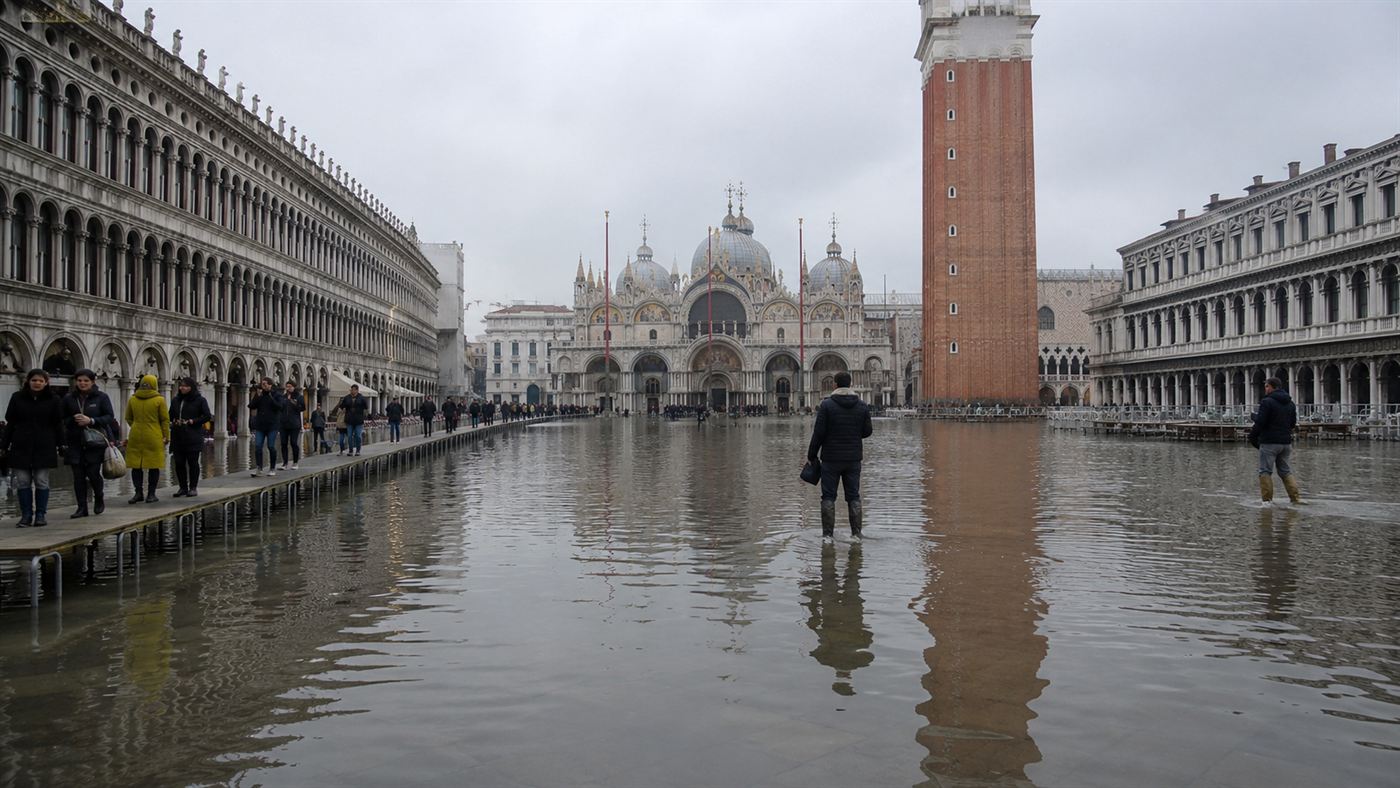
Venice floods because almost everything is conspiring against it. The city has slowly sunk over centuries, the sea is rising with the changing climate, and when a strong sirocco wind pushes Adriatic water up into the funnel of the lagoon at high tide, the result is the acqua alta that puts St Mark's Square under water. The lowest parts of the city flood dozens of times a year, and the worst events can swamp the whole historic centre.
The case for MOSE was written in disaster. In November 2019, before the system was ready, Venice suffered its worst flood since 1966, with water more than a metre and a half above normal pouring through the city, drowning shops, hotels and the basilica and killing two people. It was a brutal reminder of what was at stake, arriving at the cruelest possible moment, just as the half-built barriers sat uselessly on the seabed.
Six billion euros and a corruption scandal
If the engineering is a triumph, the way it was built is a scandal in the most literal sense. Construction began in 2003, and over the years the budget swelled to around six billion euros while the timeline slipped by a decade. Then, in 2014, the whole project blew open: the mayor of Venice, Giorgio Orsoni, was arrested along with roughly thirty others, and more than a hundred people, politicians, officials, judges and businessmen, were investigated over a vast web of kickbacks and bribes funnelled through the consortium building MOSE.
Inflated contracts had been used to skim off money for illegal payments, and for a time the great flood barrier became a symbol not of Italian ingenuity but of Italian graft. The corruption helped drive the costs up and the delays out, so that when Venice flooded catastrophically in 2019, much of the public anger was aimed not at the sea but at the people who had turned the city's defence into a trough.
It finally worked
For all that, the barrier works. On October 3, 2020, the gates of MOSE were raised in earnest for the first time against an incoming high tide, and St Mark's Square stayed dry while the Adriatic surged against the closed inlets outside. Since then the system has been deployed many times each flood season, repeatedly sparing the city the kind of inundation that once seemed inevitable. Venetians who had braced for another soaking instead watched the water stop at the lagoon's edge.
There is a hard poignancy in the timing. The technology that could have spared the city its worst modern flood arrived a year too late to stop it, after delays that corruption had made worse. But the central promise has, so far, held: when the sea comes for Venice now, the city can, for the first time in its history, shut the door.
Why MOSE might not be enough
The uncomfortable truth is that MOSE was designed for a sea that is already changing under it. The barriers were planned for a world where serious floods came a handful of times a year, and where closing the inlets briefly would not harm the lagoon. But as sea levels rise, the gates have to close more and more often, and every closure cuts the lagoon off from the tidal flushing that keeps it healthy, trapping pollution and stalling the busy port behind it.
Run the projections forward and MOSE could one day need to close almost daily, at which point a system built for emergencies starts to choke the very lagoon it protects. The submerged gates also corrode and need constant, expensive maintenance in salt water. The barrier buys Venice time, perhaps many decades of it, but it is a wall against a rising tide, not a cure for it.
The honest catch
It is worth holding two things at once. MOSE is a genuine feat of engineering that is, right now, keeping one of the world's most precious cities dry, and the relief of a protected St Mark's is real and earned. The basic idea, gates that vanish until summoned, then rise from the seabed to wall out the sea, is as elegant as anything in modern civil engineering.
And yet it was ten years late, billions over budget, soaked in corruption, and may be overtaken by the very climate change that made it necessary. The story of MOSE is not a clean triumph but a deeply human one: a brilliant solution, half-ruined by greed, arriving just behind the disaster it was meant to prevent, and now racing a sea that does not care how much it cost.
Venice built a wall of hidden gates that rise from the sea to save itself, paid for it with billions and a corruption scandal, and may still be outrun by the rising water in the end. Is MOSE worth every euro for the decades it buys, or money spent delaying the inevitable? Tell us what you think in the comments.
Related reading: How the Dutch walled off an entire arm of the sea and grew a province on the bottom.