London opened a sleek new footbridge over the Thames in 2000, then watched 90,000 people make it sway so badly the Millennium Bridge had to close just two days later
The Millennium Bridge was meant to be London's proud new river crossing for the year 2000, a slender blade of steel from St Paul's to the Tate Modern. On opening day it swayed so alarmingly under the crowd that it shut two days later, and stayed closed for nearly two years.
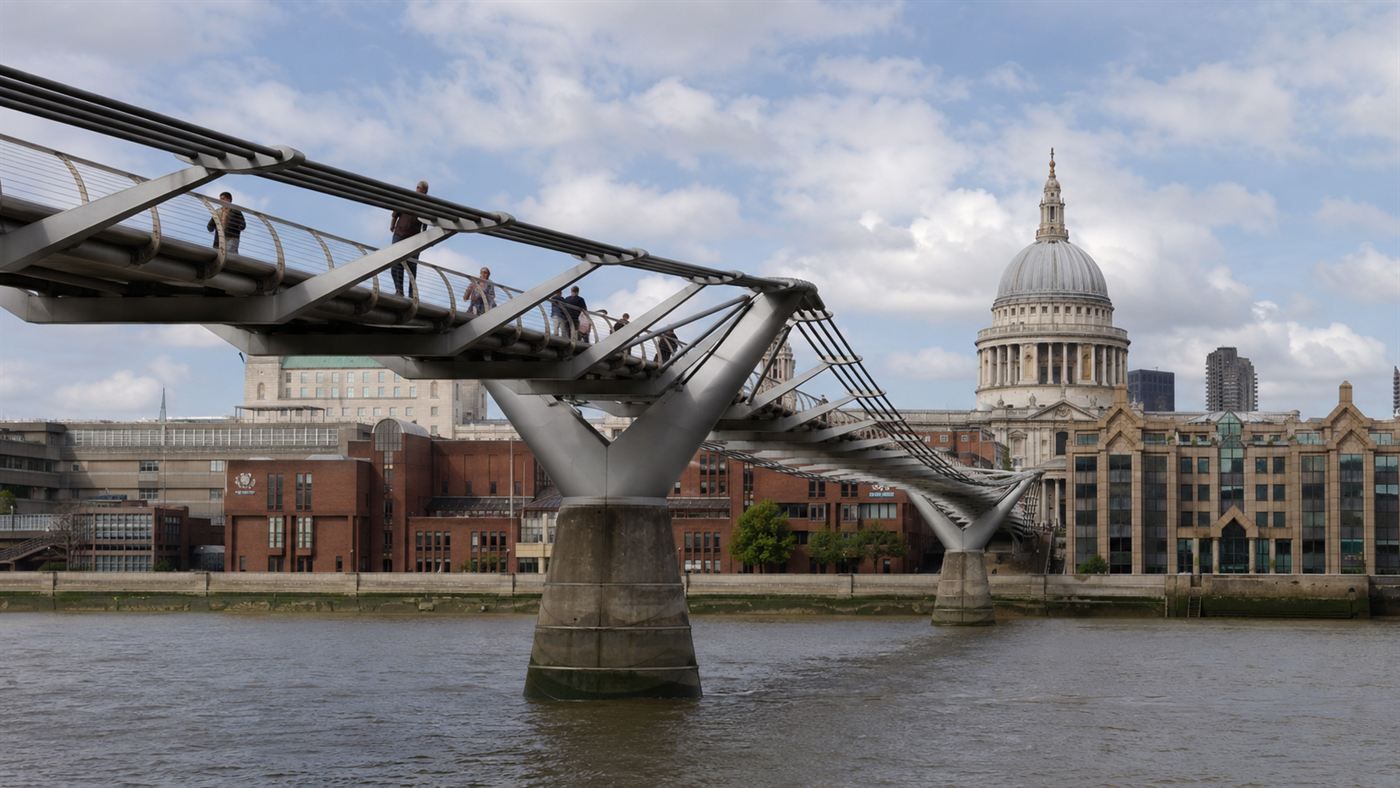
The Millennium Bridge, a low steel ribbon between St Paul's and the Tate Modern. Illustration: Watts & Wild.
The Millennium Bridge opened on June 10, 2000, to enormous fanfare. It was London's first new bridge across the Thames in more than a century, a low, futuristic footbridge designed by the architect Norman Foster with the engineers at Arup, sold to the public as a "blade of light" connecting St Paul's Cathedral to the brand-new Tate Modern gallery on the south bank. Around 90,000 people streamed across it on that first day.
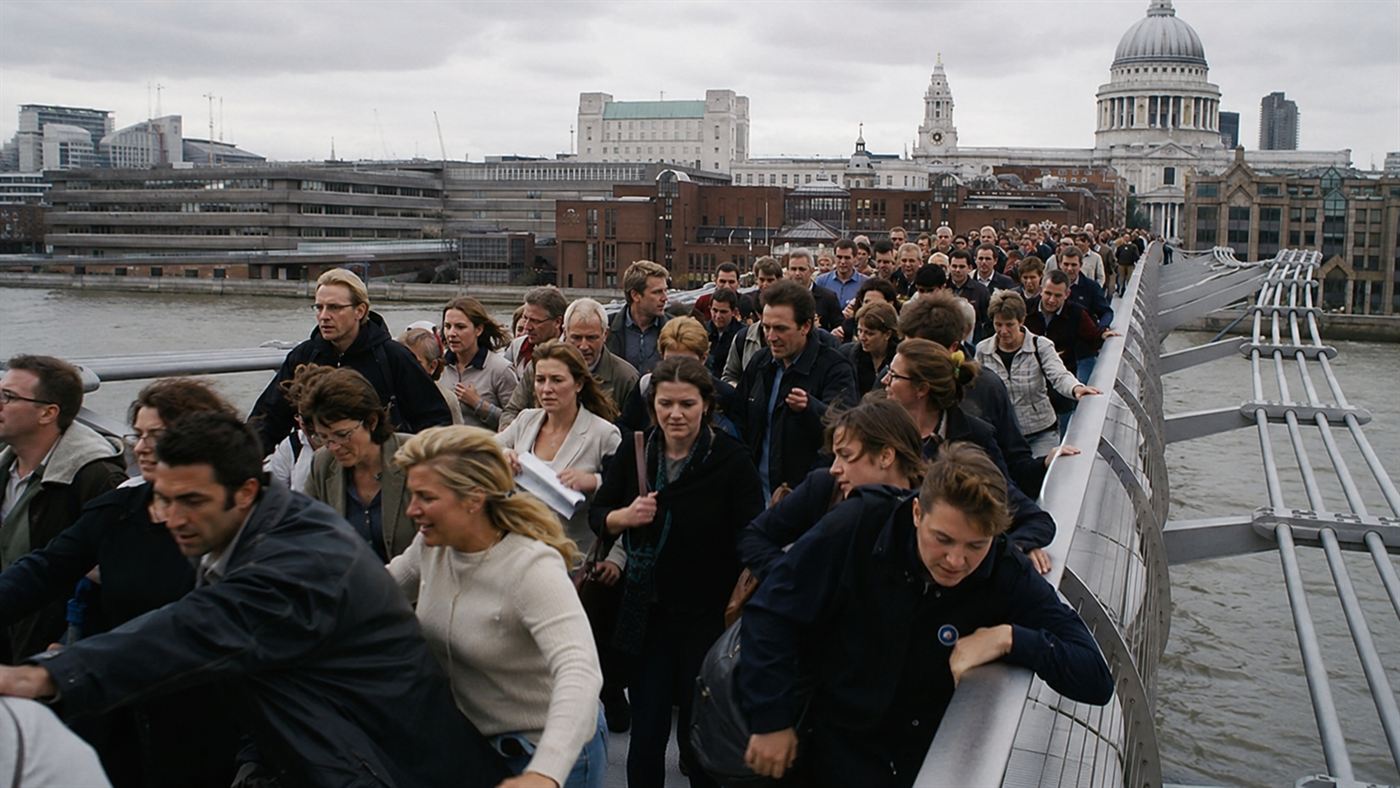
And as they did, the bridge began to move. Not up and down, but side to side, a slow, queasy sway that grew stronger as more people crowded on, until walkers were grabbing the handrails and staggering like sailors on a rolling deck. As New Civil Engineer has documented over the years, the effect was dramatic enough that the bridge was closed on June 12, just two days after it opened. The press promptly christened it the Wobbly Bridge.
Why did the Millennium Bridge wobble? The Millennium Bridge swayed because of synchronous lateral excitation: as the bridge moved slightly sideways, pedestrians unconsciously adjusted their steps in time with it to keep their balance, and that synchronized walking pumped more energy into the sway, a feedback loop the engineers had not anticipated.
What is synchronous lateral excitation?
The villain has an intimidating name: synchronous lateral excitation. The idea is simpler than it sounds. Every footstep gives a tiny sideways push. Normally those pushes are random and cancel out, but if a bridge already has the faintest sideways sway, people instinctively widen their stance and time their steps to stay balanced, the way you adjust your walk on a moving train. Without meaning to, the crowd starts stepping in rhythm with the wobble.
Once that happens, it feeds on itself. The synchronized footsteps push the bridge a little harder, the bigger sway makes more people fall into step, and the motion grows in a vicious loop. Engineers had long known to check bridges for the up-and-down resonance that makes soldiers break step when they march across. What they had badly underestimated was this sideways, crowd-driven version, which barely showed up until a large enough crowd was packed onto a slender enough footbridge.
The Millennium Bridge's beautiful, hidden flaw
Part of what made the Millennium Bridge vulnerable was exactly what made it beautiful. Norman Foster and Arup, working with the sculptor Anthony Caro, wanted an unusually flat, low-slung profile so it would not block the view of St Paul's. Instead of tall cables soaring overhead, they ran the suspension cables out to the sides, barely above the deck, a daring "blade of light" that came in at around 18 million pounds. It was elegant, modern, and proudly thin.
That slimness left it lighter and more flexible from side to side than a chunkier design would have been, which lowered its natural sway frequency right into the range that walking crowds excite. The team had run the standard checks of the day and the bridge was structurally safe; it was never going to fall down. But safe and comfortable are not the same thing, and a bridge that lurches under your feet feels like neither.
Two days of fame, two years of fixing
Closing a flagship bridge days after a royal opening was a national embarrassment, but the team refused to simply paper over it. Arup, led by engineer Pat Dallard, ran careful experiments, marching volunteers across the bridge and across test rigs to measure exactly how crowds and structure fed off each other. The work effectively pinned down synchronous lateral excitation as a quantifiable engineering problem rather than a freak event, and turned an awkward failure into genuine new science.
The fix was not to stiffen the whole bridge, which would have wrecked Foster's slender lines, but to drain the energy out of the sway. The reopened Millennium Bridge would still flex a little; it just would not be allowed to build that flex into a dangerous rhythm.
How they stopped the wobble
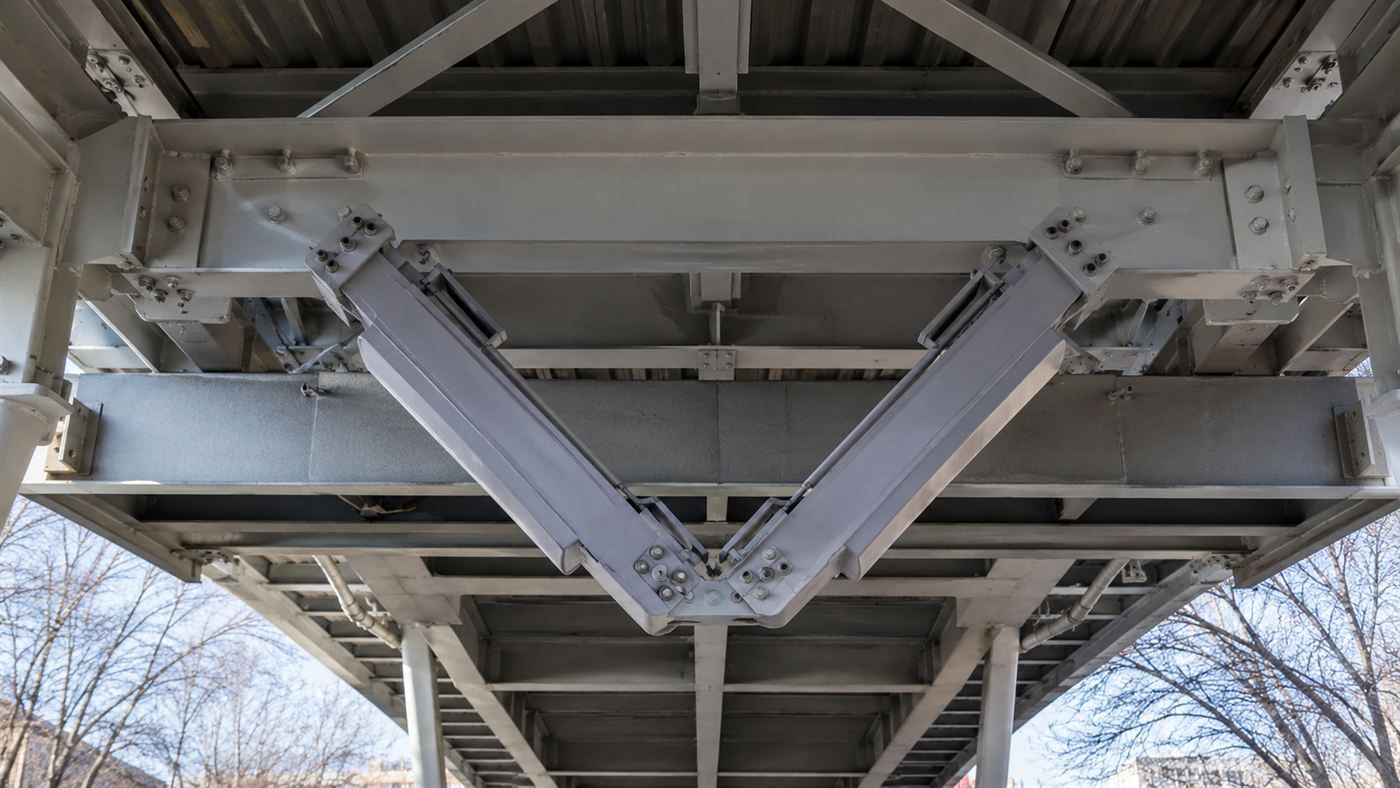
The cure was a hidden web of shock absorbers. Engineers fitted the bridge with 37 fluid-viscous dampers, including big chevron-shaped braces slung beneath the deck, to soak up the sideways motion, plus 52 tuned mass dampers, weights on springs that swing out of phase with the bridge and cancel its movement. The retrofit cost roughly 5 million pounds, on top of the original build, and took the better part of two years.
When the bridge reopened on February 22, 2002, the wobble was gone, and it has stayed gone ever since under crowds far larger than the ones that first set it shaking. Today millions of people cross the Millennium Bridge every year, most of them with no idea they are walking on one of the most studied structures in modern engineering, kept perfectly still by machinery they will never see.
The honest catch
It would be unfair to file this under simple incompetence. At the time the bridge was designed, the lateral crowd effect was poorly understood, hinted at by a few older bridges but never properly codified, and the standard rules engineers followed did not require checking for it. The Millennium Bridge failed publicly partly because it pushed the design of footbridges to a daring new extreme, right into a gap in the rulebook.
And the science still is not entirely settled. A 2021 study argued that pedestrians may not need to fully synchronize for the instability to take hold, that even people simply adjusting their balance independently can drive a slender bridge unstable once the crowd is dense enough. The dampers work regardless, which is the practical point, but the wobble that humbled London in 2000 is still teaching engineers exactly how crowds and bridges talk to each other.
One of the world's top engineering firms built a beautiful new bridge that started swaying within hours and had to close two days after it opened, then turned that embarrassment into a textbook lesson taught around the world. Would you have trusted the Wobbly Bridge again after a fix you could not see? Tell us what you think in the comments.
Related reading: How engineers saved the Leaning Tower of Pisa by digging soil out from under its higher side.