The longest cave on Earth runs for hundreds of miles under Kentucky, and much of what we know about Mammoth Cave was discovered by Stephen Bishop, an enslaved man who mapped its depths from memory
Beneath the green hills of Kentucky lies a labyrinth so vast that explorers are still measuring it. The man who opened its greatest secrets could not legally leave it. He was enslaved, teenaged, and the finest cave explorer of his age.
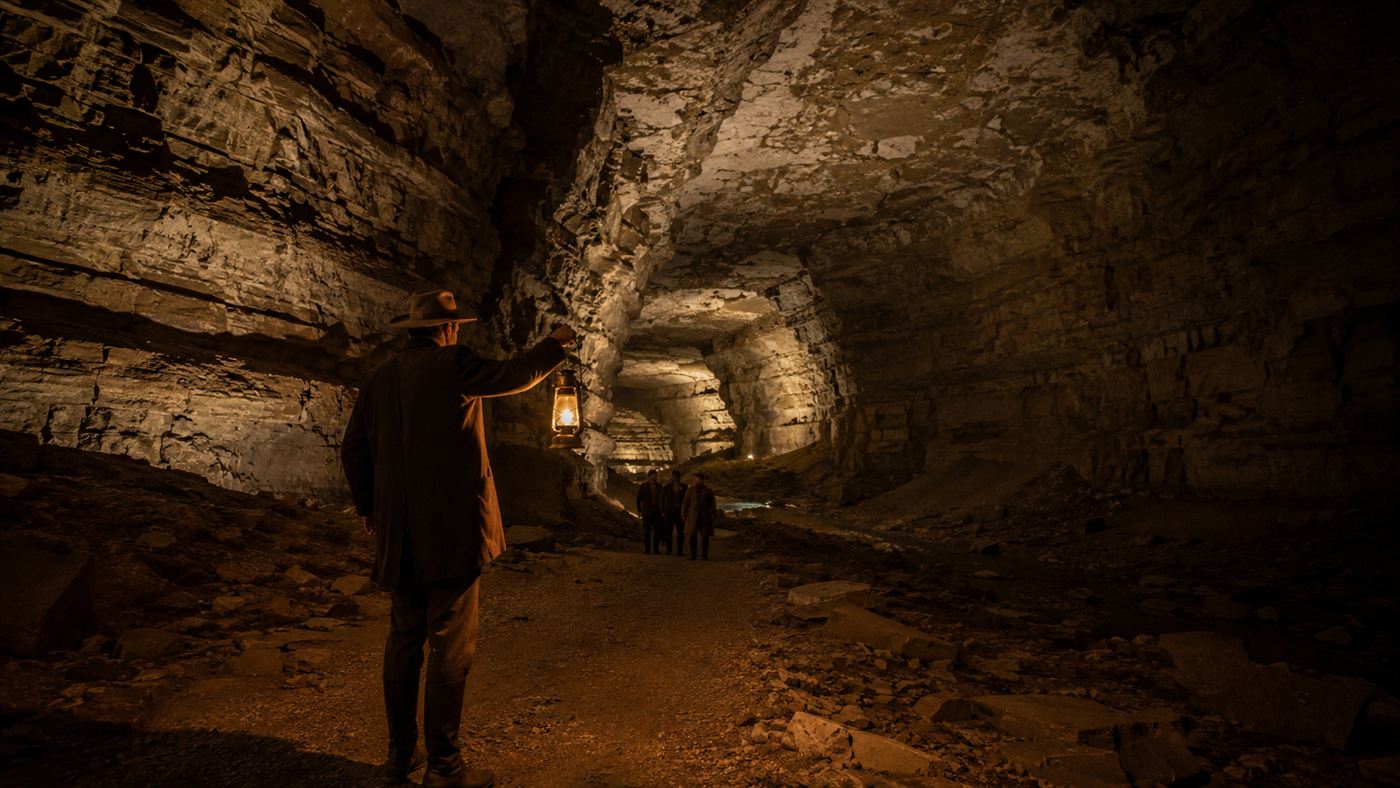
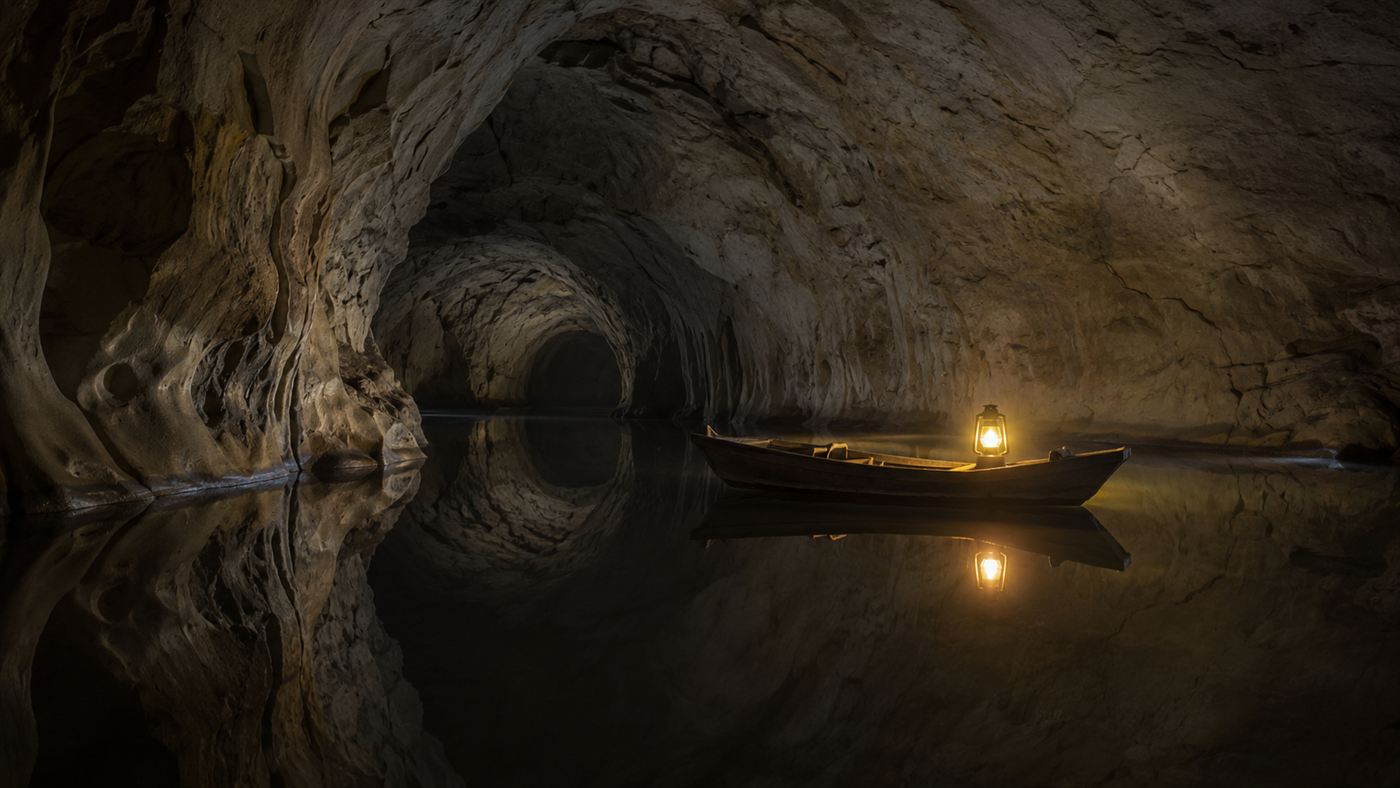
A single lantern barely dents the dark in Mammoth Cave, the longest cave system on Earth. Illustration: Watts & Wild.
Under the rolling farmland of central Kentucky runs the largest cave system humans have ever found, a stacked maze of stone corridors, domes, and rivers that seems to have no end. It is called Mammoth Cave, and the name is not an exaggeration. Surveyors have mapped more than 400 miles of it and keep adding more, which makes everything else on the planet a distant second.
But the most remarkable thing about the cave is not its size; it is a person. As Smithsonian magazine has told it, an enslaved young man named Stephen Bishop became the cave's greatest explorer and guide, pushing into places no one had dared to go and drawing the map that defined it for decades. He did all of it while legally the property of the men who profited from his genius.
The short version: Mammoth Cave in Kentucky is the longest cave system in the world, over 400 miles and growing. Much of what we know about it was discovered by Stephen Bishop, an enslaved man brought there in 1838 at 17, who crossed the fearsome Bottomless Pit, found its underground rivers and blind fish, and mapped the cave from memory. He remains one of the great explorers in American history.
How long is Mammoth Cave?
The scale is genuinely hard to hold in your head. The surveyed passages of Mammoth Cave stretch beyond 400 miles, layered in roughly five levels of limestone carved by water over millions of years, and no one knows the true total because new passages keep turning up. The second-longest cave in the world is not even close.
It got its official crown in 1972, when cavers finally proved a connection between the neighboring Flint Ridge system and the main cave, merging them into one giant network. That title, the longest cave on Earth, has held ever since, and it makes this quiet corner of Kentucky home to one of the planet's true superlatives, most of it still black, silent, and barely touched.
Who was Stephen Bishop?
Stephen Bishop was brought to the cave in 1838, at just 17 years old, by the lawyer who then owned both the cave and him. Set to work as a guide, he turned out to have a rare gift for the underground, a fearlessness and a memory for its endless branching passages that no one could match. Over about 19 years he became the star of Mammoth Cave, the man visitors from around the world came to be led by.
What sets his story apart is the cruelty at its center. Bishop was one of the most famous explorers in America and, at the same time, he remained someone else's legal property. He guided scientists, writers, and European aristocrats through passages he had discovered, was celebrated in books and newspapers, and still could not choose where to live or whether to stay. The wonder he revealed belonged, on paper, to the men who owned him.
Crossing the Bottomless Pit
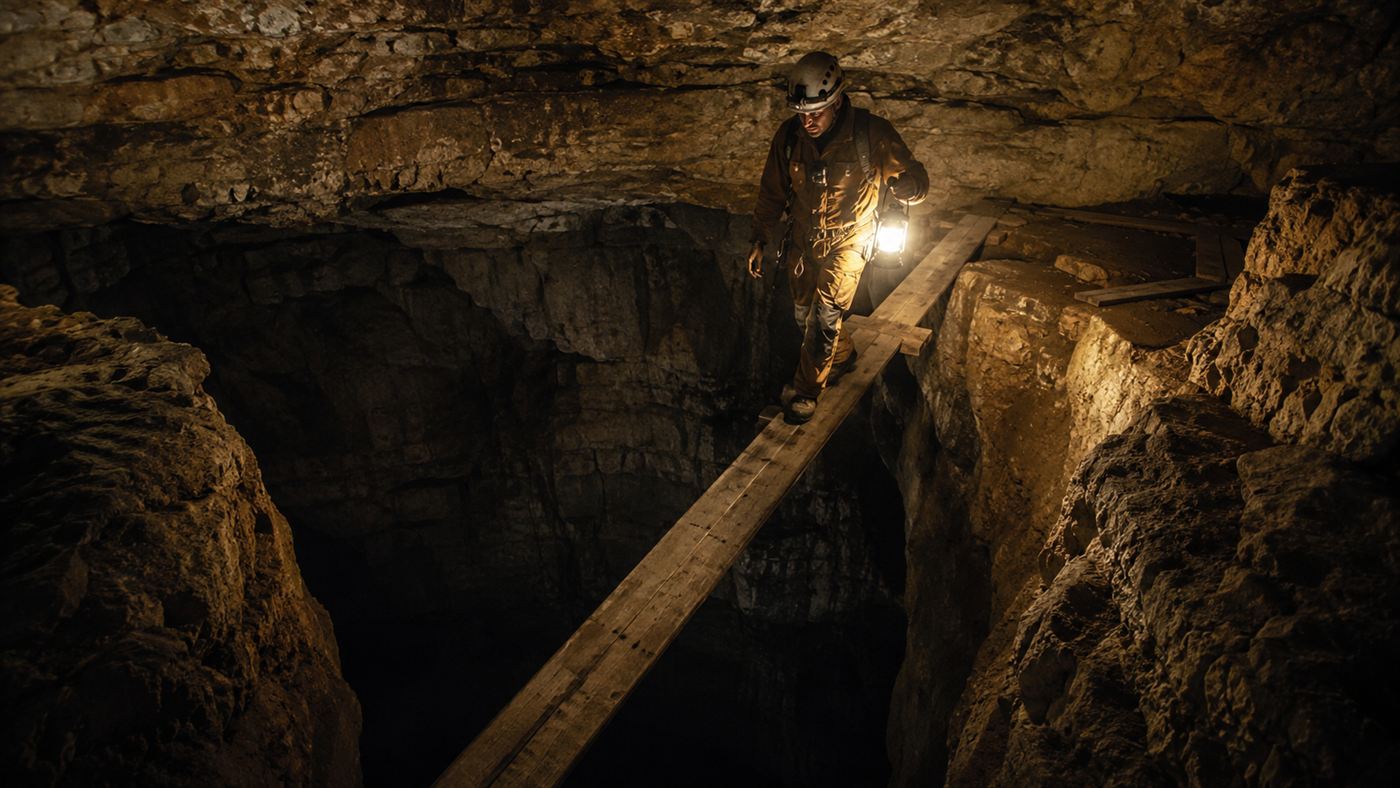
For years, exploration of the cave had stopped at a black chasm called the Bottomless Pit, a gap that no guide would cross. In 1838, Bishop changed that. With a visitor's help, he laid a ladder or planks across the void and inched over it into the unknown, and on the far side he found mile after mile of new cave.
That single act of nerve roughly transformed how much of the system was known. Past the Bottomless Pit, Bishop discovered towering chambers and, far below, underground rivers he named after the rivers of the Greek underworld, the Styx and the Echo. In their black water swam pale, eyeless fish and crayfish, creatures adapted to a world without light, which he was among the first people ever to see.
The map drawn from memory
Bishop's greatest feat may have been on paper. In 1842 he was sent to a plantation for a couple of weeks and, with no notes and nothing but his own recollection of years underground, drew a detailed map of the cave's tangled passages. It was astonishingly accurate for its time and became the authoritative map of the system for more than 40 years.
The map was so good that it did more than record what was known; it pointed to what was not. A faint line Bishop drew off one passage hinted at a lead that, more than a century later, guided cavers toward the very connection that made this the world's longest cave. A man who had never studied cartography produced a document that outlived him and quietly shaped the exploration of Kentucky's underground for generations.
The honest catch
It would be easy to package this as a heartwarming tale of talent rewarded, but the truth is harder. Bishop's brilliance did not free him for most of his life; it made him more valuable to keep. He was finally freed in 1856, under the will of a former owner, and died the next year at around 37, buried in the cave's guides' cemetery. The recognition we give him now came far too late to change his life.
His story also stands in for many others. The heavy labor that first made Mammoth Cave profitable, mining its earth for saltpeter to make gunpowder, was done by enslaved people, and other Black guides like Nick and Mat Bransford explored alongside Bishop with far less fame. And the national park that protects the cave today was created partly through forced land buyouts that displaced local families. Mammoth Cave is a genuine natural wonder, but the human story beneath it is a reminder that discovery and injustice have often shared the same lantern.
The world's longest cave was opened to the world by a man who was not free to walk away from it. How many other discoveries do we credit to a place or an institution when they really belonged to a person history tried to erase? Tell us what you think in the comments.
Related reading: how an eyeless olm survives in the dark of European caves, and how the people of Derinkuyu carved a whole city underground.