Google built a flying wind turbine on a string, proved it worked, then let it go
A normal wind turbine is mostly tower and blade, hundreds of tonnes of steel rooted to the ground so that a slim ring at the very tip of each blade can do the actual work of catching the wind. A team at Google asked a daring question: what if you threw away the tower and the blades, and kept only that fast-moving tip, in the form of a kite? The answer flew, and then it was quietly grounded.
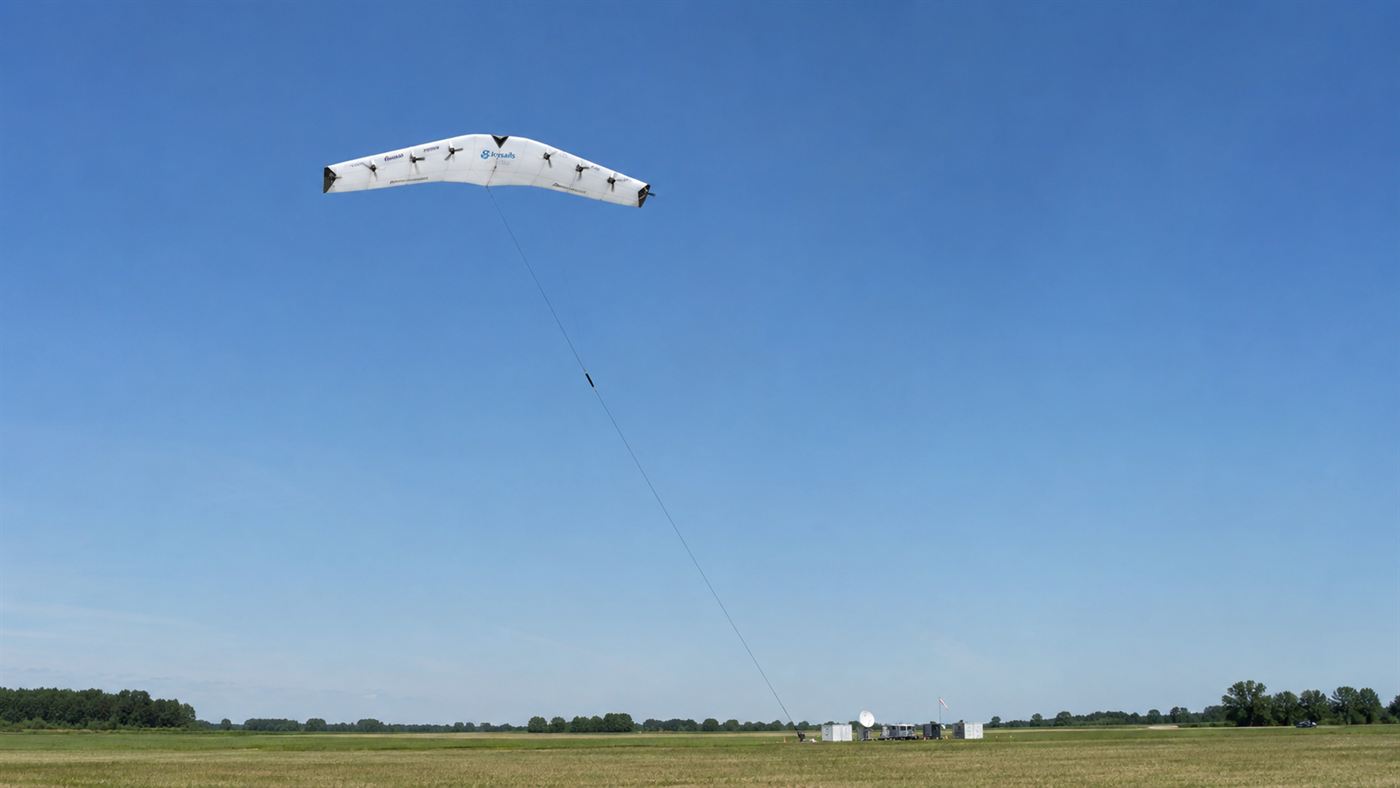
The Makani energy kite was a rigid wing studded with rotors, flying on a single tether. Illustration: Watts & Wild.
Makani was a project from Google's moonshot lab, taking its name from the Hawaiian word for wind. It set out to generate electricity not with a tower-mounted turbine but with a tethered flying wing, a rigid carbon-fibre kite lined with small propellers, dancing on the end of a long cable. The idea sounds like a toy, and it was deadly serious engineering.
For years the team made it work, flying their kites in the open air and even out over the sea, and proving that a machine could harvest the wind from the sky rather than the ground. Then, in 2020, its owners shut the whole thing down, not because it had failed, but because winning looked too far away.
A wind turbine with no tower
The thinking behind Makani starts with a simple observation about ordinary turbines. The blades are huge, but the part that moves fastest and does the most work is the outer tip, racing in a wide circle. The enormous tower and the long blades exist mostly to hold that tip in the wind and spin a generator at the bottom. Makani's bet was that you could keep the useful tip and discard almost everything else, replacing tonnes of steel with a kite and a string.
Done right, that would mean far less material for the same power, which matters when you are trying to build clean energy cheaply and at scale. A kite is light, packs away small, and could in principle be flown almost anywhere the wind blows steadily, including places a conventional turbine could never stand.
How the Makani kite made power
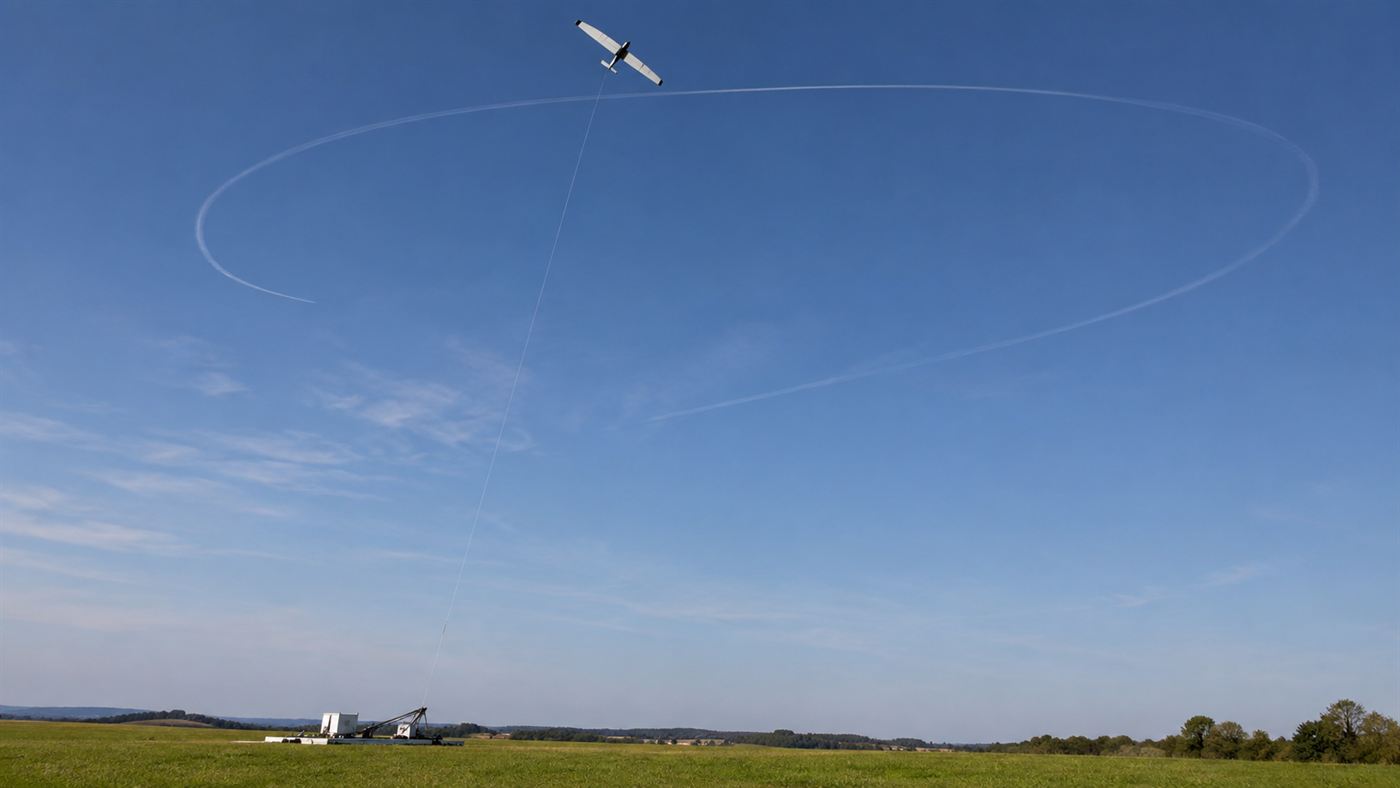
The flight was the clever part. The largest version, called the M600, had a wingspan of about 26 metres and a row of propellers along it. To launch, those propellers spun like a helicopter's rotors and lifted the kite straight up off its ground station, carrying it to around 300 metres in the air. Once up there, the kite stopped climbing and began to fly in fast, wide loops across the wind, the same swooping path a blade tip traces, except free in the open sky.
In that looping crosswind flight, the wind rushed through the propellers and turned them backwards, so the things that had been motors at takeoff now became little generators. The electricity they made ran back down the tether to the ground, while a flight computer flew the kite automatically, holding it steady through gusts. A single M600 could produce around 600 kilowatts, enough for roughly 300 homes, from a machine that weighed a tiny fraction of a normal turbine.
Reaching the winds turbines can't
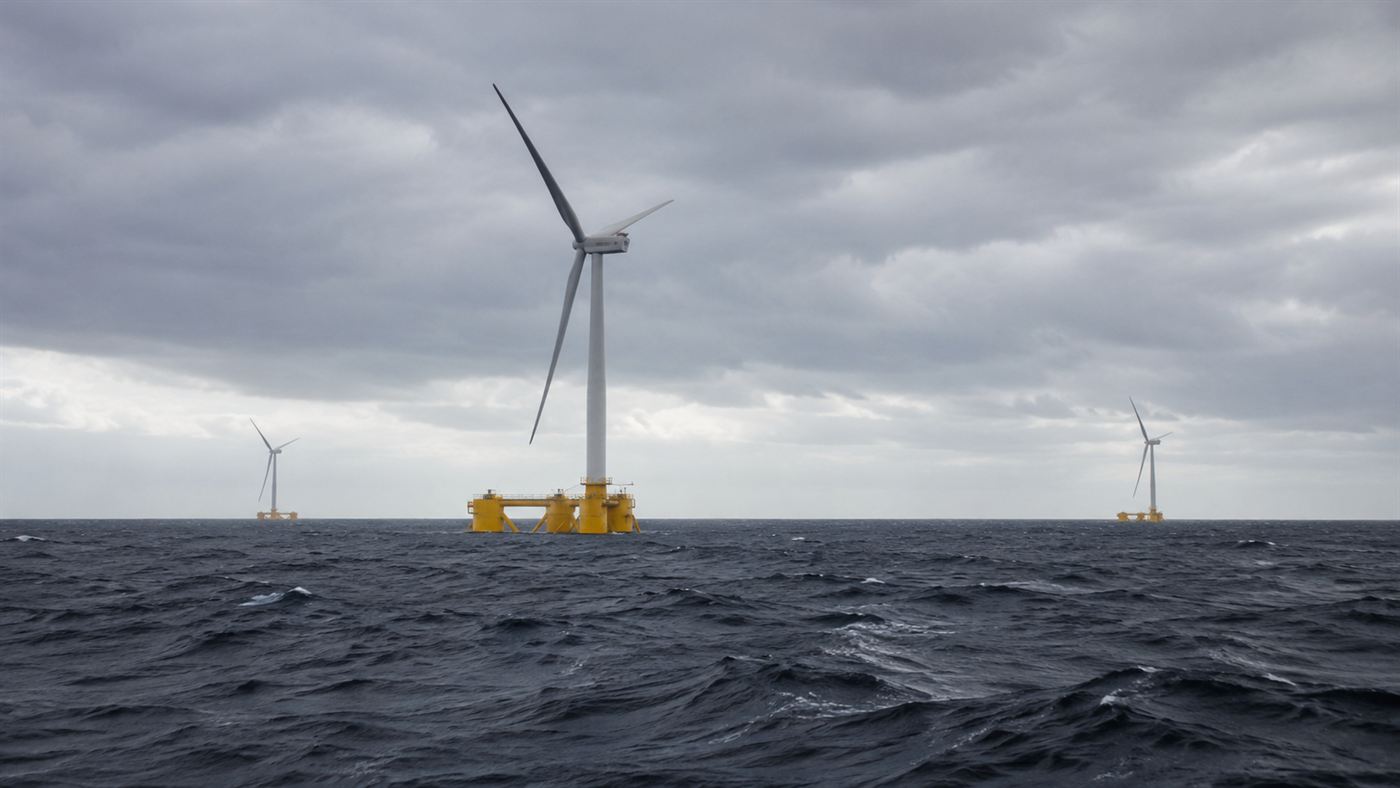
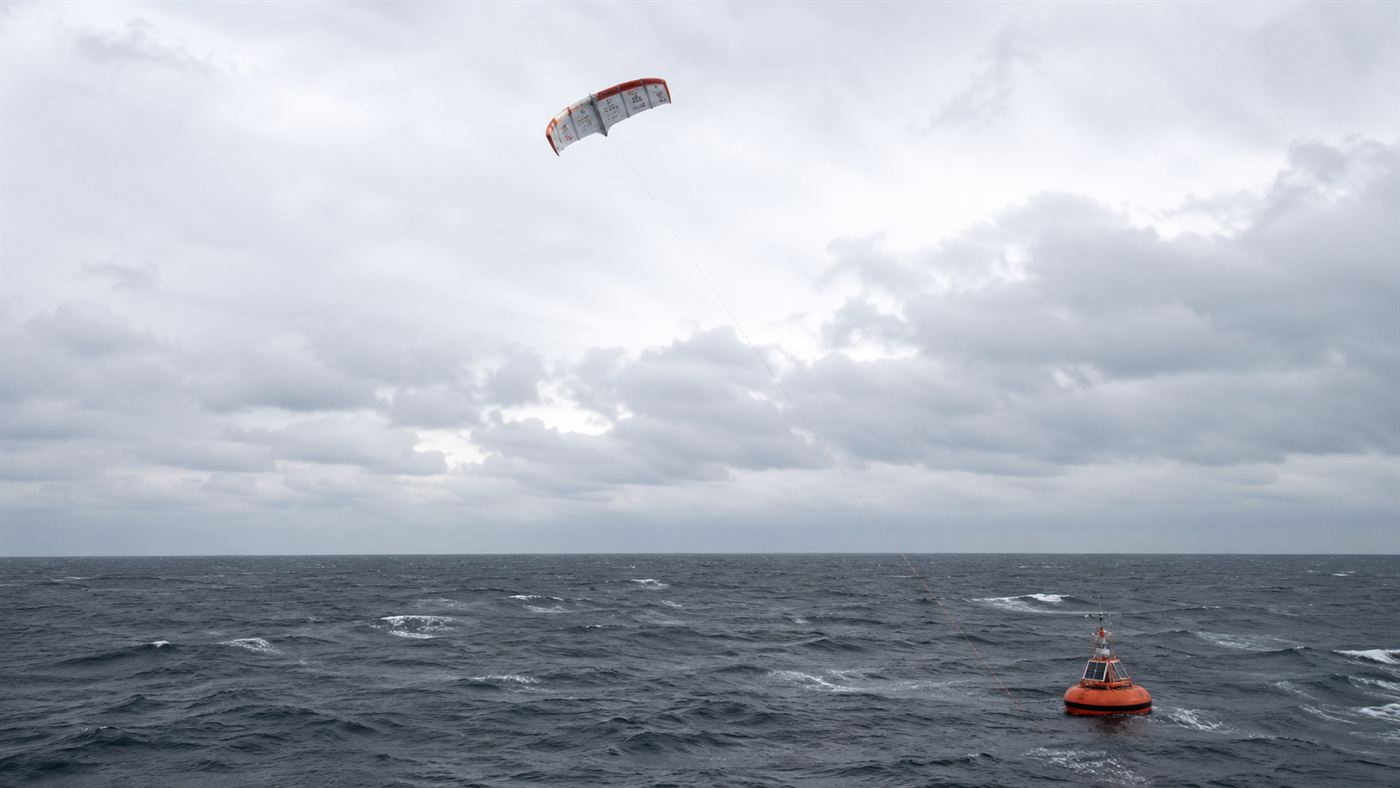
The most exciting promise was offshore. An ordinary wind turbine has to be bolted to a foundation on the seabed, which only works where the water is shallow, up to about 50 metres deep. Vast stretches of windy ocean are far deeper than that and simply out of reach. A kite, by contrast, needs only a floating buoy to anchor its tether, so it could in theory fly over water hundreds of metres deep.
To test the idea, the team flew the world's first offshore flight of an airborne wind turbine off the coast of Norway, working with the energy company Shell, in a part of the North Sea far too deep for a fixed turbine. It was a glimpse of a future in which the deep, windy oceans, by far the biggest untapped wind resource on Earth, might finally be put to work.
Why Google let it fly away
And then, in February 2020, Alphabet pulled the plug. The official reason was not that the kites did not fly, but that the road from a working prototype to a cheap, reliable, mass-produced product looked longer and riskier than anyone wanted to keep funding. The technology was real; the business case was not yet there, and the patience ran out.
Rather than lock the work away, the team did something unusually generous. They released years of their designs, data, software and flight logs to the public, so that anyone else chasing the dream of airborne wind could start from where Makani had stopped. A failed company turned itself into a gift to a whole young field.
The honest catch
It is worth being honest about why Makani was so hard. Flying a heavy wing autonomously in loops, day and night, through storms and salt air, for decades, without crashing, is a brutal engineering ask, and a prototype did crash during testing. A turbine that just sits on a tower is far less glamorous, but it is also far simpler, and simple things tend to win in energy. Six hundred kilowatts is also modest next to the giant offshore turbines now reaching well past ten megawatts.
So Makani belongs to a particular and valuable category: the bold idea that worked technically and lost economically, at least for now. Airborne wind is not dead, and others are still flying kites and gliders to chase those high, steady winds. Makani may end up being remembered not as a failure but as the brave first attempt that mapped the ground, and the sky, for everyone who comes after.
A flying wind turbine on a string really worked, and the company that built it still walked away. Was Makani a moonshot that gave up too soon, or proof that the simplest machine usually wins in energy? Tell us what you think in the comments.
Related reading: Hywind, the world's first floating wind farm, anchored in water too deep for ordinary turbines.