Elon Musk bet he could build the world's biggest battery in 100 days or it would be free, and South Australia took the deal
It started as a dare on social media and ended as one of the most important machines on the grid. The Hornsdale Power Reserve proved that a giant battery could do in milliseconds what power stations take minutes to manage.
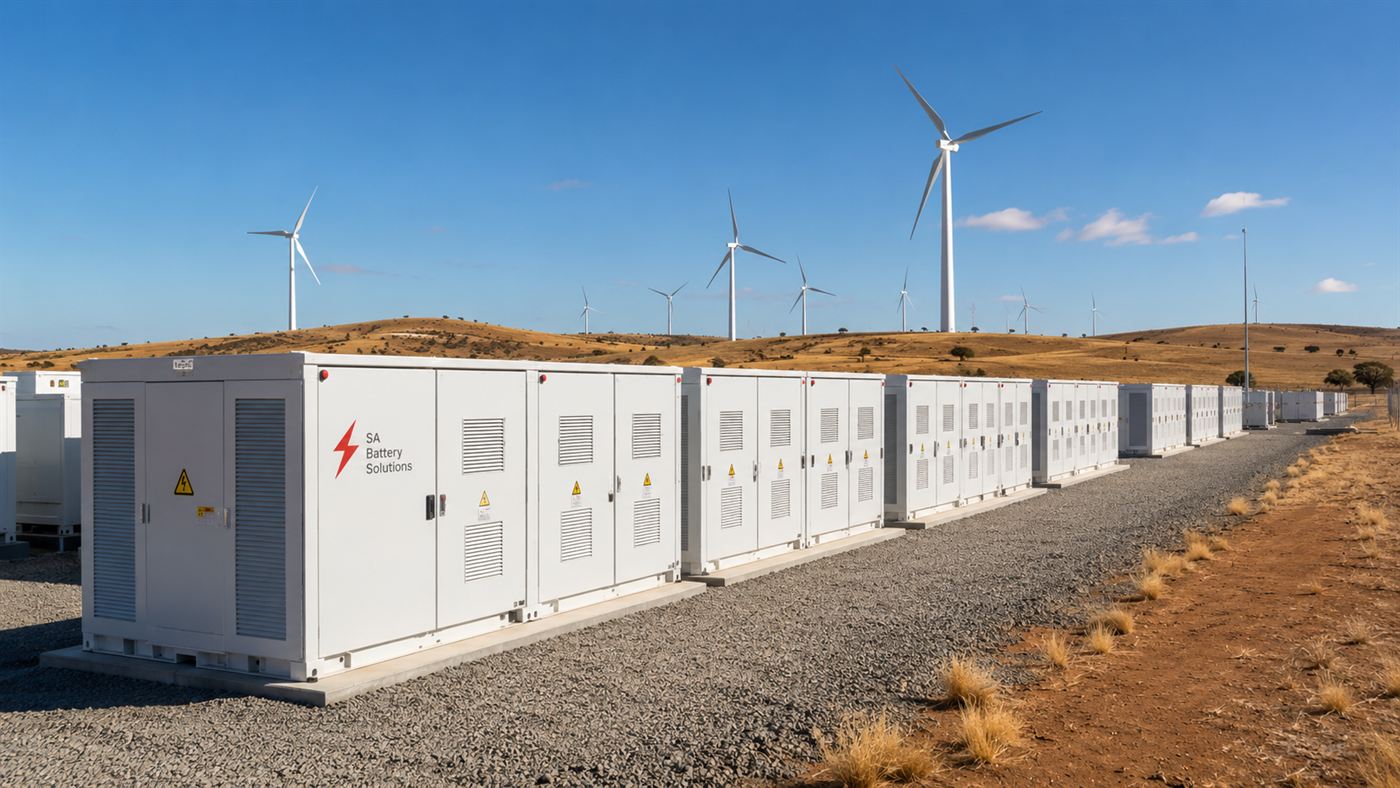
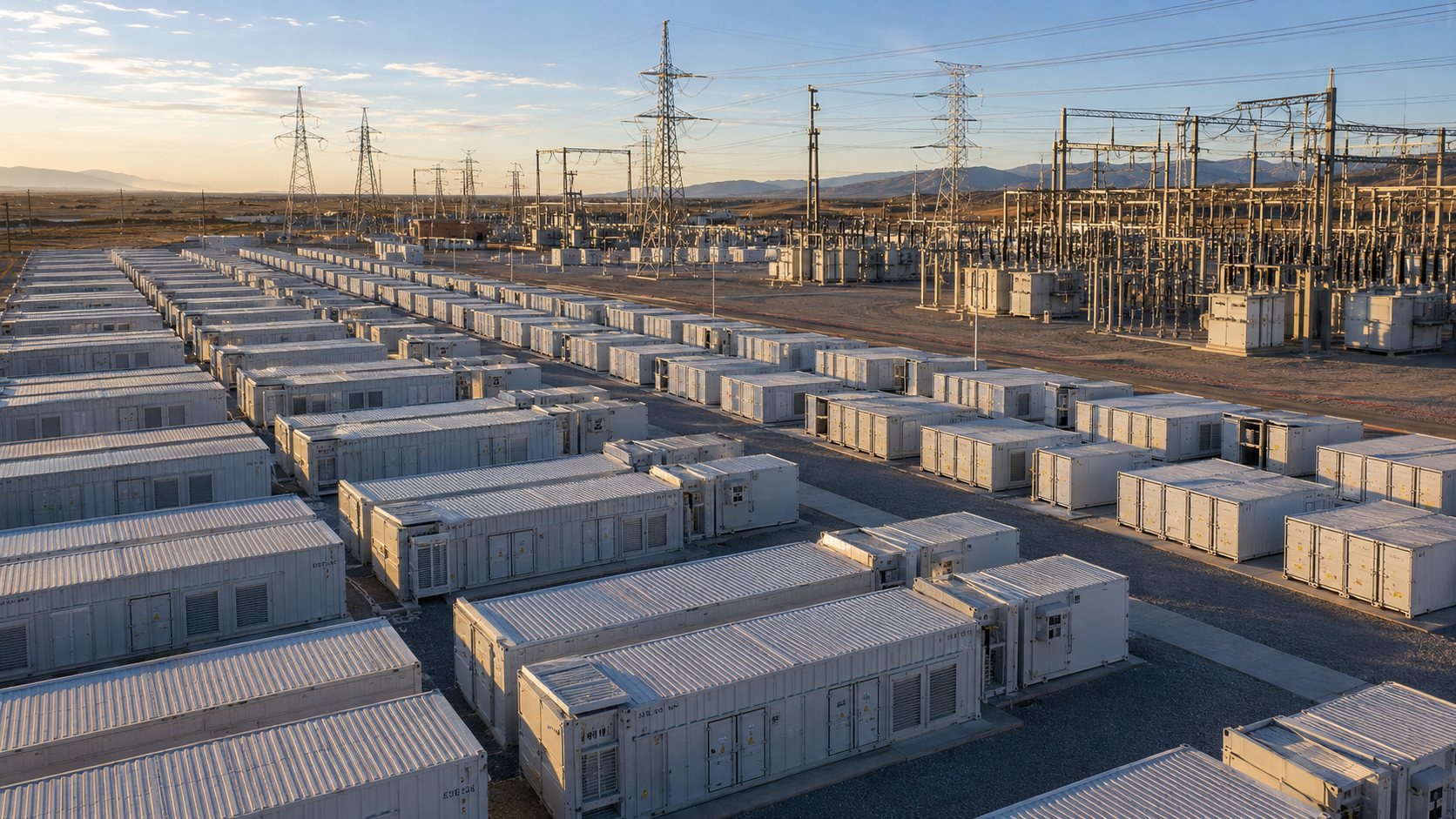
The Hornsdale Power Reserve sits beside a wind farm in the South Australian outback. Illustration: Watts & Wild.
In 2017 the idea of a battery like the Hornsdale Power Reserve running an electricity grid still sounded like science fiction to many people.
One project in the Australian outback changed that almost overnight, and it began with a bet.
What is the Hornsdale Power Reserve? The Hornsdale Power Reserve is a giant lithium-ion battery in South Australia, built by Tesla in 2017. It was the largest battery in the world at the time, and it stores power from a nearby wind farm and stabilises the grid by responding to faults in a fraction of a second.
A bet made on social media
South Australia had suffered a statewide blackout in 2016 and was struggling to keep its grid stable.
In early 2017 an Australian software billionaire challenged Tesla on Twitter to fix it, and Elon Musk replied with a promise.
Tesla would build a giant battery within 100 days of signing the contract, he said, or the whole thing would be free.
It was a public dare with millions of dollars on the line, and the state government decided to take him up on it.
Suddenly the world was watching a remote corner of Australia to see whether the boast could be met.
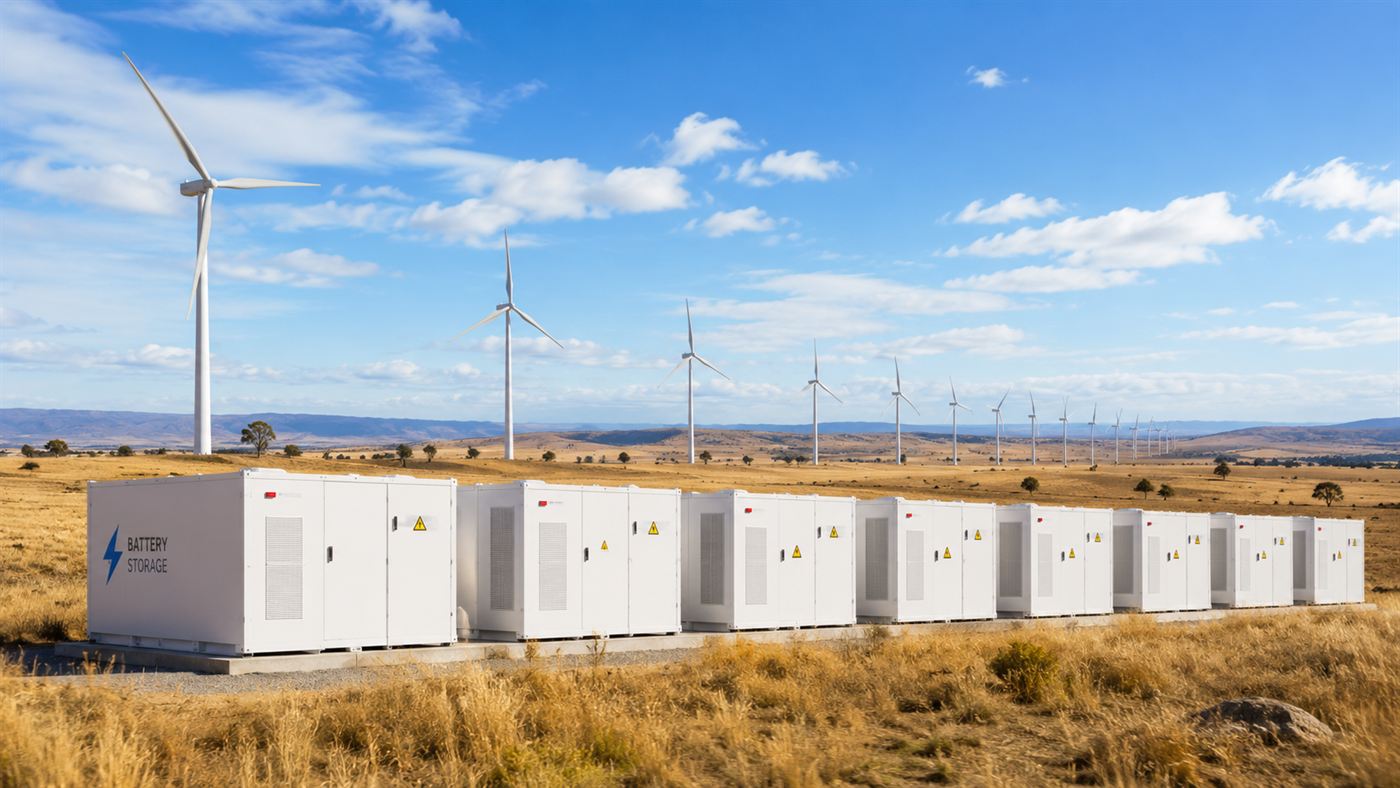
Hornsdale Power Reserve built in 63 days
Tesla did not just meet the deadline, it crushed it, switching the battery on in around 63 days.
The finished Hornsdale Power Reserve could deliver 100 megawatts and store 129 megawatt-hours, making it the biggest battery on the planet.
It was wired up next to the Hornsdale wind farm, ready to soak up power when the wind blew and release it when the grid needed help.
For a technology critics had written off as a toy, it was a spectacular entrance.
The free-or-finished gamble had paid off in front of the entire world.
Faster than any power plant
The real magic was in how fast the battery could react.
When a major coal unit on the far side of the country tripped offline in late 2017, Hornsdale fed power into the grid within about 140 milliseconds, far faster than any conventional plant.
By steadying the grid's frequency this way, the battery did a job that gas and coal generators had always charged a fortune for.
In its first couple of years it saved consumers something like 150 million Australian dollars, slashing the cost of that grid-stabilising service.
A box of batteries had quietly become one of the most valuable players on the network.
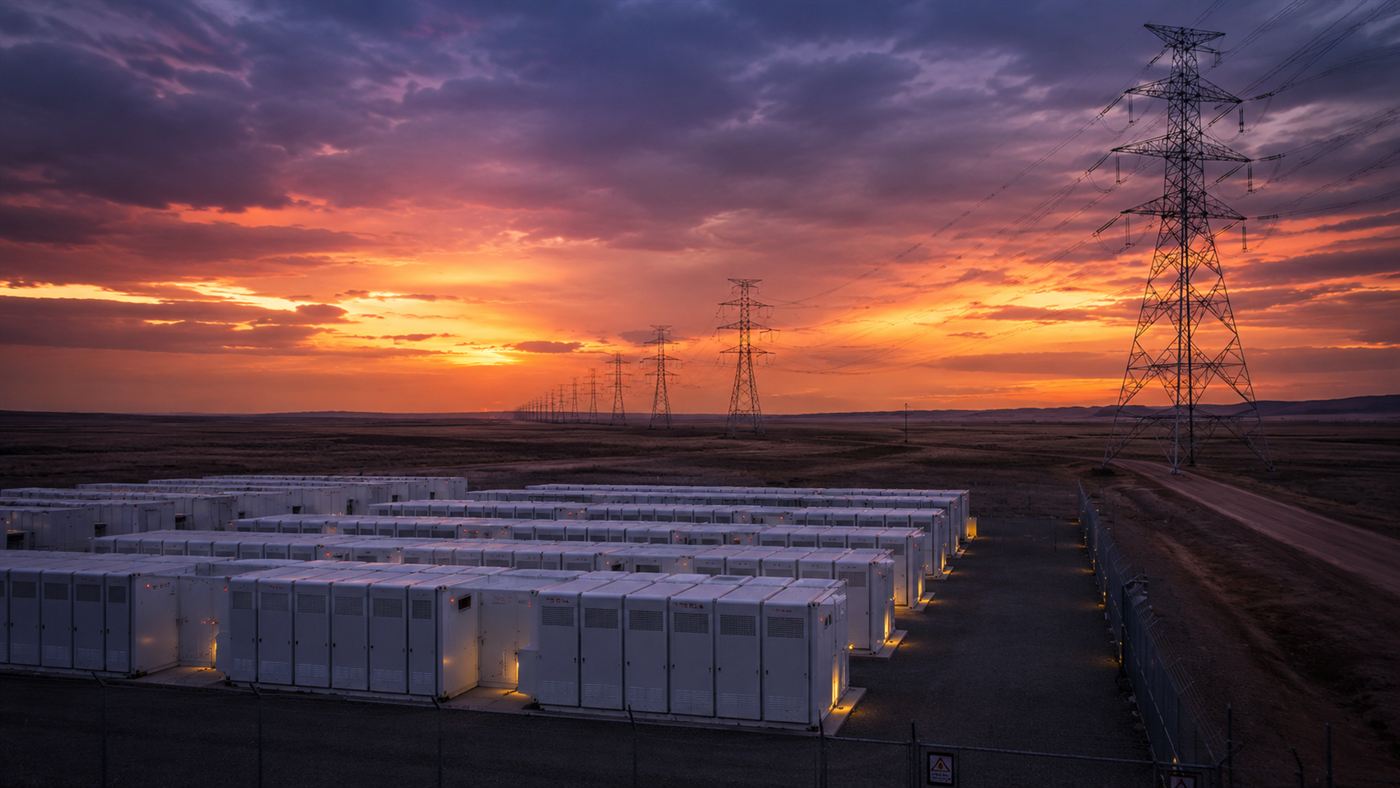
The battery that changed minds
Plenty of politicians had mocked the project, joking that a big battery was about as useful as a giant banana.
Its success turned that scorn on its head and made Hornsdale a symbol of what storage could do.
Within a few years, grid-scale batteries were being ordered all over the world, many of them far larger.
Hornsdale itself was expanded in 2020 to 150 megawatts, and upgraded to help hold the grid steady in entirely new ways.
One stubborn bet had kicked off a global stampede into battery storage.
The honest catch
Impressive as it is, the Hornsdale battery is not a magic box that can power a state for days.
Its strength is fast, short bursts of power, measured in minutes to an hour or two, not long stretches of backup.
Most of its famous savings came from one specialised job, steadying the grid's frequency, rather than from storing huge amounts of energy.
A battery like this works best alongside wind, solar and other sources, not as a replacement for all of them.
What it really proved was not that batteries can do everything, but that they finally belong at the heart of the grid.
The Hornsdale battery is a reminder that a single bold project, delivered fast, can shift what the whole world believes is possible.
It sits with the other ways we are learning to store and steady our power, from the water battery hidden inside a Welsh mountain to the grid battery that runs on rust.
If a battery built on a 100-day dare could rescue a struggling grid, how much faster could the switch to clean power happen if we simply decided to move at that speed, and what would you have bet? Tell us in the comments.