For more than a century treasure hunters have died in the Arizona mountains chasing the Lost Dutchman's gold mine, a fortune that geologists say probably never existed
A dying old man, a mountain of hidden gold, and a secret whispered on a deathbed. It is the perfect treasure story, and for more than a hundred years it has lured people into a range of jagged desert peaks. Some of them never came back out, all for a fortune that may be nothing but a legend.
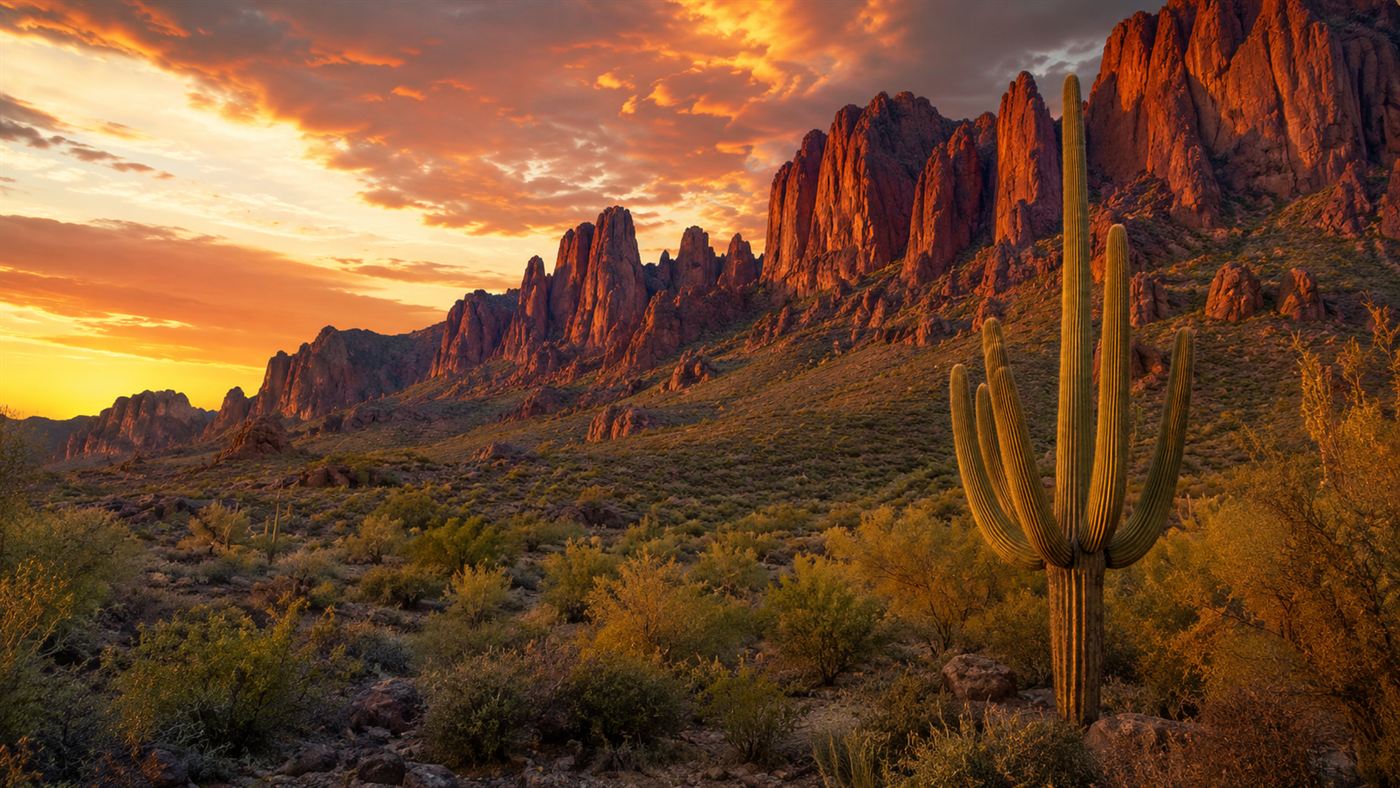
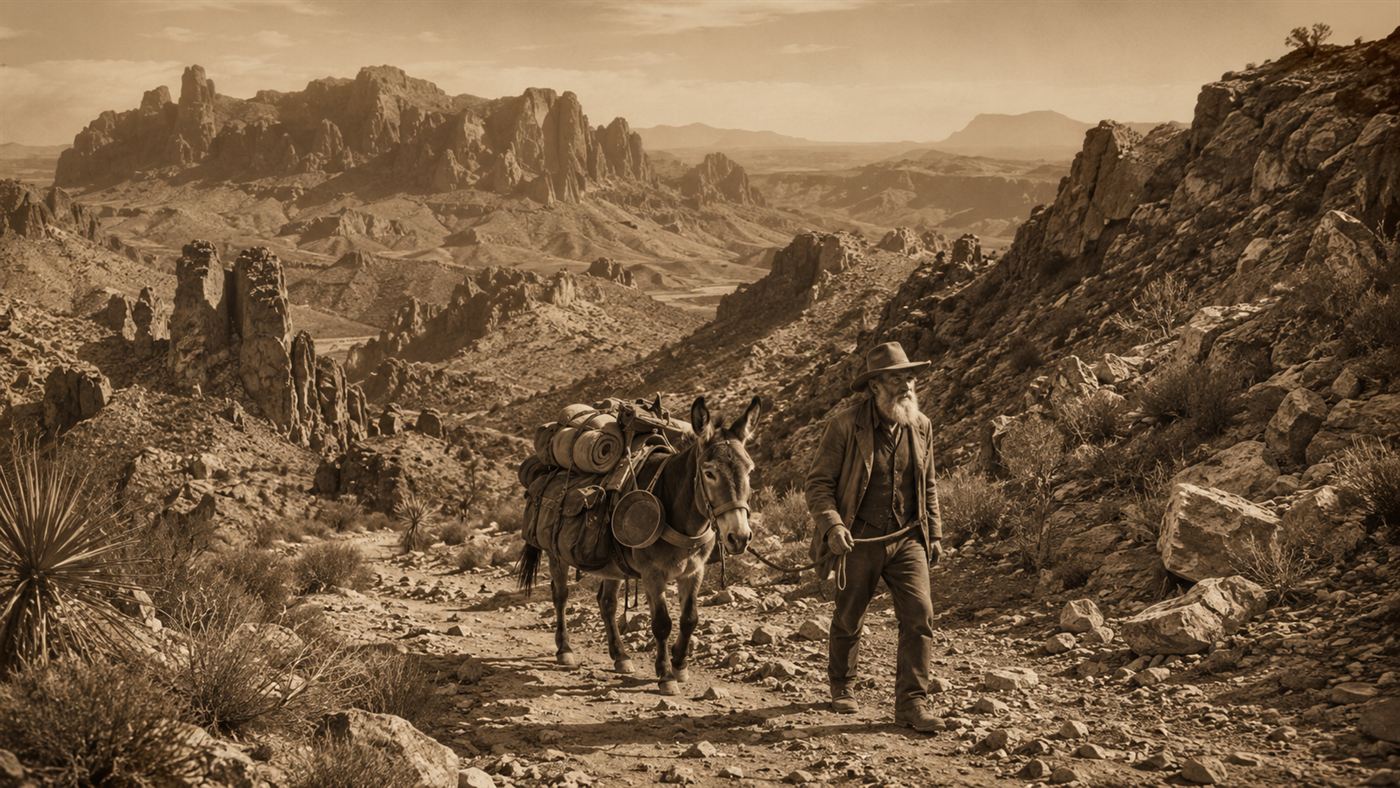
The Superstition Mountains have swallowed treasure hunters for generations. Illustration: Watts & Wild.
East of Phoenix, Arizona, a wall of jagged volcanic peaks called the Superstition Mountains rises out of the desert. It is beautiful, brutally hot and easy to get lost in, and for well over a century it has been the setting for one of America's most enduring treasure legends: the Lost Dutchman's Gold Mine.
The story centres on a German immigrant named Jacob Waltz, known as the Dutchman because Americans muddled the word Deutsch. He supposedly found, or was shown, an incredibly rich vein of gold somewhere in those mountains in the 1800s, and guarded the secret jealously until he lay dying in 1891.
The short version is that a poor immigrant with a bag of astonishing gold ore left behind a deathbed riddle instead of a map, and generations of hopeful, sometimes doomed searchers have been trying to solve it ever since. The strangest part is that the mine they are hunting may not be real at all.
A secret whispered on a deathbed
As Jacob Waltz lay dying in Phoenix, he was cared for by a neighbour named Julia Thomas, and the legend says he spent his last hours describing where his gold was hidden. He is said to have left clues about landmarks and directions, and even, in some versions, a box of rich ore tucked under his bed.
Whatever he actually said, it was not enough. Julia Thomas and others searched the mountains soon after his death and found nothing. The directions that had seemed so clear on a deathbed dissolved into a maze of look-alike canyons and ridges, and the Lost Dutchman mine kept its secret, if it ever had one.
The mountains that kept their dead
What turned a simple lost-mine tale into something darker was the toll it took. Over the decades the Superstition Mountains drew thousands of treasure hunters, and the harsh terrain killed a grim number of them through heat, thirst, falls and simply getting lost far from any trail.
A few deaths were stranger. In 1931 an amateur hunter named Adolph Ruth vanished in the range, and months later his skull was found, with some claiming it showed signs of a gunshot. Stories like his fed a belief that something in the mountains did not want to be found, and that the gold was guarded by more than distance and heat.
Why the Lost Dutchman legend refuses to die
Part of the answer is that the treasure was said to be real gold, not buried pirate coins or a vague rumour. Jacob Waltz genuinely seems to have turned up now and then with small amounts of remarkably rich ore, which convinced people that a fabulous source existed and was simply waiting to be rediscovered.
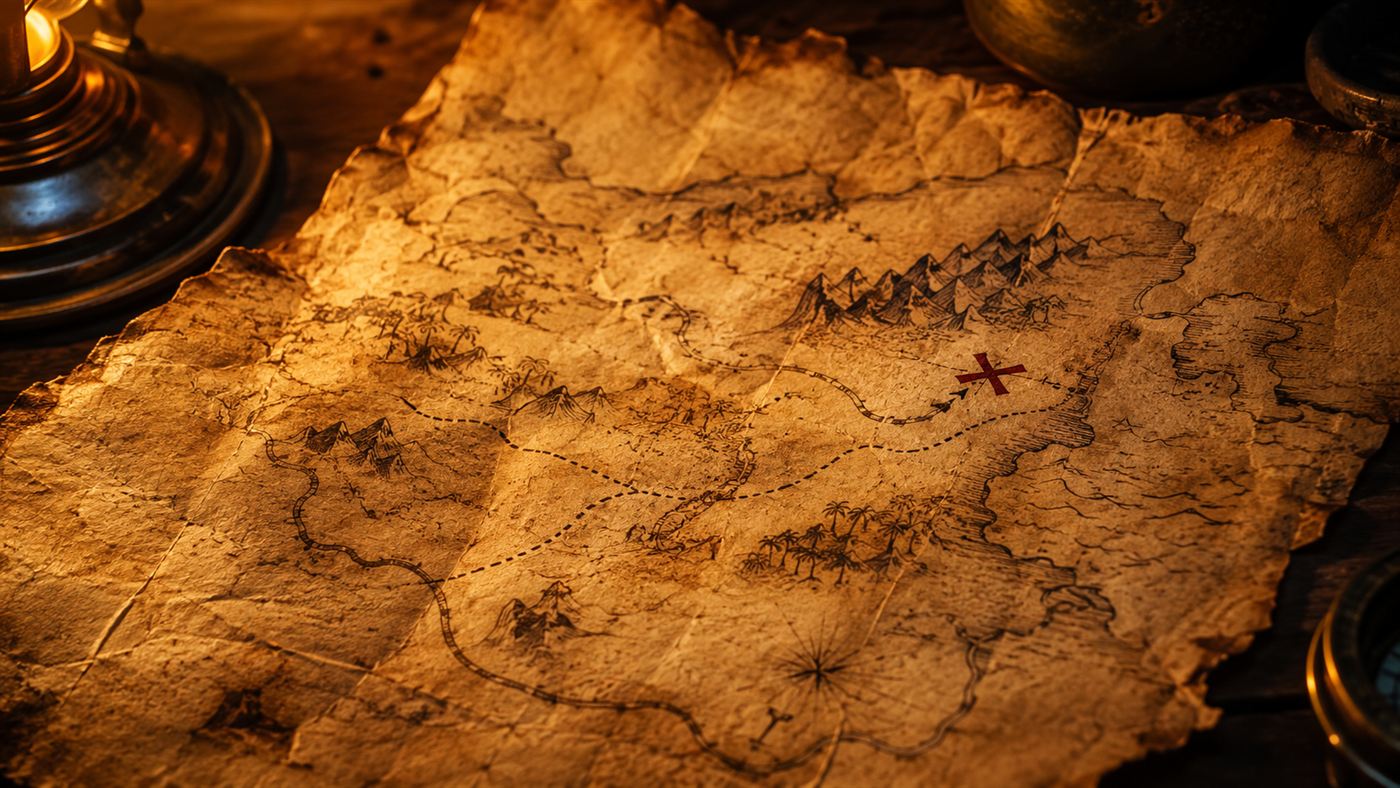
The legend also grew because it kept being fed. Maps supposedly showing the way, most famously a set of carved stone tablets, surfaced over the years and were sold or fought over, drawing fresh waves of treasure hunters. Whether genuine or forged, each new clue reignited the hunt and added another layer to the myth of the Lost Dutchman.
Does the mine even exist?
Here the romance runs into hard geology. The Superstition Mountains are made largely of volcanic rock, the kind of formation that does not usually host the rich gold veins the legend describes. To many geologists, a bonanza mine in that range is close to impossible, which means the story may be chasing something that was never there.
So where did Waltz's undeniable gold come from? The likeliest explanations are far less magical than a secret mountain vein. He may have quietly taken high-grade ore from other working mines in the region, or acquired it in ways he had good reason not to explain, then let people assume it came from a hidden Superstition lode he alone could find.
The honest catch
It would be a shame to flatten the tale into a simple hoax, because parts of it are stubbornly real. Jacob Waltz existed, his rich ore appears to have been genuine, and people really have died searching the Superstition Mountains. The legend is not made of nothing; it is built on true fragments arranged into a story that promises far more than the pieces can prove.
What is almost certainly false is the heart of it, the idea of a single fabulously rich mine still hidden up there for the taking. The most likely truth is that the Lost Dutchman is a mirage assembled from real gold of murky origin, forged maps and the powerful human wish to believe a fortune is waiting just past the next ridge. The mountains keep the story, and sometimes the searchers, but probably not the gold.
People are still climbing into those blistering mountains today, maps in hand, hunting a fortune that geology says was probably never buried there in the first place. Is the Lost Dutchman a real lost mine still waiting to be found, or a beautiful story we simply refuse to give up? Tell us what you think in the comments.
Related reading: the island pit that has swallowed money and lives for two centuries. See also the castle one small man carved alone from coral rock, and the colony that vanished and left only a single carved word. See also the Marfa lights, the desert glow that science has mostly, but not fully, explained.