Villagers drained a pond they thought was bottomless and found 24 vast caverns carved by hand that no history book mentions
In 1992, a handful of villagers in eastern China set out to empty some local ponds they had always believed had no bottom. What they uncovered instead were the Longyou Caves, a sprawling underground world of enormous chambers carved by human hands, so old and so unrecorded that nobody can say who made them or why.
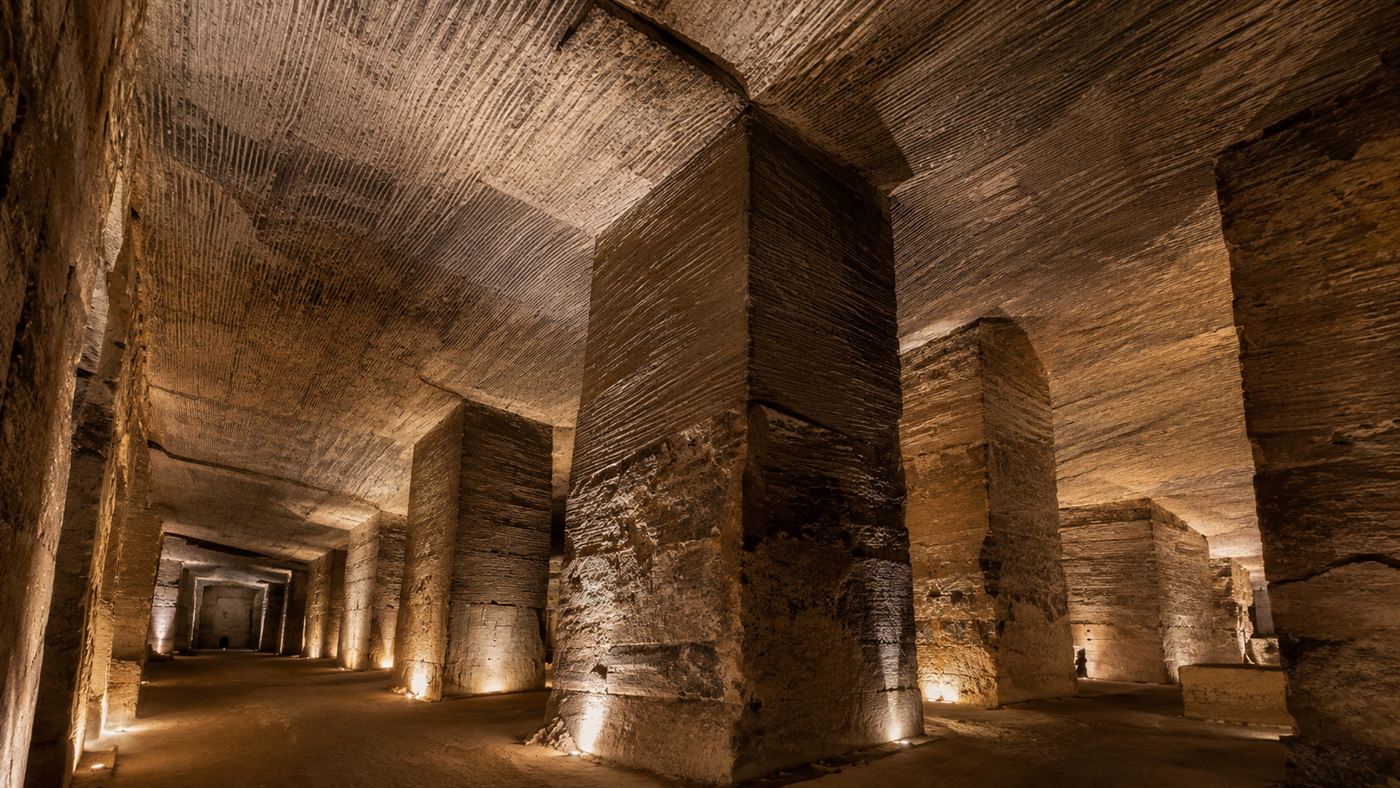
Inside the Longyou Caves, giant pillars hold up ceilings covered in uniform chisel marks. Illustration: Watts & Wild.
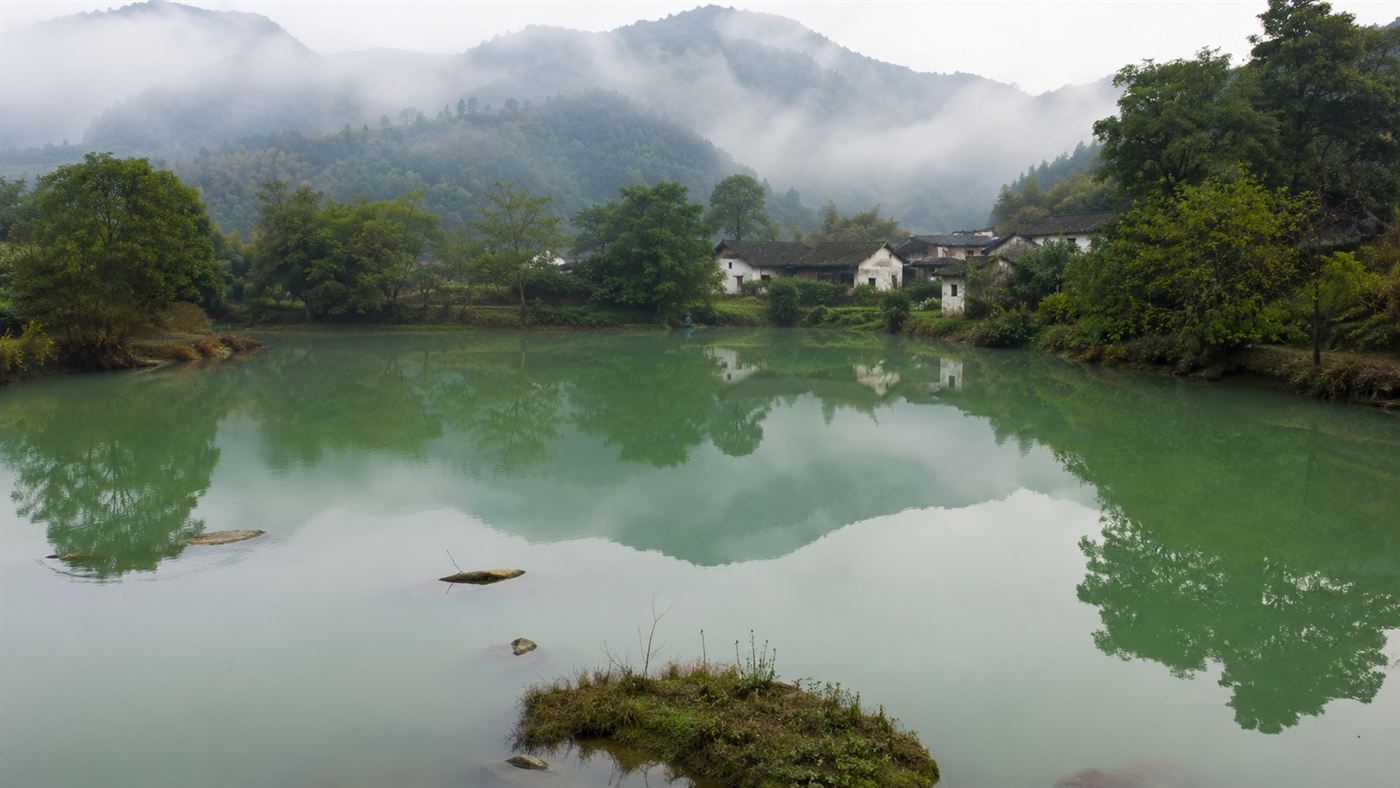
The ponds sat in the village of Shiyan Beicun, in Longyou County, Zhejiang province. For generations people had assumed they were just deep, dark water. When the villagers finally pumped one dry, the water level kept dropping past where any natural pond should end, and a cavernous space opened up beneath them. The "bottomless" pond was actually the flooded entrance to a hand-carved hall the size of a cathedral.
It was not alone. As the documented record describes, 24 separate caverns have been found so far, covering some 30,000 square metres, each one cut down into the solid siltstone, some plunging around 30 metres deep. Together they form one of the largest ancient underground excavations ever discovered, and almost everything about them is a question mark.
What the Longyou Caves actually are
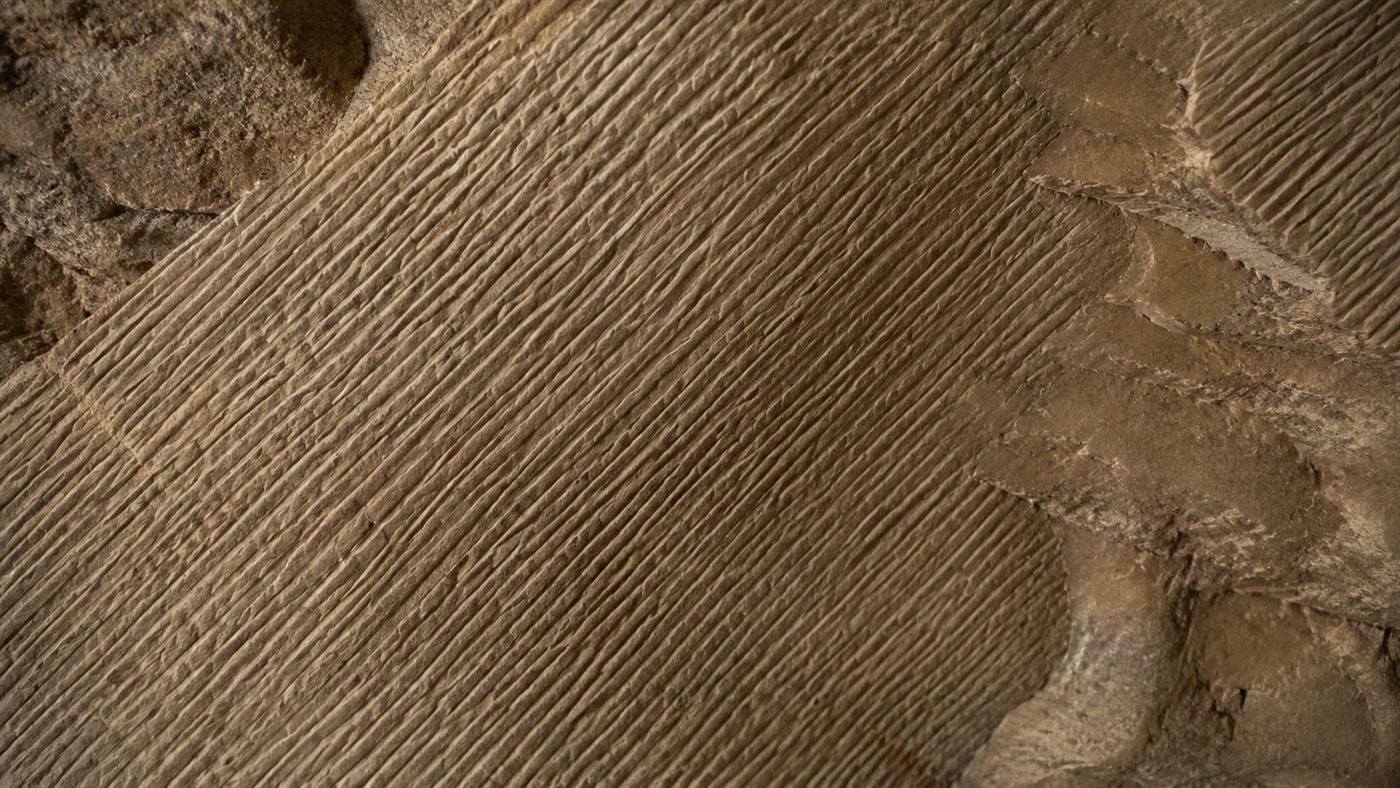
Step inside and the strangeness hits you. The chambers are huge, with sloping ceilings held up by deliberately shaped stone pillars, and they contain carved rooms, bridges, gutters and pools. Every wall, ceiling and column is covered in the same fine, parallel chisel marks, a uniform pattern repeated across all 24 caves as if a single design was followed underground in total darkness.
That consistency is one of the deepest puzzles. The caves sit very close together, sometimes separated by rock walls less than a metre thick, yet they never accidentally broke through into one another. Whoever dug them was measuring and planning with remarkable care, by lamplight, hundreds of years before anything we would call modern surveying.
A million cubic metres, and no paper trail
The numbers are what turn this from a curiosity into a genuine mystery. As researchers have estimated, carving the caves would have meant removing close to a million cubic metres of rock, a quantity that would take something like a thousand people working day and night for six years. That is a colossal public-works project, and not a single ancient text, record or legend mentions it.
For a job that size, you would expect armies of workers, mountains of removed stone, payment records, somebody bragging in a chronicle. Instead there is silence. No tools have been found in or around the caves, no spoil heaps of waste rock have been clearly identified, and no document from imperial China seems to know they exist. A massive, organised effort simply vanished from history.
The honest catch
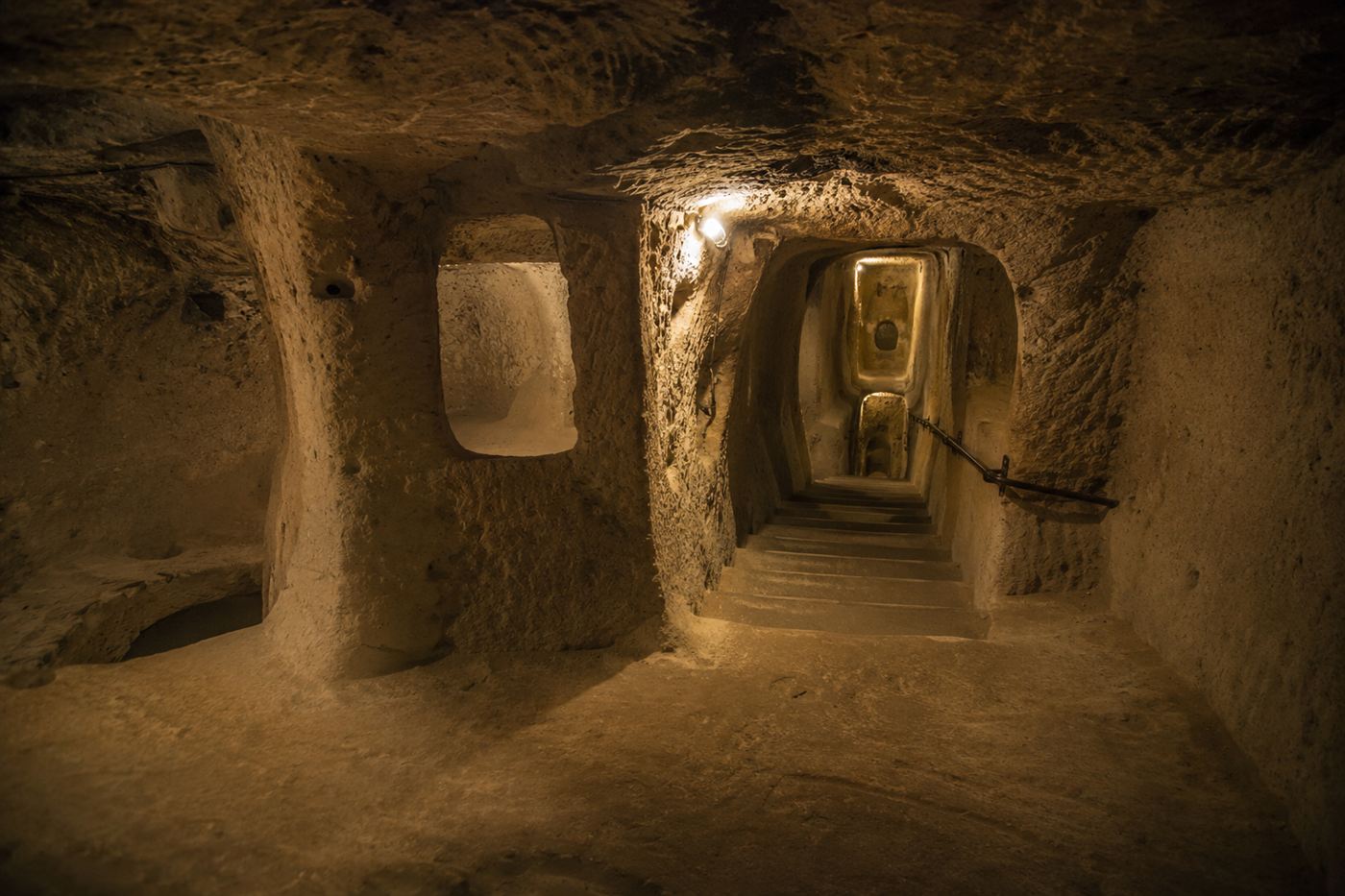
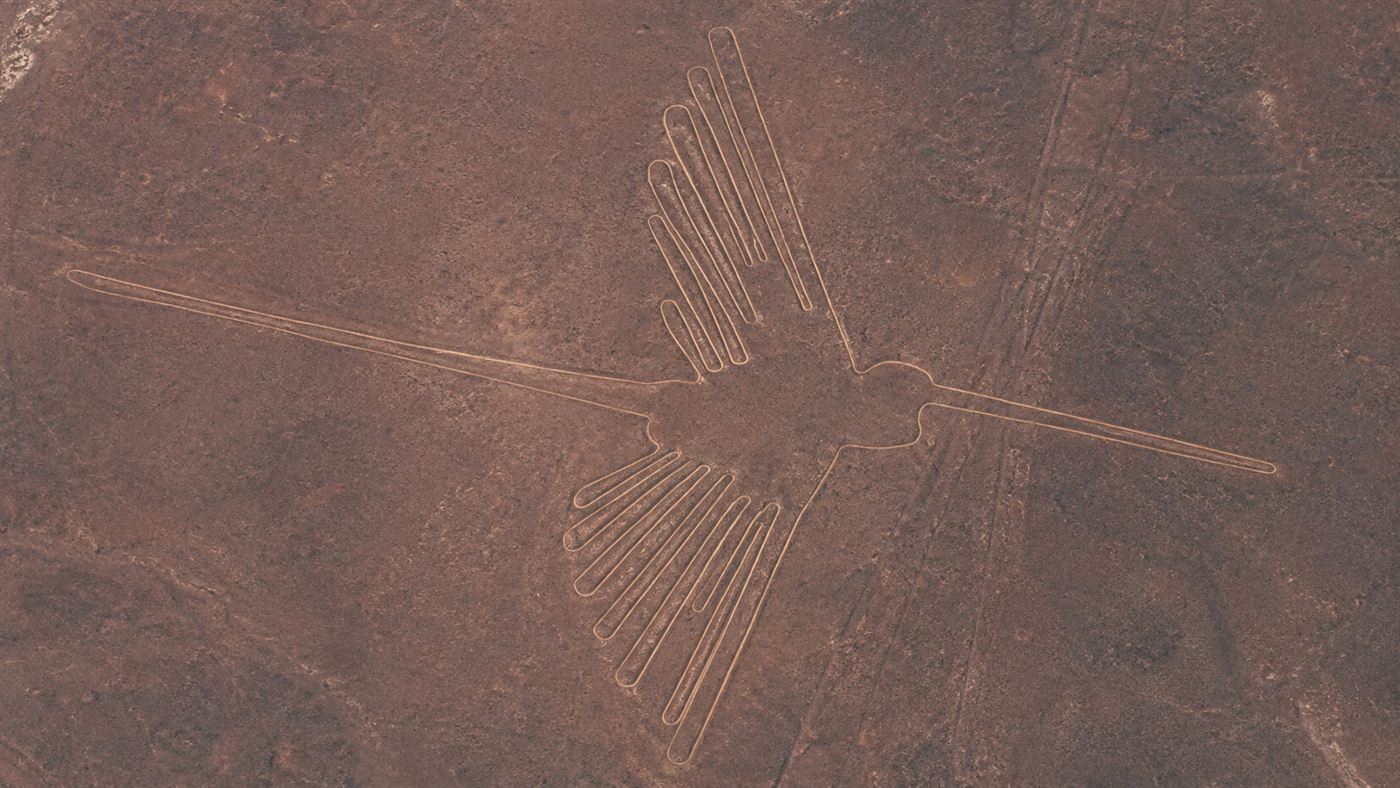
Mystery sells, so it is worth separating the real puzzle from the hype. There is no serious evidence of anything supernatural here; the Longyou Caves were unquestionably dug by people with chisels, not by aliens or lost super-civilisations. Experts have floated plenty of down-to-earth explanations, that the caves were quarries for stone, or hidden barracks for troops, or imperial tombs, or vast storehouses. The honest position is that all of these are guesses, and none has been proven. The dating itself is uncertain, resting on estimates rather than firm records. What is not in doubt is the scale and the skill: a staggering feat of ancient engineering that the people who paid for it, somehow, never wrote down. It joins a small club of structures that still defy easy explanation, from the giant Nazca Lines drawn across a Peruvian desert to the buried city of Derinkuyu that sheltered thousands underground.
An underground project the size of a small town was carved out of solid rock, used, abandoned, flooded and then completely forgotten, until some villagers got curious about a pond. What do you think the Longyou Caves were really for? Tell us in the comments.
Related reading: Derinkuyu, the underground city in Turkey that could hide thousands of people 18 storeys down.