In 1968 an American bought London Bridge for $2.46 million, took it apart stone by stone, shipped it across an ocean, and rebuilt it in the middle of the Arizona desert
It sounds like a tall tale, but it really happened. A famous English bridge was crumbling into the Thames, and a chainsaw millionaire from the United States decided he wanted it. What he did next turned an empty patch of desert into a city, and left tourists forever asking whether he had made a spectacular mistake.
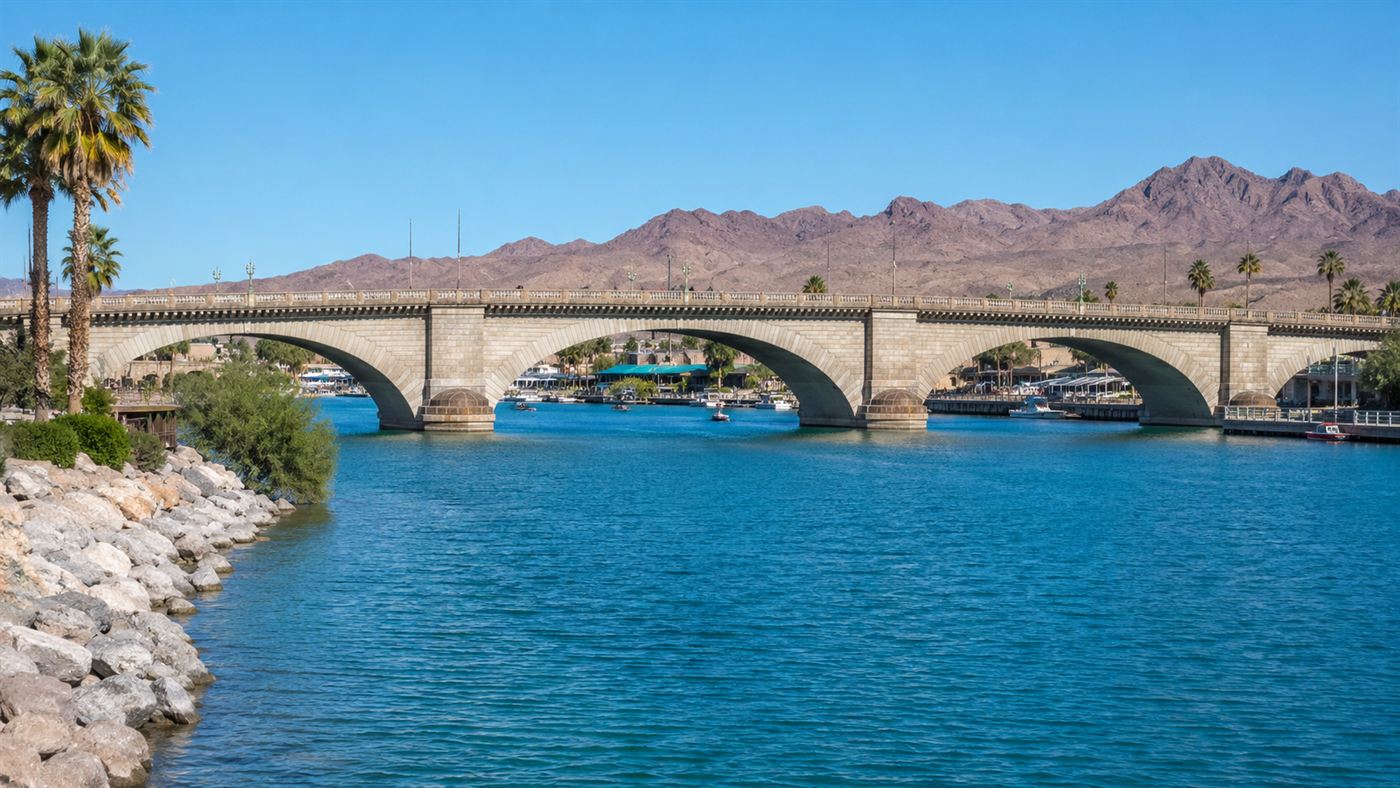
The 1831 bridge now spans a desert channel two thousand miles from the Thames. Illustration: Watts & Wild.
Drive into the retirement town of Lake Havasu City, in the far west of Arizona, and you come upon something that has no business being there. Stretching across a blue channel, framed by cactus and bare desert hills, is a stately five-arch stone bridge that looks a century and an ocean out of place. It is not a copy. It is the actual London Bridge that once carried horse carts and red buses over the River Thames.
How it got there is one of the strangest deals of the twentieth century. In 1968 the City of London put its old bridge up for sale, and an American entrepreneur bought it, had it taken to pieces, and shipped every stone to a stretch of desert where, at the time, almost nobody lived.
The short version sounds like a joke, and for decades people told it as one. But the man behind it was not a fool. He was making a calculated bet, and against the odds it paid off.
The bridge that was sinking into the Thames
The bridge in question was not medieval. It was the handsome granite crossing designed by engineer John Rennie and opened in 1831, replacing the crowded old London Bridge that had stood for six centuries. For its time it was elegant and solid, five wide arches of pale Scottish and Cornish stone.
The trouble was that it had been built for a gentler age. By the 1960s the traffic of modern London was far heavier than Rennie ever imagined, and the bridge was slowly sinking under the weight, its eastern side settling lower than the west. It could not be saved in place, and the city needed a wider, stronger crossing. So officials made an unusual decision: rather than smash the old bridge for scrap, they would try to sell it whole.
Why London Bridge ended up in the Arizona desert
Enter Robert McCulloch, a wealthy industrialist who had made his fortune in chainsaws and small engines. In the 1960s he was pouring that money into a wild project, building a brand new town called Lake Havasu City on empty land beside a reservoir on the Colorado River. He had the land and the water. What he did not have was a reason for anyone to come.
When McCulloch heard that London Bridge was for sale, he saw his answer. A world-famous monument, sitting in his desert, would be a magnet no ordinary billboard could match. In April 1968 he bid $2,460,000 and won. The story goes that he set the price at double the estimated cost of dismantling, plus a thousand dollars for each year of his age at the planned finish. Whether or not that is exactly true, the sum made him the owner of an English landmark.
Ten thousand stones on a very long journey
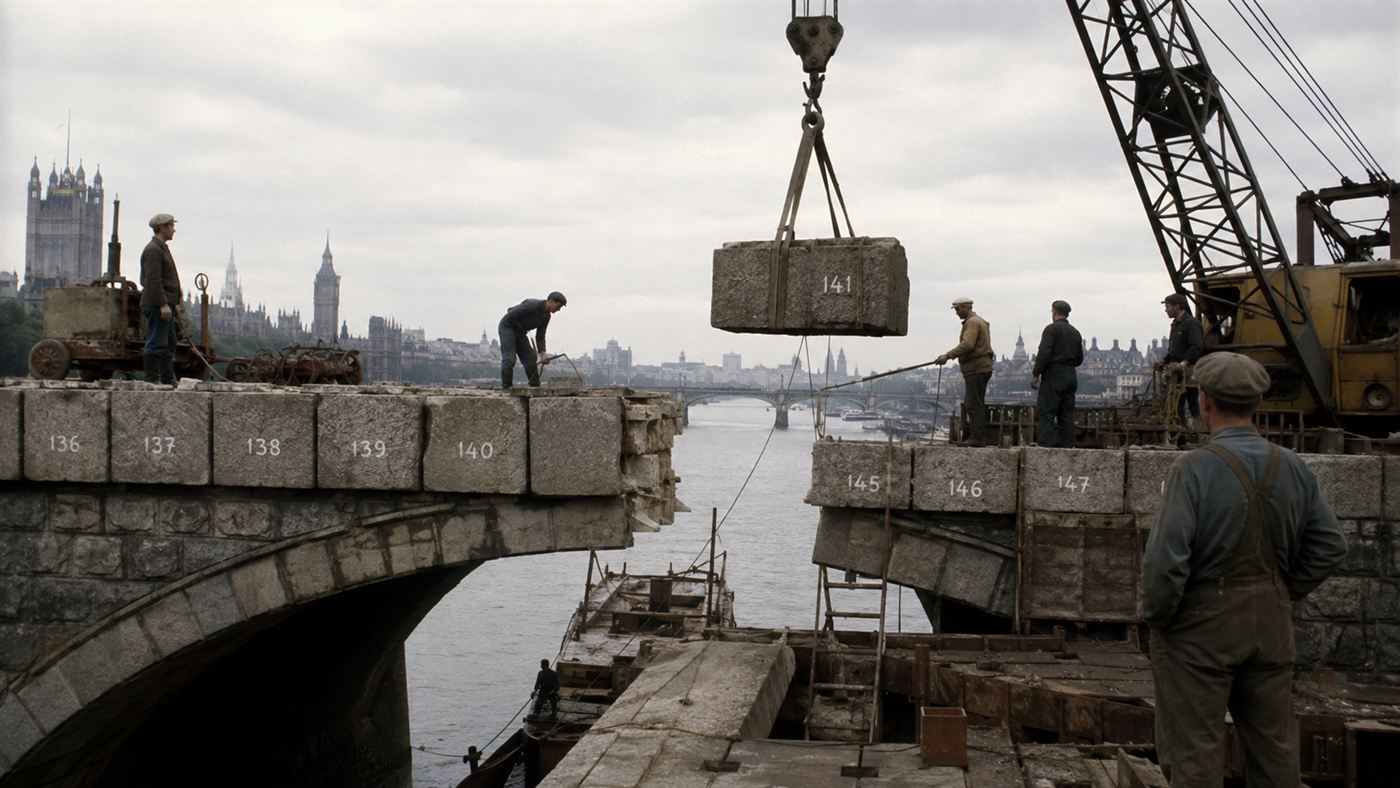
Buying the bridge was the easy part. Moving it was an epic of logistics. Workers carefully took the structure apart, and before each block came down it was marked with a number recording exactly where it belonged, so the whole thing could be rebuilt like a giant three-dimensional puzzle. In all, roughly 10,000 granite blocks were removed.
The stones travelled by ship from London, down through the Panama Canal, to the coast of California, then overland by truck across the desert to Arizona. Only the outer facing of granite blocks made the trip. At Lake Havasu City the crossing was rebuilt around a modern core of poured concrete and steel, with the historic Rennie stone bolted on as a skin, so that what tourists see is genuinely old even though the bones beneath are new.
Reconstruction took about three years. When it was dedicated in 1971, the River Thames was nowhere in sight, because there was one obvious problem the builders had saved for last.
Did McCulloch think he was buying Tower Bridge?
Here is the legend everyone repeats: that McCulloch, and his team, believed they were buying the far more spectacular Tower Bridge, the one with the twin Gothic towers and the drawbridge that people picture when they think of London. When the plain flat bridge arrived, the story says, they realised too late they had bought the wrong one.
It is a wonderful story, and almost certainly false. Both McCulloch and Ivan Luckin, the London councillor who dreamed up the sale and flew to America to promote it, flatly denied the mix-up. McCulloch was a careful businessman who had studied what he was buying, and he wanted a real, usable crossing for his town, not a fantasy castle. The myth was too good to kill, so it followed the bridge across the ocean and never left.
The honest catch
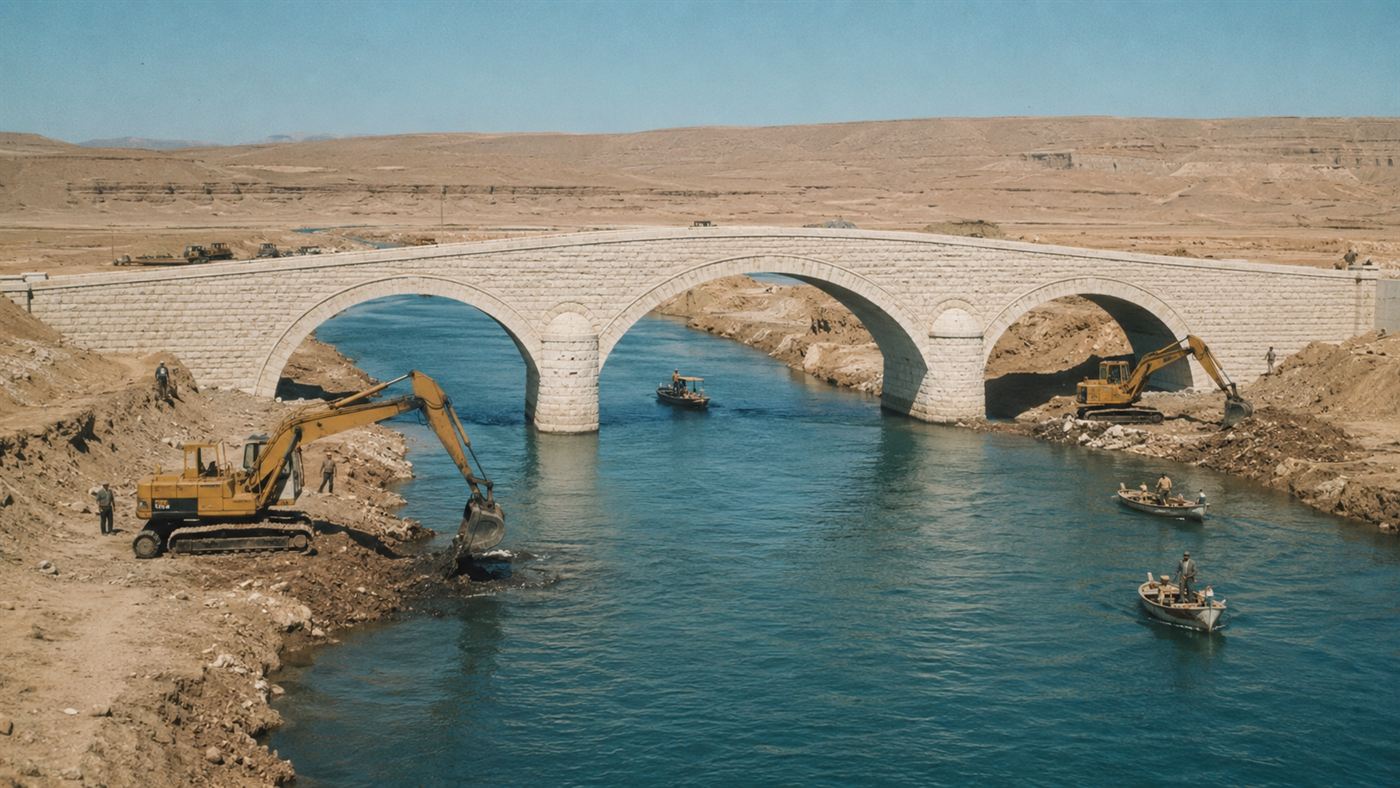
The tidiest part of the tale, that a great English monument was lovingly rescued, deserves a gentle correction. What crossed the ocean was really the decorative granite shell, not the whole engineering structure, so purists argue that Lake Havasu owns the face of London Bridge rather than the bridge itself. And it did not span anything at first. Workers assembled it over dry desert, then dredged a channel underneath and flooded it with water from Lake Havasu, so the famous crossing could finally have a river to cross.
Robert McCulloch's motive was not sentiment either. It was real estate. He needed to sell thousands of desert plots, and a global curiosity was the cheapest advertising imaginable. He even flew potential buyers in for free on his own airline. The bridge was a brilliant marketing stunt as much as a rescue, and it is fairer to admire the nerve of the gamble than to pretend it was pure preservation.
A crumbling English crossing was numbered, shipped around the world, and reborn in the sand as the heart of a town that barely existed, and today it is one of Arizona's most visited sights. Would you call that a rescue, a marketing trick, or the boldest impulse buy in history? Tell us what you think in the comments.
Related reading: the endless mansion a grieving heiress could not stop building. See also the strange narrow homes built purely out of spite, and the day a wall of molasses flooded the streets of Boston.