A 60-pound trout that vanished from a Nevada lake was declared extinct for decades, until it turned up alive in a tiny desert creek and the Paiute brought the Lahontan cutthroat trout home
Pyramid Lake once held trout the size of a large dog, until a dam starved the lake and the giants disappeared. Everyone assumed they were gone forever. They were quietly waiting in a creek most maps do not bother to name.
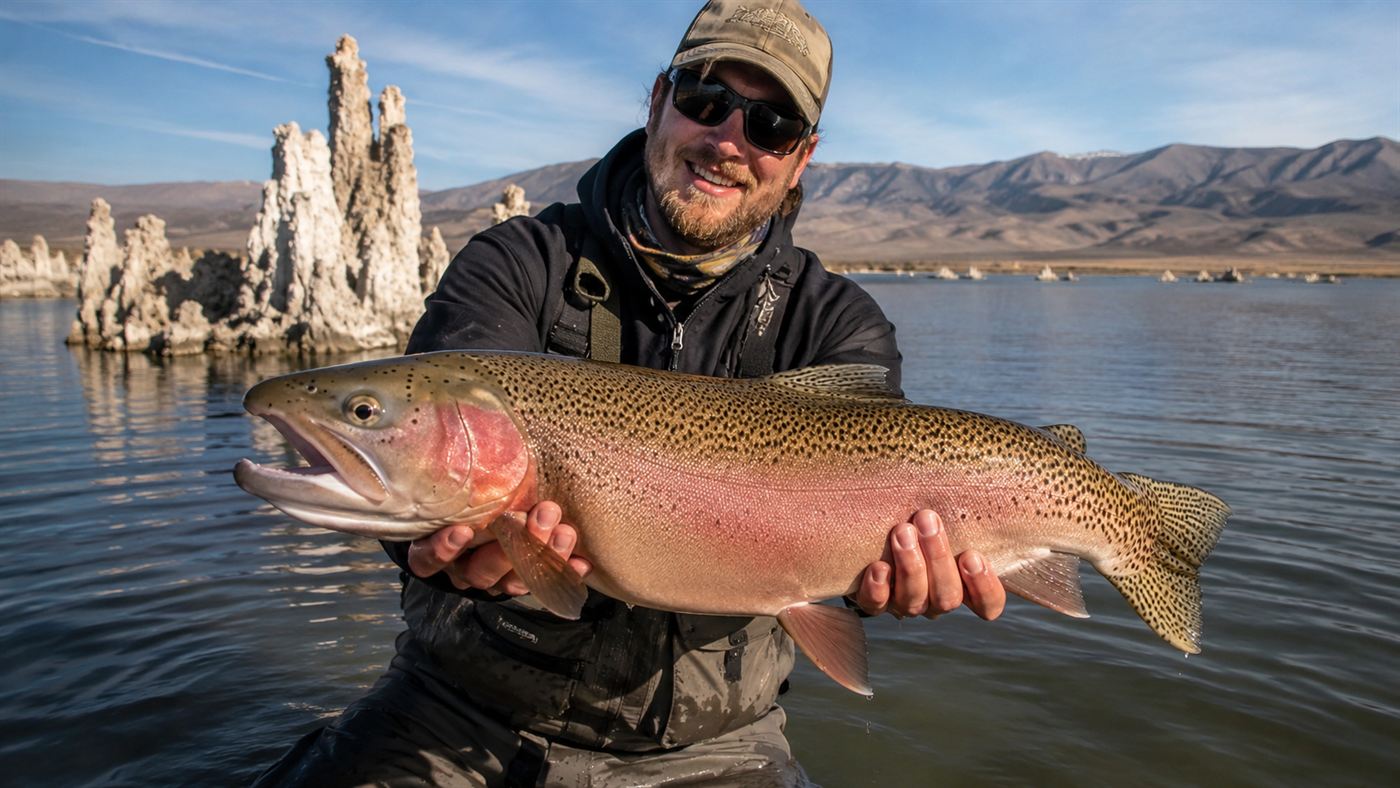
A Lahontan cutthroat trout at Pyramid Lake, where the giant fish once again grows past 20 pounds. Illustration: Watts & Wild.
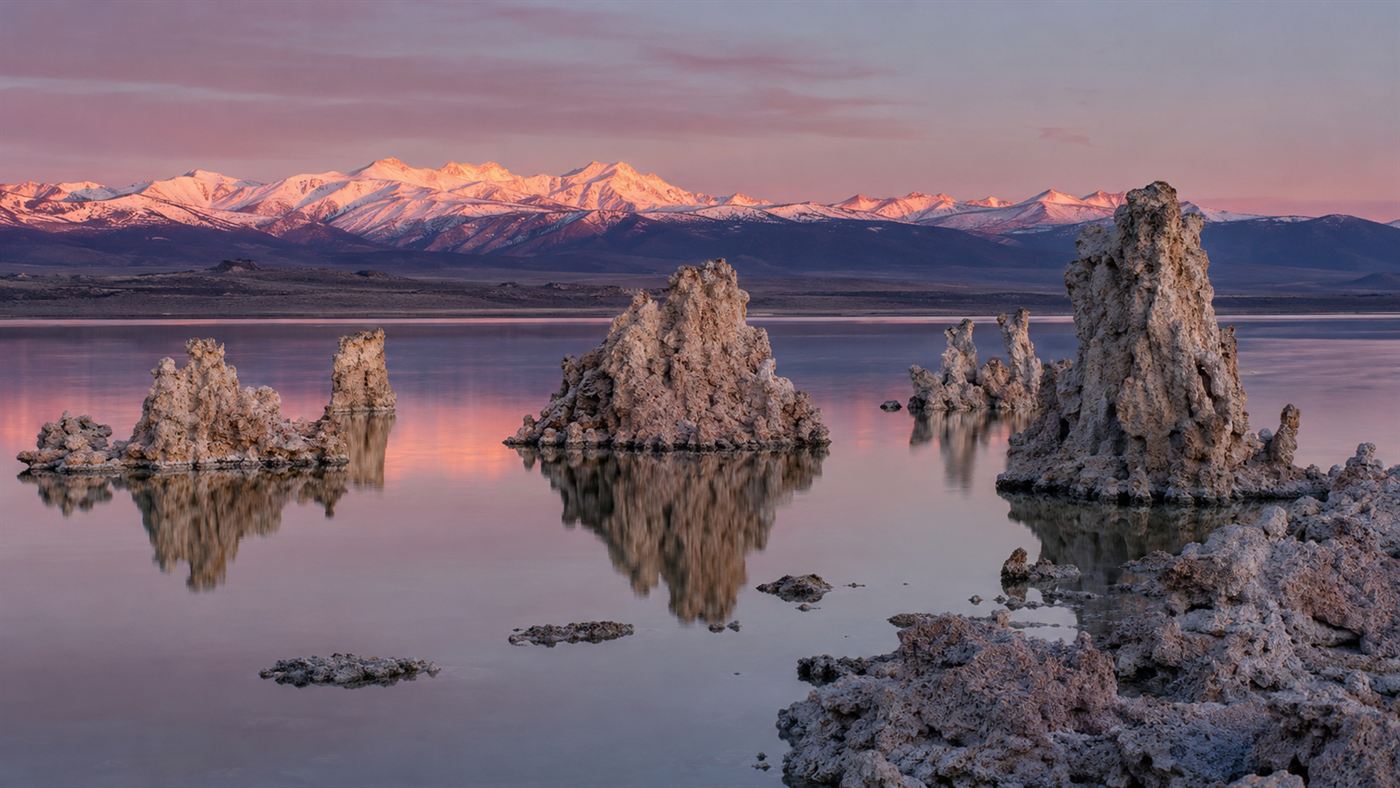
In the high desert north of Reno lies Pyramid Lake, a startling sheet of blue water ringed by pale rock spires. For thousands of years it held a fish that seems almost mythical now: the Lahontan cutthroat trout, the largest cutthroat on Earth, a lake-run monster that could reach roughly 60 pounds. To the Pyramid Lake Paiute Tribe, whose ancestors fished these waters, it was both food and a being of deep cultural importance, not just a trophy.
Then people broke the plumbing that fed the lake, and the giants died out. As the University of Nevada, Reno has documented, the original Pyramid Lake strain was considered extinct by the mid-20th century, another casualty of the way the American West rearranged its rivers. Except the fish was not quite gone, and the story of how it came back is one of the strangest comebacks in American conservation.
The short version: the Lahontan cutthroat trout, the world's biggest cutthroat, was wiped out of Nevada's Pyramid Lake after a dam cut off its spawning river in the early 1900s. Long presumed extinct, a surviving population was found in a remote creek, confirmed by DNA, and since 2006 the Paiute Tribe and federal biologists have restored the giant fish to its home lake.
How big is the Lahontan cutthroat trout?
The size is the part people struggle to believe. Most trout are measured in inches and ounces, but the lake form of this species grew into something else entirely, feeding on the rich fish life of Pyramid Lake until it reached weights of 40, 50, even a reported 60 pounds. The official rod-and-reel record, 41 pounds, was set in 1925 and still ranks among the largest trout ever caught anywhere.
That growth is a quirk of place. Given a big lake full of food and room to roam, the Lahontan cutthroat trout simply keeps getting bigger, in a way its stream-dwelling relatives never do. It is a reminder that a fish is not just its genes but its habitat, and that a species can hold a hidden capacity for the spectacular if the conditions are right.
How a dam erased them
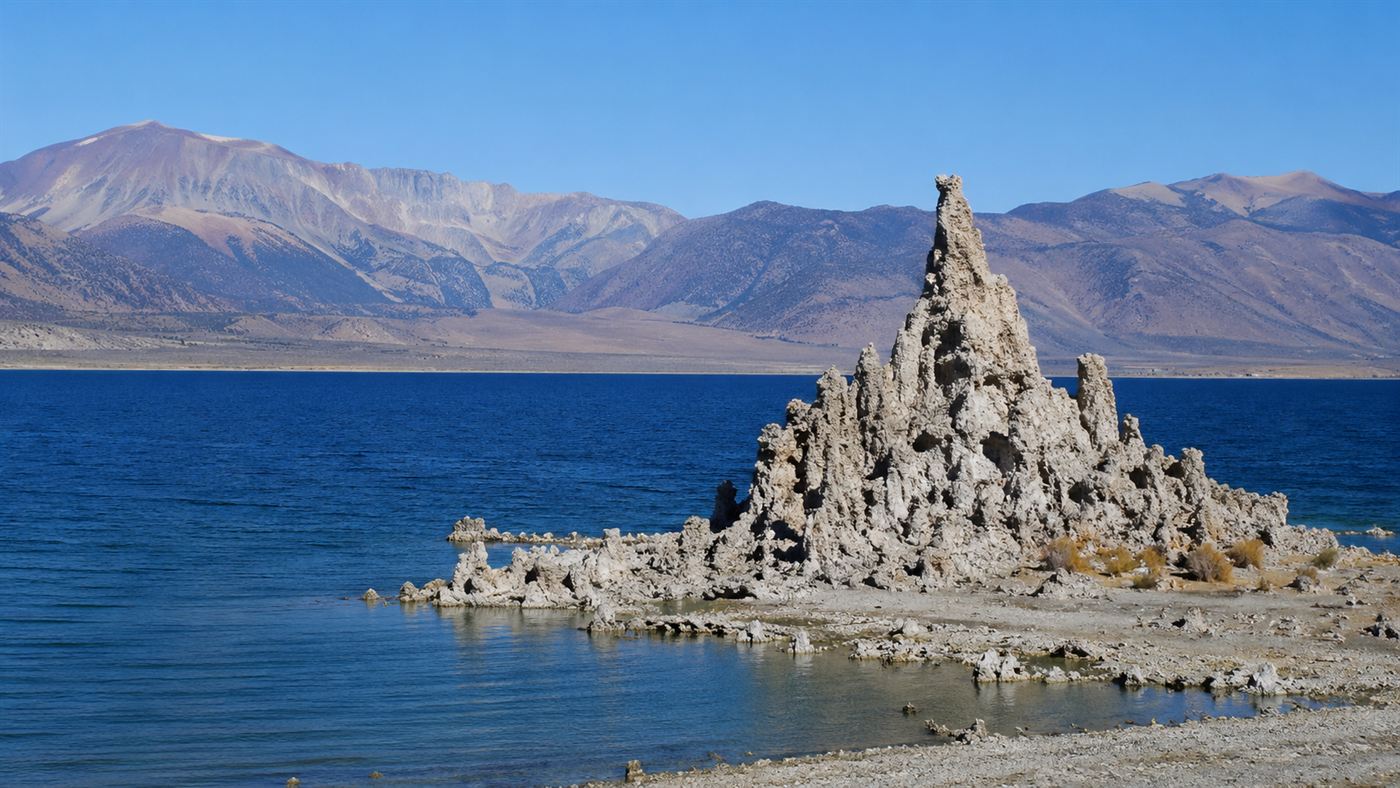
The killer was thirst for water. In 1905 the federal government completed the Derby Dam on the Truckee River, the stream that connects Lake Tahoe to Pyramid Lake, and diverted much of its flow to irrigate farmland near Fallon. The Derby Dam both dropped the lake, by an estimated 80 feet over the following decades, and blocked the trout from swimming upriver to spawn.
For a fish that had to run up the Truckee to reproduce, a wall across the river was a death sentence. The last great spawning runs petered out in the 1930s, and by around 1943 the enormous native Pyramid Lake trout were considered extinct. It is a familiar Western pattern, the same collision between water for farms and water for fish that has played out from the Klamath to the Colorado, and the fish usually loses.
The fish that was hiding in a desert creek
Here the story turns. Decades earlier, someone had carried some of the Pyramid Lake trout far away and stocked them in an obscure stream near Pilot Peak, on the Nevada-Utah border above the Bonneville Salt Flats. Forgotten and isolated, those transplanted fish quietly survived while their home-lake kin died out. In the 1970s biologists noticed unusually large cutthroat in that creek and began to wonder.
Proof came from the laboratory. As detailed in later genetic work, biologist Mary Peacock at the University of Nevada, Reno compared the creek fish to museum specimens collected from Pyramid Lake between 1872 and 1911, and the DNA matched. The remote population, now called the Pilot Peak strain, really was the lost giant of Pyramid Lake, hiding in plain sight in a stream most people had never heard of.
Bringing the giant home
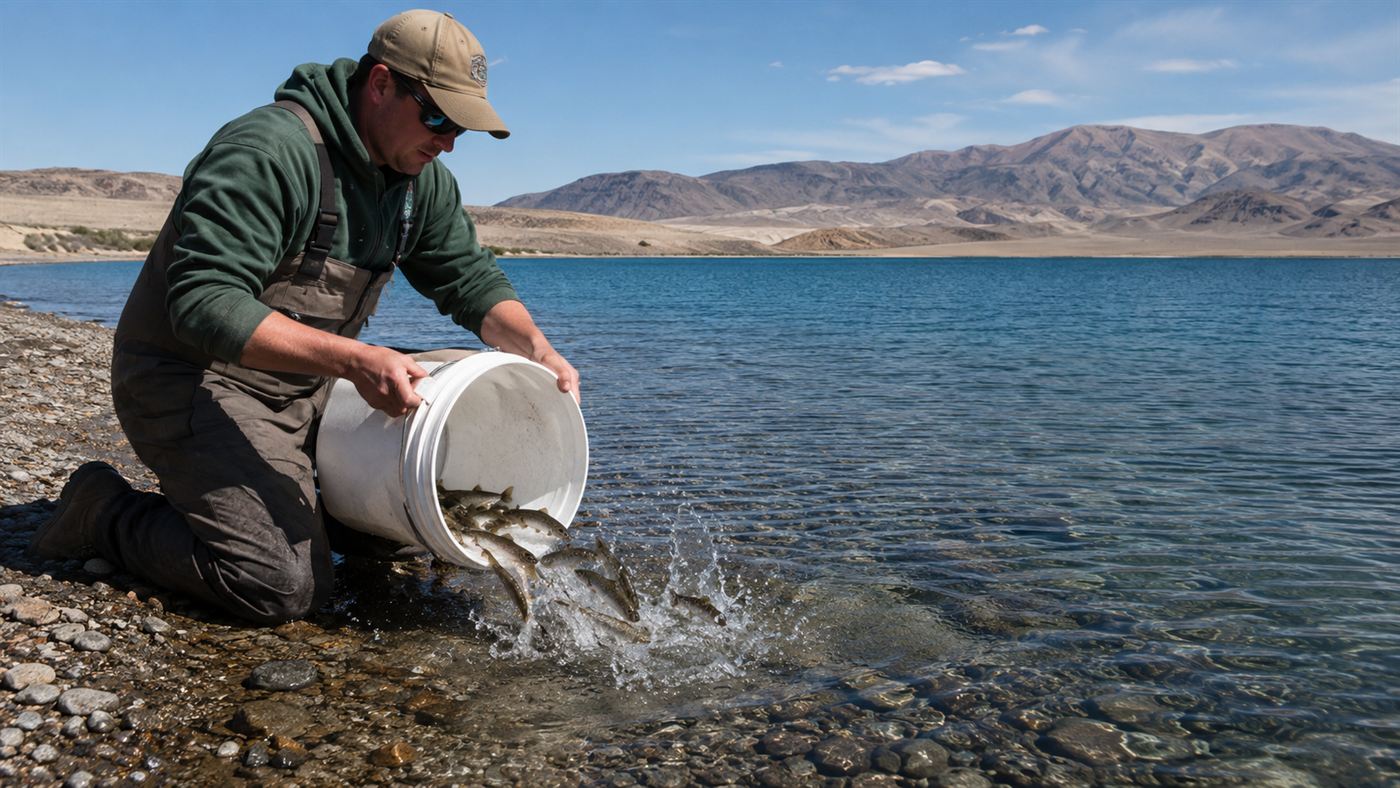
Once the identity was confirmed, the rescue became a partnership. Eggs were brought back to Nevada in the 1990s, a federal hatchery began raising the Pilot Peak strain by the hundreds of thousands each year, and starting in 2006 the US Fish and Wildlife Service and the Paiute Tribe restocked the fish into Pyramid Lake. Slowly, the impossible started to happen: the giants came back.
In 2012 the trout spawned in the Truckee River below the Derby Dam for the first time in about 80 years. Engineers later built a bypass around the dam and, in 2021, installed a 35-million-dollar fish screen to reconnect the route between Tahoe and Pyramid Lake. Anglers who once dreamed of a 5-pound catch now regularly land trout well over 20 pounds, and the lake's monster is a fixture again rather than a legend.
The honest catch
It is a genuinely uplifting story, but it deserves an asterisk or two. This is the recovery of a strain, not a resurrection from nothing, and it leans heavily on hatcheries. The trout are not yet fully self-sustaining in the wild the way they once were, and if the stocking and habitat work stopped, the population could slide again. A managed comeback is not the same as a healed ecosystem.
The deeper tension has not gone away either. The Derby Dam still diverts Truckee River water to farms, and Pyramid Lake still lives or dies by how that scarce water is shared in a drying region. The return of the giant trout is a real triumph, and the Paiute Tribe's role in it is a rare case of a Native nation leading the rescue of its own sacred fish. But it is a truce with the plumbing of the West, not a victory over it, and truces can always be renegotiated.
A 60-pound fish came back from the dead because someone, long ago, happened to move a few of them to a nameless creek. How many other species we have written off are still out there, waiting in some overlooked corner for us to notice? Tell us what you think in the comments.
Related reading: how removing four dams on the Klamath River brought the salmon back, and how the California condor clawed back from just 22 birds.