Joy Milne smelled a strange new odour on her husband and only understood it 12 years later, when he was diagnosed with Parkinson's, and her nose is now becoming a medical test
Years before any scan or doctor could tell, Joy Milne knew something had changed about her husband. She could smell it. Decades on, that strange gift has pointed scientists toward a simple test that could catch Parkinson's disease long before the shaking ever starts.
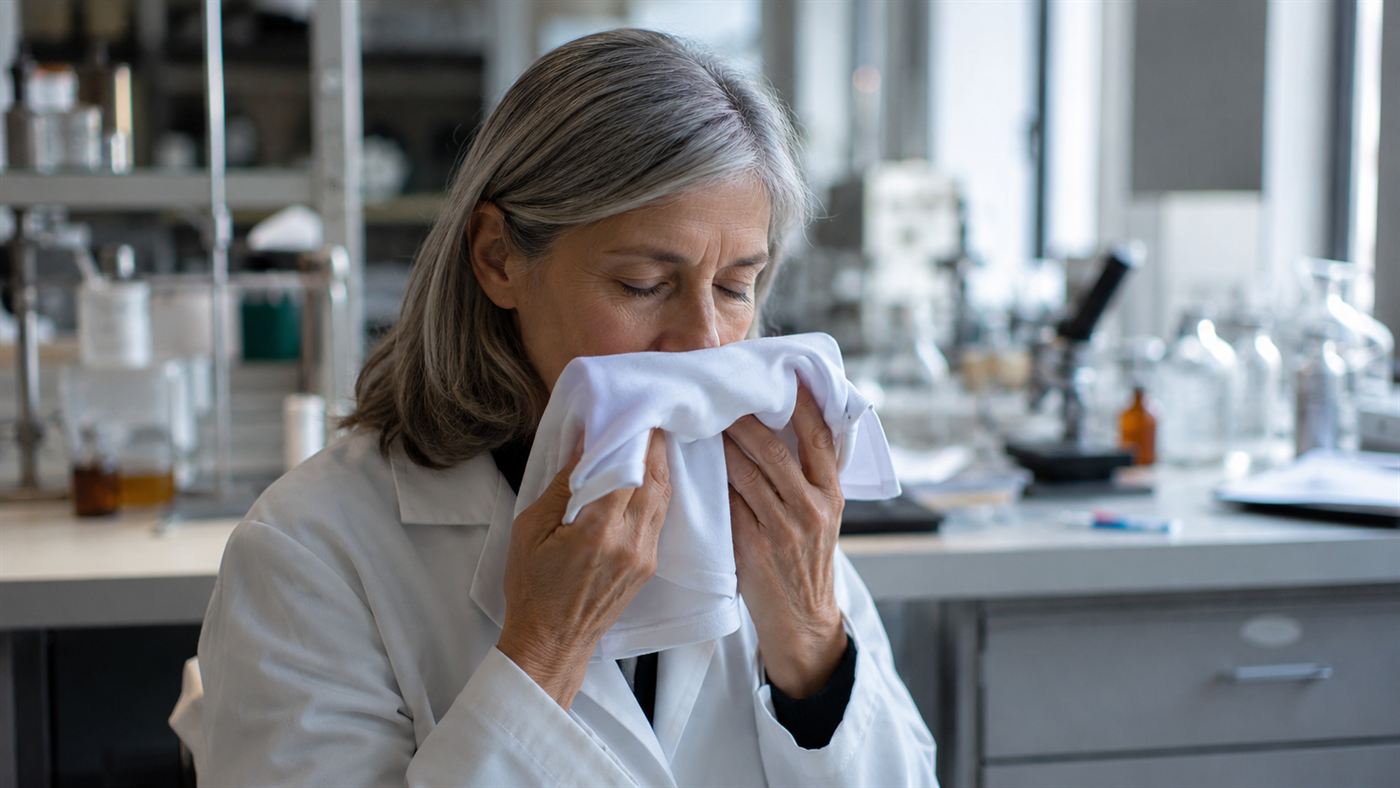
A retired nurse with an extraordinary nose turned a private grief into one of the most hopeful leads in Parkinson's research. Illustration: Watts & Wild.
Joy Milne, a retired nurse from Perth in Scotland, has a rare quirk of biology called hyperosmia, an unusually powerful sense of smell. For most of her life it was just a curiosity, the reason she could pick out scents nobody else noticed. Then it became something far stranger and more important: the first warning of a disease that medicine still struggles to catch early.
Her story is one of those rare cases where a single human being's odd talent cracks open a real scientific problem. What she noticed on her husband, and what she later proved she could do with a row of unwashed t-shirts, has launched a serious hunt for a way to detect Parkinson's disease from nothing more than the smell of a person's skin.
Joy Milne has hyperosmia, an unusually acute sense of smell. Parkinson's disease changes the oily sebum on the skin, giving off a distinctive musky odour, and Milne can detect it. She first noticed the smell on her husband around 12 years before he was diagnosed, and her ability has since helped scientists build an experimental skin swab test.
The smell that changed before the diagnosis
It began around 1982, when Joy Milne noticed that her husband Les, then in his early thirties, had developed a faint new odour she described as musky and slightly greasy. She put it down to sweat or stress and, after a while, more or less stopped consciously noticing it. There was no reason to connect a change in body odour to anything serious.
Twelve years later, Les was diagnosed with Parkinson's disease at the age of 45. The link only clicked for Joy years after that, when the couple attended a Parkinson's support group and she realised that the whole room shared the same smell she had detected on Les so long before. Her exceptional sense of smell had registered the disease more than a decade ahead of any doctor, she just had not known what it meant.
The t-shirt test that proved Joy Milne right
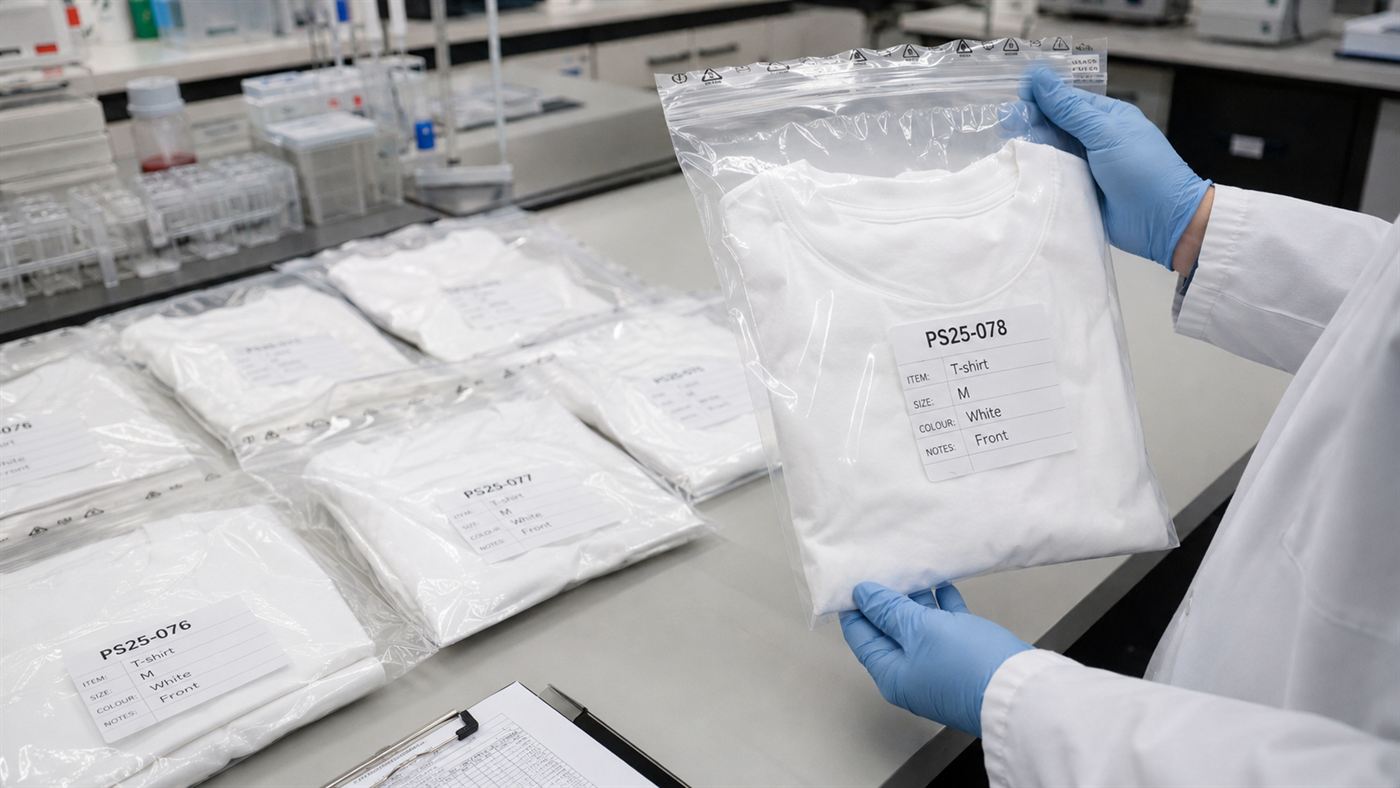
The turning point came when Joy Milne mentioned her observation to Tilo Kunath, a Parkinson's researcher at the University of Edinburgh, after a talk. Intrigued rather than dismissive, he devised a simple experiment. People with and without Parkinson's disease wore plain t-shirts, which were then coded and handed to Joy to smell, with no clue as to who was who.
She was almost perfect, correctly sorting the shirts of people who had the disease from those who did not. There was just one apparent mistake: she insisted that one man in the healthy control group had the Parkinson's smell. About eight months later, as Scientific American reported, that same man was diagnosed with Parkinson's disease. Her one "error" was not an error at all; her nose had simply run ahead of the clinic again, which is when the scientists realised her hyperosmia might be a genuine diagnostic tool.
Turning a nose into a skin swab test
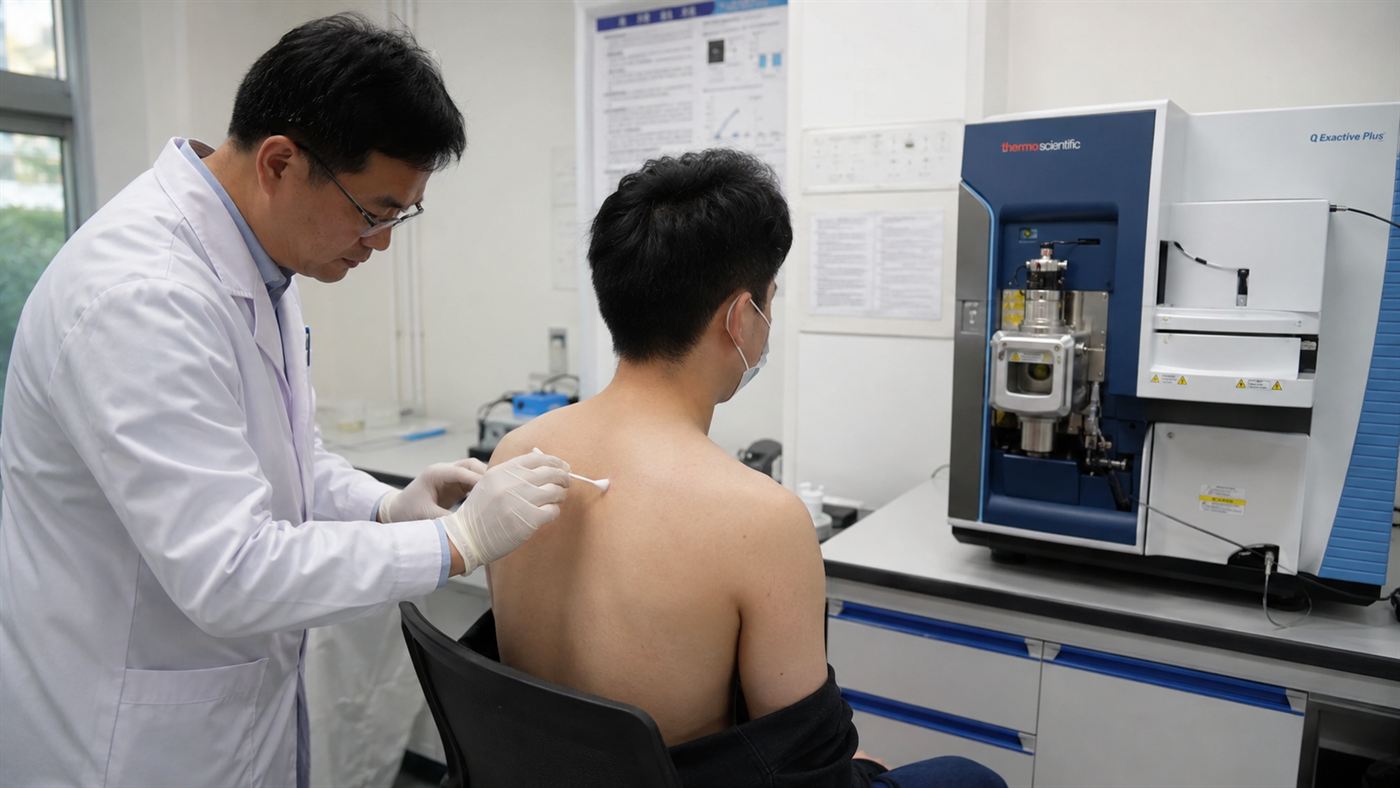
A gift that lives in one woman's nose is a wonderful story, but it is not yet medicine. To make it useful, scientists had to work out exactly what Joy Milne was smelling. That job fell largely to Perdita Barran and her team at the University of Manchester, who used mass spectrometry, a technique that identifies molecules by weight, to hunt for the chemical signature behind the odour.
They traced it to sebum, the oily film the skin produces, which people with Parkinson's tend to make in excess, especially on the upper back. Within that sebum they found a distinctive mix of volatile compounds tied to the disease. From that came a non-invasive skin swab test: wipe a cotton swab across someone's back, run it through the machine, and read the molecular fingerprint. Early results for the skin swab test have reported accuracy in the region of 95 percent.
The promise here is huge, because Parkinson's disease has no simple, definitive early test. It is usually diagnosed only once the tremors and stiffness appear, by which point the brain has already lost many of the cells that produce dopamine. A cheap, painless skin swab test that flags the disease years earlier could change when and how treatment begins, and give researchers a way to test drugs meant to slow it down.
A promise kept
There is a quiet, human thread running under the science. Les Milne died in 2015, and before he died he asked Joy Milne to do something useful with what her nose could do. Pushing the research forward became, in part, a promise to him, which is why she has spent years travelling to labs, sniffing samples, and letting scientists study a case of hyperosmia most people would have kept to themselves.
Since then her sense of smell has been tested against other conditions too, with researchers exploring whether she can detect diseases like tuberculosis and certain cancers by odour. Whatever comes of that, the core discovery stands: human bodies give off the chemistry of illness, and at least one person could read it before our instruments could.
The honest catch
It is worth keeping the wonder in proportion. Joy Milne is not a walking diagnosis, and her hyperosmia is genuinely rare, so the answer was never going to be sending one remarkable woman around the world's hospitals. The real value was using her to find the molecules, so a machine could do the smelling reliably and at scale, which is exactly the harder part that is still being worked on.
That skin swab test is also not finished. It has performed impressively in studies, but it still has to be validated in large, diverse groups and approved before any clinic can offer it, so the headline accuracy figures are a promising start rather than a settled fact. None of which dims the strangeness at the centre of it. A woman smelled a disease on the man she loved, years before anyone could name it, and turned that heartbreak into a tool that may one day catch Parkinson's disease in time to matter.
One woman's nose may end up catching a disease years before any scan can. If a smell test could tell you that Parkinson's was coming a decade early, would you want to know? Tell us in the comments.
Related reading: The quiet government scientist whose stubbornness kept a deforming drug out of America.