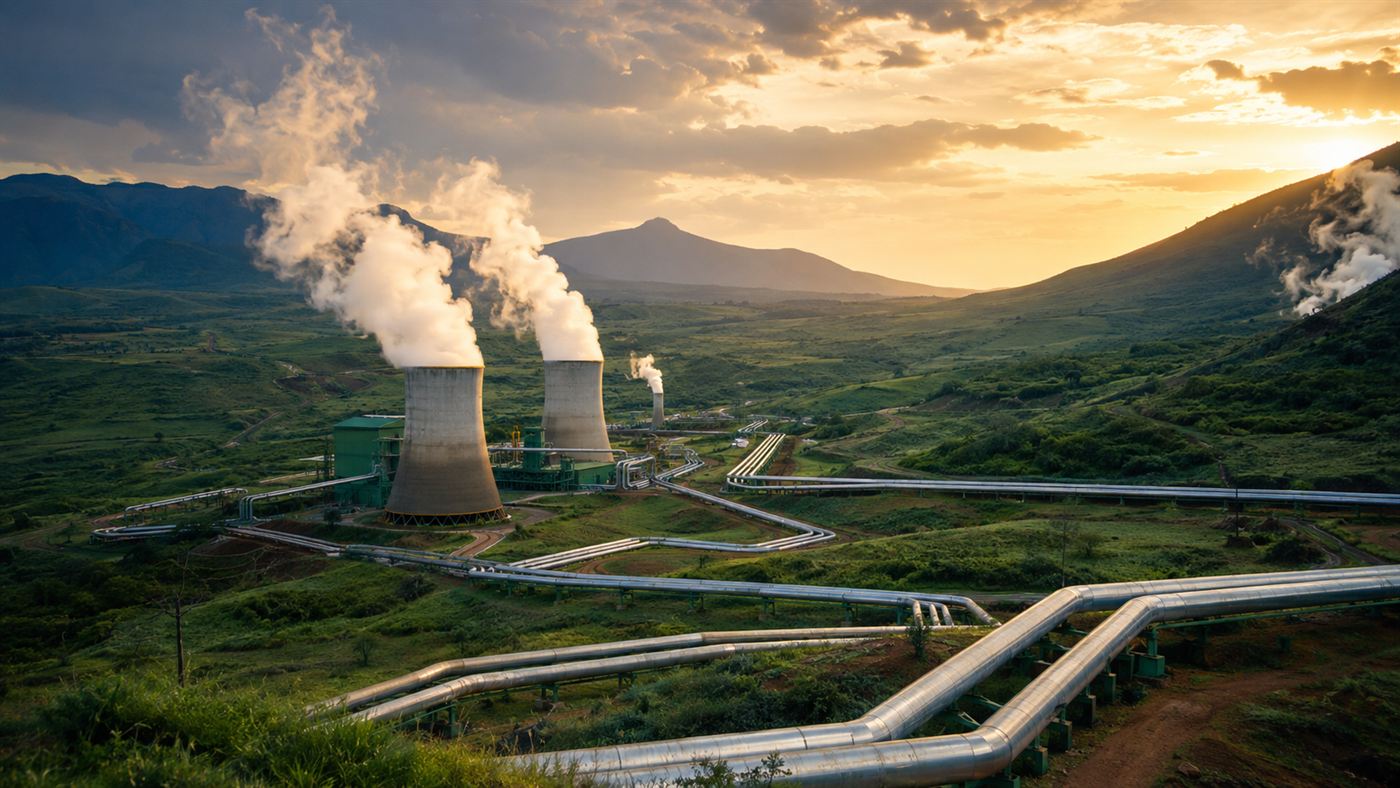
A tiny Canary Island called El Hierro is trying to run entirely on wind and water, using the crater of a dead volcano as a giant battery for its electricity
El Hierro is the smallest of the Canary Islands, a windswept rock in the Atlantic with around 11,000 people. For decades it ran on diesel shipped in by sea. Now this El Hierro renewable island project tries to power itself from wind alone, storing the surplus by pumping water up into a volcanic crater.
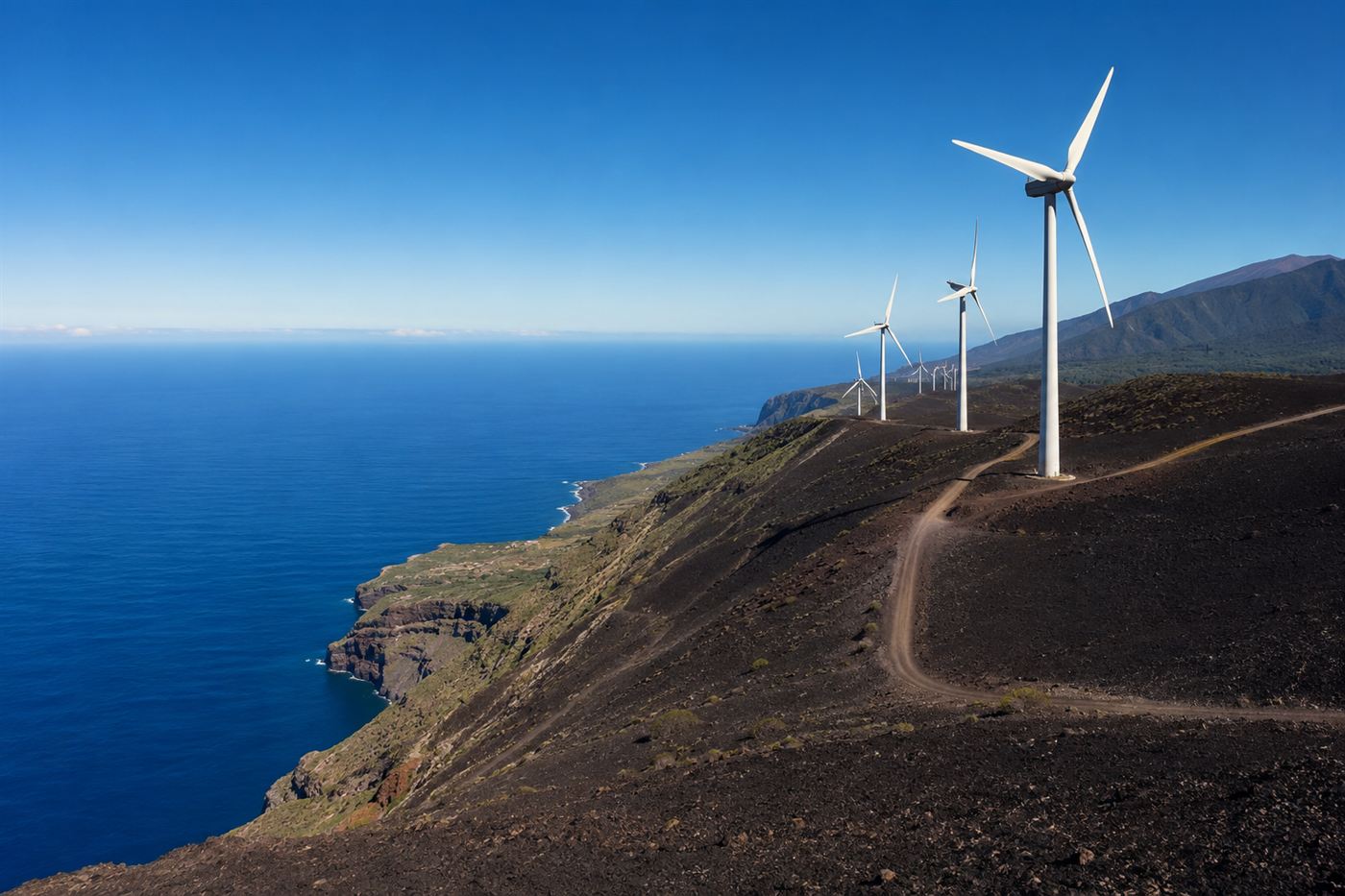
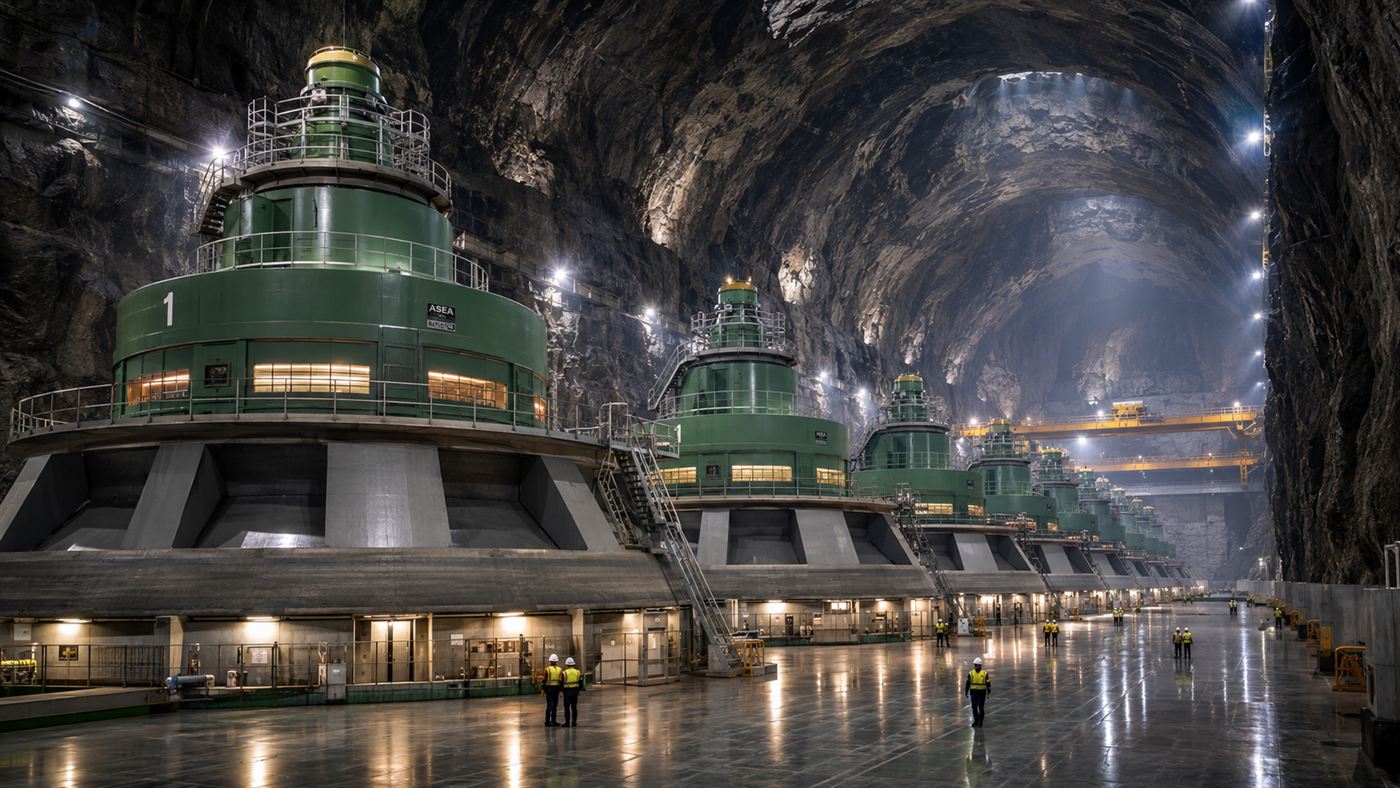
Wind turbines on El Hierro feed a plant that stores power inside an extinct volcano. Illustration: Watts & Wild.
On 9 August 2015, for four hours, something quietly historic happened on a small island off the coast of West Africa. El Hierro, the most remote of Spain's Canary Islands, ran its entire electricity grid on renewable power alone, with not a drop of diesel burning anywhere. For those four hours it became the first isolated territory on Earth to do it.
The island had spent decades, and tens of millions of euros, getting to that moment. The machine behind it, a plant called Gorona del Viento, pairs a row of wind turbines with one very unusual battery, the crater of an extinct volcano sitting hundreds of metres above the sea.
El Hierro powers itself with Gorona del Viento, a plant that pairs five wind turbines with a pumped-hydro store. When the wind blows hard, the surplus pumps water up into the crater of an extinct volcano. When the wind drops, that water falls back through turbines to make electricity on demand.
The El Hierro renewable island at the end of the wires
El Hierro sits far out in the Atlantic, the last scrap of Spain before the open ocean.
With only around 11,000 residents, it is too small and too remote to plug into any mainland grid.
For most of its modern history it simply burned diesel, brought in by tanker, to keep the lights on.
That meant dirty air, a heavy fuel bill and total dependence on ships arriving on schedule.
The dream of cutting that cord is what drove the whole project, much as cheap volcanic heat now powers a green grid in Kenya.
A volcano turned into a battery
The clever part of Gorona del Viento is how it stores energy.
Batteries big enough to run an island are still expensive, so the engineers used water and gravity instead, the same problem the world is chasing with a battery made of rust.
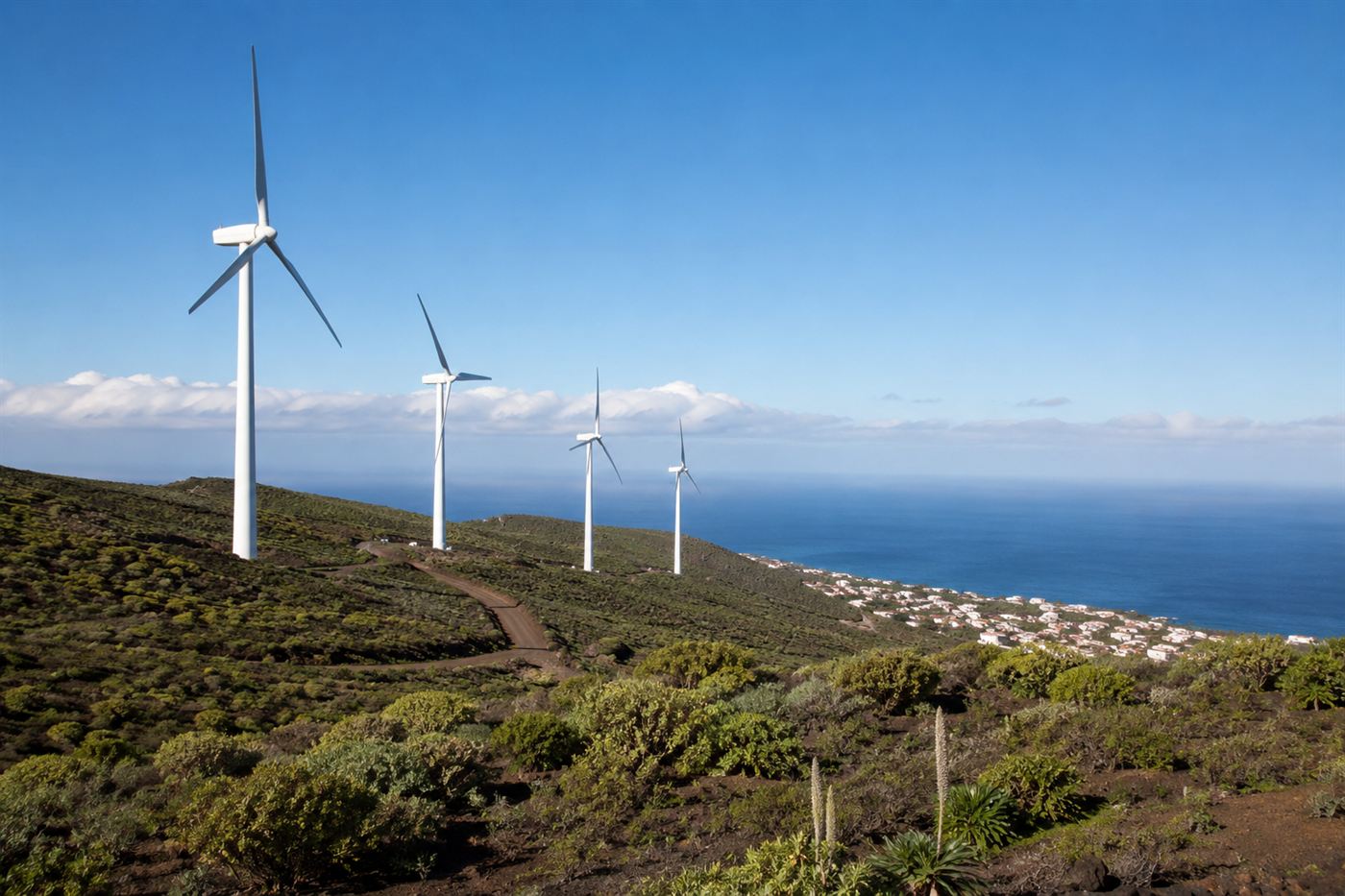
Five wind turbines, rated together at 11.5 megawatts, sit on a ridge where the trade winds blow almost without stop.
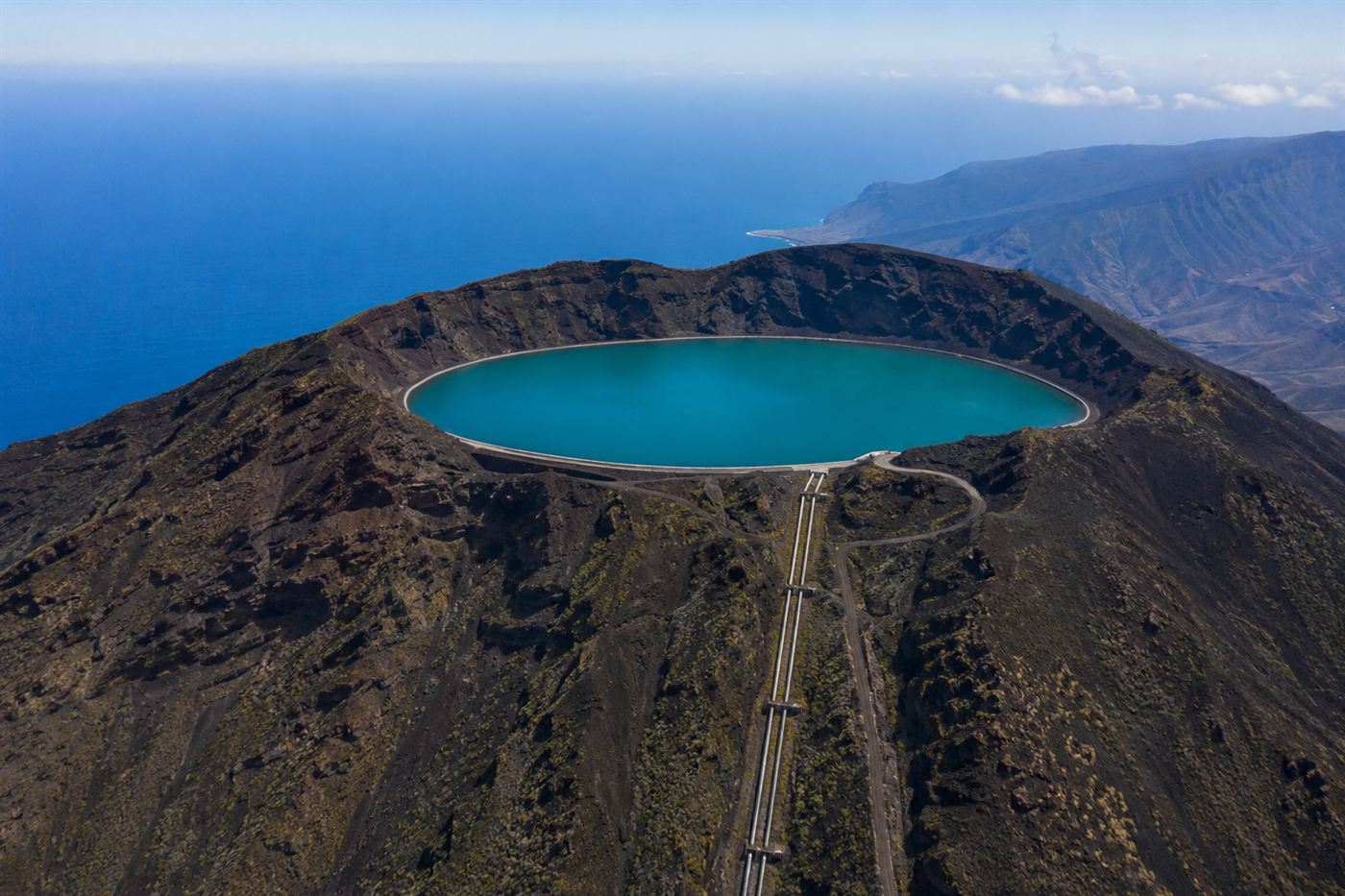
When they make more power than the island needs, the extra runs pumps that push water hundreds of metres uphill into the crater of a dead volcano.
That crater holds a reservoir of water, a small lake of stored energy waiting to come back down.
How the water closes the loop
When the wind dies down, the island simply reverses the flow.
Water rushes down from the crater through pipes to a lower reservoir near the coast, spinning hydroelectric turbines on the way.
Those turbines, rated at around 11 megawatts, can carry the island on their own for hours at a time.
The two reservoirs, upper and lower, act like one huge rechargeable battery made of rock and water, a cousin of the way Finland buries surplus power in a battery made of sand.
It is the same idea as the giant pumped-storage dams on the mainland, shrunk down to fit a single small island.
The man who dreamed it for thirty years
The idea did not come from a startup or a government target.
It came from a local electrical engineer named Tomás Padron, who first sketched it out back in 1981.
Padron ran the island's electricity and later served as president of its council for seven terms, pushing the plan the whole way.
For Padron and the islanders it was about more than carbon, it was about no longer depending on a diesel tanker to survive.
Records, and the reality
When it works, the island is spectacular.
In 2018 the island ran for eighteen days straight on renewable power alone, a world record for an isolated grid, and it later stretched past twenty-four.
For hundreds of hours a year, the diesel generators sit completely idle.
But those headline runs hide a more modest yearly picture.
Across a full year, renewables have covered only around half of the island's electricity, with diesel quietly making up the rest.
The honest catch
El Hierro is a brilliant experiment, not a finished miracle.
The wind does not always blow, the reservoirs are relatively small, and on calm weeks the old diesel plant still has to step in.
Building it cost more than 80 million euros for an island of 11,000 people, a price few places could ever justify.
Its design also leans on a rare piece of luck, a tall volcanic crater sitting in just the right spot to hold water high above the sea.
Most islands and cities have nothing like it, so the island is less a template than a glimpse of what total energy independence really asks for.
What it proves is that a community can break its dependence on imported fuel, even if it cannot yet do so every single day.
The turbines on the ridge and the lake in the crater have turned a forgotten Atlantic island into one of the most watched energy experiments in the world, the same daring spirit behind a solar tower that keeps the lights on after dark.
El Hierro has not perfectly closed the loop, but it has shown the rest of us how close a small, determined place can get.
Would you accept a much higher upfront cost to free your town from imported fuel, even if it only worked most of the time? Tell us in the comments.