A writer with no power stopped the most feared builder in America from bulldozing a ten-lane highway through Lower Manhattan, and in doing so saved the neighborhoods we now call SoHo and Greenwich Village
He had reshaped New York for forty years, moving highways and neighborhoods around like furniture, and almost no one had ever beaten him. Then he ran into a journalist in sensible glasses who lived on the block he wanted to pave. By the time it was over, the master builder had lost, and the city had changed its mind about bulldozers forever.
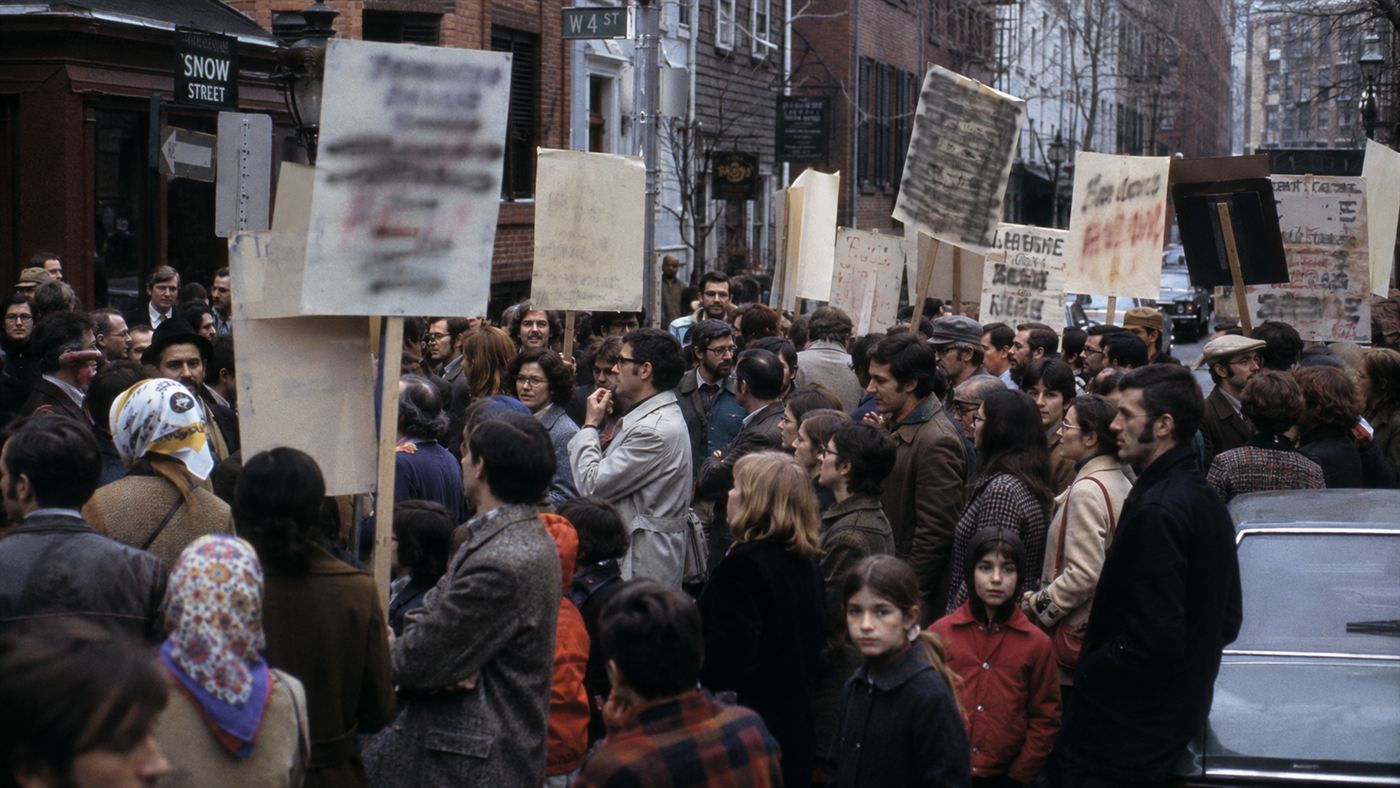
Jane Jacobs mobilized ordinary New Yorkers to save their own streets. Illustration: Watts & Wild.
For most of the twentieth century, the most powerful person in New York City was not the mayor or the governor. It was Robert Moses, an unelected official who, across a string of appointed offices, built the parkways, bridges, beaches and expressways that shaped the modern city. He also flattened whole neighborhoods to do it, and for decades no one could stop him.
His grandest and most destructive idea was the Lower Manhattan Expressway, a ten-lane elevated road that would have cut straight across the island. Standing in its path was a middle-aged writer named Jane Jacobs, who had no official power at all, and the fight between them became one of the defining battles over what a city is actually for.
The short version: Robert Moses planned a ten-lane highway across Lower Manhattan that would have destroyed much of today's SoHo, Little Italy and Greenwich Village. The writer Jane Jacobs led a grassroots campaign against it through the 1960s, was arrested at a 1968 hearing, and by 1969 the expressway was dead.
The man who bulldozed New York
To understand the stakes, you have to understand Robert Moses. Over roughly four decades he built an astonishing amount of the region's infrastructure, but his method was blunt: he ran expressways through dense, living neighborhoods, displacing hundreds of thousands of people. His Cross Bronx Expressway alone tore the heart out of thriving communities.
Moses believed the future belonged to the car, and that old, crowded, low-rise districts were slums to be cleared for it. He had mastered the levers of power so completely that opposition rarely mattered. When he announced a project, it usually happened, and the people in the way were expected to move.
The highway that would have erased SoHo
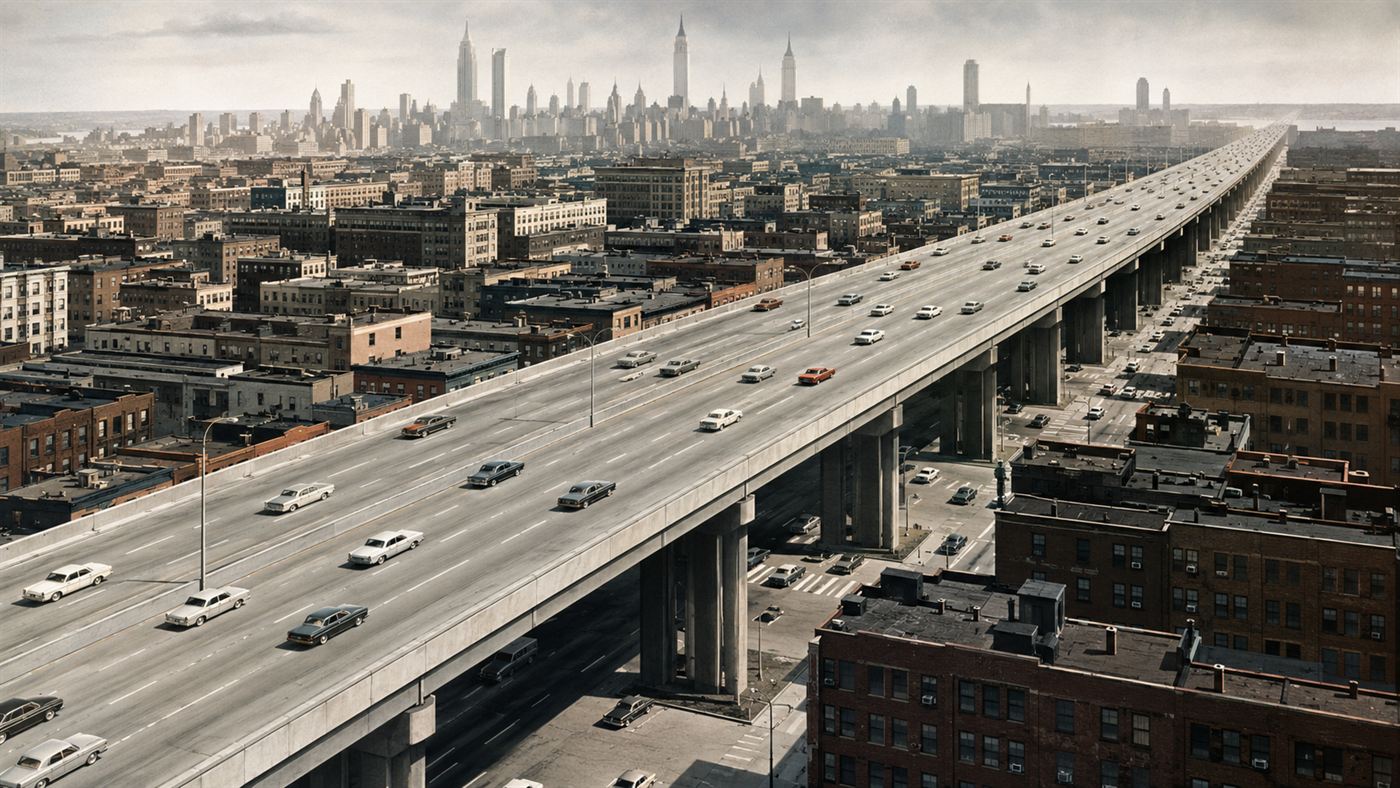
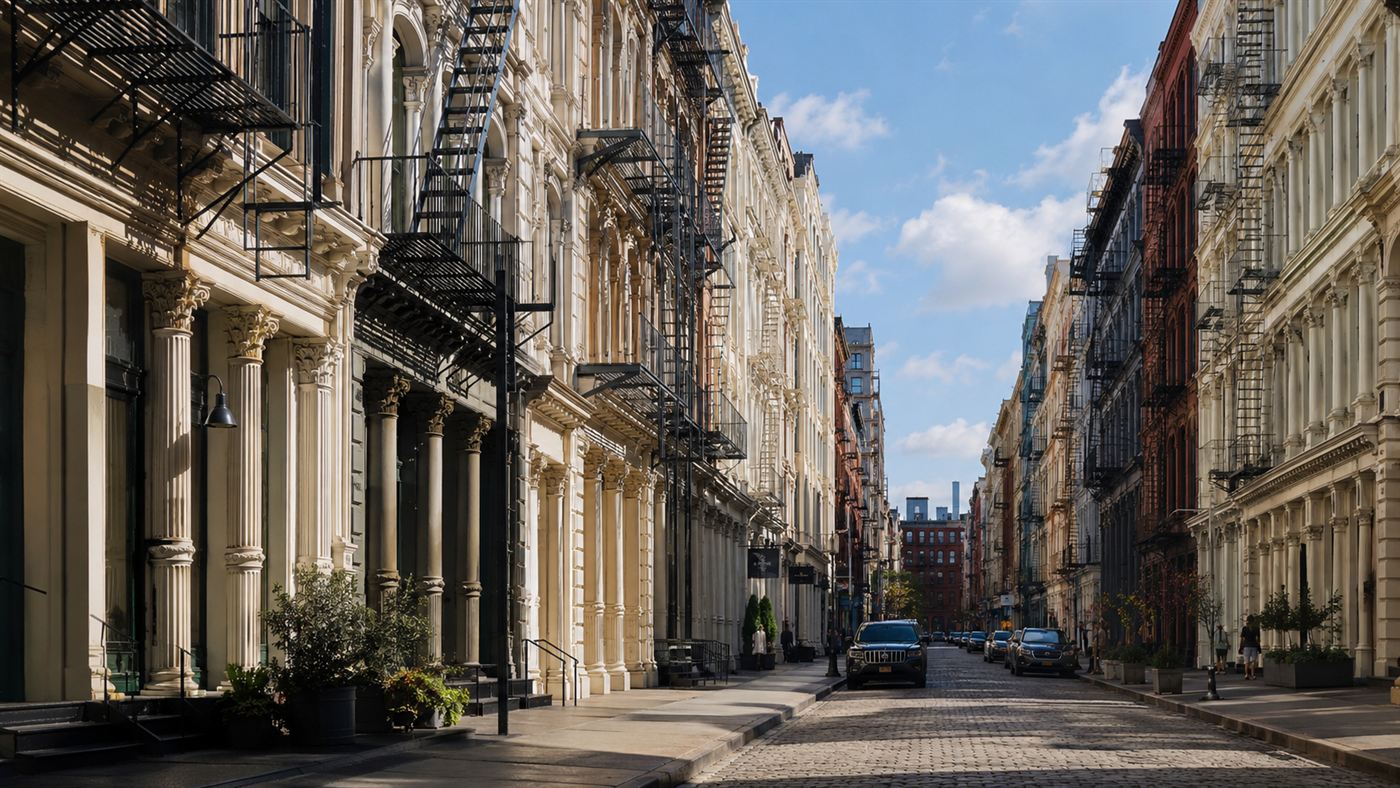
The Lower Manhattan Expressway, often called LOMEX, was Moses at his most ambitious. It would have carried ten lanes of traffic on an elevated structure from the Holland Tunnel across to the bridges over the East River, slicing through the cast-iron loft district that is now SoHo, along with parts of Little Italy and Chinatown.
The human cost would have been enormous. The plan called for demolishing scores of buildings and displacing thousands of residents and small businesses, all to speed cars across an island where most people did not even drive. The very blocks now treasured as SoHo were, on the plans, simply in the way.
Who was Jane Jacobs?
Jane Jacobs was not a planner or a politician. She was a writer and editor who lived in Greenwich Village, raised a family there, and paid close attention to how her neighborhood actually worked. In 1961 she published The Death and Life of Great American Cities, a book that attacked the whole bulldozing philosophy Moses embodied.
Her argument was radical for its time: that busy, mixed-up, older neighborhoods, with shops, homes and people mingling on the sidewalk, were not slums but the living heart of a city. She wrote about "eyes on the street," the informal web of neighbors that keeps a place safe and alive, and warned that expressways and towers destroyed exactly that.
How an ordinary citizen beat the master builder
When Moses came for her part of the city, Jane Jacobs did not just write, she organized. She chaired the citizens' committee formed to kill the expressway, and turned the fight into a very public, very stubborn grassroots war of petitions, protests, packed hearings and relentless press attention. She had already helped beat an earlier Moses plan to run a road through Washington Square Park.
The campaign got fierce. At a public hearing in 1968, the crowd surged the stage and the official stenographer's tape was destroyed, and Jacobs was arrested and charged, the counts later reduced to disorderly conduct. Far from ending the movement, the heavy-handed response only made her cause more famous, and in 1969 the city finally killed the Lower Manhattan Expressway for good.
The honest catch
It is a beautiful David-and-Goliath story, and the bones of it are true, but the neat version flattens some awkward parts. Robert Moses was already losing power by the late 1960s for many reasons beyond one activist, and the expressway died from a pile-up of community anger, shifting politics and money problems, not from Jane Jacobs alone. She was the face and the spark, not a lone slayer of a giant.
There is a harder irony, too. The victory helped save neighborhoods like SoHo and the Village, but their triumph made them so desirable that they became some of the most expensive real estate on Earth, pricing out the very working families who once filled them. Jacobs won the fight to keep the streets alive; keeping them affordable turned out to be a battle no one has really won.
One determined writer helped stop a highway that would have paved over some of the most beloved streets in America. When a city wants to bulldoze a neighborhood for a road, who should get the final say, the planners or the people who live there? Tell us in the comments.
Related reading: the Big Dig, Boston's attempt to bury the highway that had already cut its downtown in two. See also how a company town built by one powerful man ended in revolt.