The tribe that came to this Louisiana island to escape forced removal in the 1830s is being moved again, and the $48 million the US gave them to relocate built homes that leak
In September 2025, investigations found that America's first federally funded climate relocation, a $48.3 million effort to move the Biloxi-Chitimacha-Choctaw people from a barrier island that has lost 98% of its land, produced homes that leak after three years and left the tribe's dream of reunification in pieces. The Isle de Jean Charles climate refugees are now planning a second attempt, without government help.
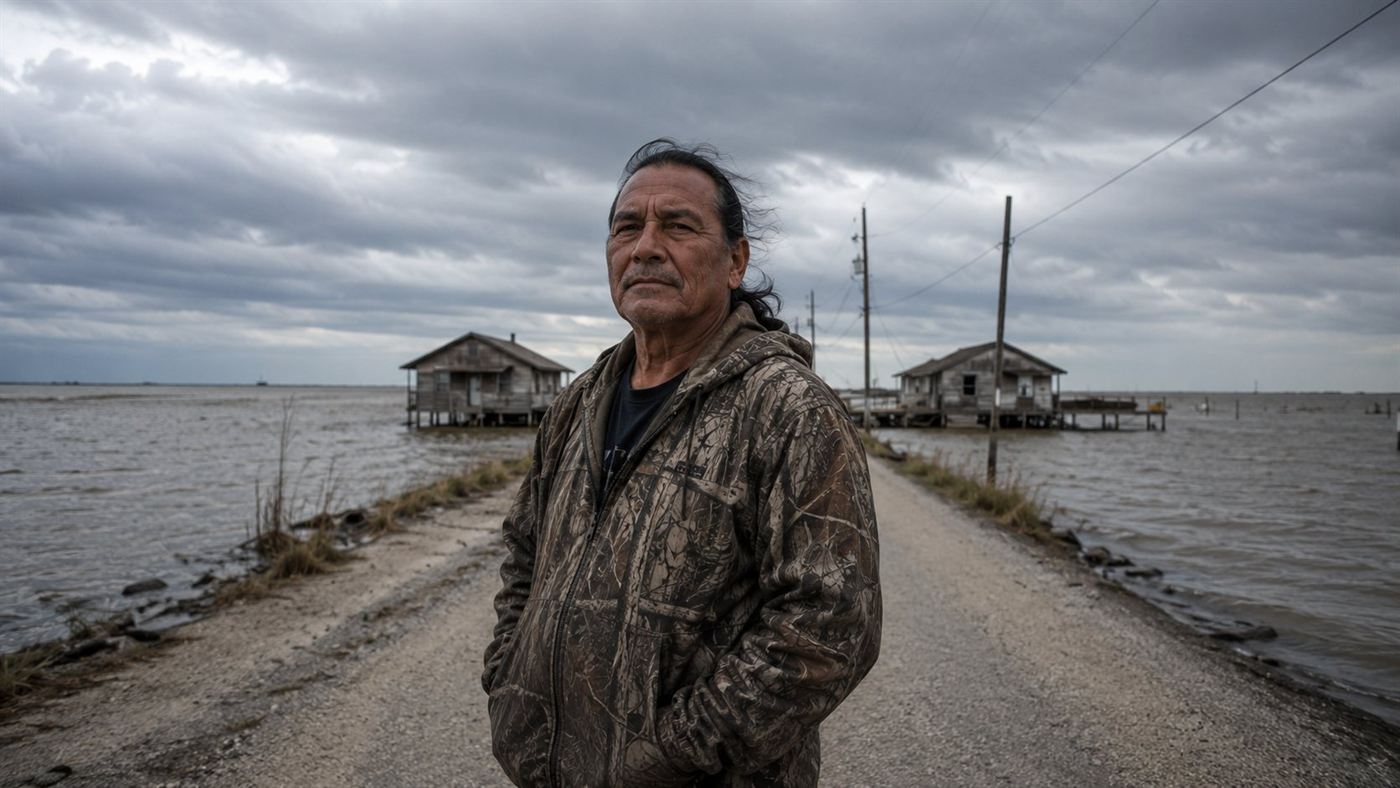
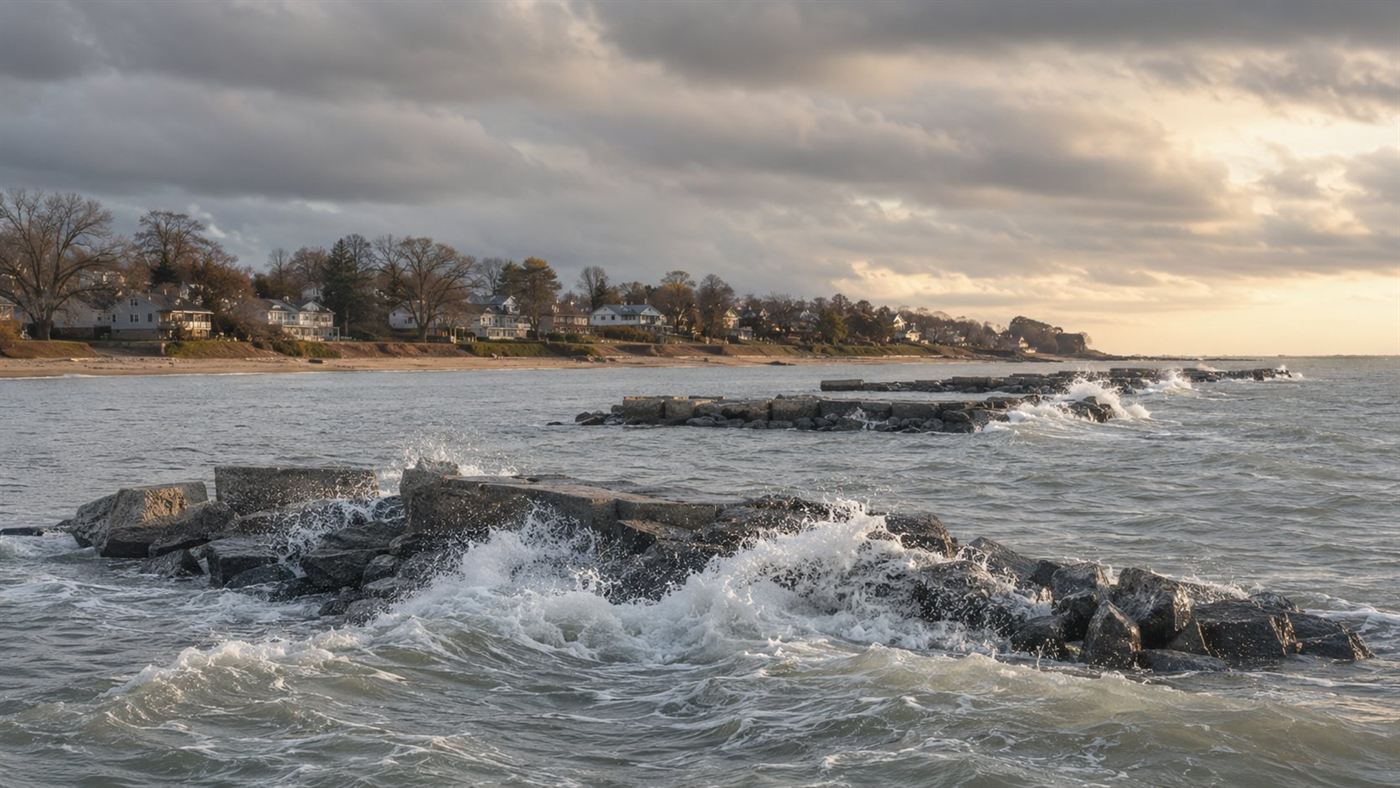
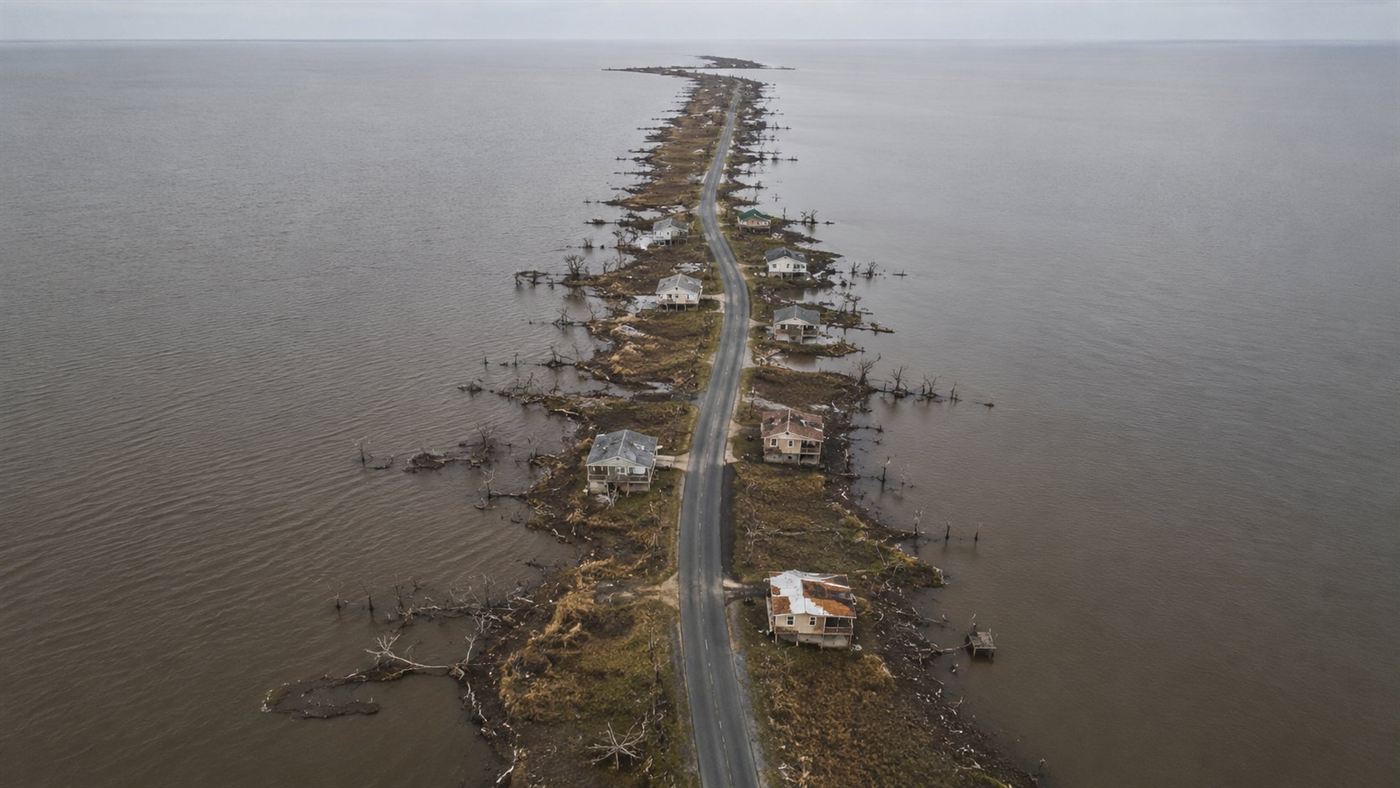
Isle de Jean Charles has shrunk from 22,000 acres to a narrow road surrounded by open water. The tribe that retreated here in the 1830s to hide from forced removal is now being asked to leave. Illustration: Watts & Wild.
When the ancestors of the Biloxi-Chitimacha-Choctaw people first settled on Isle de Jean Charles in the 1830s, they were hiding. The Indian Removal Act was sweeping Native tribes off their lands across the American South, and this narrow ridge of marsh in Terrebonne Parish, Louisiana, was far enough from the roads and the authorities to be safe. They built a fishing community on land that spanned more than 22,000 acres. For nearly two centuries, they stayed.
By 2025, oil and gas canals had shredded the surrounding wetlands and decades of hurricanes had stripped what remained. The island had shrunk to a sliver one quarter of a mile wide and two miles long, a 98% loss since 1955. The US government stepped in with $48.3 million to move the tribe to higher ground, the first time in American history that the federal government had fully funded the relocation of a community because of climate change. A September 2025 investigation by Inside Climate News called the result a cautionary tale.
A refuge built on exile
The tribe's decision to build a life here was deliberate. In the 1830s, as the Indian Removal Act forced Native peoples onto routes that would become known as the Trail of Tears, small groups of Biloxi, Chitimacha, and Choctaw people retreated into the coastal marshes of southern Louisiana. Isle de Jean Charles, a ridge at the edge of the Gulf, was too remote and too modest to attract the attention of the state. That obscurity was the point.
The community that took root here became one of the longest-surviving Native settlements in Louisiana. At its fullest extent the island was more than five miles wide and eleven miles long, with a fishing economy built around the bayou: shrimp, crab, fish, trapping in the surrounding wetlands. Tribal membership scattered across the region over generations, but the island remained the center, the place where the identity held. The wider family always knew where home was.
That identity was woven into the landscape. The water around the island was not just scenery. It was food, income, and transport. The marshes were a living system, productive and buffering, the reason a community had managed to survive here for so long against so many odds.
What the oil canals did to the marsh
The destruction began after World War II, when Louisiana emerged as a major oil and gas production zone. To reach wells and lay pipelines through the coastal wetlands, energy companies dredged a vast network of canals across the Louisiana coast. Environmental researchers estimate more than 10,000 miles of cuts were made through living marsh. Each canal was a straight slot of dead water running through a living system, and the damage compounded quickly.
The canals let salt water from the Gulf penetrate deep into freshwater marshes. Saltwater kills the cordgrass and sedge that hold marsh sediment in place. USGS satellite records show the island that covered more than 22,000 acres in 1955 had been reduced by 98% in the decades that followed. Hurricanes did the rest: Katrina in 2005 flooded the island with salt water and stripped more sediment. Each passing storm took more.
What remained by the 2010s was a single narrow road through open water, houses clinging to its edges. To reach the mainland, residents had to cross a mile-long, single-lane causeway, often flooded after storms. The marsh that once buffered the island was gone. There was nothing left to protect it.
Isle de Jean Charles climate refugees make American history
In January 2016, Louisiana received $48.3 million from the US Department of Housing and Urban Development as part of the National Disaster Resilience Competition, created in the wake of Hurricane Sandy. The Isle de Jean Charles grant was historic: the first time in American history that the federal government had funded the full relocation of a community threatened by climate change.
The man behind the original vision was Albert Naquin, a tribal leader who had spent years watching the island disappear. His plan was not just about moving people. It was about reuniting them. Tribal membership had scattered across Louisiana over the decades, and Naquin saw the relocation as a chance to bring them back together. The blueprint called for more than 100 homes, a community center, walking trails, and commercial space. A village, not just a row of houses on a new street.
"This was about rebuilding our nation," he said at the time.
How it went wrong
The state of Louisiana controlled how the money was spent, and its eligibility rules changed everything. Officials determined that only residents currently living on the island, plus those displaced by a specific 2012 hurricane, could participate. That decision cut off most of the scattered tribal membership. Albert Naquin's vision of reunification was gone before a single house was framed.
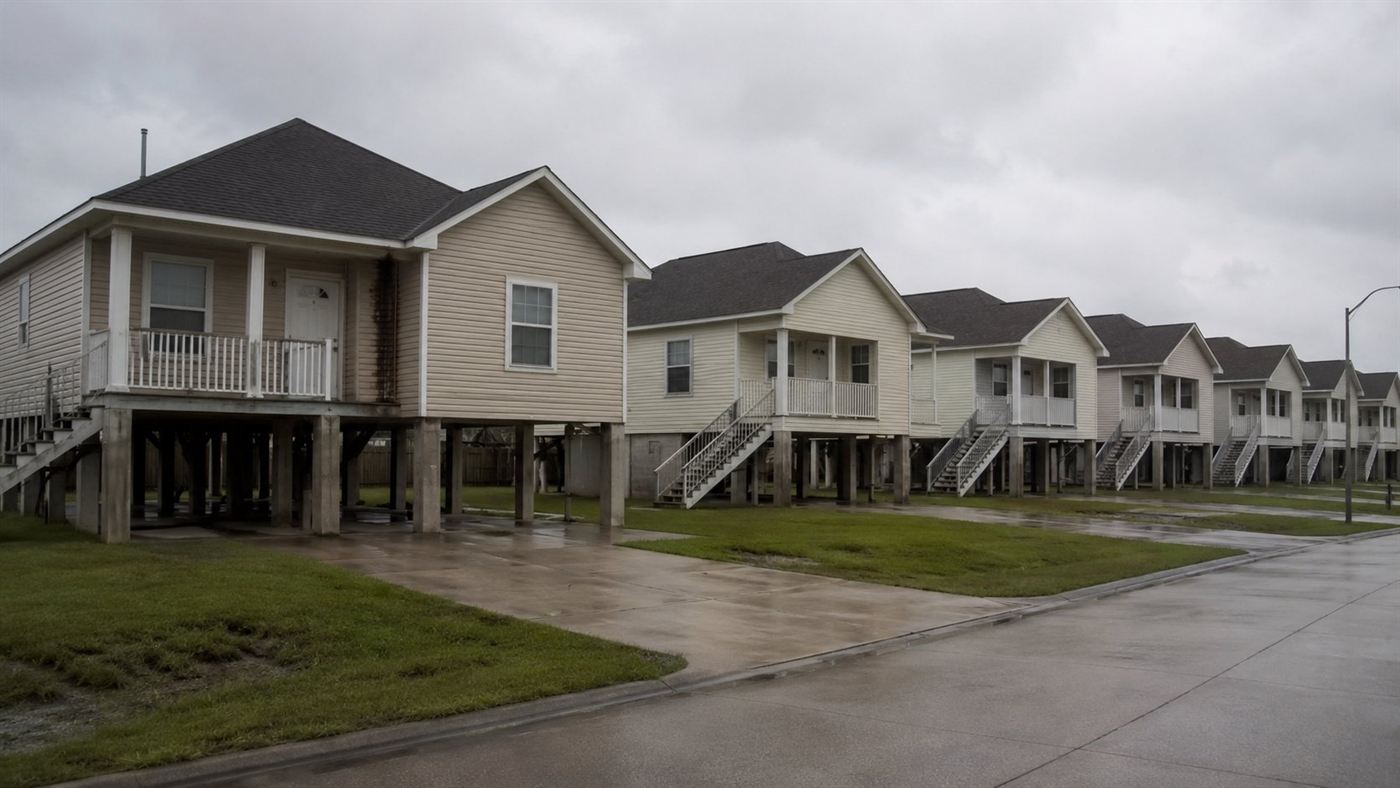
By 2018, Naquin had seen enough. He urged the US Department of Housing and Urban Development directly to revoke the grant. It was not revoked. Construction of the New Isle subdivision in Gray, Louisiana, 40 miles north of the old island, proceeded anyway. Thirty-seven families moved there beginning in August 2022.
A September 2025 investigation by the Louisiana Illuminator found that residents were dealing with homes that had leaking doorframes, malfunctioning appliances, and yards that pooled standing water, in properties that were barely three years old. Of the original $48.3 million, just under $1.4 million remained as of October 2024.
Chief Deme Naquin, who now leads the Jean Charles Choctaw Nation, did not hide his frustration. "We thought we were going to have a community and we were going to be able to own and run it as a tribe," he told reporters in 2025. "Once that money was awarded, we were pretty much pushed away."
Starting again, this time on their own
The tribe is not finished. Chief Deme Naquin and the Jean Charles Choctaw Nation are building a new resettlement plan, one that excludes the federal government this time. The goal is what the original project was always supposed to be: a place where scattered tribal members can choose to come home, controlled and run by the people who actually belong to it.
There is something almost circular about this. Their ancestors came to Isle de Jean Charles specifically to build something for themselves, away from the reach of a government that wanted them somewhere else. Nearly 200 years later, the same instinct is being called on again, with the same distrust of outside plans and the same conviction that the people who know this community best are the ones who should be making its decisions.
The stakes reach far beyond one island. Climate researchers estimate that roughly 13 million Americans live in coastal zones facing chronic flooding by 2100. Isle de Jean Charles is not an anomaly. It is a preview. The questions it raises about who decides, who pays, and what a displaced community actually needs are already being asked in Miami, Houston, and across dozens of Pacific island nations. What the Biloxi-Chitimacha-Choctaw learned is that moving people and rebuilding a community are not the same thing.
The honest catch
The destruction of Isle de Jean Charles was not caused by climate change alone. A large part of the damage was done by the fossil fuel industry, which dredged thousands of miles of canals through Louisiana's coastal marshes to reach oil and gas infrastructure, letting saltwater kill the wetlands that once protected the island. The companies that built those canals have not been required to contribute to the cost of the relocation.
The $48.3 million came from a federal disaster resilience fund, not from the industries that helped create the disaster. And the Biloxi-Chitimacha-Choctaw are recognized as a tribe by the state of Louisiana but not by the federal government, a status that severely limited their legal standing when the project changed beneath them. The gap between a house and a home, between a relocation and a restoration, is exactly where the money went.
The tribe that survived the Indian Removal Act by retreating to Isle de Jean Charles, endured a century of industrial destruction, and held together through a string of hurricanes is still here. The island is nearly gone. The government plan meant to help is now studied as a cautionary tale. And the tribe, as it has done before, is writing its own next chapter.
When climate change forces an entire community to move, who should be responsible for making sure the new place is actually a home and not just a house, the government that funded the move, the industries that helped cause it, or the community itself? Tell us in the comments.