A tiny rock off Japan called Hashima Island was once the most densely crowded place on Earth, over 5,000 people mining coal under the sea, until oil emptied it almost overnight
Hashima Island Gunkanjima, also called Battleship Island, is a concrete ruin in the sea off Nagasaki. For a few decades it was the most crowded place humanity has ever built, more than 5,000 people stacked on a coal mine the size of a few city blocks, and then it died almost overnight.
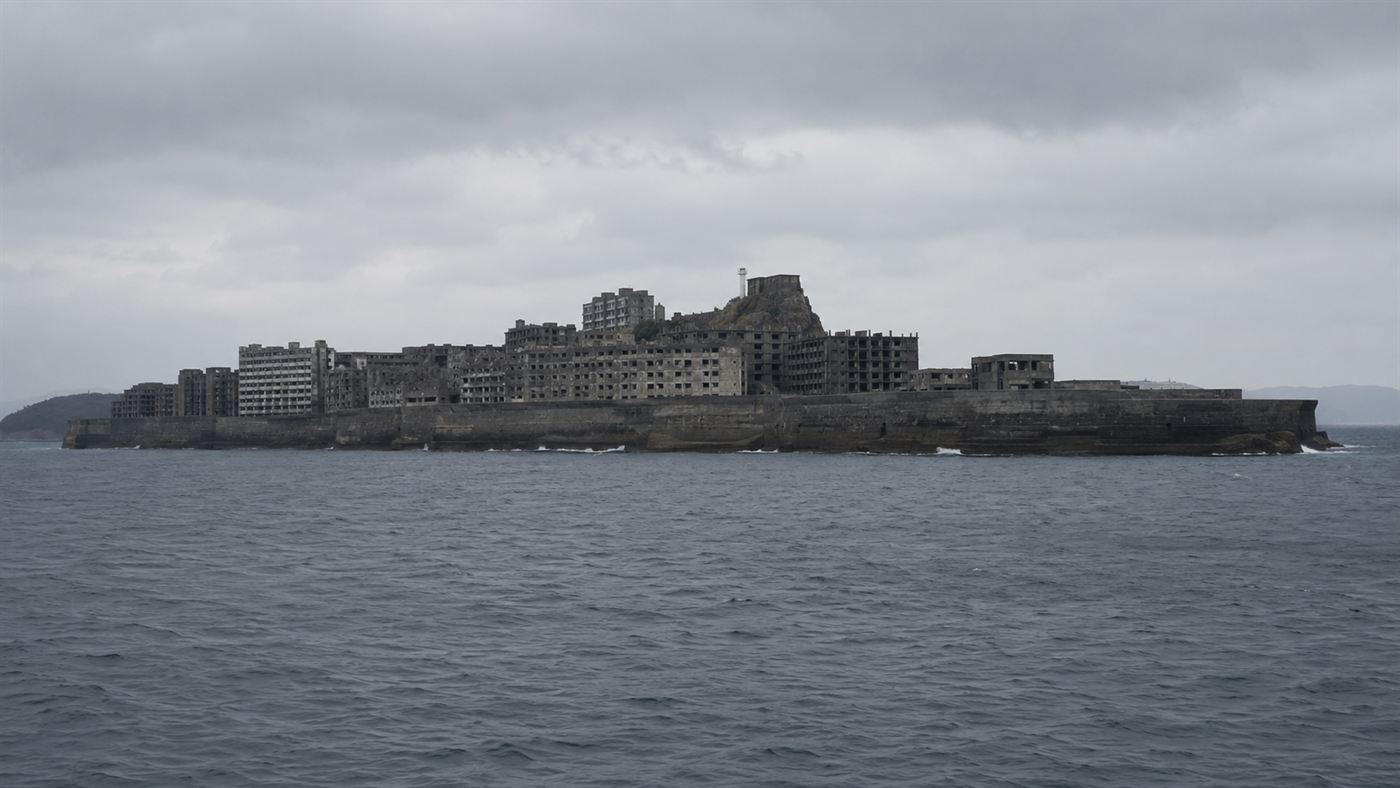
Hashima Island, nicknamed Gunkanjima for its battleship silhouette, sits empty off Nagasaki. Illustration: Watts & Wild.
Hashima Island barely deserves the word island. It is a slab of rock and concrete in the sea off Nagasaki, smaller than many city parks, wrapped in a high seawall that makes it look, from a passing boat, like a warship riding low in the water. For a stretch of the twentieth century, this speck held more people per square meter than anywhere on the planet.
At its peak in 1959, more than 5,000 people lived on its 6.3 hectares, packed into Japan's first big concrete apartment blocks, all of them there for one reason: the coal mine that ran deep under the seabed. Then the country switched from coal to oil, the mine closed, and within weeks the island stood completely empty.
Hashima Island, or Gunkanjima, is an abandoned island about 15 kilometers off Nagasaki, Japan. From 1887 it was an undersea coal mine owned by Mitsubishi, and in 1959 its 6.3 hectares held 5,259 people, the highest population density ever recorded. When Japan shifted from coal to oil, the mine closed and the island was emptied in 1974.
How did so many people fit on Hashima Island Gunkanjima?
The numbers are hard to believe even when you read them twice.
According to the record set out by Wikipedia, the island's 5,259 residents in 1959 worked out to about 835 people per hectare across the whole rock, and roughly 1,391 per hectare in the residential quarter, the densest human settlement ever measured.
The only way to fit that many people on so little ground was to build upward and leave nothing out.
In 1916 the mine's owners put up what is considered Japan's first large reinforced concrete apartment block, a seven-story building designed to shrug off typhoons and stack miners on top of one another.
Dozens more followed, knitted together into a single vertical town with a school, a kindergarten, a hospital, a temple, a cinema, shops, a public bath and a swimming pool.
There was no soil and not a single tree, so residents planted gardens on the concrete rooftops just to see something green.
Personal space was measured in inches, with some families living in a single cramped room, an extreme version of the squeeze that is now forcing the Swedish mining town of Kiruna to pick itself up and move.
Why build a city on a rock in the sea?
The answer, as on so much of this site, comes down to energy.
Hashima sat on top of a rich seam of coal running out under the ocean floor, and from 1887 that coal was worth almost any amount of trouble to reach.
Mitsubishi bought the island and turned it into a single-purpose machine for hauling coal up from beneath the sea, the fuel that powered Japan's furious rush to industrialize.
That coal fed the steel mills and steamships of a country racing to catch up with the West, which is why a barren rock was worth covering in concrete towers, the same hard bargain with the ground that built the underground opal town of Coober Pedy.
To make room for everyone, the company kept extending the island with walls and landfill until the sea was held back by a perimeter of concrete.
The result was less a town than a coal mine with a city bolted to its roof.
The island shaped like a battleship
Seen from the water, the wall of buildings behind the seawall has an unmistakable silhouette.
It looks like a warship, and that is exactly how it got its nickname.
Gunkanjima means Battleship Island, and the resemblance to a Japanese warship of the era was close enough that, by local legend, it was once mistaken for a real one.
The likeness is the reason Battleship Island became a pop-culture landmark, standing in as a villain's lair in the James Bond film Skyfall.
It is a strange afterlife for a place built purely to dig, the same way an artificial island built for jets became Japan's slowly sinking Kansai Airport.
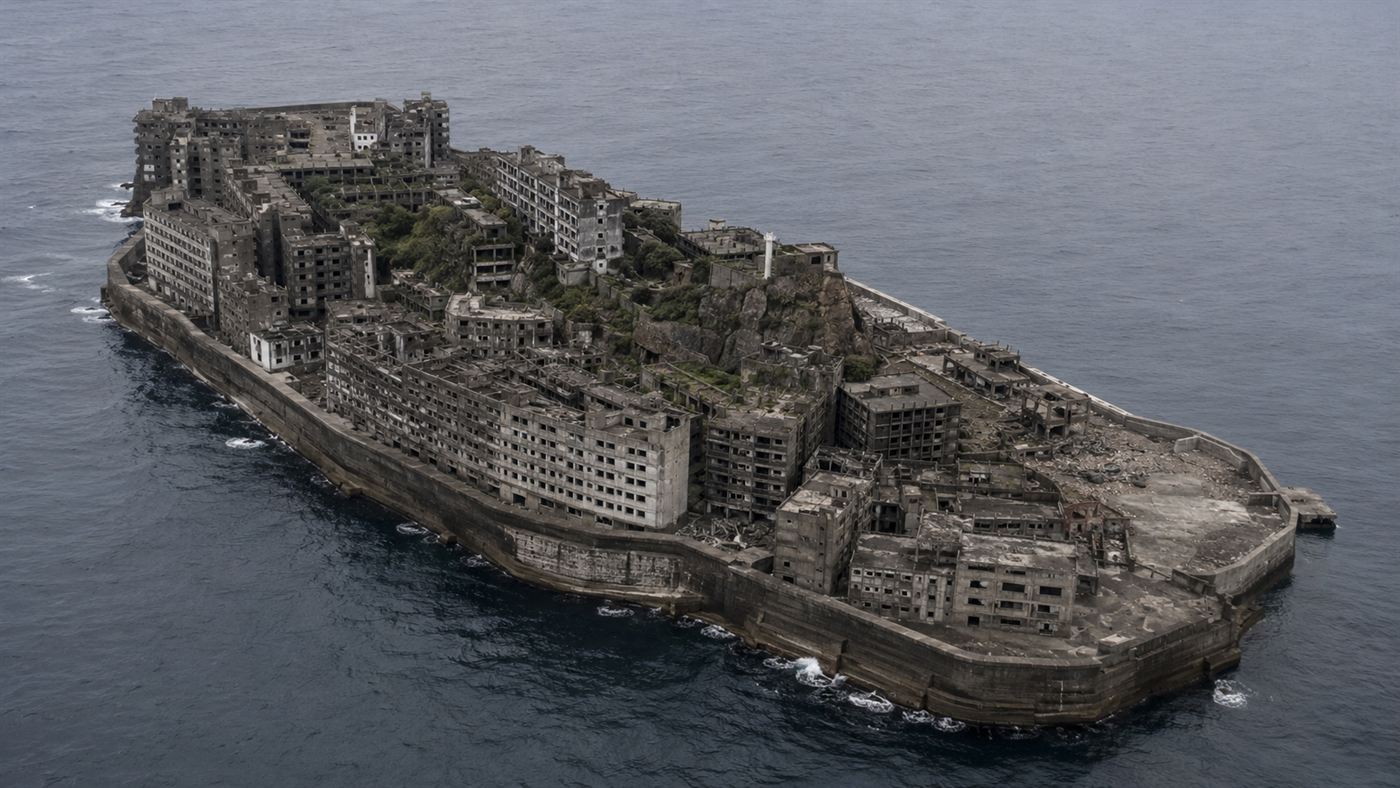
From the densest city on Earth to a ghost in weeks
What killed Hashima was not a disaster but a change of fuel.
Through the 1960s, Japan swapped coal for cheaper, cleaner imported oil, and coal mines closed across the country one after another.
A place that had been the most crowded on Earth was abandoned in a matter of weeks, families leaving furniture, televisions and toys behind as they caught the boat to the mainland.
The same shift from coal is still playing out, more gently, where Britain just shut its last coal power plant after 142 years.
On Hashima it happened all at once, and the sea and the weather have been pulling the empty towers apart ever since.
The dark seam under the coal
The ruin is photogenic, but its history is not.
From the 1930s until the end of the Second World War, conscripted Korean civilians and Chinese prisoners of war were forced to mine Hashima's undersea shafts under brutal conditions.
They worked in heat and gas with poor equipment, were housed apart from the Japanese miners, and were not free to leave.
Estimates of how many died on the island during those years range from around 137 to well over a thousand, from accidents, exhaustion and malnutrition.
The laborers had their own names for the place, and they were not romantic ones, calling it Jail Island and Hell Island.
That memory is why the island's modern fame sits so uneasily with many people in Korea and beyond.
The honest catch
Hashima today is sold as a thrill, a crumbling ghost city you can visit by tour boat, and that framing hides as much as it shows.
When the island was named a UNESCO World Heritage Site in 2015 as part of Japan's Meiji industrial story, the decision drew immediate protest, and in 2021 UNESCO criticized Japan for failing to tell the full history of forced labor at the site.
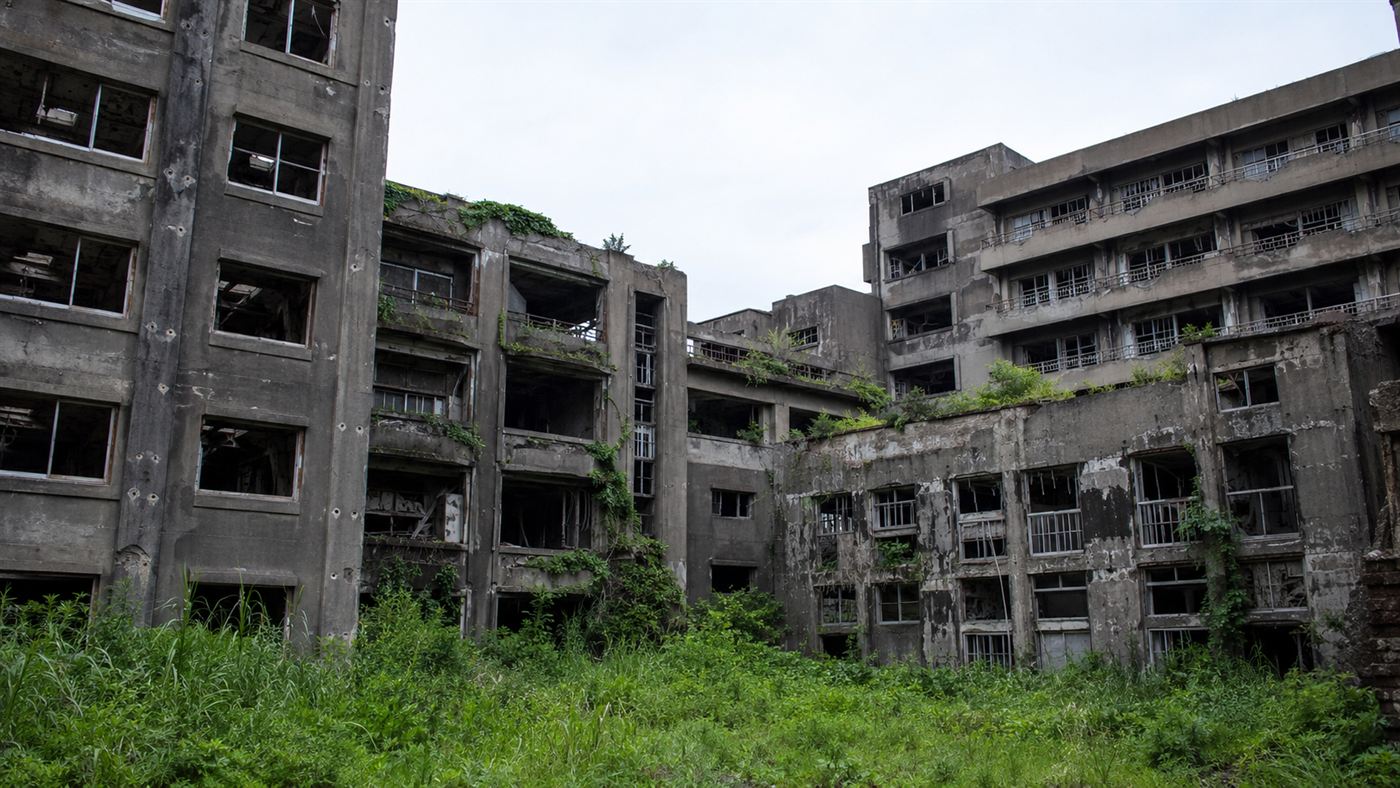
The concrete is also genuinely dangerous now, decades of salt air and typhoons having left the buildings cracked and collapsing, so visitors are kept to a short fixed walkway.
Nature is taking the rest of the abandoned island, with weeds and birds reclaiming the apartments where thousands once slept.
It is worth remembering that the same engineering marvel was, for some of the people who built its wealth, the worst place on Earth.
Hashima Island packed more human life into less space than anywhere before or since, then lost all of it the moment the world stopped wanting its coal.
It is a whole century of boom, brutality and collapse fossilized on a single rock you can see from a boat.
Should a place like this be preserved as a tourist marvel, remembered mainly for the people who suffered there, or simply left to the sea? Tell us in the comments.