In Taiwan, electric scooters do not charge: their riders pull into a green kiosk, swap two drained Gogoro batteries for fresh ones in seconds, and ride away
Charging an electric vehicle takes time most riders do not have. Gogoro's answer, built across Taiwan, is to skip charging entirely: pull up to a kiosk, swap your dead batteries for charged ones in a few seconds, and go. The network now handles hundreds of thousands of swaps a day.
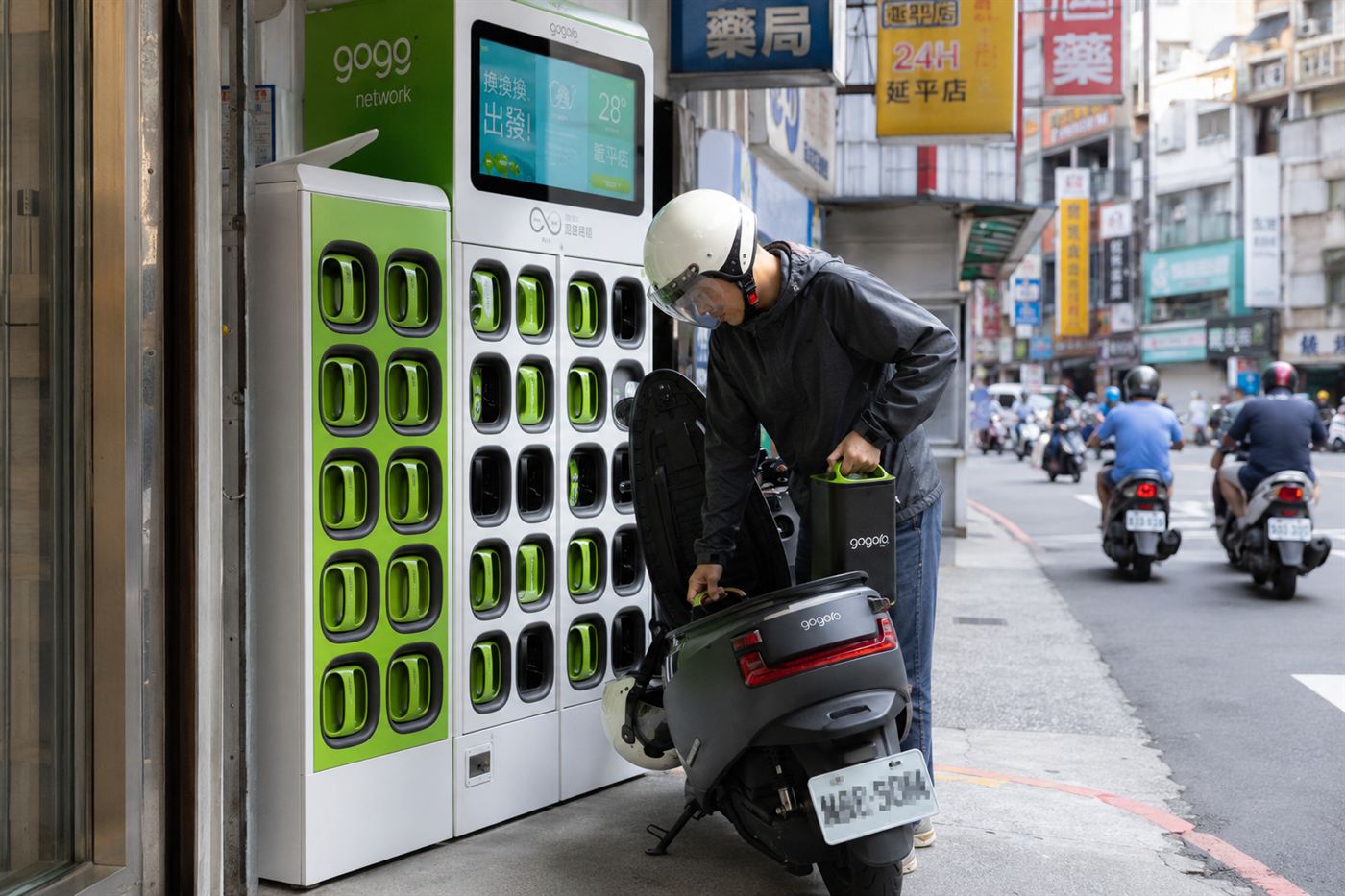
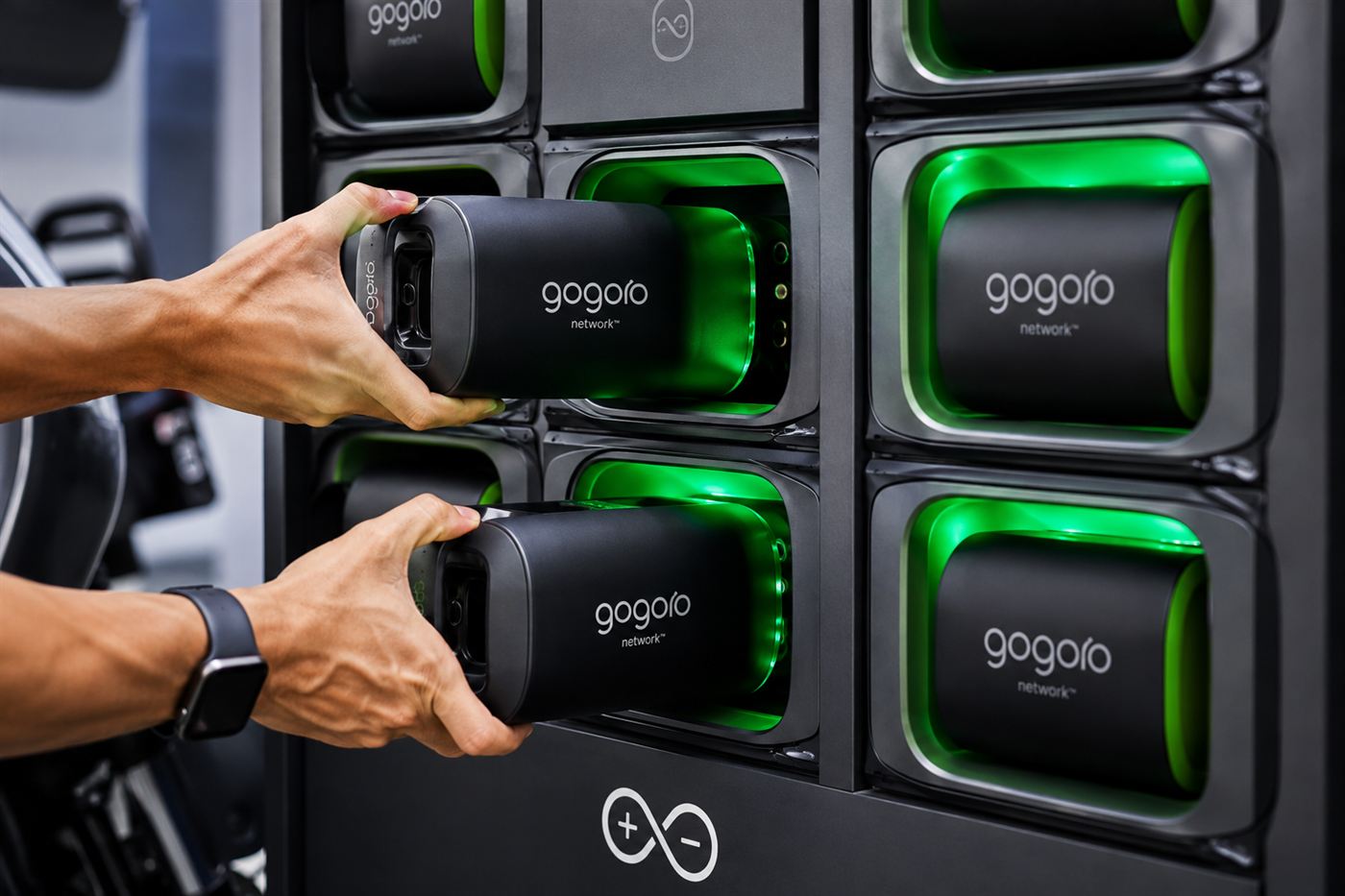
A rider swaps batteries at a green Gogoro GoStation in seconds. Illustration: Watts & Wild.
Gogoro solved the slow part of electric vehicles by removing it. The single biggest frustration of going electric is charging: even a fast charge takes far longer than splashing petrol into a tank, and for a city full of scooter riders who live in apartments with nowhere to plug in, charging at home is barely an option at all. So a Taiwanese company looked at the problem and decided that the rider should never have to charge anything. They should simply swap.
The idea has taken over an entire country's two-wheelers. As the company is documented, Gogoro runs a battery-swapping network of more than twelve thousand kiosks handling on the order of hundreds of thousands of swaps every single day, and its batteries now power the large majority of Taiwan's electric scooters. Refuelling has become a matter of seconds.
What is Gogoro? Gogoro is a Taiwanese company whose riders refuel electric scooters not by charging but by swapping. At a network of green kiosks called GoStations, a rider exchanges two drained batteries for fully charged ones in seconds, paying a monthly subscription. The network handles hundreds of thousands of swaps a day.
Gogoro: refuelling in seconds, not hours
The heart of Gogoro is the swap itself, and it is almost comically simple. A rider pulls up to a GoStation, a tall, bright green cabinet that looks like an oversized vending machine standing on the pavement. They lift the two depleted batteries out from under the scooter's seat, push them into empty slots in the cabinet, and pull out two that are fully charged. The whole exchange takes a few seconds, less time than queuing to pay for fuel, and the rider is back in the traffic before the batteries they handed in have even begun to recharge.
That speed is the entire point. By turning a long wait into a quick swap, Gogoro made an electric scooter as convenient to refuel as a petrol one, which removed the single objection that keeps many people from going electric.
The battery is a service, not a thing you own
The clever twist behind Gogoro is that you never actually own the battery in your scooter. You buy the scooter, but the batteries belong to the network, and you pay a monthly subscription for the right to keep swapping them. That arrangement quietly solves several problems at once. You never worry about your battery wearing out, because you are always handed a healthy one. You never wait for a charge. And you never need a charging point at home, which matters enormously in dense cities where most people park on the street or in shared garages.
In effect, the battery becomes like a bottle of cooking gas: a standard unit you exchange when it is empty rather than a fixed part you have to maintain. The network takes care of charging, cooling and replacing the batteries; the rider just keeps swapping.
Built for a nation of scooters
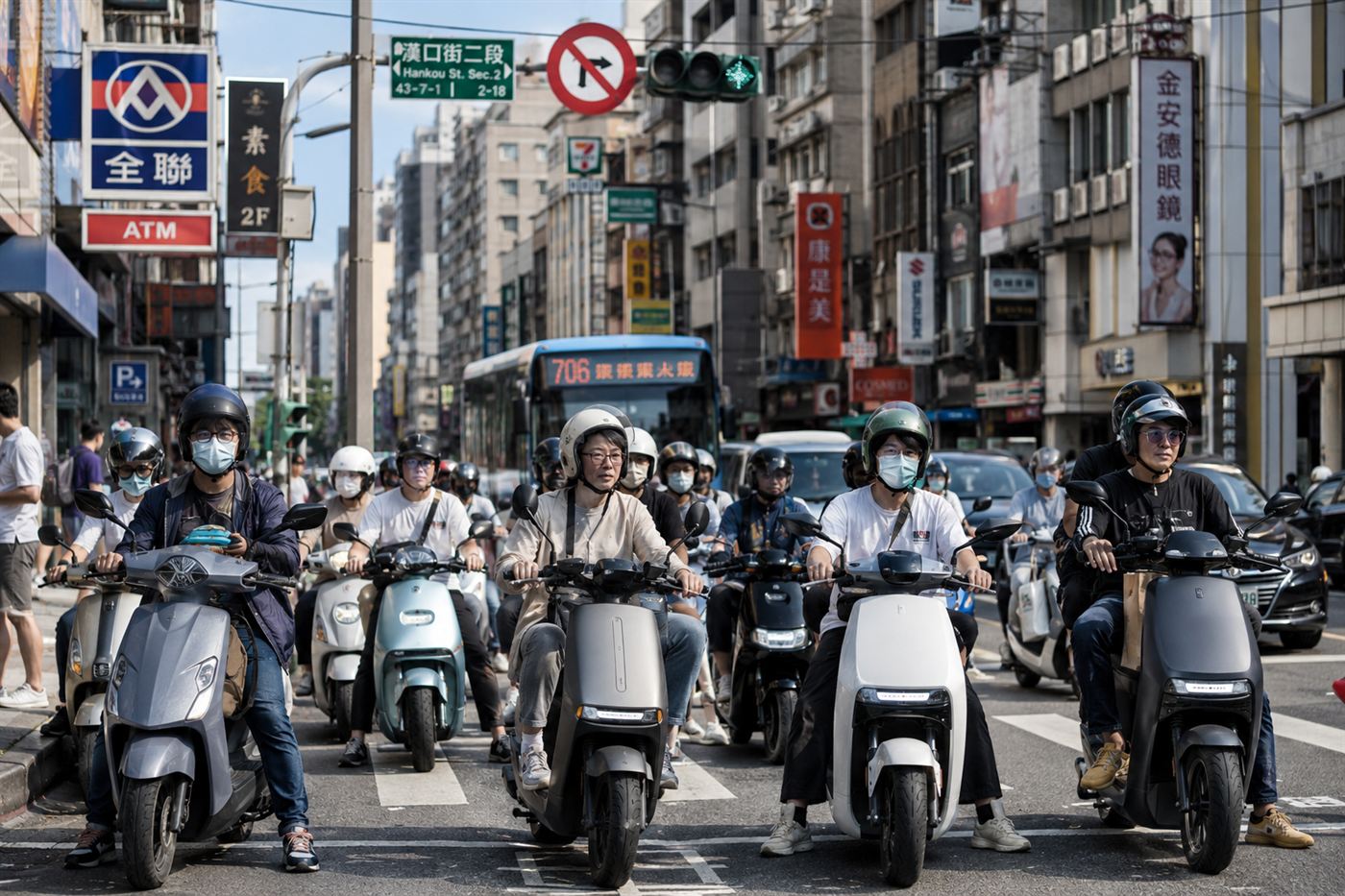
It is no accident that Gogoro grew up in Taiwan. The island is one of the most scooter-dense places on Earth, with millions of two-wheelers weaving through its cities, and for decades many of them were noisy, smoky two-stroke machines that fouled the air. Short trips, crowded streets and a lack of home charging made Taiwan an almost perfect place for swapping rather than plugging in. The model caught on so completely that Gogoro batteries now power around nine in ten of the island's electric scooters, and Taiwan is heading toward having more battery-swap stations than petrol stations.
The numbers behind the network
The scale that Gogoro has reached is what makes it more than a gadget. The network runs over twelve thousand swap stations, keeps more than a million smart batteries in circulation, serves hundreds of thousands of riders, and processes well over a third of a million swaps a day. It was founded back in 2011 by Horace Luke, a designer who had been chief innovation officer at the phone maker HTC, together with Matt Taylor, and the first Smartscooter was unveiled at the big Las Vegas electronics show in 2015. What looked then like a stylish toy has become a piece of national infrastructure.
A grid battery hiding in plain sight
There is one more layer to Gogoro that is easy to miss. Every one of those thousands of cabinets is stuffed with batteries quietly charging, which means the whole network is also an enormous, distributed store of electricity spread across the country. Gogoro can choose when to charge all those batteries, soaking up power when electricity is cheap and clean and easing off when the grid is strained, and it has worked with the local utility to help balance the grid. The system built to refuel scooters turns out to double as a giant battery for the electricity network itself, a happy bonus that a tankful of petrol could never provide.
The honest catch
Battery swapping is not a magic answer to everything, and it is worth being clear why. Gogoro works so well partly because of Taiwan's specific conditions: a dense, scooter-loving population, supportive government policy, and a single network that reached critical mass so that there is always a station nearby. Two-wheelers also make swapping easy, because their batteries are small enough to lift by hand; car batteries weigh hundreds of kilograms and come in no standard shape, which is exactly why swapping has mostly failed to catch on for cars. And because the battery is a subscription, riders are tied to the network and never truly own the most expensive part of their vehicle.
Even so, the achievement is real and unusual. Plenty of clever electric ideas never escape the demonstration stage, but Gogoro quietly rewired how an entire island refuels its scooters, swapping hundreds of thousands of batteries a day, cutting the smog of a million two-strokes, and building a national grid battery almost by accident. For two wheels in a crowded city, it may be the most convincing answer yet to the problem of charging.
A whole island that refuels its scooters by swapping a battery in seconds, never charging at all. Would you rather swap a battery in seconds or plug in and wait? Tell us in the comments.
Related reading: The electric motorcycles bringing battery swapping to Africa's cities.