Instead of charging an electric car, China's NIO swaps the whole battery for a full one in about three minutes, and it has now done this more than 100 million times across nearly 4,000 robot stations
Charging an electric car is the one thing that still cannot quite match a petrol fill-up. The Chinese maker NIO has spent years on a different answer: do not charge the battery at all, swap it. Drive in, and a robot trades your empty pack for a full one in about three minutes.
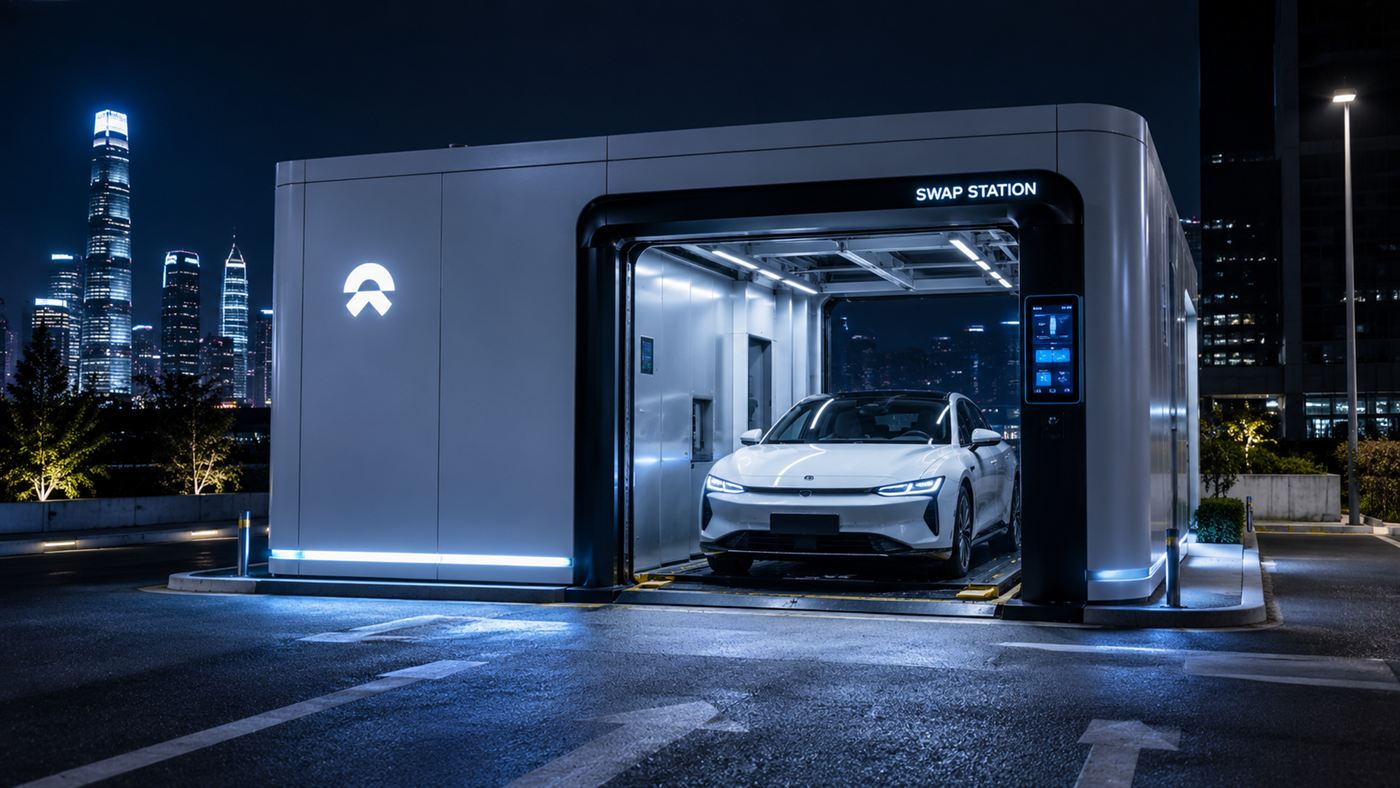
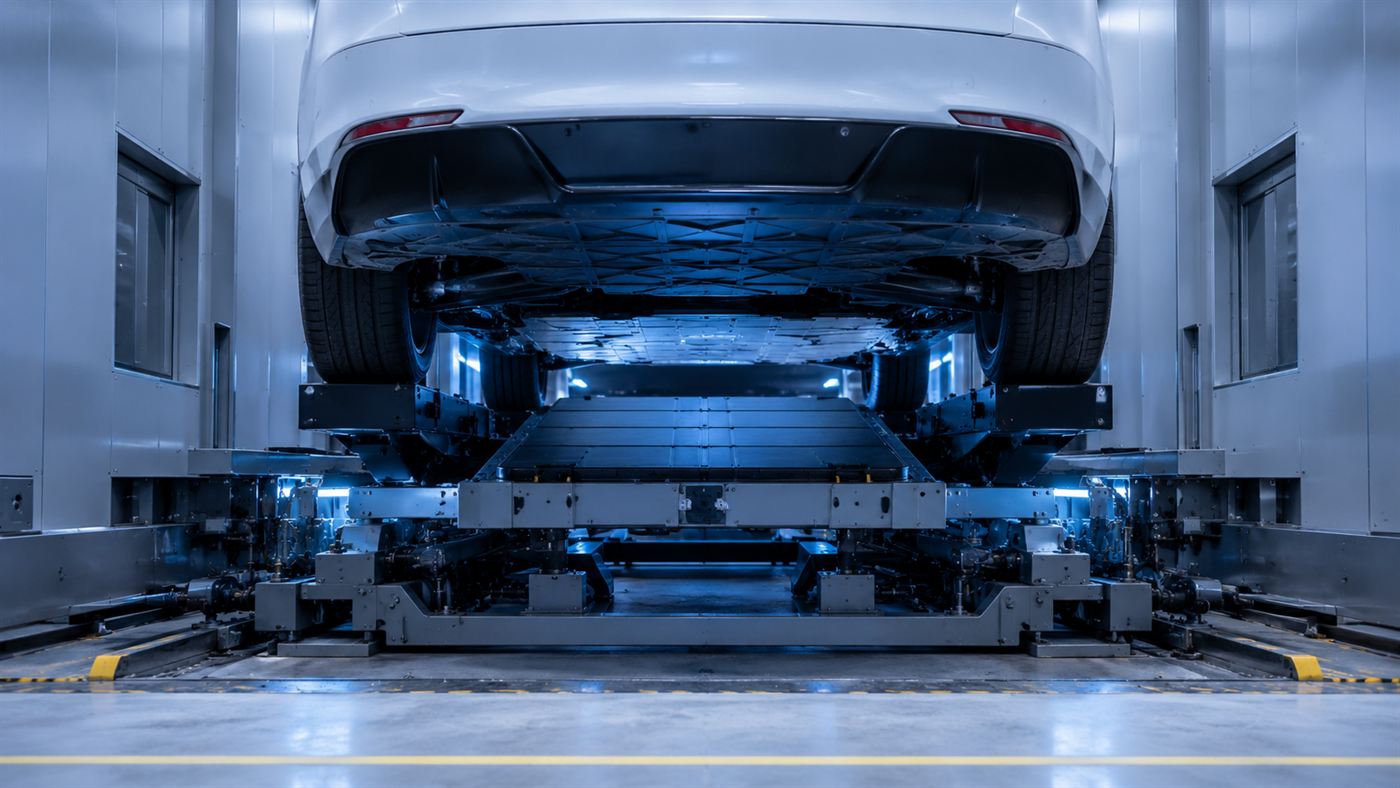
A NIO swap station does in three minutes what a charger does in thirty or more. Illustration: Watts & Wild.
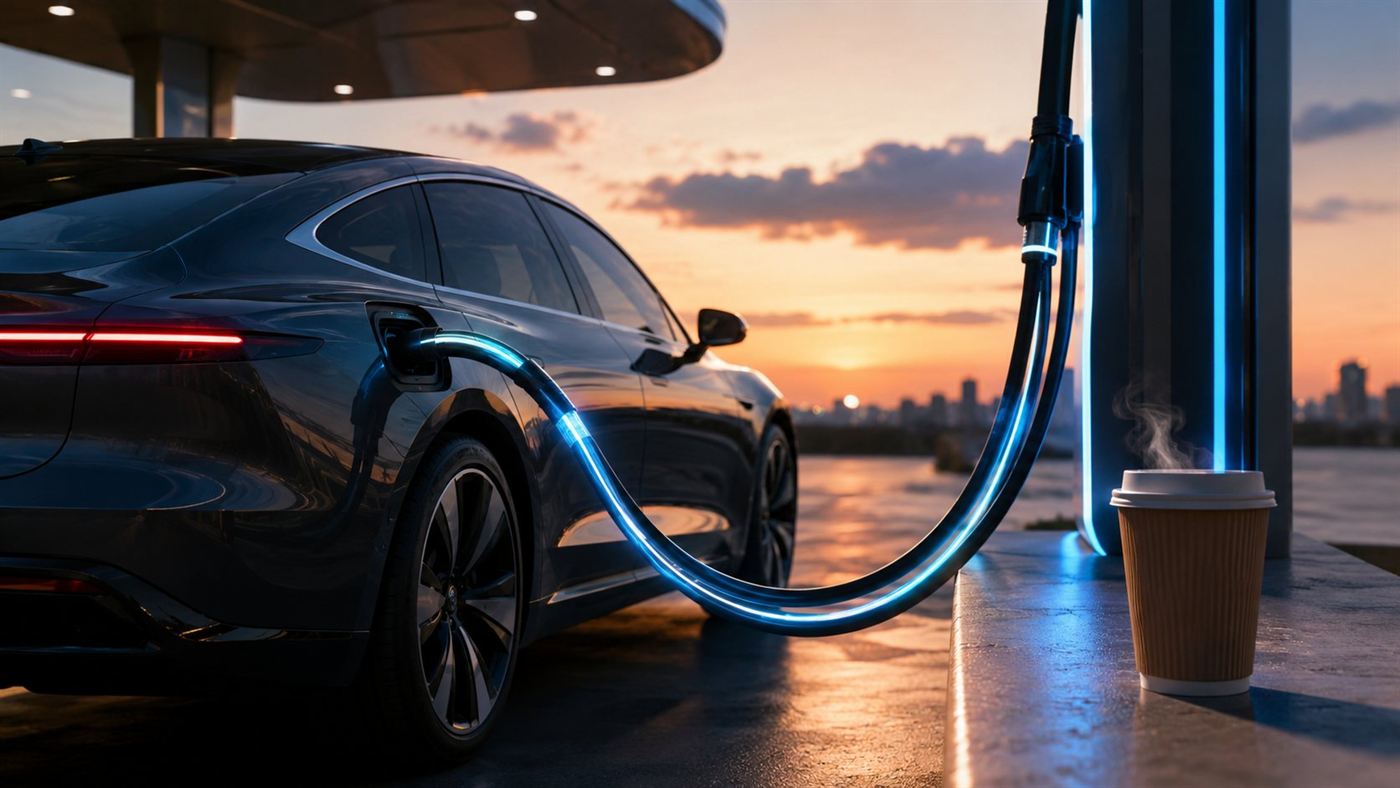
The biggest remaining gripe about electric cars is not range. It is the wait. Even a fast charger takes far longer than the few minutes it takes to fill a tank with petrol, and on a long trip that adds up. Most of the industry is trying to fix this by making chargers faster. The NIO battery swap sidesteps the problem entirely.
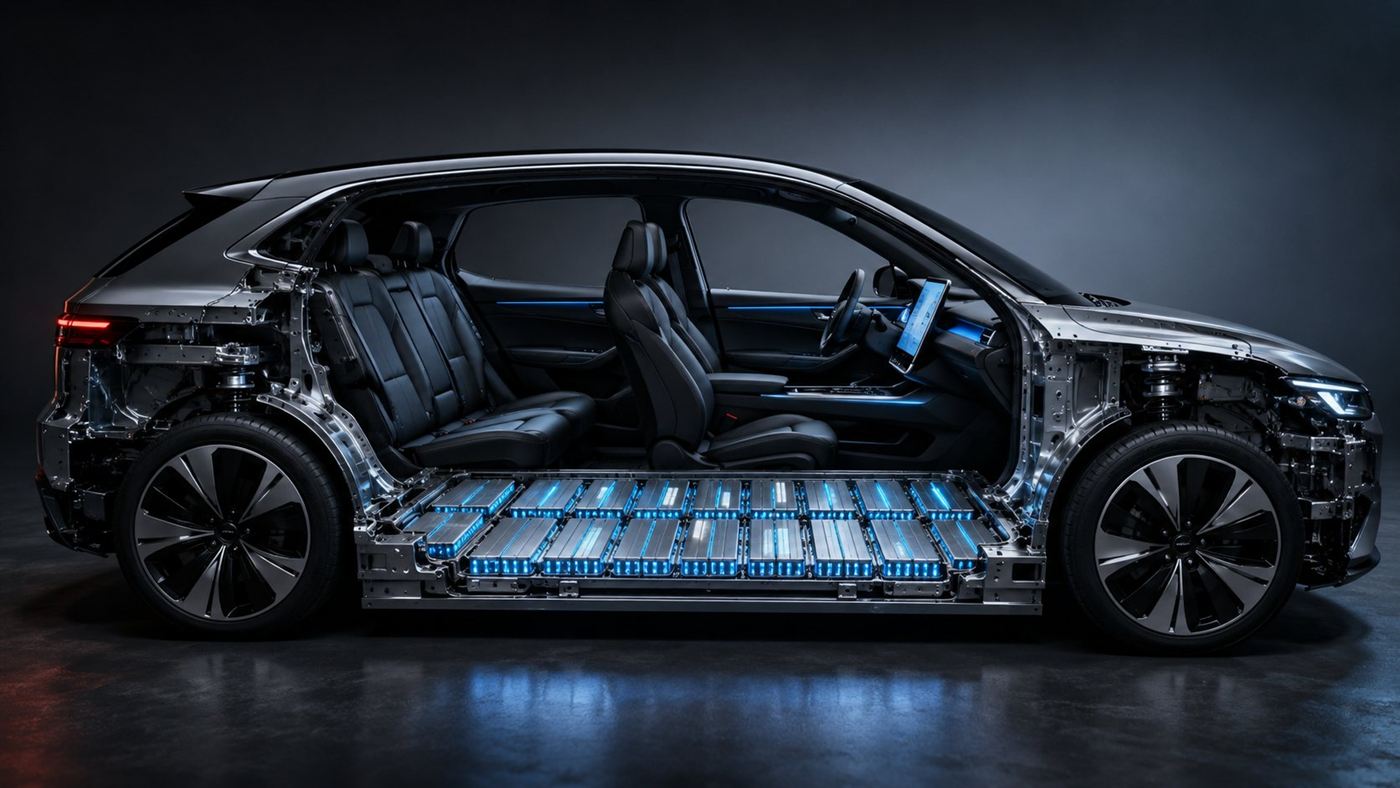
Its idea is the battery swap. You drive your car into a station, stay in your seat, and an automated system underneath lifts the car slightly, unbolts the depleted battery pack from the floor, and slides a fully charged one into its place. The whole thing takes around three minutes, no plugging in, no waiting around. The depleted pack stays behind to be charged slowly and safely for the next driver.
The numbers behind the network
What started as a gimmick has become an enormous piece of infrastructure. As CnEVPost tracked through 2025, NIO crossed its 90 million cumulative swap milestone in October that year, and by early 2026 it had passed 100 million swaps and was approaching 110 million. It now runs on the order of 3,800 swap stations across China, more than a thousand of them placed along highways for long-distance trips.
The throughput is the part that is hard to picture. According to Interesting Engineering, NIO once carried out 145,000 swaps in a single 24-hour period, and across its network a car drives away with a fresh battery on average roughly once a second. This is no longer a demo. It is a working, nationwide alternative to plugging in.
Why the NIO battery swap beats charging
Speed is the obvious win, but it is not the only one. Because the battery is rented rather than owned, NIO sells the car and the battery separately, which knocks a large chunk off the up-front price and means you never have to worry about the pack wearing out, you simply get a different one each time. The station also charges its packs gently in the background, which is kinder to the batteries than repeated fast charging.
There is a quieter advantage, too. Because the packs are separate from the car, they can be upgraded over time. A driver who bought a NIO years ago can swap into a newer, denser battery without buying a new vehicle, something no fixed pack can offer. The swap model treats the battery as a service that keeps improving, rather than a fixed part that only ages.
The honest catch
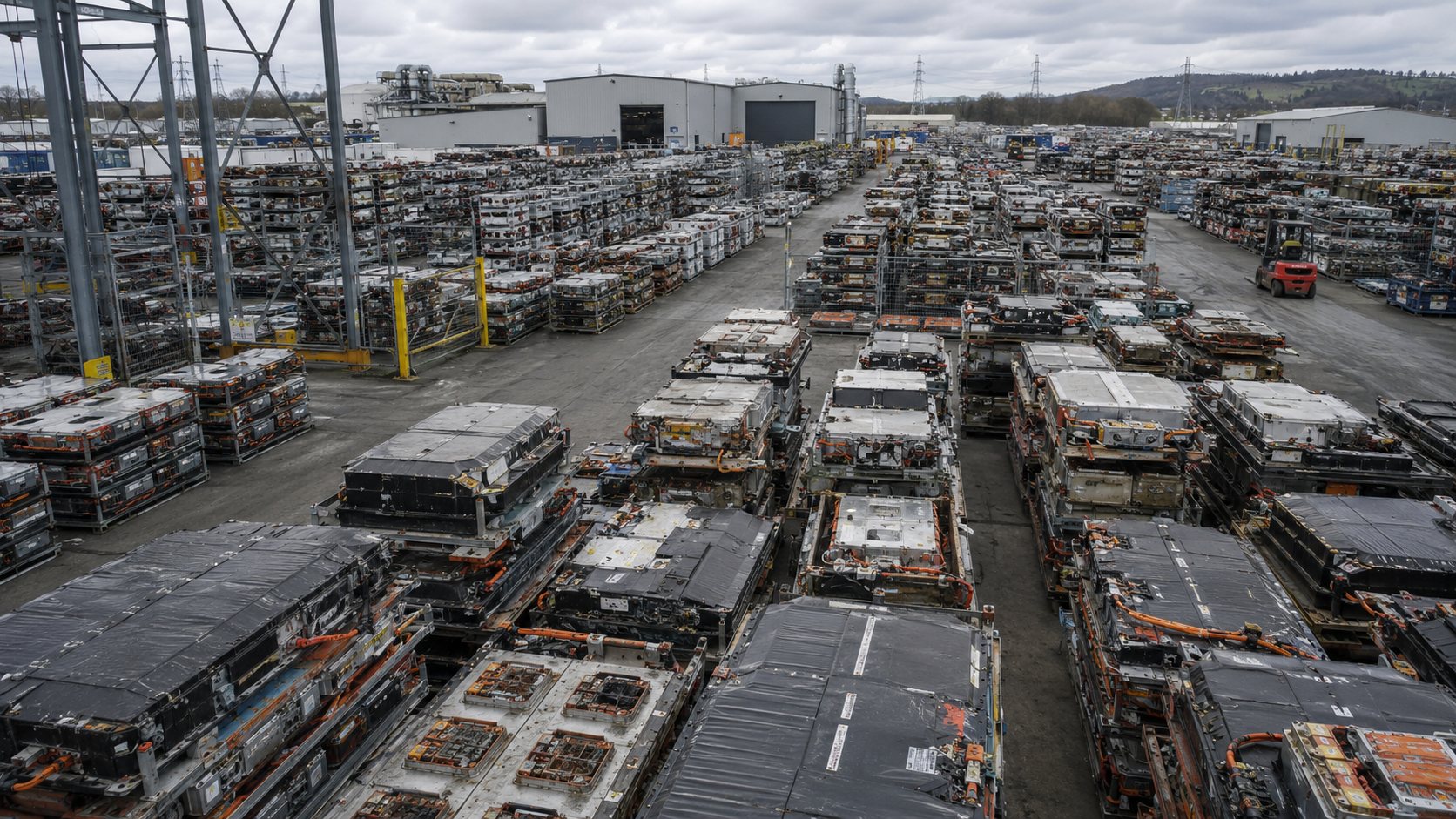
For all its cleverness, battery swapping has real limits, and it is worth being straight about them. A swap station is far more expensive to build than a charger, full of robotics and a stock of spare batteries sitting around, and the economics only work at high volume. That trap is exactly what sank Better Place, the $800 million startup that bet on battery swapping a decade too early. NIO has poured huge sums into the network, and analysts only expect the swap business to break even around the end of 2026.
It also only works if the batteries are standardised, which in practice means it works for NIO cars and almost nothing else. A petrol pump fits every car; a NIO swap station fits NIO. Meanwhile rivals are pushing ultra-fast charging that can add hundreds of kilometres in five minutes, narrowing the time advantage that swapping was built to exploit. Whether the world copies this model or treats it as a clever Chinese detour is still genuinely open.
Why swapping matters
Even if battery swapping never spreads much beyond NIO, it has proved something useful: that the slow-charging problem has more than one solution, and that you can take the wait out of an electric car if you are willing to rethink who owns the battery. A hundred million swaps is not a science experiment. It is a habit, for millions of drivers who simply pull in and pull out three minutes later with a full pack.
The race to make electric cars as convenient as petrol ones is being run on two tracks at once, faster chargers on one side and battery swaps on the other, and NIO has shown the second track can carry real traffic. Would you rather wait at a fast charger or swap your whole battery in three minutes and never own it at all? Tell us what you think in the comments.
Related reading: BYD's new megawatt platform charges an EV with about 400 km of range in just 5 minutes at a record 1,000 kW, roughly as fast as a petrol fill-up.