Firefighters wrapped the base of General Sherman, the largest tree on Earth, in aluminum foil in 2021 to save it from wildfire, because the giant sequoia that needs fire is now being killed by it
In September 2021, crews in Sequoia National Park did something that looked absurd: they wrapped the base of the biggest living thing on the planet in shiny foil. It was not absurd at all. It was a last-ditch effort to keep a 2,200-year-old giant sequoia from burning.
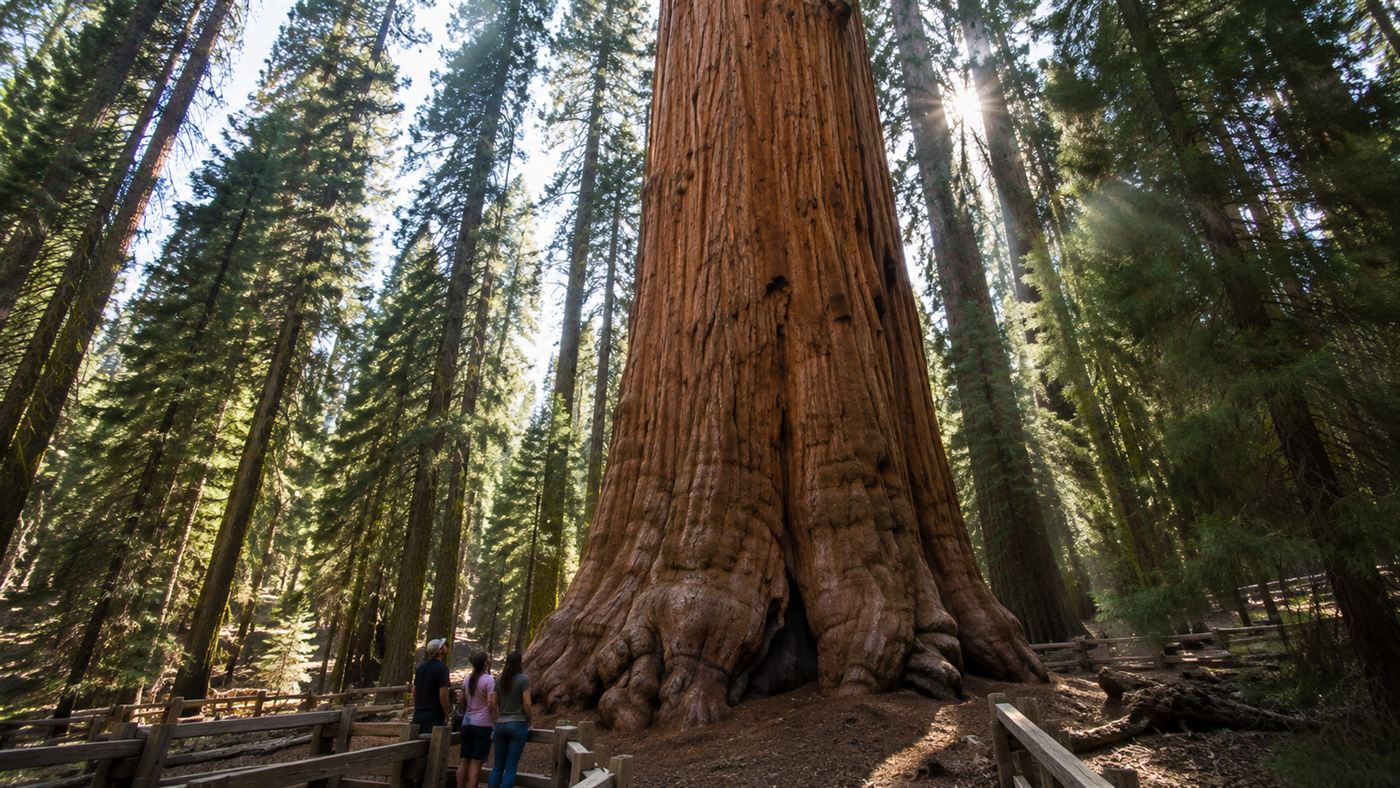
General Sherman, the largest tree on Earth by volume, dwarfs visitors at its base. Illustration: Watts & Wild.
The photographs from that September were surreal: the base of General Sherman, the largest tree on Earth, swaddled in silver like a giant baked potato. General Sherman is a giant sequoia in California's Sequoia National Park, roughly 275 feet tall, more than 36 feet across at the base, and somewhere around 2,200 years old. It weighs an estimated 2.7 million pounds, and in the autumn of 2021 a wildfire was bearing down on it.
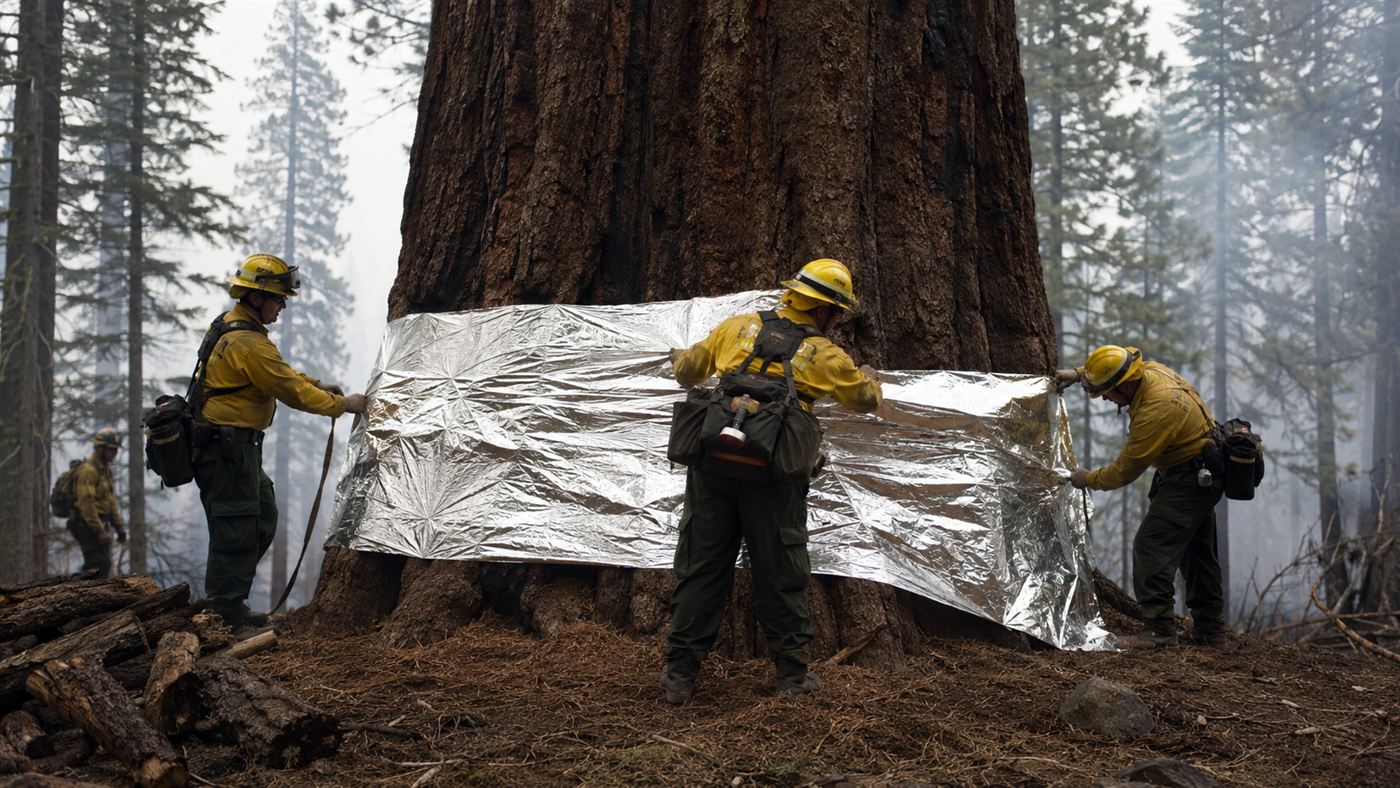
So firefighters did what they could. As NPR reported, crews wrapped the base of General Sherman and other famous trees in aluminum-based burn-resistant material as the KNP Complex Fire closed in. It worked, and the tree survived. But the strange image of a foil-wrapped titan hides a far bigger and more disturbing story about what is happening to these trees.
The short version: in 2021, firefighters wrapped the giant sequoia General Sherman in fire-resistant foil to save it from an advancing wildfire, and it survived. The alarming part is why that was necessary: recent megafires have killed an estimated 13 to 19 percent of all large giant sequoias in just two years, even though these trees evolved to need fire.
Why was the giant sequoia General Sherman wrapped in foil?
The threat in 2021 was the KNP Complex Fire, two lightning-sparked blazes that merged and burned through more than 88,000 acres of Sequoia and Kings Canyon National Parks, including the Giant Forest where General Sherman stands. With the fire approaching some of the most famous trees on Earth, crews raced to protect them by any means available.
They wrapped the trunks of marquee sequoias in fire-resistant foil, raked away brush and dead needles, and ran sprinklers to raise the humidity. It looked improvised because it partly was, but it held. The Giant Forest came through largely intact and General Sherman was undamaged, a rare piece of good news in a brutal fire era. The foil bought time, which is exactly what these ancient trees suddenly need.
Are giant sequoias supposed to survive fire?
Here is the twist that makes this so unsettling. For most of their long lives, giant sequoias are among the most fireproof organisms on the planet. Their bark can grow two feet thick, spongy and full of water and tannins that resist flame, and mature trees routinely stand in fire after fire for thousands of years, blackened but alive.
They do not just tolerate fire, they depend on it. The heat of a passing blaze dries and opens their cones to release seeds, and it clears the shady undergrowth so that sequoia seedlings get the bare, sunny soil they need to sprout. A grove that never burns slowly stops making new trees. For a species like this, the right kind of fire is not a threat at all; it is a requirement for survival.
So why are the big trees dying?
Because the fires changed. As the National Park Service reported, the 2020 Castle Fire alone killed an estimated 10 to 14 percent of all large giant sequoias in the Sierra Nevada, and the 2021 fires took several percent more. In just two years, somewhere between 13 and 19 percent of the world's big sequoias, trees that had survived for millennia, were killed or left dying.
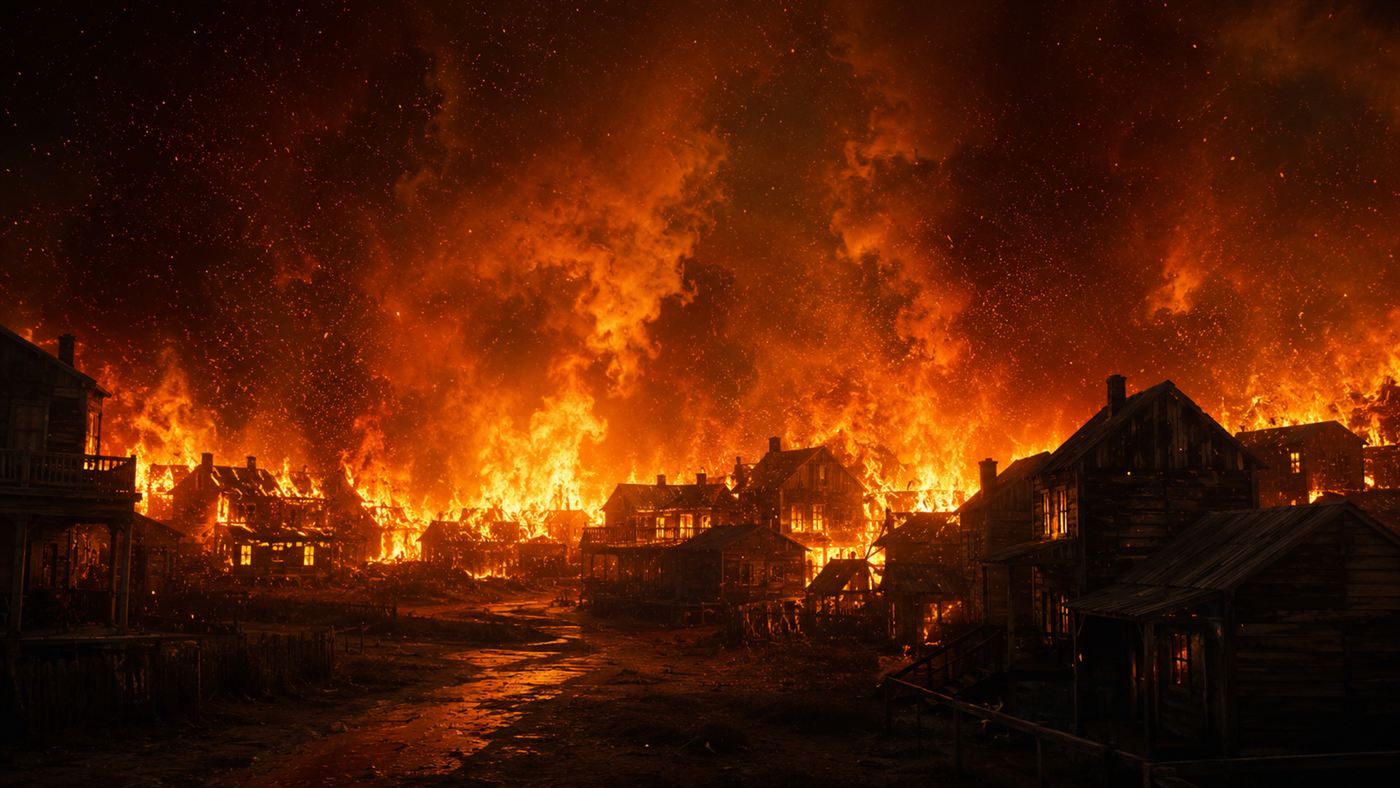
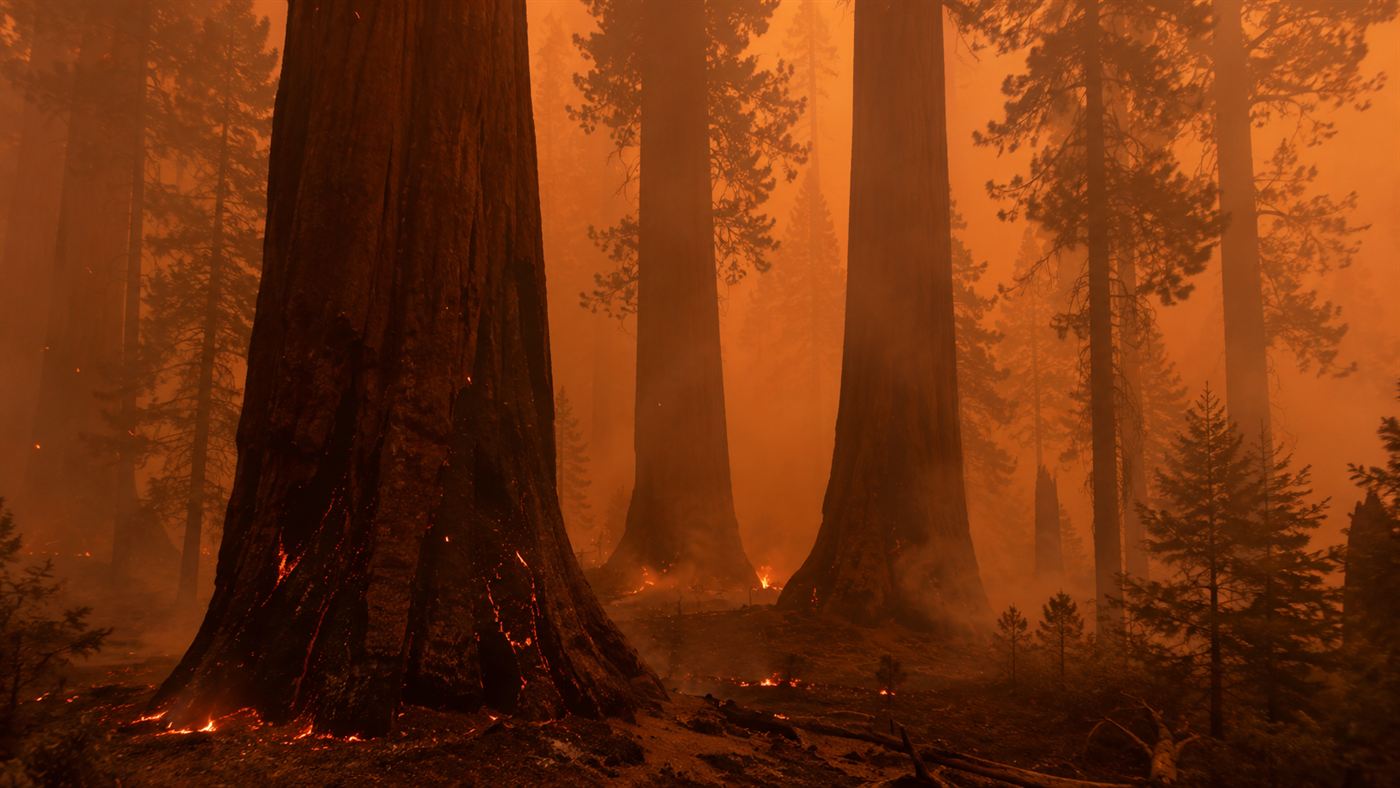
Two things turned helpful fire into a killer. A century of aggressive fire suppression let dead wood and dense young trees pile up in the groves, so when fire finally comes it has enormous fuel to feed on. Layer a hotter, drier climate on top, and 2021 delivered California's hottest summer on record. The result is high-severity megafire that climbs into the sequoias' crowns and cooks them, something even two feet of bark cannot survive. The trees did not get weaker; the fire got stronger.
Can we actually save them?
Foil is not a plan; you cannot gift-wrap a whole mountain range. The real fix is to give the groves back the gentle fire they evolved with, mainly through prescribed burns and thinning that clear out the century of built-up fuel before a megafire can. Where managers had done that work ahead of time, the sequoias fared dramatically better in 2021.
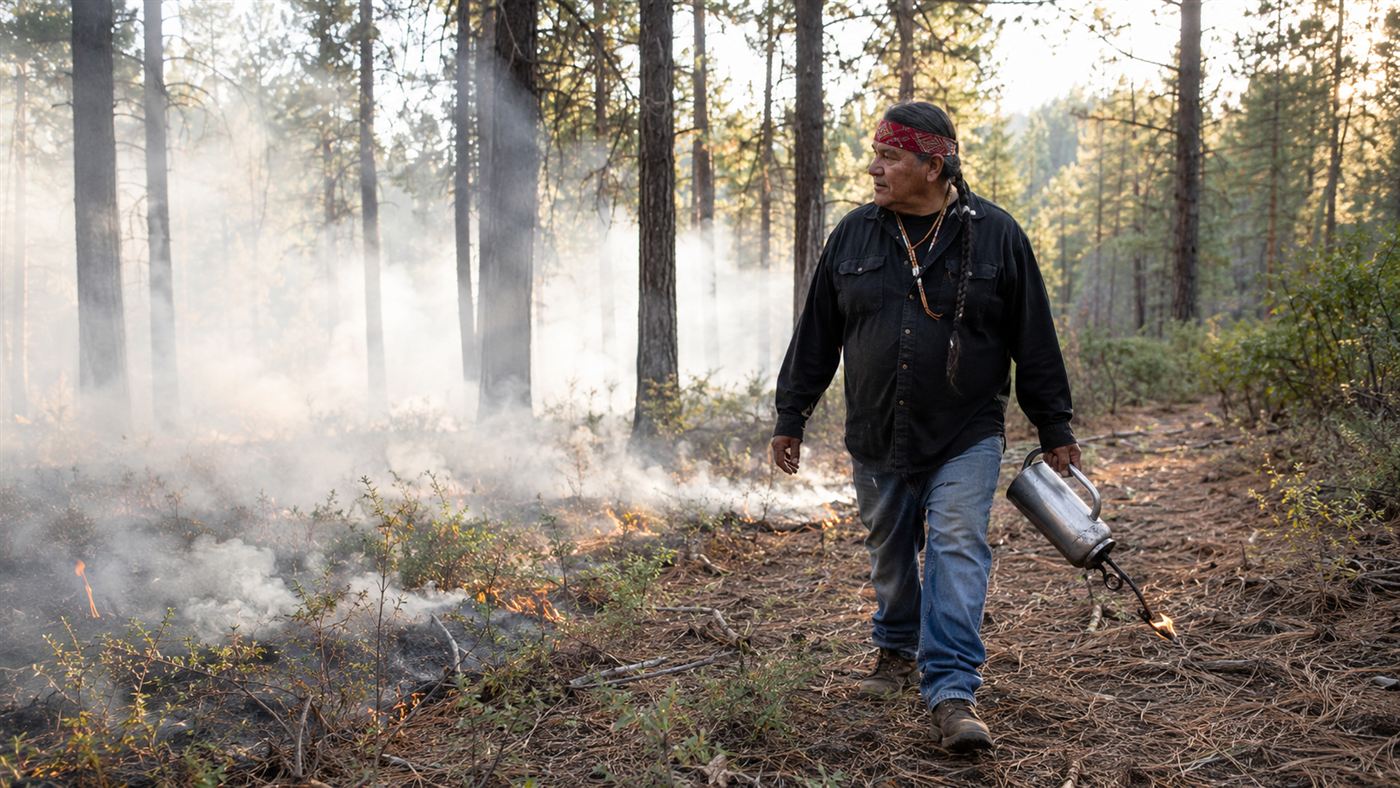
That solution has deep roots. Long before the parks existed, Native peoples in California deliberately set frequent, low-intensity fires that kept these forests open and healthy, a practice being revived today through Indigenous cultural burns. Crews are also collecting sequoia seeds and replanting scorched groves that may not recover on their own. None of it is as photogenic as a tree in a silver blanket, but it is the work that actually matters.
The honest catch
It would be easy to file this under simple climate doom, and the climate part is real, but the fuller story is partly our own doing. The very policy meant to protect these forests, putting out every fire for a hundred years, is what loaded the groves with the fuel that now makes fires lethal. We did not just fail to stop the danger; we helped build it, with good intentions.
There is a sliver of hope in that, though. If human choices helped create this crisis, human choices can ease it, and sequoias are still extraordinarily tough where the fire is not catastrophic. Restoring good fire through prescribed burns is slow, unglamorous, sometimes controversial work, and it will not save every grove. But the foil around General Sherman should be read less as a triumph than as a warning: we are now hand-tending the largest living things on Earth one tree at a time, and that is not a strategy that scales.
We are now wrapping the oldest and largest living things on Earth in foil, one at a time, to get them through the summer. Should we keep hand-saving individual famous trees, or put everything into the slow work of bringing back the gentle fire the whole forest needs? Tell us what you think in the comments.
Related reading: how Indigenous cultural burns are returning to California, and how the Franklin tree survives only because people saved it.