In 2004 a NASA capsule carrying pieces of the Sun slammed into the Utah desert at nearly 200 miles an hour because its sensors had been installed upside down, and scientists saved the mission anyway
Helicopters waited in the sky over Utah, stunt pilots ready to snatch a falling capsule out of the air like something from a film. Then the parachute never opened, and the world watched a priceless piece of the Sun smash into the desert. What happened after the crash turned near-total disaster into a quiet triumph.
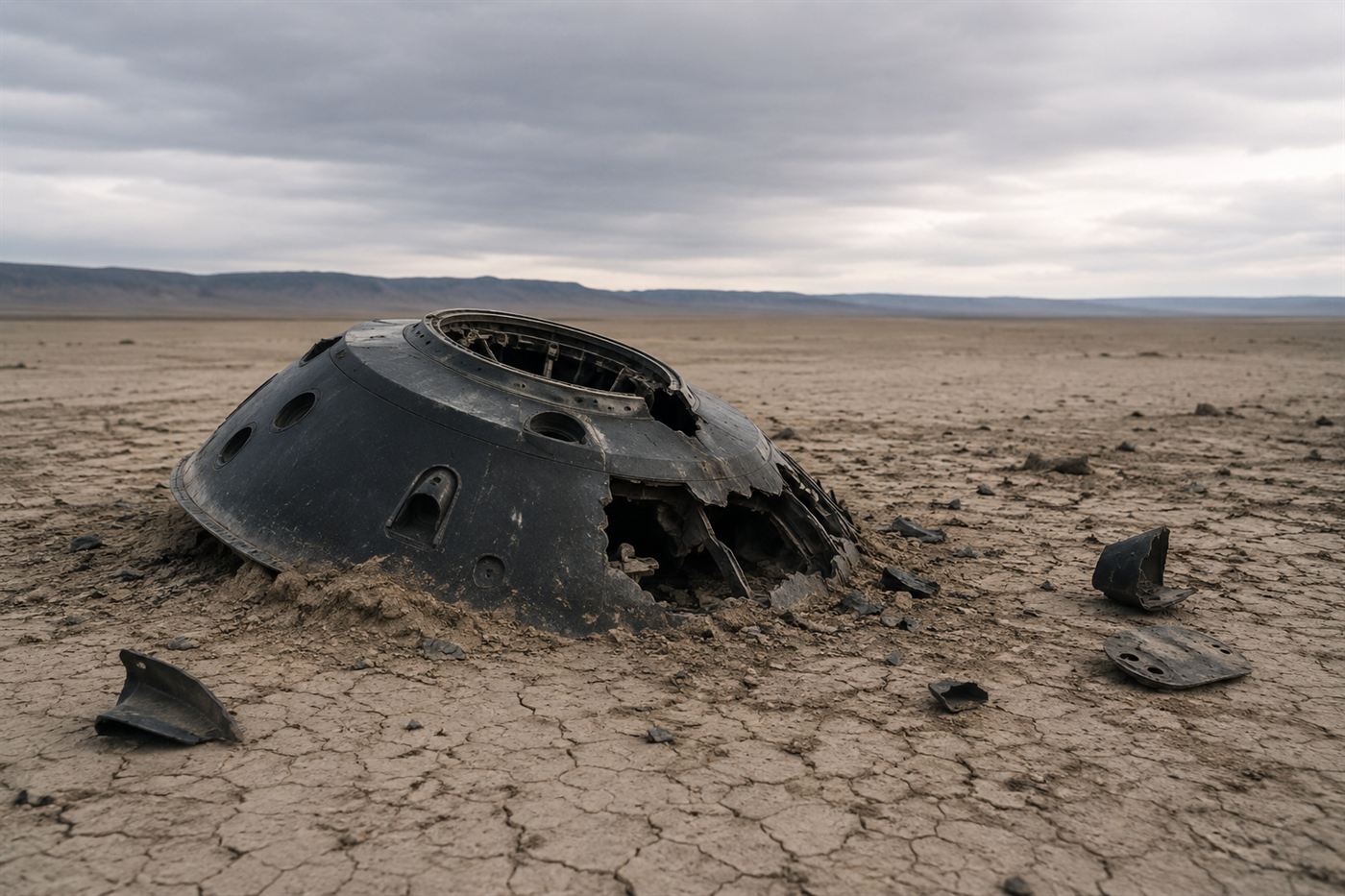
The Genesis capsule hit the Utah desert at nearly 200 miles an hour. Illustration: Watts & Wild.
The plan was one of the most audacious in the history of space exploration. A NASA spacecraft called Genesis had spent years in deep space collecting the solar wind, the faint stream of particles that blows off the Sun, on wafers of ultra-pure material. Those wafers held actual atoms of the Sun, and the goal was to bring them home cleaner than anything had ever been returned from space.
To keep the delicate samples from being jarred by a hard landing, engineers devised a spectacular finale. The sample return capsule would parachute down over the Utah desert, and helicopters flown by Hollywood stunt pilots would swoop in and hook the parachute in mid-air, lowering the precious cargo gently to the ground.
The short version is that none of that happened. On 8 September 2004 the capsule came screaming back through the atmosphere, its parachute stayed firmly shut, and it hit the desert floor at high speed. And yet, remarkably, the mission was not lost.
Catching a piece of the Sun
The Genesis probe had launched in 2001 and travelled out to a quiet point in space where the pull of the Earth and the Sun balance, far beyond the Moon. There it opened its collector panels and simply waited, letting the solar wind rain gently onto its wafers for more than two years, building up an invisible film of solar atoms.
Those atoms mattered because the Sun holds the original recipe of the solar system. By measuring the exact mix of elements and their isotopes in the solar wind, scientists hoped to learn what the cloud that formed the planets was really made of. It was, in effect, a chance to read the ingredient list of our own origins, which is why the samples were treated as almost sacred.
Why did the Genesis probe crash?
The failure came down to something almost absurdly small. Inside the capsule sat a set of sensors whose only job was to feel the fierce deceleration of re-entry and, on sensing it, trigger the parachutes. But the drawings used to build the capsule had these sensors specified the wrong way round, and so they were fitted upside down.
Installed backward, the sensors could not detect the braking force they were watching for. When the moment came to fire the parachutes, nothing told the system that re-entry was even happening, so the command never went out. The capsule, with no parachute and nothing to slow it, simply fell, striking the Utah desert at close to 200 miles an hour and cracking open on impact.
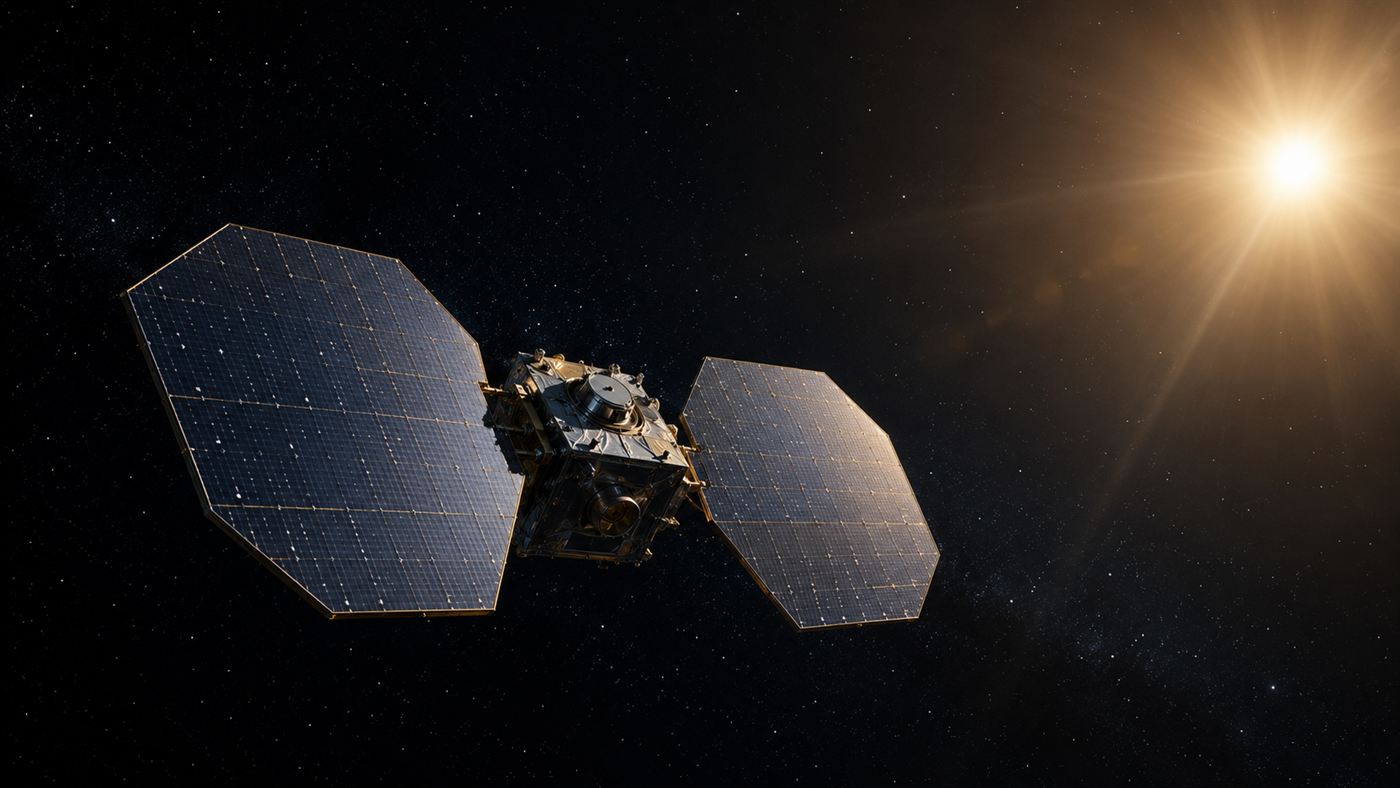
A backward drawing that doomed the landing
What makes the error so striking is how ordinary it was. This was not exotic bad luck or some unforeseeable flaw in physics; it was a part fitted the wrong way because a diagram said so. A review found the mistake had slipped through the checks meant to catch exactly that kind of thing, a failure of process as much as of hardware.
It is an echo of other famous space blunders, where a fortune in engineering was undone by a small, human slip. The lesson these missions keep teaching is that the most dangerous problems are often not the hard ones but the simple ones, the details so basic that everyone assumes someone else has already checked them.
Saving the science from the wreck
When the recovery teams reached the crash site, the scene looked hopeless. The capsule had split open, the ultra-clean collectors were shattered, and desert dirt had blown in among the fragments, contaminating samples that were supposed to be spotless. For a sample return mission built entirely around purity, dirt in the works was close to a worst case.
But the scientists refused to give up. They carefully gathered the broken pieces, cleaned them with painstaking care, and worked out which measurements could still be trusted despite the contamination. Against the odds, they recovered most of the science the Genesis probe had been sent to get, including precise readings of the Sun's oxygen that reshaped ideas about how the solar system formed.
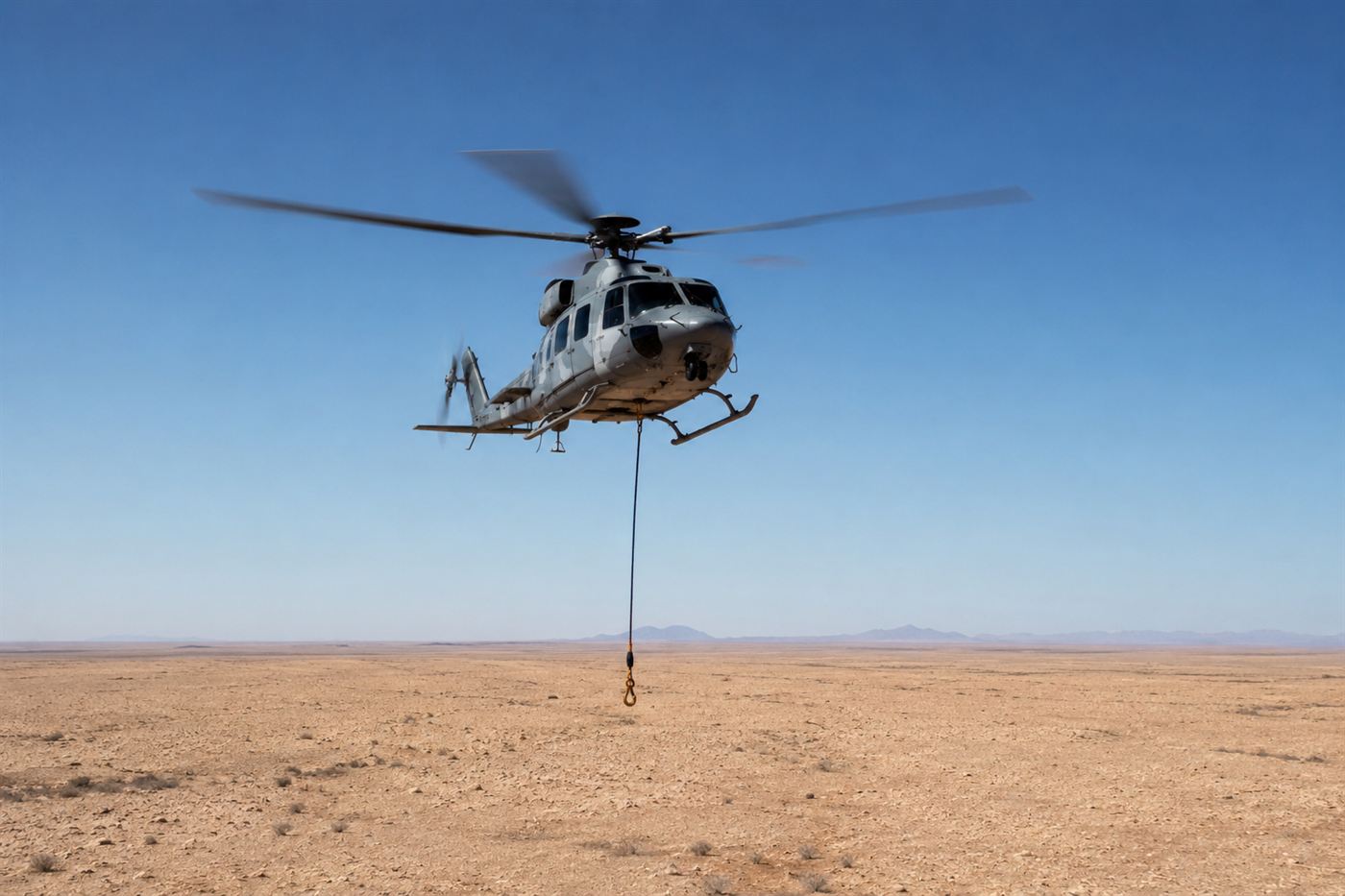
The honest catch
It would be wrong to wrap this up as a simple happy ending, because the crash did real damage. Some of the contamination could not be undone, certain measurements were lost or made far harder, and the recovery took years of grinding, delicate work that a clean landing would have spared entirely. The Genesis probe's upside-down sensors cost real science, not just embarrassment.
Even so, the truest lesson of the Genesis probe is a hopeful one about not giving up. A mission that looked, on live television, like a total loss became a scientific success because people were willing to sift through the wreckage rather than walk away. Sometimes the difference between failure and triumph is simply whether anyone is patient enough to salvage what remains.
Pieces of the Sun fell out of the sky and buried themselves in the Utah dirt because a sensor was fitted the wrong way up, and a doomed-looking mission was rescued atom by atom from the mess. Is the Genesis probe a story of a stupid mistake, or of the stubborn refusal to accept a loss? Tell us what you think in the comments.
Related reading: the Mars probe lost because two teams used different units. See also how Skylab fell out of the sky onto Australia, and how engineers revived Voyager 1 from 15 billion miles away.