The self-taught Dane whose windmill became the template for every modern turbine
By the 1950s the world had decided wind power was a quaint relic, beaten for good by cheap oil and coal. On a windswept spit of Danish coast, a retired engineer with no university degree quietly disagreed. The machine he put up there ran for a decade without anyone needing to climb it, and when the oil shocks hit, engineers went looking for a design that actually worked. They found the Gedser wind turbine, and copied it.
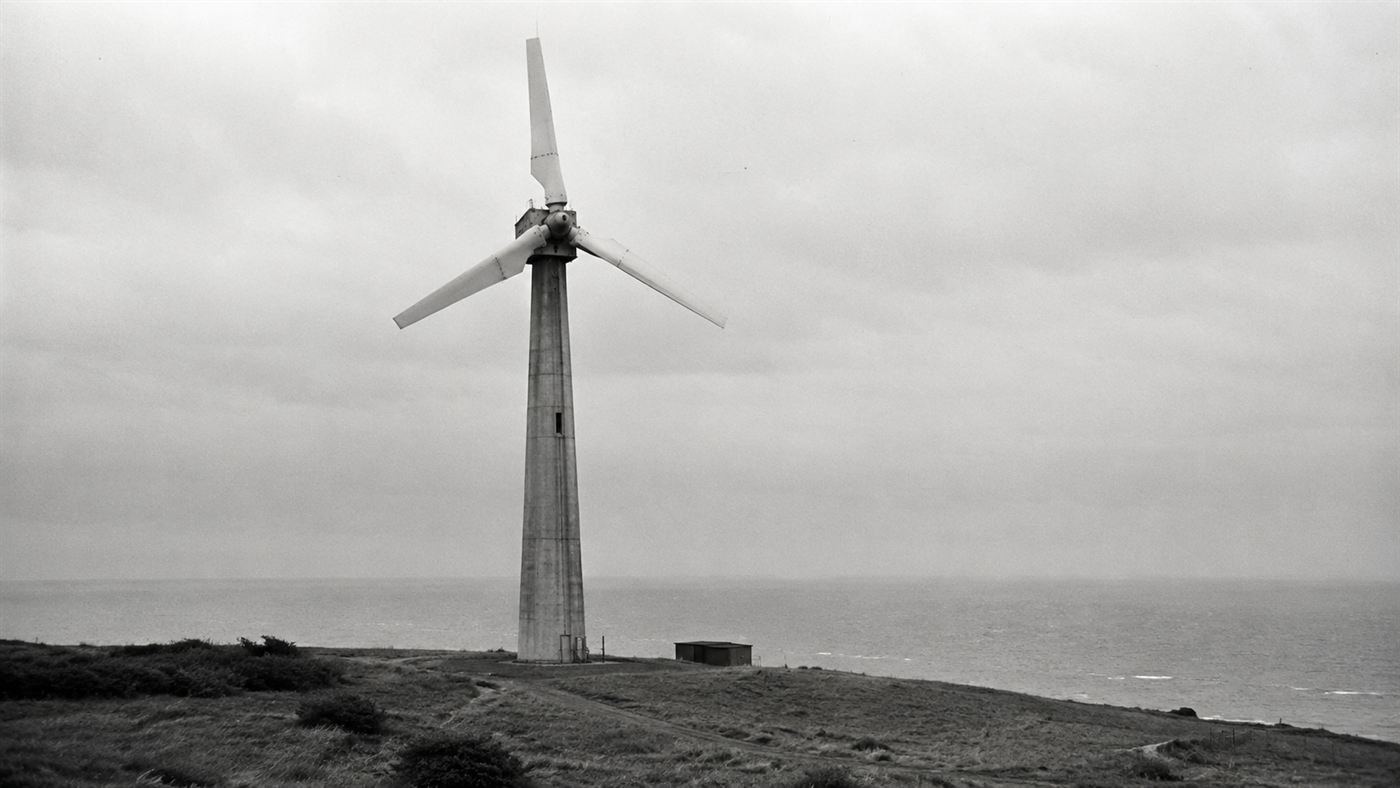
The Gedser turbine, three blades on a concrete tower, looked like the future before the world was ready. Illustration: Watts & Wild.
Almost every big wind turbine spinning today shares the same basic shape, and that shape has a single, surprising ancestor. The Gedser wind turbine was the first machine to prove that a simple three-blade design could make grid electricity from the wind, reliably, for years on end.
It was not built by a famous laboratory or a great corporation. It was built by an old man who refused to let an idea die.
Wind power's forgotten decades
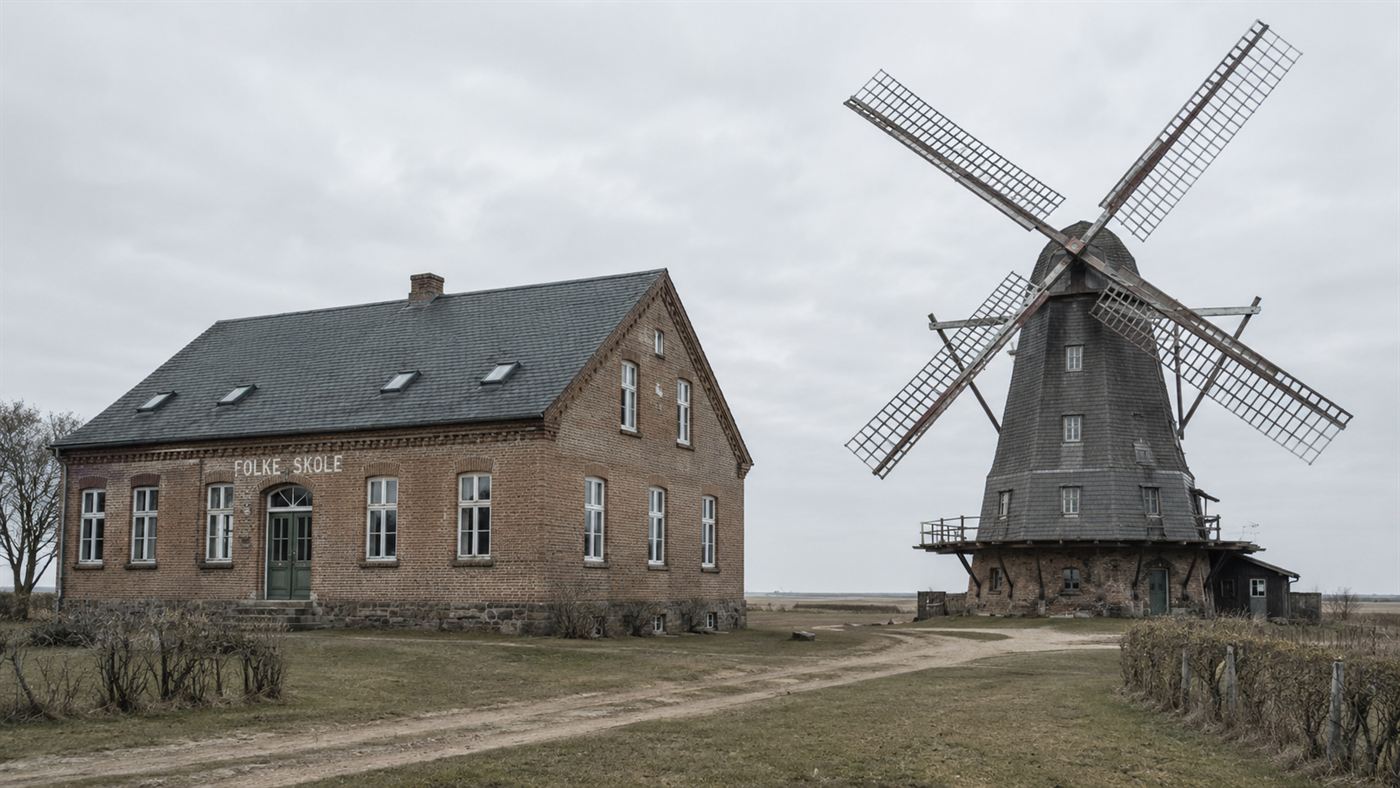
For a few hopeful years around 1900, wind looked like a serious source of power. The Danish scientist Poul la Cour had shown that windmills could generate electricity for villages, and hundreds were built. Then cheap, abundant fossil fuel arrived and swept wind aside, and for half a century the idea of generating real electricity from the breeze was treated as charming but pointless.
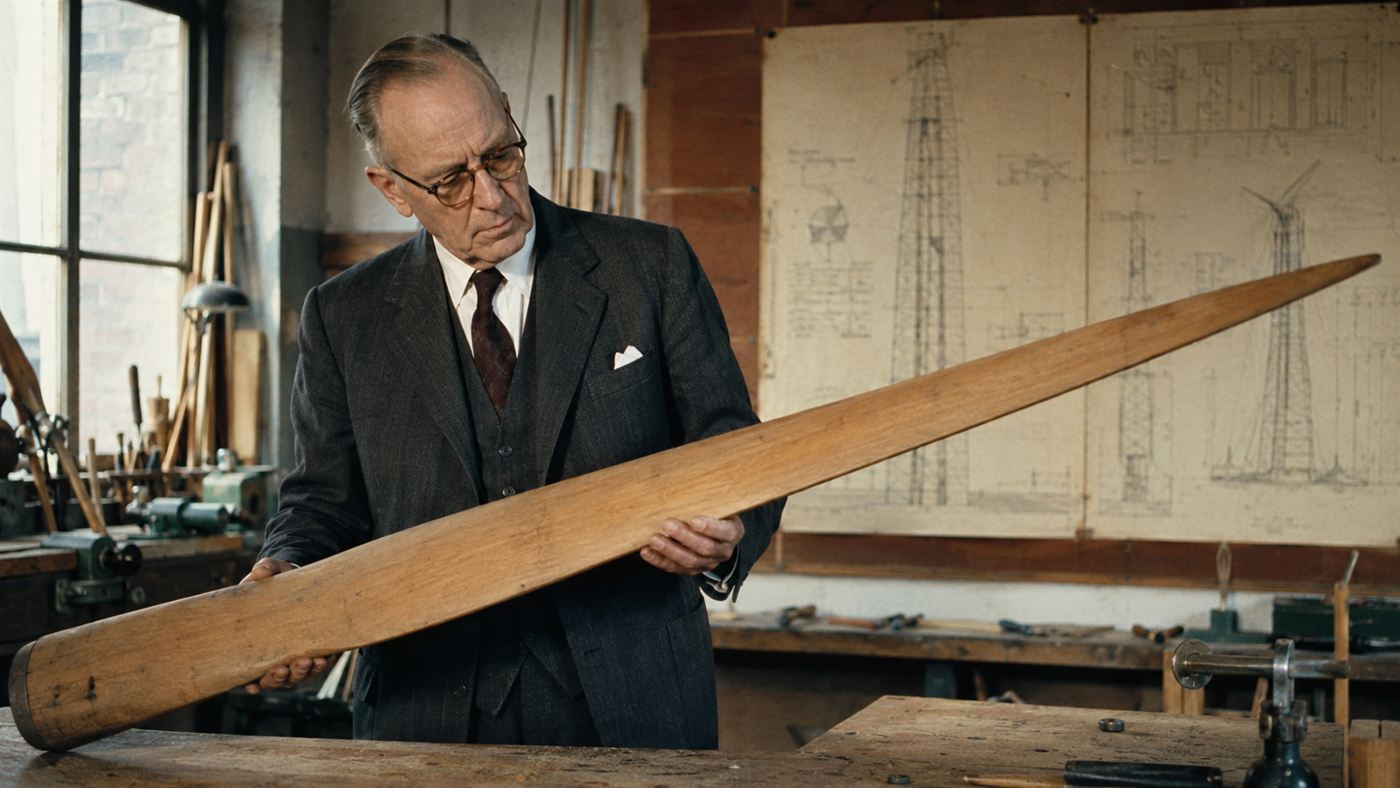
One of la Cour's earliest students never accepted that verdict. Johannes Juul had taken la Cour's wind-electricity course as a young man in 1904, then spent a long career as an engineer at the Danish utility SEAS. Wind stayed in the back of his mind for decades while the rest of the world moved on. When he finally returned to it, he was already an old man, and almost everyone thought he was wasting his time.
An old man and a concrete tower
In the mid-1950s, working for SEAS and with help from Marshall Plan funds, Juul began building experimental turbines, and in 1957 he finished his masterpiece on the Gedser peninsula. The Gedser wind turbine stood on a reinforced-concrete tower, carried three blades spanning 24 metres, and fed 200 kilowatts of alternating current directly into the national grid.
What made it remarkable was not its size but its stubborn reliability. The turbine ran from 1957 until 1967, around a decade, with almost no maintenance at all, something no earlier large wind machine had managed. While flashier projects in other countries shook themselves apart, Juul's machine on the cold Danish coast simply kept turning, quietly making the case that wind could be a workhorse and not just an experiment.
The ideas that became the Danish concept
Juul did not just build a turbine, he settled the basic argument about what a turbine should be. His design fixed the features that engineers later named the Danish concept: three blades facing into the wind, an asynchronous generator, blades that shed excess power by stalling, and emergency tip brakes that he invented to stop the rotor in a storm.
Those choices were not the only ones possible. Other designers tried two blades, or one, or rotors that faced away from the wind, and on paper several of those ideas were cheaper. Juul's combination simply turned out to be the one that stayed stable, safe and durable in real weather, year after year. That is why, when the modern wind industry finally took off, it converged on his template rather than the alternatives.
What was the Gedser wind turbine?
It was the machine that proved the whole idea could work. The Gedser wind turbine was Denmark's first large wind turbine, a three-blade, 200-kilowatt machine on a concrete tower that fed power to the grid from 1957 to 1967 with almost no upkeep.
For years it was the largest wind turbine in the world, and more importantly it was the most convincing. When the oil crisis of 1973 sent the United States, Germany and Denmark scrambling for alternatives to imported oil, they did not start from scratch. Juul's turbine was refurbished in 1975 and brought back to life to provide test data, an old design pressed into service to teach a new generation how to harness the wind.
Who built the Gedser wind turbine?
A man the textbooks almost forgot. The Gedser wind turbine was designed by Johannes Juul, a self-taught Danish engineer and former student of Poul la Cour, who built it late in life while working for the utility SEAS.
It would be wrong to say Juul invented wind power on his own. La Cour came before him, and an American turbine, the giant Smith-Putnam machine, was bigger and earlier as a feat of engineering. The Gedser turbine itself was shut down in 1967 because it could not compete with cheap oil, and the towering machines of today are far larger and more sophisticated than anything Juul imagined. But the family resemblance is real: look at the three blades on the next turbine you pass, and you are looking at the quiet legacy of an old man who would not give up on the wind.
A retired man with no degree settled a question that big laboratories could not, simply by building something that refused to break. How many good ideas are we still writing off today the way the world once wrote off the wind? Tell us what you think in the comments.
Related reading: Poul la Cour, the teacher who first turned Danish wind into electricity and trained the man who built Gedser.