A Wisconsin startup pulled electricity straight out of a fusion plasma, and it was just enough to light a few bulbs
In July 2026, a company called Realta Fusion said it had done something no private firm had managed before: reach into a live fusion plasma and draw usable electricity straight out of it. The prize was almost comically small, enough current to light a handful of ordinary bulbs, and yet it may be a genuine step toward the hardest goal in energy.
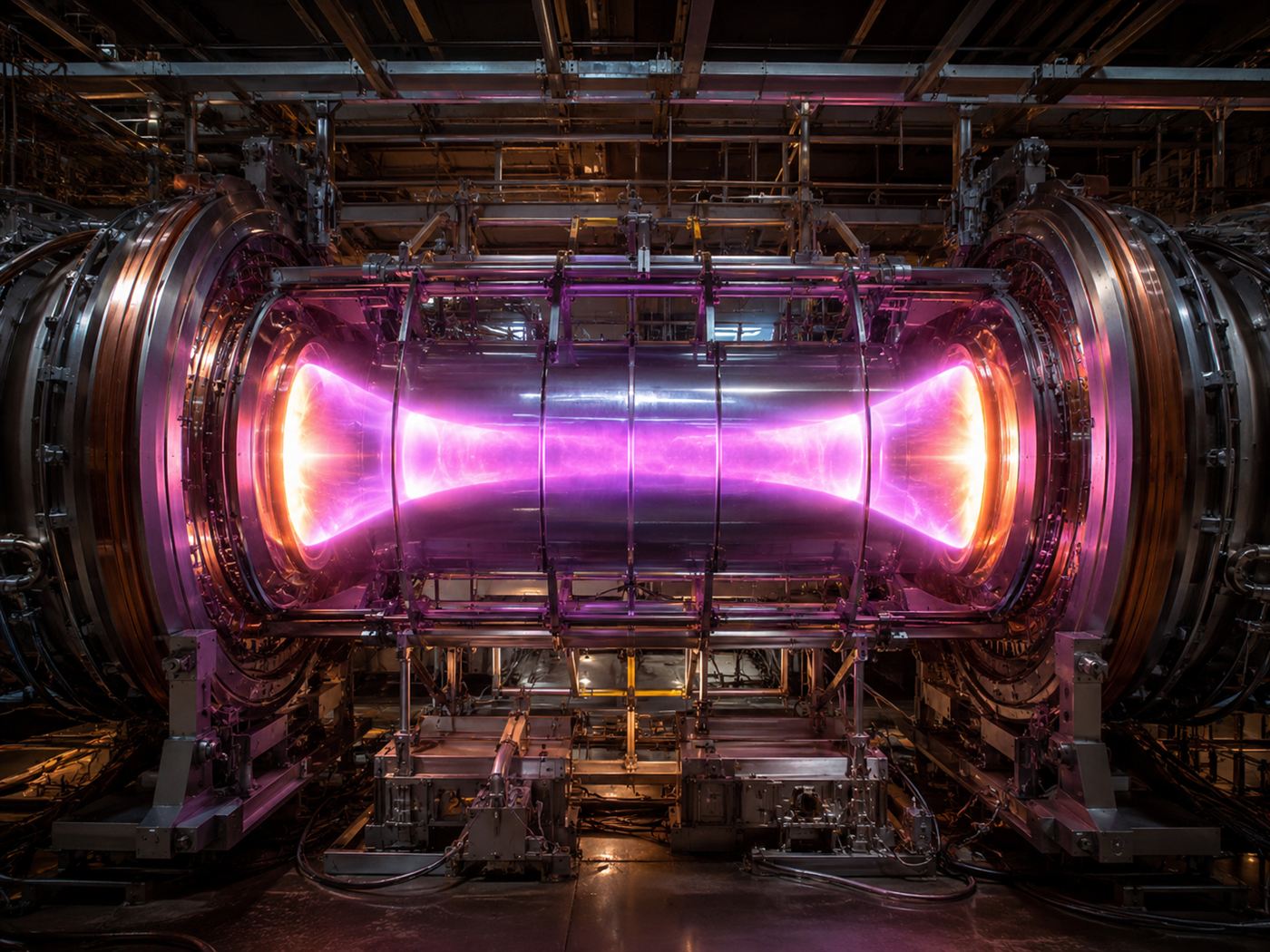
Inside a magnetic mirror machine, a hot plasma is pinched between powerful magnets. Illustration: Watts & Wild.
On July 1, 2026, Realta Fusion, a startup spun out of the University of Wisconsin-Madison, announced that it had connected a device called a direct energy converter to an operating fusion plasma and pulled electricity out of it. By the company's account, it is the first time a private company has ever done so on a live fusion machine, and while the amount was tiny, the principle behind it is anything but.
The numbers are humble on purpose. The converter drew a few amperes at roughly 100 volts, enough to light several incandescent bulbs and no more. But the point was never the wattage. It was to prove that a stream of charged particles flying out of a fusion reaction can be turned into current you could actually use, without first boiling water and spinning a turbine.
The short version is this: fusion has always been chased as a source of heat, and heat means old-fashioned steam engines dressed up in new clothes. Realta is testing a shortcut that skips the steam entirely, and it just showed the shortcut works.
What Realta Fusion actually built
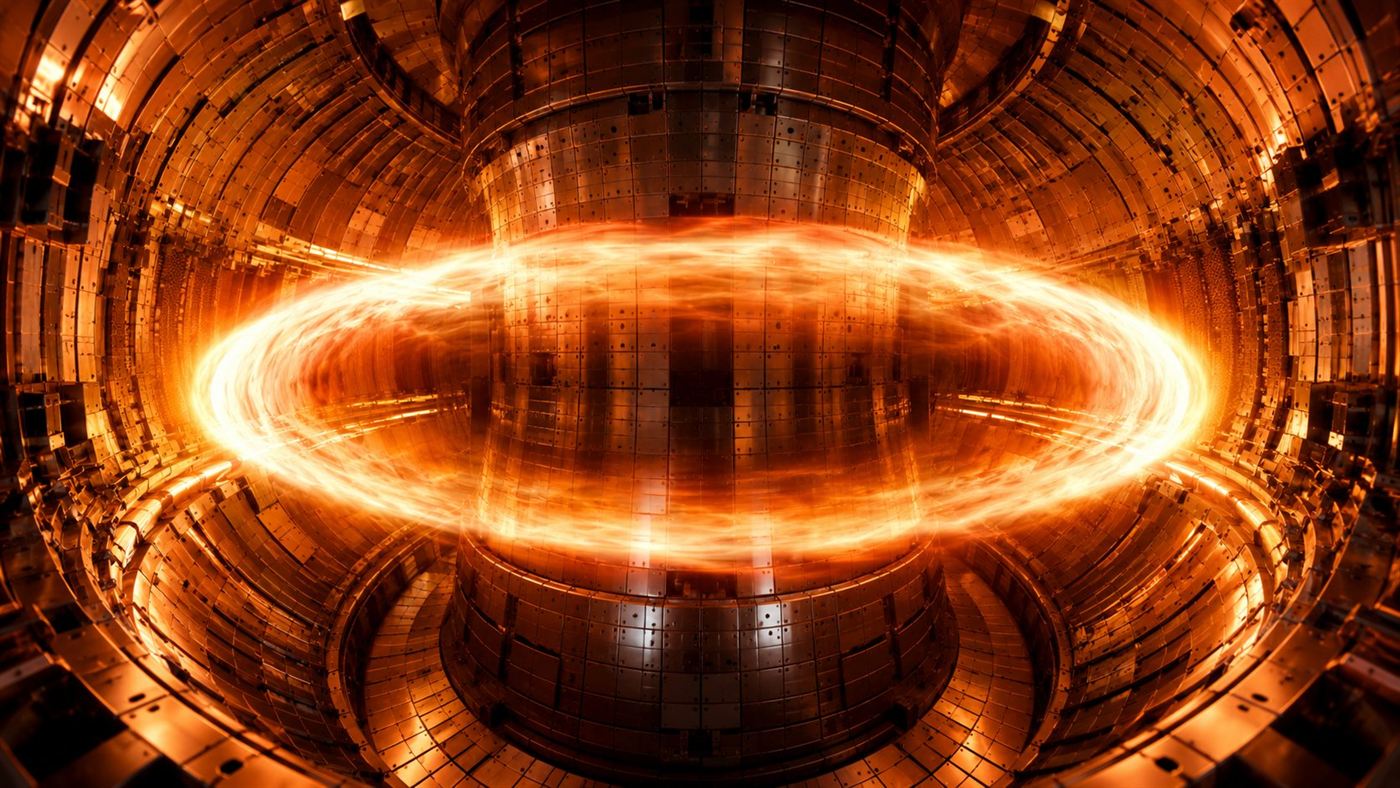
Realta Fusion uses a design called a magnetic mirror, one of the oldest ideas in the field. Instead of bending plasma into a ring like a doughnut-shaped tokamak, a magnetic mirror traps it in a straight tube, pinched at each end by intense magnetic fields that reflect escaping particles back toward the middle, like corks forced back into a bottle.
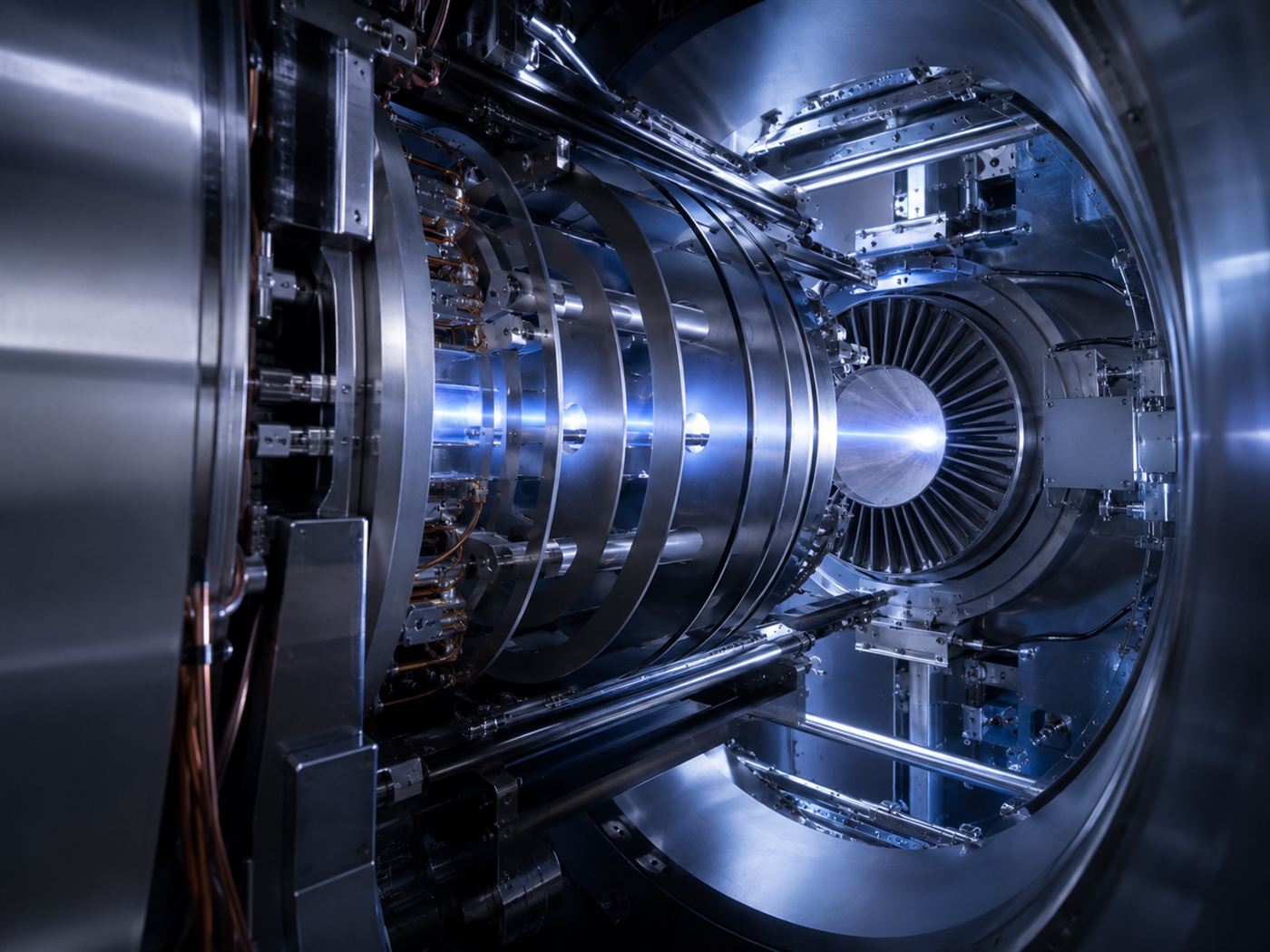
The clever part sits at one end of that bottle. Some particles always leak out along the field lines, and rather than waste them, Realta aimed them at a direct energy converter, a set of charged plates that catch the fleeing ions and harvest their motion as electric current. Charged particles moving toward a plate are, in effect, already electricity waiting to be collected.
Why skipping the steam is such a big deal
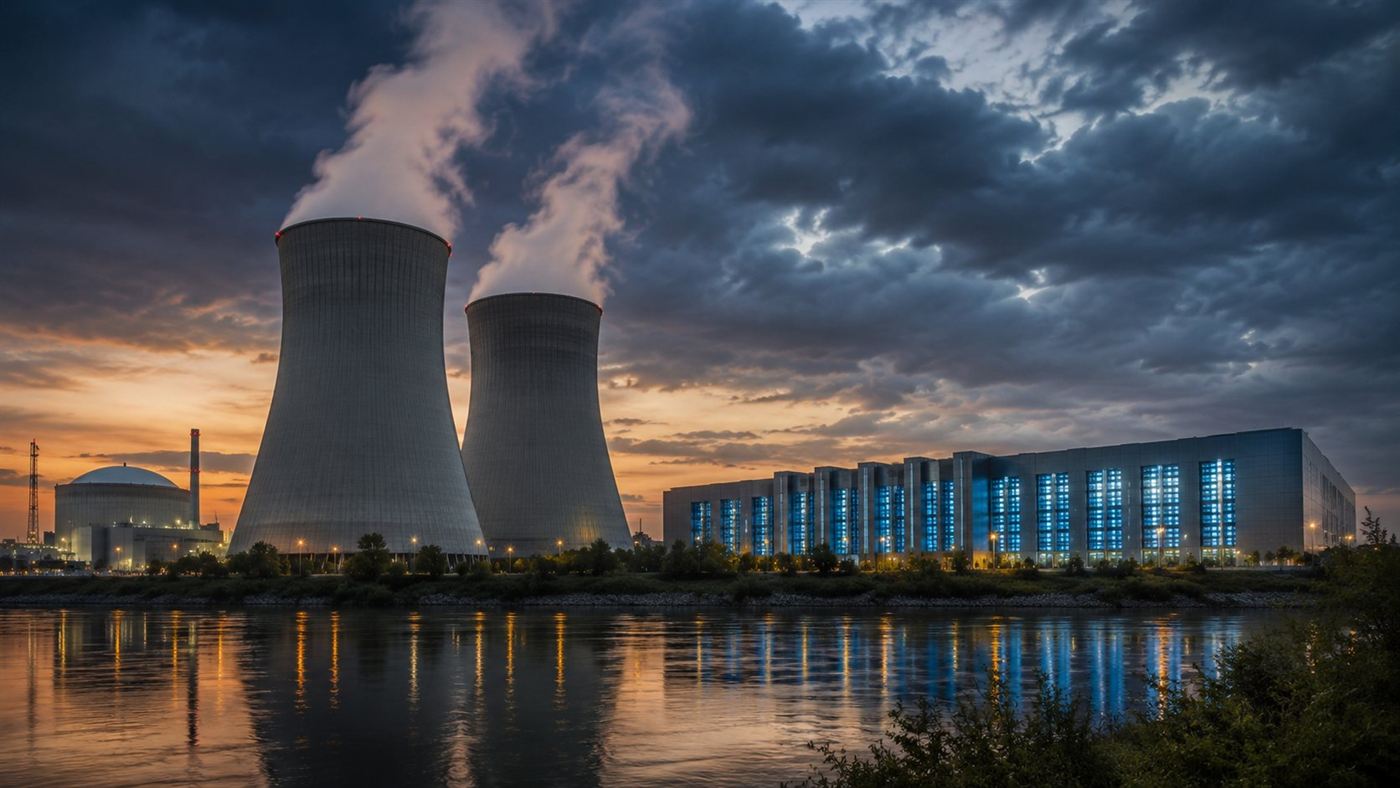
Nearly every power plant on Earth, coal, gas, nuclear, even most fusion designs, is really a very elaborate way to make steam. You release energy, heat water, spin a turbine, and feed a generator. Each of those steps throws away a slice of the energy, and the whole chain rarely turns more than 40 percent of the heat into electricity.
A direct converter dodges most of that loss. Because it grabs energy from the charged particles themselves, its efficiency can top 90 percent for that portion of the output. Realta's proposed plants would use a hybrid: send most of the fusion energy through a normal thermal cycle at around 45 percent efficiency, and route the rest through the converter, which the company says could shave the cost of the electricity by 10 to 20 percent. In an industry where every percentage point is fought over like territory, that is a real prize.
CEO Kieran Furlong and chief scientist Dr Derek Sutherland have framed the result as validation of the engineering, not a finished machine. The idea itself is old, sketched by the physicist Dr Richard Post back in 1974, but no private company had ever bolted it to a working fusion plasma until now.
Is this the same as fusion power?
Not yet, and the distinction matters. Lighting a few bulbs is not the same as producing net energy, the long-sought moment when a fusion machine gives out more power than it takes to run. Realta's converter proved a piece of the puzzle, the harvesting step, but the reactor around it still consumes far more than it makes.
That is why the honest way to read this news is as a milestone on a long road, not the finish line. The company is aiming for its first small modular power plants in the mid-2030s, a timeline that, like most fusion promises, should be treated as a hope rather than a date on a calendar. Fusion has a long history of being twenty years away, and it has slipped before.
The honest catch
It is easy to roll your eyes at a fusion headline where the grand payoff is a couple of glowing light bulbs, and easy in the other direction to declare that limitless clean power has arrived. Both reactions miss the mark. What Realta showed is narrow but solid: a specific, decades-old trick for turning plasma directly into electricity really does work on a real machine, and a private company can do it.
The catch worth naming is that the loudest word in any fusion story is usually the one doing the least work, and that word is soon. Direct conversion could make future fusion plants cheaper and simpler if fusion ever crosses the net-energy line at scale, and that if is still enormous. The gap between a bright idea and a running power station is measured in decades and billions. Realta has taken a careful, honest step and said so plainly, which is refreshing. The bulbs it lit are small. The habit of proving each claim before making the next is not.
Sources: Interesting Engineering on Realta Fusion's direct energy conversion, the US Department of Energy fusion roadmap, and TechCrunch on the fusion funding race.
A few glowing bulbs in a Wisconsin lab may be the quietest big fusion news of the year. Do you think fusion will finally deliver in your lifetime, or is it still the energy of tomorrow that never quite arrives? Tell us what you think in the comments.
Related reading: the night a US lab got more energy out of fusion than it put in. See also China's tokamak that held its plasma for a thousand seconds, and the cold fusion claim that fooled the world in 1989.