Scientists found a fungus-mimicking spider in the Amazon that copies the parasite which eats spiders alive
In early 2026, researchers gave a name to one of the strangest disguises in nature: a fungus-mimicking spider from the Ecuadorian Amazon that makes itself look like the mould-like parasite which infects and kills spiders. It was first spotted not by a scientist, but by a stranger with a camera, who thought they were photographing a mushroom.
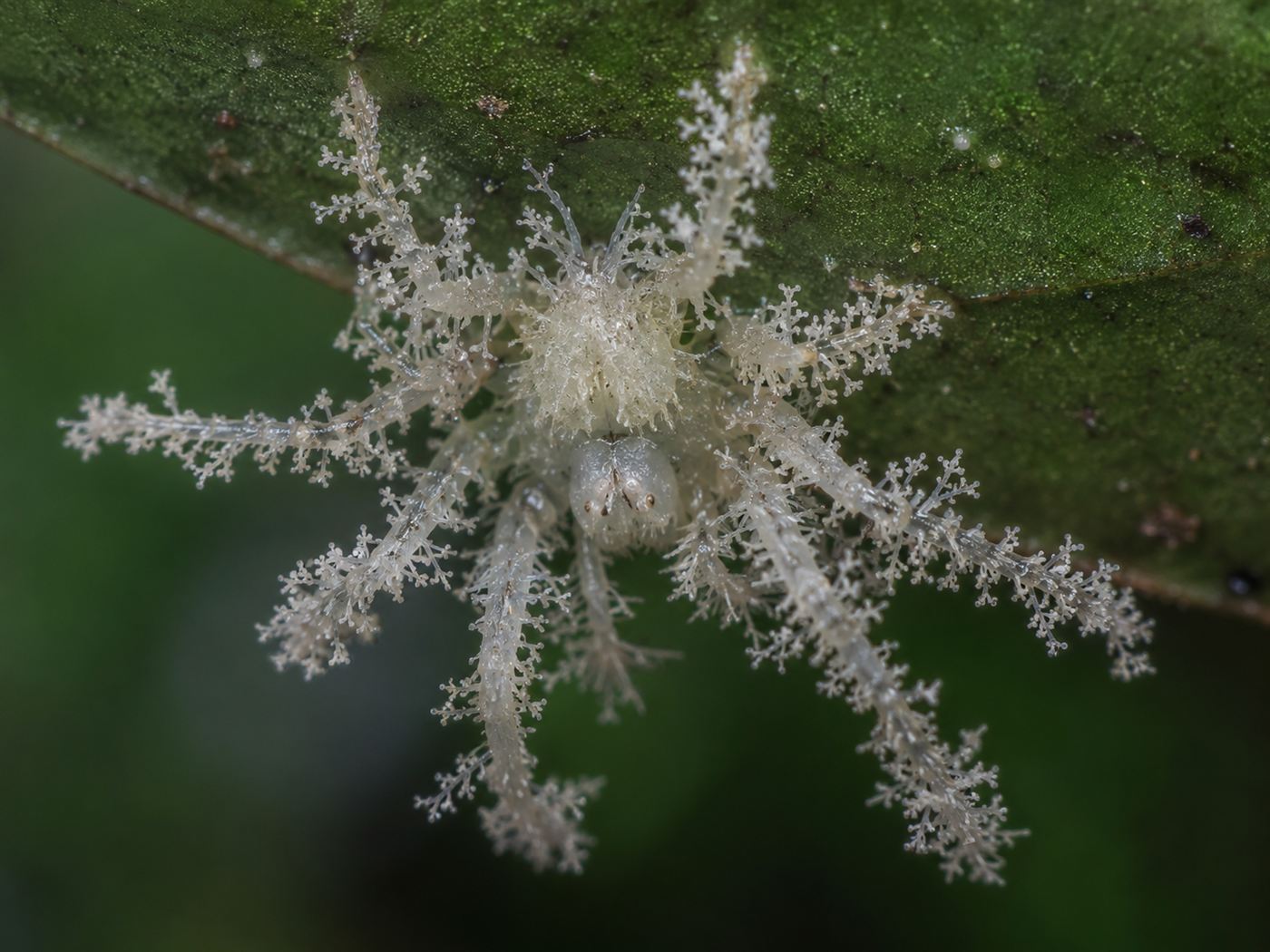
The spider's pale, spiky body imitates a fungus that grows on dead spiders. Illustration: Watts & Wild.
The animal now carries the scientific name Taczanowskia waska, and it belongs to the orb-weaver family, the same broad group that spins the classic wheel-shaped webs you find in a garden. But there is nothing ordinary about how it hides. Instead of matching a leaf or a twig, it has evolved to look like a disease, specifically the pale, hairy fruiting body of a Gibellula fungus.
That choice is darkly clever, because Gibellula is a spider's nightmare. It is a parasite that infects spiders, spreads through their bodies, and eventually erupts from the corpse as a ghostly growth. A living spider that resembles one of these fungal outbreaks is, in effect, hiding by looking like the very thing that kills its kind.
The short version is that a hunter has disguised itself as a killer of hunters, and for a long time no trained scientist even noticed it was there.
How the fungus-mimicking spider pulls off its trick
Up close, the illusion is built from a few clever features. The spider's abdomen carries elongated, finger-like projections, and its surface is pale and matte rather than glossy, so instead of reading as a smooth animal body it looks like a clump of fungal threads reaching up from a leaf. The overall effect is less creature, more mould.
Behaviour completes the costume. The spider tends to sit motionless on the undersides of leaves, exactly where a real Gibellula outbreak would appear, and it stays there without the twitchy movement that would give an animal away. Staying perfectly still under a leaf is as much a part of the camouflage as the shape of its body, because a fungus, after all, does not fidget.
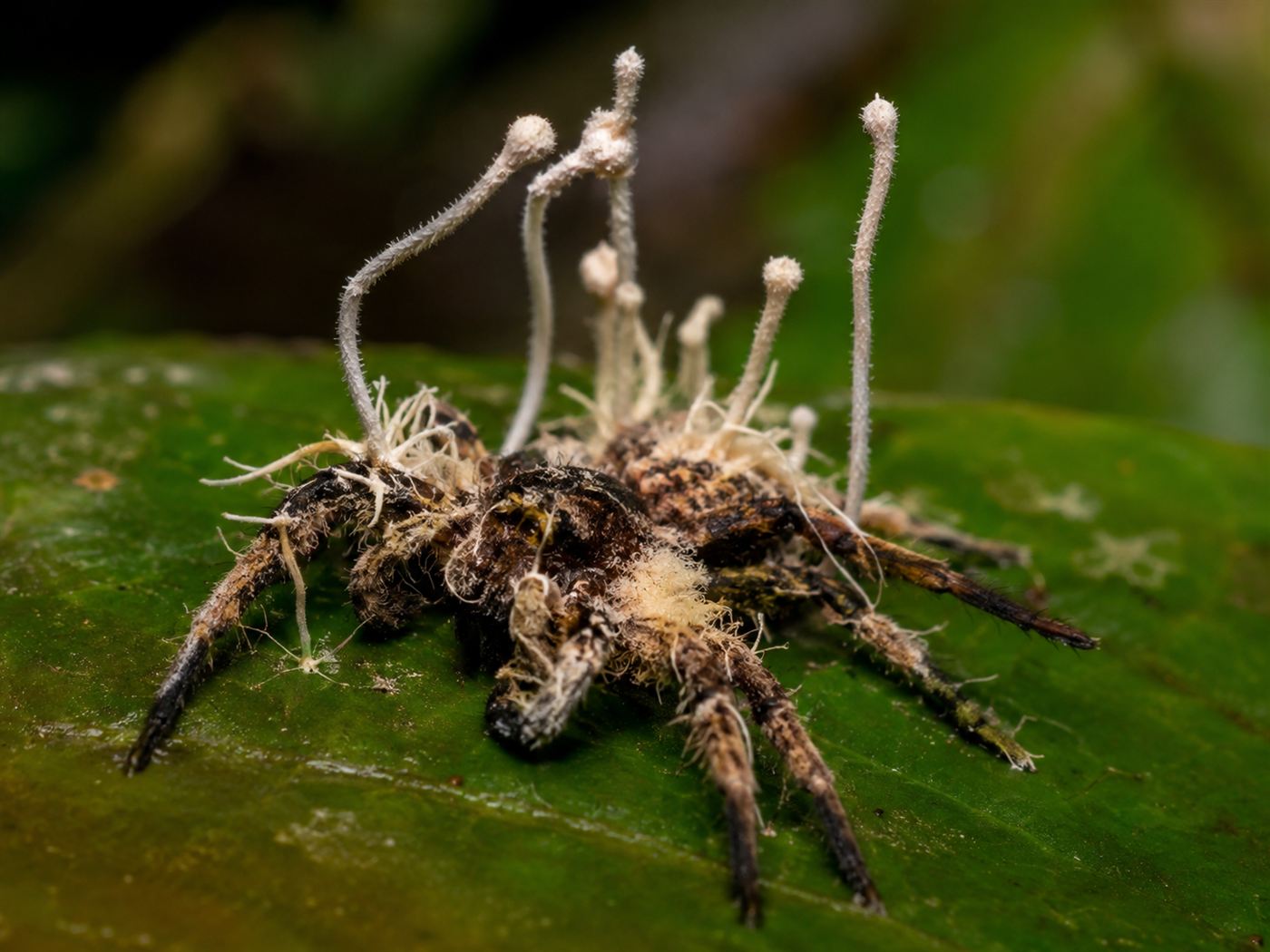
Why would a spider dress up as its own killer?
The leading idea is defence. Many animals that hunt spiders, from birds to wasps, have no interest in a mouthful of parasitic fungus, which is inedible and possibly toxic. By resembling something predators are trained to skip, the spider may quietly lower its odds of being eaten, a form of camouflage built not from leaves and bark but from fear itself.
There may be a second payoff too. A predator that sits unnoticed is also a predator that gets closer to its own prey. If insects treat the disguised spider as a harmless smudge of mould on a leaf, they may wander within striking distance before they realise their mistake. In that sense the costume could work both ways, keeping the spider safe and helping it feed, a rare two-for-one deal in the economy of survival.
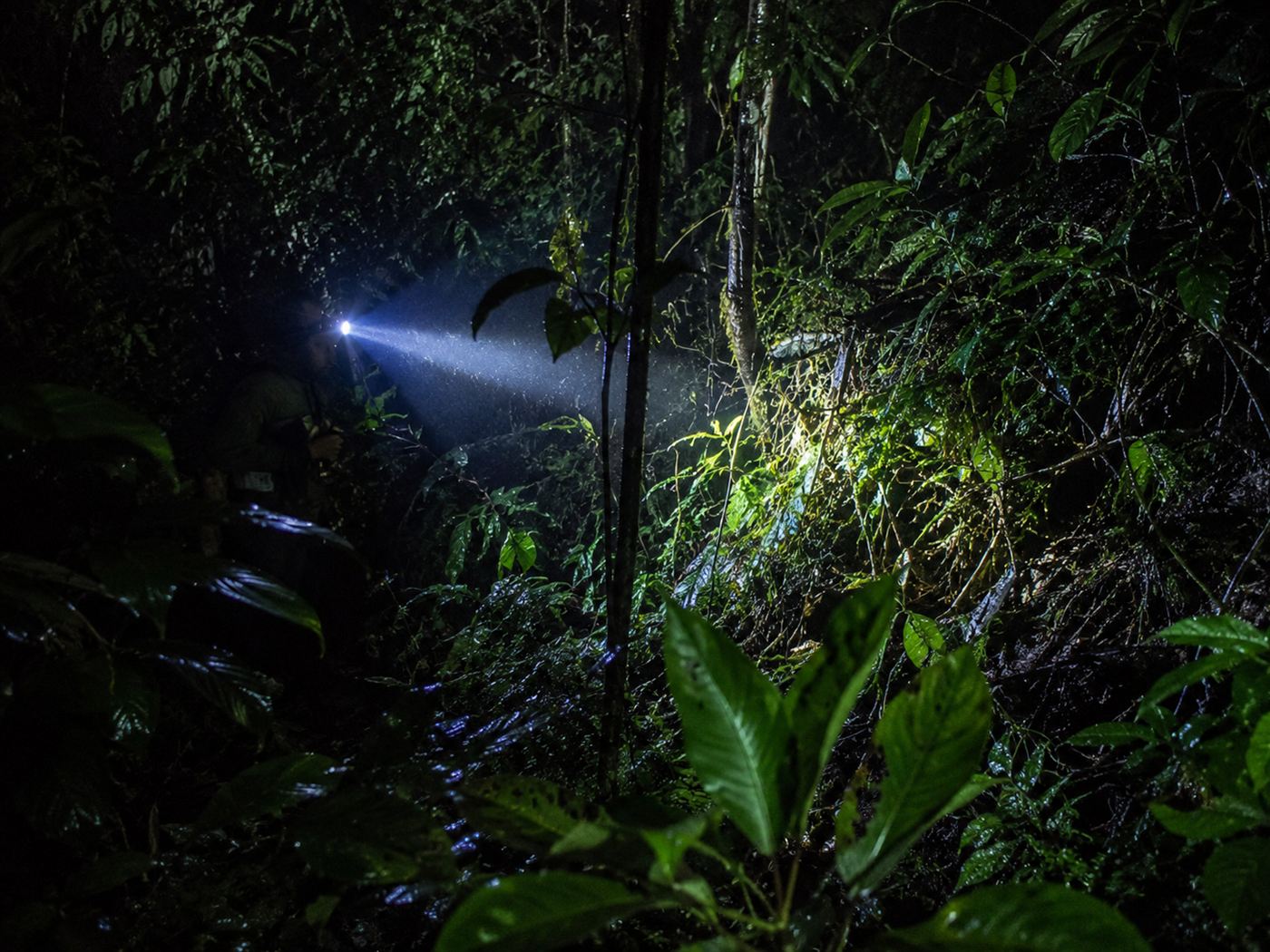
The citizen scientist who saw a spider in a mushroom
The most human part of this story is how it began. Someone exploring the forest photographed what looked like a small fungus on a leaf and uploaded it to iNaturalist, the free app where anyone can post pictures of wildlife for others to identify. On iNaturalist, sharp-eyed users pointed out that the mushroom had legs.
That online spark sent researchers looking, including a team linked to the Leibniz Institute for the Analysis of Biodiversity Change, where the specialist Nadine Dupérré compared specimens to confirm it was new to science. The find was written up with colleagues including David R. Díaz-Guevara and Alexander Griffin Bentley, and formally described in the journal Zootaxa in 2026. A photograph from a curious amateur had turned into a brand-new branch on the tree of life.
The honest catch
It is tempting to tell this as a tale of a genius spider that cunningly decided to impersonate a fungus. Evolution does not work that way, and the honest picture is stranger and slower. Over countless generations, the spiders that happened to look a little more fungus-like survived a little more often, until the resemblance sharpened into the eerie match we see now. No individual spider is fooling anyone on purpose.
There is a second, quieter catch worth naming. We are meeting this creature at the same moment its home is under pressure, as the forests of the Amazon are cleared and fragmented year after year. This spider went unrecorded until a chance photo revealed it, which raises an uncomfortable thought: how many equally astonishing species vanish before anyone points a camera at them. The discovery is a delight. It is also a reminder of how much we are still losing in the dark.
Sources: SciTechDaily on Taczanowskia waska, Phys.org, and the study in Zootaxa.
A spider survives by wearing the mask of the disease that hunts its kind, and we only found it because a stranger stopped to photograph a leaf. What else is hiding in plain sight, waiting for the right pair of eyes to notice it? Tell us what you think in the comments.
Related reading: the real parasitic fungus that turns ants into puppets. See also the octopus that impersonates a dozen other animals, and the vine that copies the leaves of whatever it climbs.